A class barrier becomes irreversible through the lover's refusal to act decisively, after which addiction and belated promises prolong the consequences without restoring the lost relationship.
Why this matches +
These offer a related experience with a meaningful difference in story, tone, or presentation.
An adjacent discovery: a related idea with a different viewing experience.
Genres: Drama / Romance
Shared film traits
Based on recorded story, mood and style. Your preferences can change the order.
What changes Devdas follows a man whose failure to challenge class expectations leads to destructive romantic choices.
Returning from education abroad, a young aristocrat renews his attachment to a childhood companion but fails to oppose the family hierarchy that humiliates her. Her marriage elsewhere does not end his longing, and his growing dependence on alcohol draws him toward a courtesan whose care he cannot answer on equal terms. Elaborate promises and gestures of devotion coexist with failures of practical courage, making romantic suffering inseparable from choices that keep other people constrained. Devdas’s romantic suffering is heightened by the very choices through which he avoids challenging class power.
An older man's curated access to culture makes a student's future seem disposable until concealed information exposes the cost of dependence.
Why this matches +
These offer a related experience with a meaningful difference in story, tone, or presentation.
An adjacent discovery: a related idea with a different viewing experience.
Genres: Drama / Romance
Shared film traits
Based on recorded story, mood and style. Your preferences can change the order.
What changes An Education follows a young woman's attraction to a privileged world and the dangerous gap between appearances and reality.
A gifted schoolgirl in early 1960s London is offered an apparently sophisticated escape from exams and parental restrictions by an older man. His access to music, travel, and adult approval makes formal education seem small beside a life already available. As inconsistencies emerge, the attraction becomes a test of how glamour can disguise unequal knowledge and how easily ambition can be redirected by someone presenting himself as its shortcut.
Anna's relationship with Vronsky challenges a marriage embedded in public status, but the social order gives her fewer ways to leave than it gives him. The parallel Levin plot resists treating passion as the only model of intimacy.
Why this matches +
These offer a related experience with a meaningful difference in story, tone, or presentation.
An adjacent discovery: a related idea with a different viewing experience.
Genres: Drama / Romance
Shared film traits
Based on recorded story, mood and style. Your preferences can change the order.
What changes Anna Karenina examines romance constrained by social standing and the costs of choices made within it.
In nineteenth-century Russia, Anna's affair with the cavalry officer Vronsky ruptures the marriage and social standing that have defined her public life. Their attraction offers an apparent alternative, but the social costs fall most heavily on Anna and make private desire a public spectacle. A parallel story follows Levin's slower courtship and marriage to Kitty, providing a contrasting account of work, faith and commitment. Joe Wright stages much of the film as if it unfolds inside a theater, turning class performance into both setting and visual argument.
A financial offer meant to isolate sex from marriage produces jealousy and continuing pursuit, exposing how little control the couple has over the bargain’s emotional aftermath. The million-dollar offer follows financial crisis, so consent occurs within pressure rather than a neutral choice.
Why this matches +
These offer a related experience with a meaningful difference in story, tone, or presentation.
An adjacent discovery: a related idea with a different viewing experience.
Genres: Drama / Romance
Shared film traits
Based on recorded story, mood and style. Your preferences can change the order.
What changes Indecent Proposal explores how wealth and a compromising proposition strain a romantic relationship.
When recession threatens the home and business they have built, David and Diana Murphy accept the possibility of a wealthy stranger’s million-dollar offer for one night with Diana. The bargain is described as mutual, but financial desperation, Gage’s wealth and David’s later need to control how Diana recounts the encounter complicate that account of choice. The couple’s shared dream becomes a site of jealousy and possession rather than a neutral transaction with a clear end. The melodrama asks whether love can survive a price placed on intimacy, yet Diana’s agency must stay visible inside a plot that repeatedly lets men frame its meaning.
An impulsive marriage collides with a family's ability to mobilise money and intermediaries against an outsider's claim to recognition.
Why this matches +
These offer a related experience with a meaningful difference in story, tone, or presentation.
An adjacent discovery: a related idea with a different viewing experience.
Genres: Drama / Comedy
Shared film traits
Based on recorded story, mood and style. Your preferences can change the order.
What changes Anora follows a relationship crossing a steep class divide where wealthy families control the terms.
A young Brooklyn sex worker begins seeing the son of a wealthy Russian family and interprets his impulsive marriage proposal as an opening into a different life. Their brief period of indulgence ends when his family's representatives arrive to contain the situation. Searching for a missing groom exposes the distance between affection, purchased access and the power to decide whether another person's promises will be treated as binding.
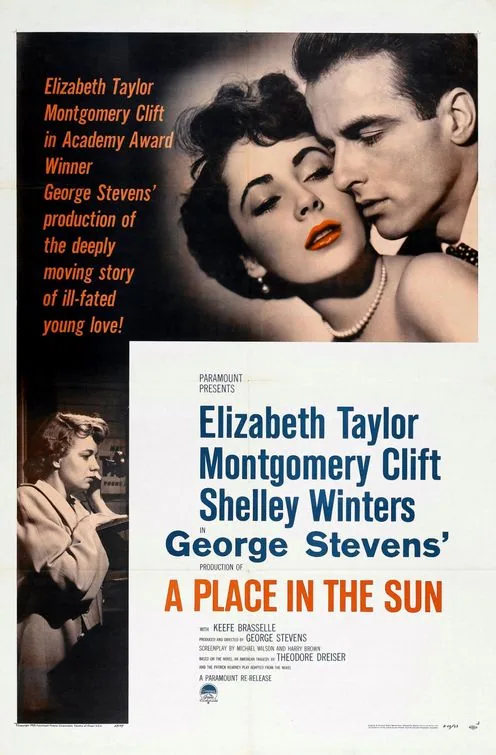
A poor young man finds work in a wealthy relative's factory and begins a secret relationship with a colleague. Access to a glamorous social circle then offers the romantic and class future he has imagined, just as the first relationship creates obligations he wants to escape. His divided commitments become morally catastrophic, making the wish to belong inseparable from choices about whose life can be discarded.
What drives the story
Class aspiration turns a concealed workplace romance into an obstacle when a wealthy new relationship makes an alternative identity appear attainable.
The people at its centre
George's desire for Angela depends on evading Alice's increasingly urgent claims, exposing an imbalance between romantic fantasy and responsibility.
What it feels like
Luminous romantic images coexist with tightening moral suspense, making social aspiration seductive before revealing the fear and cruelty it can produce.
Worth knowing
Compare desire for class belonging that converts intimacy into an unwanted obligation, rather than treating the story as a neutral love triangle or simple courtroom puzzle.
ClassDesireGuilt
Mood
Romantic · Tense · Tragic
Pacing
Measured
Visual style
Luminous · Noir
Storytelling
Love triangle · Concealed obligations · Moral collapse