A spy assignment against a culture-shaping corporation lets the film turn style, image and identity into both comic weapons and targets.
Why this matches +
Selected for the central appeal: A sexually boastful retro spy confronts an absurd threat to his persona, with parody, bodily gags and playful self-awareness.
Genres: Comedy / Action
Shared film traits
Based on recorded story, mood and style. Your preferences can change the order.
What changes A flamboyant retro-styled agent’s exaggerated persona becomes both the engine and target of spy parody; blaxploitation and racial corporate satire replace Bond nostalgia, time travel and threatened sexual potency.
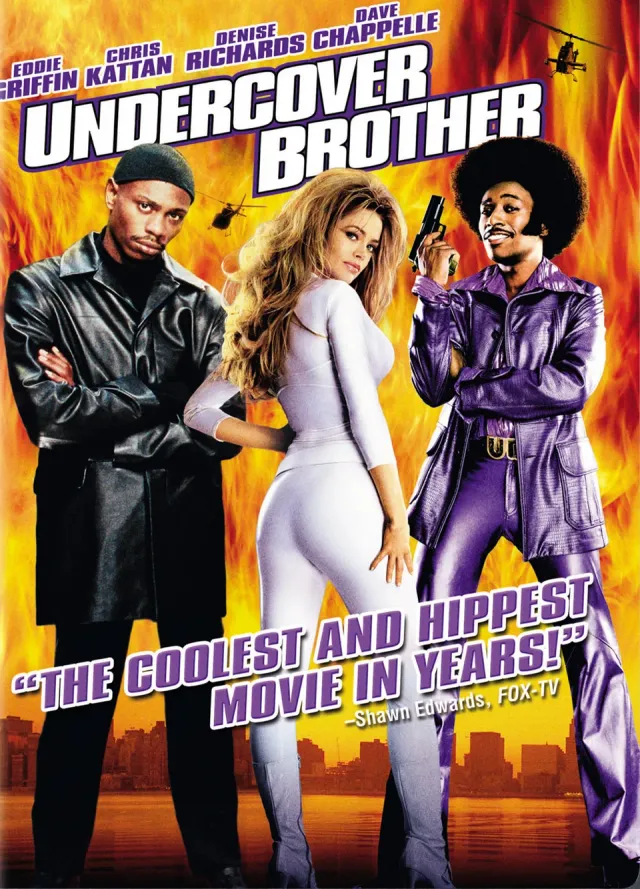
An undercover operative joins a secret organization to investigate a corporation whose leadership is working to weaken Black cultural influence. The mission draws on a parody of 1970s spy and blaxploitation conventions, with the hero's style and confidence treated as part of the joke and the strategy. The comedy uses exaggerated villains and pop-cultural references to satirize corporate control and the way images can be used to shape public identity.
A retired agent returns to thwart an overblown world-domination plan.
Why this matches +
Selected for the central appeal: A sexually boastful retro spy confronts an absurd threat to his persona, with parody, bodily gags and playful self-awareness.
Genres: Comedy / Action
Shared film traits
Based on recorded story, mood and style. Your preferences can change the order.
What changes An overblown secret-agent mission collapses into gadget jokes, glamorous adversaries and bodily sight gags; deadpan disconnected spoofs replace the recurring hero’s affectionate obsession with his own sexual identity.
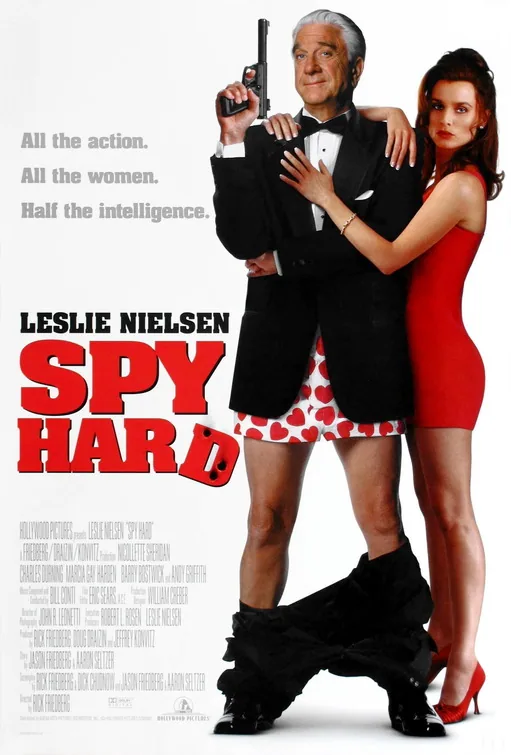
Retired secret agent Dick Steele is called back to stop the villainous General Rancor, whose plan threatens global security. The mission gives the film an excuse to spoof spy gadgets, action conventions, glamorous adversaries and famous movie moments through Leslie Nielsen's deadpan persona. The plot is deliberately thin; song, sight gags and parody recognition supply most of its pace.
An incompetent replacement agent investigates a theft while the principal suspect exploits official trust to prepare a fraudulent transfer of royal authority.
Why this matches +
Related viewing experiences with the specific differences recorded for each pair.
An adjacent discovery: a related idea with a different viewing experience.
Genres: Comedy / Spy
Shared film traits
Based on recorded story, mood and style. Your preferences can change the order.
Espionage and covert operations
What changes A self-flattering spy’s misplaced confidence repeatedly turns national-security danger into physical farce; a less sexually charged family-friendly incompetent replaces the knowingly flamboyant retro seducer.
An intelligence clerk imagines himself a master spy and becomes the agency's remaining option after disasters he helped cause. Assigned to protect the Crown Jewels, he converts uncertainty into confidently invented explanations while a practical assistant repeatedly prevents worse consequences. A wealthy suspect's plan extends beyond theft toward control of the state, but exposing it requires the supposed professional to recognize evidence outside his own flattering account. The spoof makes the gap between institutional prestige and actual competence a continuing source of trouble rather than a single disguise.
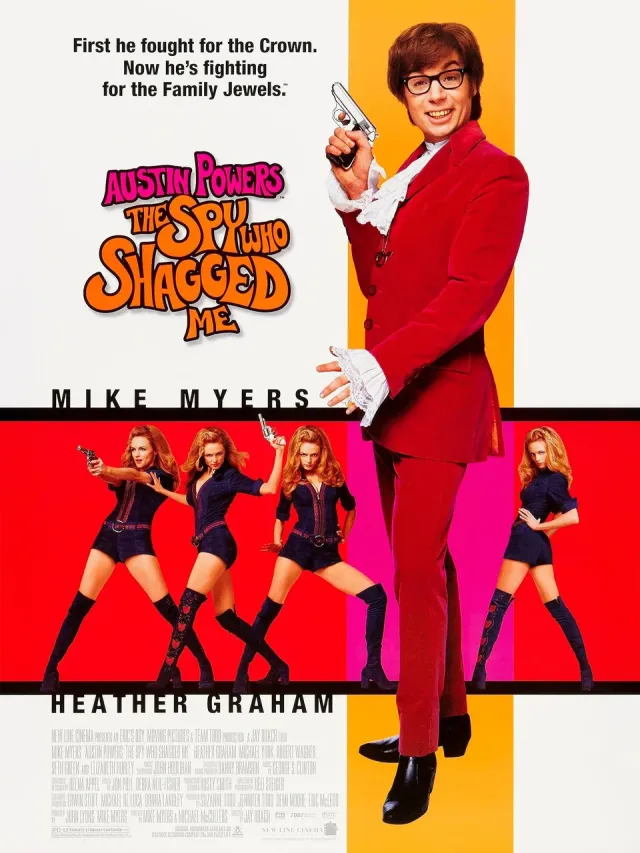
An enemy's use of time travel threatens Austin's sexual confidence by stealing the force he associates with his identity. Returning to the 1960s offers a chance to recover it with a new agent, while familiar villainous ambitions acquire another elaborate technological form. The mission turns continuity, masculinity, and sequel repetition into running jokes, making the hero's imagined need for restoration as important as the external danger.
What drives the story
A time-travel theft converts masculine self-confidence into a recoverable object, giving espionage pursuit a deliberately ridiculous personal stake.
The people at its centre
Austin's dependence on a myth of lost potency meets Felicity's interest in the person beyond that performance, while villainous family tensions mirror the demand for recognition.
What it feels like
Bawdy repetition, self-conscious temporal contradictions and exaggerated period spectacle prioritize spy-comedy machinery over consistent speculative rules.
Worth knowing
Compare comic insecurity literalized as a stolen capacity, rather than treating temporal devices as a rigorous continuity system or the sexual framework as realistic psychology.