A seasonal robbery routine is destabilized by the thief's self-destruction and a child's refusal to treat his apparent caregiving role as merely a disguise.
Why this matches +
Selected for the central appeal: Rude comedies about selfish adults abusing a job or battling workplace rivals.
Genres: Comedy / Crime
Shared film traits
Based on recorded story, mood and style. Your preferences can change the order.
What changes Bad Santa follows a cynical adult exploiting a child-facing job for personal gain; its Christmas con is criminal rather than a teacher's pursuit of wealth.
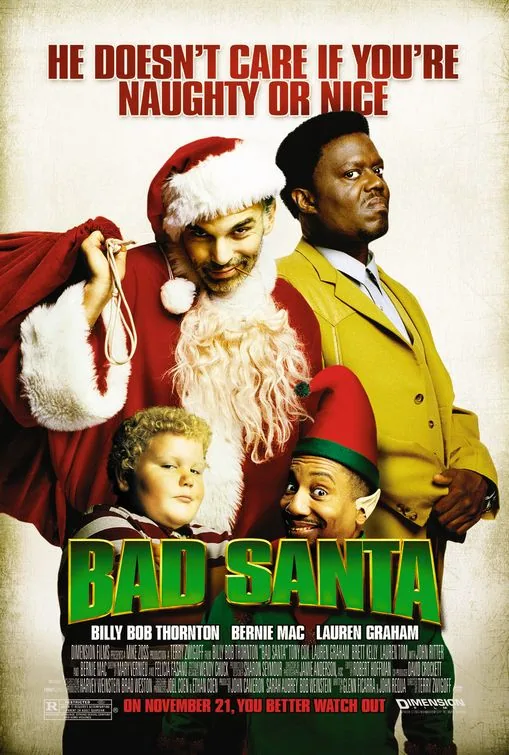
A professional thief poses as a department-store Santa while his partner exploits the seasonal job's access to safes and cash. Drinking and openly destructive behavior make the operation increasingly difficult to maintain. An isolated child's attachment creates an unwanted relationship outside the immediate heist, challenging a man who has usually treated self-disgust as sufficient reason to harm both himself and anyone expecting reliability from him.
The announced fight becomes a spectacle that grows through gossip faster than either teacher can correct it.
Why this matches +
These offer a related experience with a meaningful difference in story, tone, or presentation.
An adjacent discovery: a related idea with a different viewing experience.
Genres: Comedy
Shared film traits
Based on recorded story, mood and style. Your preferences can change the order.
What changes Fist Fight turns a school workplace rivalry into an escalating comedy, focusing on a threatened confrontation rather than a scheme to attract a wealthy partner.
On the last day of school, a mild-mannered teacher’s joking response to a colleague’s confrontation sets off a rumor that they will fight after class. The pressure attracts students, administrators and coworkers, turning an ordinary workplace grievance into a public spectacle. The comedy relies on escalating misinterpretation and a mismatch between the two teachers, while exposing how little control either has over the story spreading around them.
An undercover social sabotage plan rewards its participant with status until the distinction between imitation and genuine complicity collapses.
Why this matches +
These offer a related experience with a meaningful difference in story, tone, or presentation.
An adjacent discovery: a related idea with a different viewing experience.
Genres: Romance / Comedy
Shared film traits
Based on recorded story, mood and style. Your preferences can change the order.
What changes Mean Girls turns school status, manipulation and rivalry into comedy from the students' perspective rather than a teacher's.
A teenager entering an American high school after years of home schooling is drawn into a plan to undermine its most powerful clique. Learning the group's rules gives her access to popularity, but the performance gradually becomes a way of treating other people. Romantic rivalry and circulating insults expose how easily an apparent outsider can reproduce the same hierarchy she once found absurd.
A shared murder fantasy becomes an improvised conspiracy whose surveillance and mistakes entangle the employees in violence committed for another reason.
Why this matches +
These offer a related experience with a meaningful difference in story, tone, or presentation.
An adjacent discovery: a related idea with a different viewing experience.
Genres: Comedy / Crime
Shared film traits
Based on recorded story, mood and style. Your preferences can change the order.
What changes Horrible Bosses uses vulgar workplace comedy and resentment toward difficult colleagues, but follows employees plotting against their bosses rather than an irresponsible teacher.
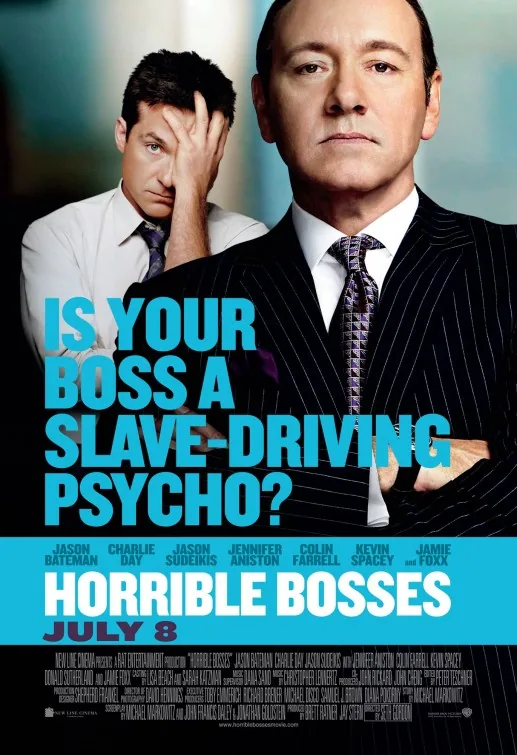
Three friends conclude that their workplaces would become bearable if their abusive employers disappeared. They seek advice and attempt to exchange targets, but their limited competence turns preparation into a series of misunderstandings that collide with an actual murder. Each grievance involves a different form of power, from blocked advancement to sexual coercion and reckless inheritance. The black comedy turns the fantasy of escape through crime into a problem of surviving consequences the would-be conspirators cannot manage or reliably interpret.
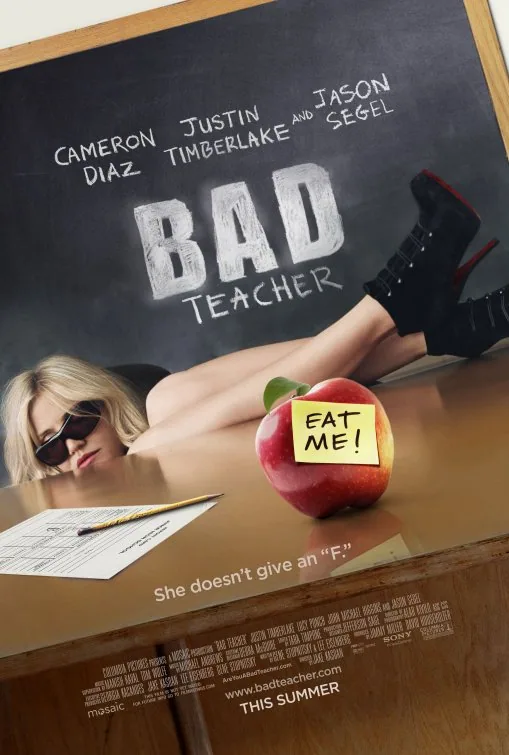
A disengaged teacher returns to work after losing the wealthy partner she expected to support her. She pursues another apparent financial escape while manipulating colleagues, students, and school incentives to improve her position. Competition with a conscientious coworker turns ordinary institutional routines into opportunities for humiliation, making the comic arc depend on how little public educational duty initially matters beside private status and money.
What drives the story
A teacher's search for a financially useful relationship converts school incentives and professional rivalry into tools for personal advancement.
The people at its centre
Elizabeth's instrumental charm meets a rival's need for recognition and another colleague's less prestigious affection, exposing different forms of self-interest behind professional roles.
What it feels like
Crude dialogue and deliberately inappropriate conduct drive a workplace comedy whose classroom setting is used to violate expectations of responsible care.
Worth knowing
Compare opportunistic professional performance within a caring institution, rather than treating the school setting as an uplifting account of teaching or a realistic behavioral model.