A field built on an unexplained instruction becomes a meeting place, with apparent errands gradually turning public baseball memory toward a private father-son encounter. Annie’s agreement is consequential because the field uses land her household needs to earn income.
Why this matches +
Selected for the central appeal: Imaginative family stories about fathers, mortality and the emotional meaning of storytelling.
Genres: Fantasy / Drama
Shared film traits
Based on recorded story, mood and style. Your preferences can change the order.
What changes Field of Dreams uses gentle fantasy to explore a son's unresolved relationship with his father.
An Iowa farmer hears an instruction to turn part of his cornfield into a baseball diamond, putting his family’s livelihood at risk before the promised visitors arrive. Annie shares that risk rather than serving only as an audience for Ray’s private vision, and further clues send him toward people whose lost opportunities are tied to the game. The supernatural errands gradually become a way to approach his estranged father, but the film’s emotional restoration does not mean every sacrifice is repaid or every historical memory is neutral. Baseball works as ritual and shared language more than as a contest to win.
Time travel begins as a means of improving dates and mistakes, but its family consequences place limits on what Tim can revise without changing the people he loves. The film favors emotional consequence over a fully consistent mechanics puzzle.
Why this matches +
Selected for the central appeal: Imaginative family stories about fathers, mortality and the emotional meaning of storytelling.
Genres: Comedy / Drama
Shared film traits
Based on recorded story, mood and style. Your preferences can change the order.
What changes About Time blends fantasy and family affection while confronting a father's mortality.
On his twenty-first birthday, Tim learns from his father that the men in their family can travel back through their own lives by entering a dark place and concentrating on a moment. He first uses the ability to repair awkward encounters, then pursues Mary while concealing how much he can revise their shared past. Family life makes the power harder to treat as a private advantage: changes can alter who is born, and returning to earlier moments cannot restore every later attachment. The romantic comedy gradually becomes a story about accepting ordinary days and the grief no perfect revision can remove.
A survival account links practical coexistence with a dangerous animal to a retrospective question about how catastrophic experience is narrated.
Why this matches +
Selected for the central appeal: Imaginative family stories about fathers, mortality and the emotional meaning of storytelling.
Genres: Fantasy / Drama
Shared film traits
Based on recorded story, mood and style. Your preferences can change the order.
What changes Life of Pi uses an elaborate fantastical story to consider how narrative gives meaning to loss.
A writer listens to an Indian man's account of surviving a shipwreck as a teenager, adrift in a lifeboat with a Bengal tiger. Keeping the animal at a workable distance requires routines of training, rationing and constant observation, while the ocean alternates between beauty and indifference. The framed recollection also raises questions about faith, interpretation and the role a story can play when experience resists ordinary explanation.
The auditor’s effort to find the narrator turns a literary device into a practical investigation of his own agency.
Why this matches +
These offer a related experience with a meaningful difference in story, tone, or presentation.
An adjacent discovery: a related idea with a different viewing experience.
Genres: Comedy / Drama
Shared film traits
Based on recorded story, mood and style. Your preferences can change the order.
What changes Stranger than Fiction brings an author's storytelling into direct contact with a man's life and mortality.
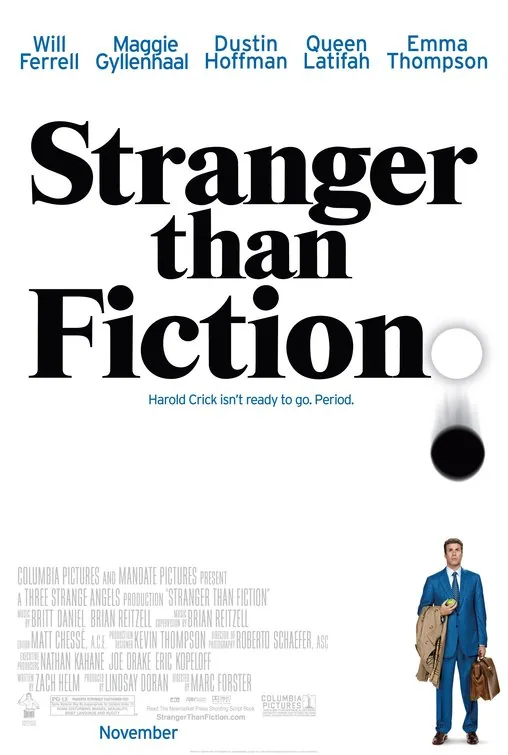
An IRS auditor begins hearing a narrator describe his actions and becomes convinced that his life is being written toward an ending. He seeks help from a literary scholar while his routines bring him into contact with a baker he is auditing. The comedy uses a self-aware premise to ask whether a person can alter a story without losing the relationships and responsibilities that give life meaning.
A reader follows a hero through a threatened fantasy world and gradually discovers his own role in its survival.
Why this matches +
These offer a related experience with a meaningful difference in story, tone, or presentation.
An adjacent discovery: a related idea with a different viewing experience.
Genres: Fantasy / Adventure
Shared film traits
Based on recorded story, mood and style. Your preferences can change the order.
What changes The NeverEnding Story uses a young person's connection to an invented world to explore imagination and grief.
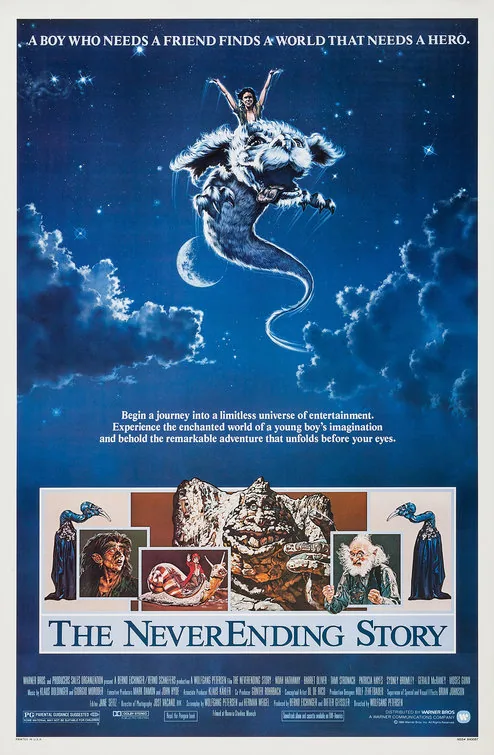
A lonely boy named Bastian hides in an old book and discovers Fantasia, a world threatened by a force called the Nothing. As the young warrior Atreyu searches for a way to save the Childlike Empress, Bastian realizes that reading has drawn him into the fate of the story. Their intertwined journeys explore how imagination can offer comfort while also asking for courage and participation.
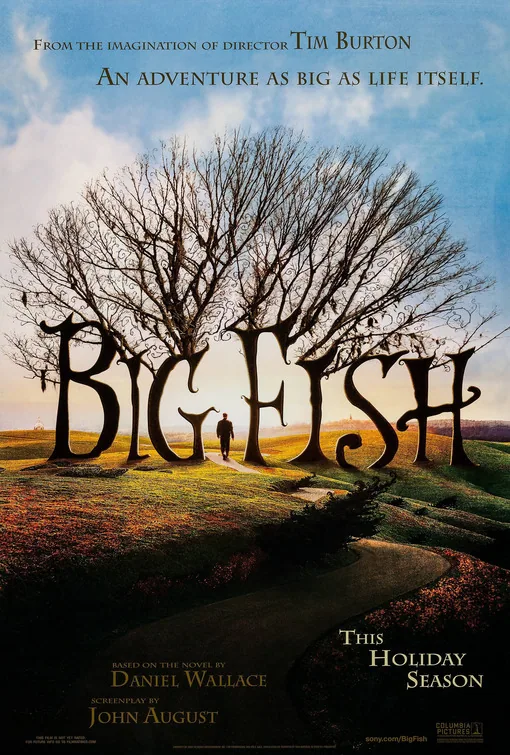
Will Bloom returns to Alabama when his father Edward is dying, still frustrated that the man tells extravagant stories instead of speaking plainly about their relationship. He investigates the people and places behind those tales, hoping to separate verifiable fact from performance before it is too late. The stories make Edward's life larger but also conceal disappointments and private choices. As father and son approach a final conversation, Will must consider whether accepting a story means abandoning truth or recognizing the kind of intimacy Edward knew how to offer. The fantasy remains an emotional language, not a verified history.
What drives the story
Will's investigation into Edward's tall tales becomes a last attempt to know his father, but each factual check raises a deeper question about what a story can communicate.
The people at its centre
Will wants direct access to a parent who turns experience into performance; Edward wants to be received on the terms he has chosen. Sandra and others recognize details that neither man can interpret alone.
What it feels like
Fantastical episodes sit beside restrained family scenes, making visual exaggeration an emotional form rather than a consistent rule of the world. The final reconciliation offers feeling without proving every story true.
Worth knowing
Pair it with family dramas about inherited self-mythology and deathbed reconciliation. Neither literal verification nor affectionate acceptance completely settles the difference between Edward's history and his chosen stories.