A con artist wins office through a convenient name and encounters a larger culture of corruption.
Why this matches +
Selected for the central appeal: A disillusioned senator orders his own killing, then speaks openly about race, poverty and political corruption.
Genres: Comedy / Political satire
Shared film traits
Based on recorded story, mood and style. Your preferences can change the order.
Political resistance
What changes A self-interested politician learns how money and deception shape public office in a satire about race, power and political performance.
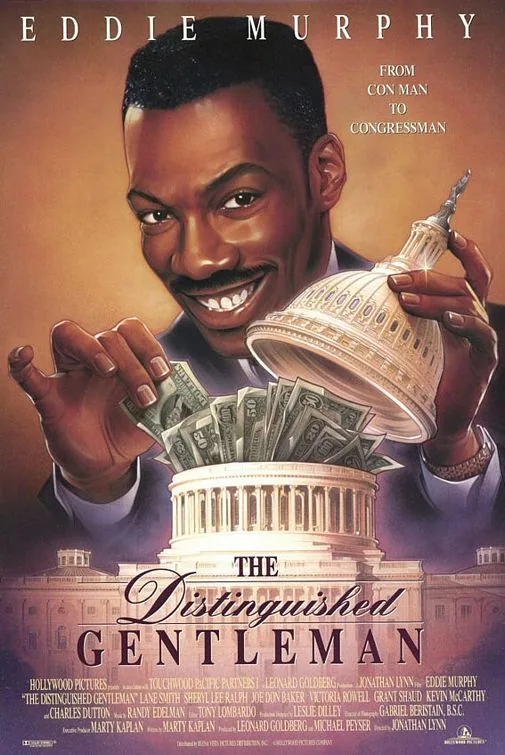
A Florida con artist discovers that the name he shares with a retiring congressman can help him win a seat in Washington. Once elected, he learns how lobbyists and political operators turn public office into private opportunity, and he must decide whether to exploit the system or challenge it. The satire follows a self-interested outsider as he navigates institutions more practiced at deception than he is.
Chance’s literal gardening remarks are repeatedly interpreted as metaphor by people eager to find wisdom and leadership in him.
Why this matches +
These offer a related experience with a meaningful difference in story, tone, or presentation.
An adjacent discovery: a related idea with a different viewing experience.
Genres: Comedy / Drama
Shared film traits
Based on recorded story, mood and style. Your preferences can change the order.
What changes An unlikely public figure's apparent candor attracts political attention as others project their interests onto his words.
Chance is a sheltered gardener whose knowledge of the outside world comes largely from television and the routines of the wealthy household where he lives. After he is forced to leave, a series of coincidences brings him into contact with influential people who interpret his simple observations as political wisdom. As Chance moves through elite social circles, the gap between what he means and what others hear becomes the film’s central comic device. Hal Ashby’s satire examines media, class, celebrity, and the appetite for meaning in public life.
A political crisis becomes a media production in which a fictional war is assembled from repeatable images and a marketable narrative.
Why this matches +
These offer a related experience with a meaningful difference in story, tone, or presentation.
An adjacent discovery: a related idea with a different viewing experience.
Genres: Drama / Comedy
Shared film traits
Based on recorded story, mood and style. Your preferences can change the order.
What changes Political image-making and manufactured narratives expose the gap between public rhetoric and private interests.
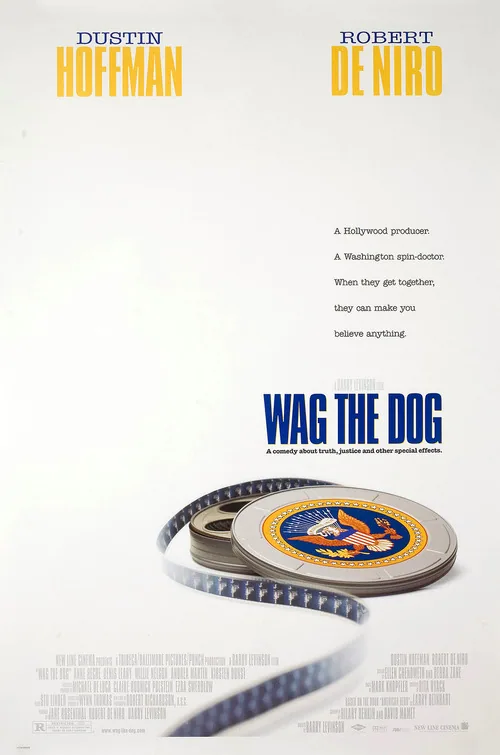
With a presidential sex scandal threatening an election, political consultant Conrad Brean hires Hollywood producer Stanley Motss to invent a distant war that can redirect the news. Motss treats the crisis as a production problem, assembling images, slogans, music and a fictional hero with the same craft he would use for a movie. Brean manages government messaging while the fabricated conflict begins to acquire an independent life in the media. The film’s comedy comes from watching public belief depend on the details of a story that exists mainly because two professionals know how to stage it. As the campaign grows, it becomes less controllable, even for the people who made it. The satire targets both political spin and entertainment’s ability to make images feel like evidence.
A minister's careless phrase draws him into a transatlantic policy debate whose participants try to control how war is described.
Why this matches +
These offer a related experience with a meaningful difference in story, tone, or presentation.
An adjacent discovery: a related idea with a different viewing experience.
Genres: Comedy / Dark comedy
Shared film traits
Based on recorded story, mood and style. Your preferences can change the order.
What changes Politicians and advisers use dark comedy to expose cynical institutional incentives and the consequences of public speech.
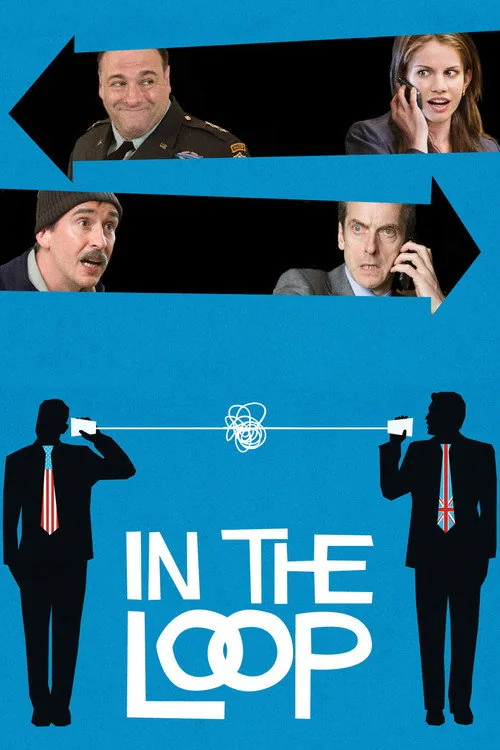
After a British minister casually describes a possible war as unforeseeable, his remark is seized on by political aides in London and Washington as policy begins drifting toward military intervention. The minister, his advisers, and a furious communications director are pulled into meetings where every phrase can be spun into support or resistance. Armando Iannucci's ensemble satire follows the bureaucratic scramble behind public decisions, using rapid insults and conflicting agendas to show how momentum can outpace judgment. Its comedy targets the machinery and language of government rather than the battlefield.
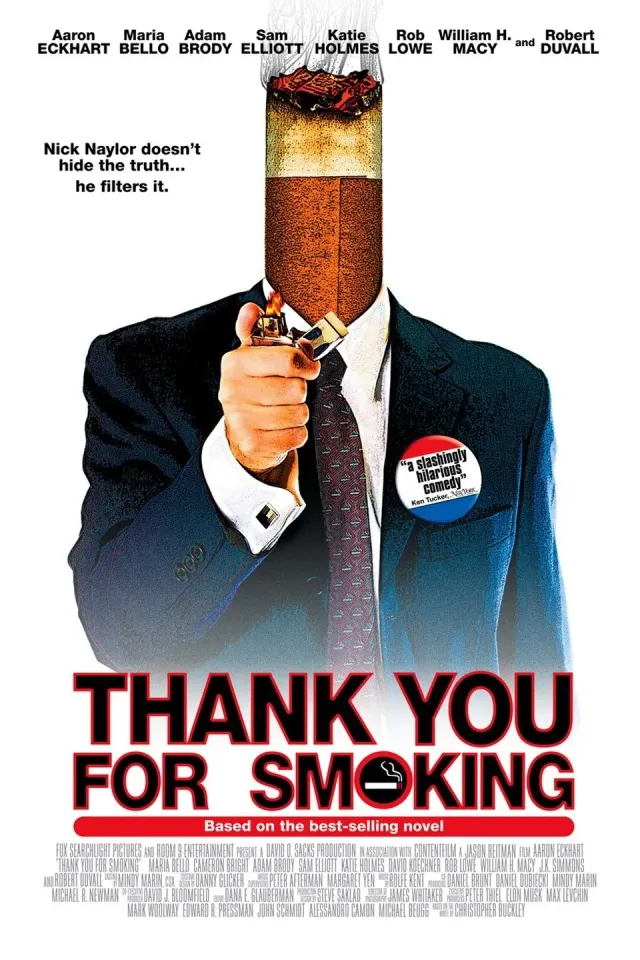
Nick’s public defense of tobacco makes persuasion visible as both professional skill and moral evasion.
Why this matches +
These offer a related experience with a meaningful difference in story, tone, or presentation.
An adjacent discovery: a related idea with a different viewing experience.
Genres: Drama / Comedy
Shared film traits
Based on recorded story, mood and style. Your preferences can change the order.
Political resistance
What changes A professional communicator's polished rhetoric reveals how money and influence shape public debate.
A skilled lobbyist for the tobacco industry travels the talk-show and debate circuit, turning arguments about smoking into an opportunity to display verbal dexterity. His work becomes harder to keep separate from family life when his young son watches how he persuades people. The satire makes rhetoric its main action, examining how a talented advocate can defend an indefensible product while sincerely believing that argument itself is a kind of freedom.
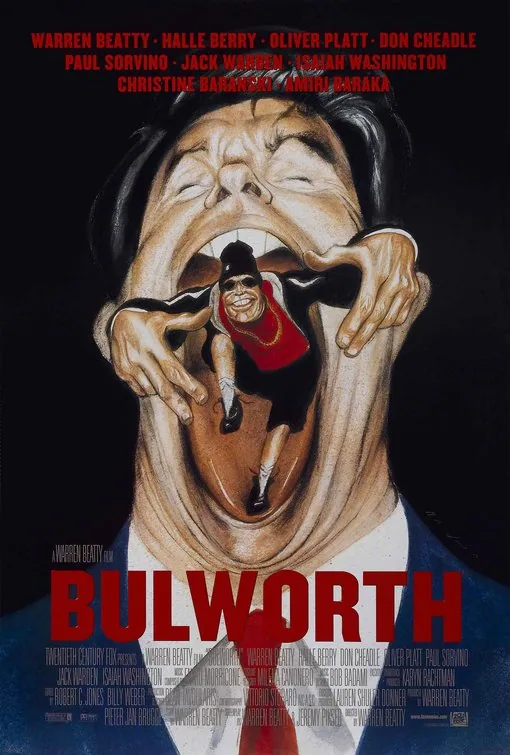
A disillusioned California senator hires a hitman to kill him, then abandons his usual campaign language and begins delivering blunt, rhythmic speeches about race, poverty and politics. His sudden candor attracts public attention and a connection with a young activist, forcing him to reconsider the fatalistic plan he set in motion. Warren Beatty mixes political satire with musicalized rhetoric and a late-career crisis.
What drives the story
A senator who expects to die speaks freely and discovers a reason to change course.
The people at its centre
Bulworth's performative honesty starts as a breakdown and becomes a challenge to his own cynicism.
What it feels like
The story combines campaign episodes, escalating public attention and a personal turn.
Worth knowing
Its political comedy uses a candidate's transformed speech, rather than a conventional election-race plot.
TruthPowerRenewal
Mood
Satirical · Provocative · Restless
Pacing
A campaign spirals into public truth-telling
Visual style
Political satire · Spoken-word and rap-inflected scenes
Storytelling
Senatorial campaign · Death wish · Political awakening