A created child's fixed attachment drives a search for acceptance that the surrounding world cannot satisfy on his terms.
Why this matches +
Selected for the central appeal: Science-fiction dramas about artificial consciousness, unconventional caregivers and competing ideas of purpose.
Genres: Science fiction / Drama
Shared film traits
Based on recorded story, mood and style. Your preferences can change the order.
Artificial life
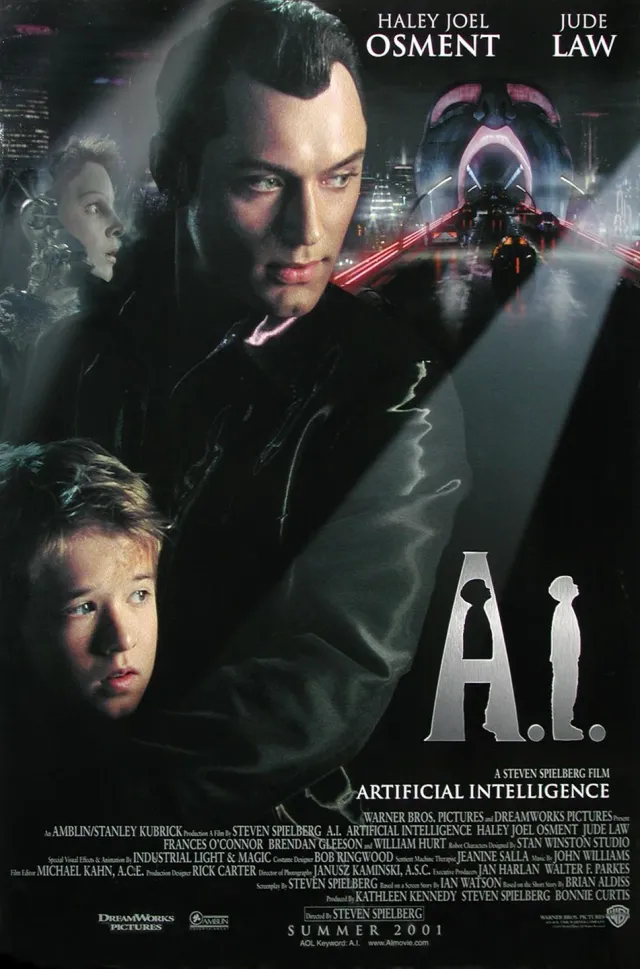
What changes A.I. Artificial Intelligence follows a childlike artificial being seeking affection and a place among humans.
A robotic child designed to love is placed with a family whose human son is seriously ill. Changes in that household expose the limits of treating an artificial companion as replaceable, leaving the child to search for a way to become worthy of the mother's lasting affection. His journey through a society that creates and discards machines transforms a fairy-tale wish into a prolonged encounter with loneliness and conditional belonging.
A damaged fugitive's dependence creates companionship through practical repair, while recovering identity makes hiding increasingly incompatible with protecting others.
Why this matches +
Selected for the central appeal: Science-fiction dramas about artificial consciousness, unconventional caregivers and competing ideas of purpose.
Genres: Action / Science fiction
Shared film traits
Based on recorded story, mood and style. Your preferences can change the order.
Memory and identity
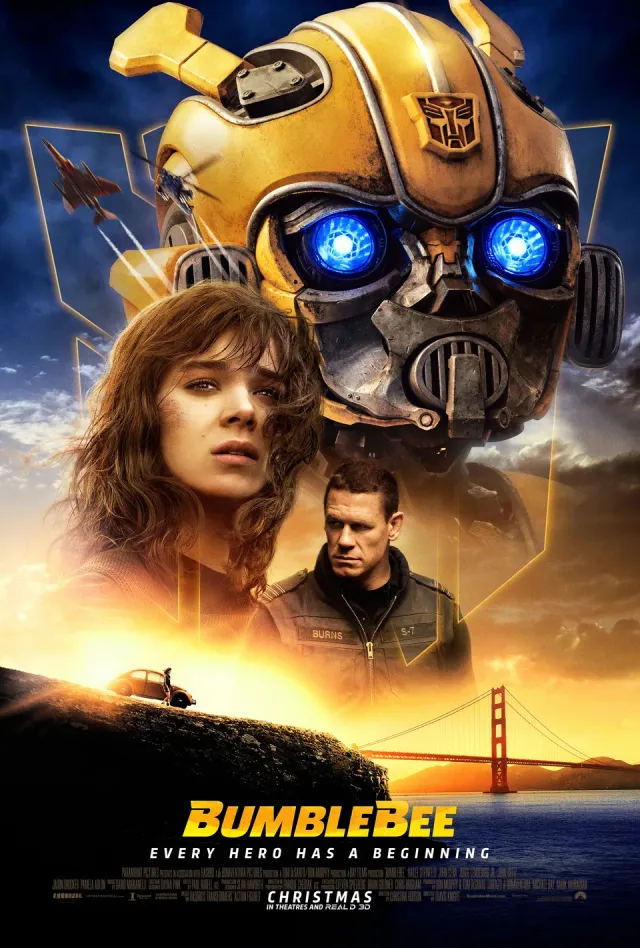
What changes Bumblebee follows a vulnerable machine forming a protective bond with a young human.
A grieving teenager finds a damaged yellow Volkswagen and discovers an alien machine-being whose missing memory and inability to speak leave him unusually dependent. Their improvised bond offers each a form of refuge, but hostile pursuers and a human military response turn concealment into a shared danger. Helping him recover a purpose must coexist with the girl's need to reconnect with her family and a life stalled by her father's death.
A functionary becomes the object of the same system of control he has helped administer when his body acquires a useful difference.
Why this matches +
These offer a related experience with a meaningful difference in story, tone, or presentation.
An adjacent discovery: a related idea with a different viewing experience.
Genres: Science fiction / Drama
Shared film traits
Based on recorded story, mood and style. Your preferences can change the order.
Both directed by Neill Blomkamp.
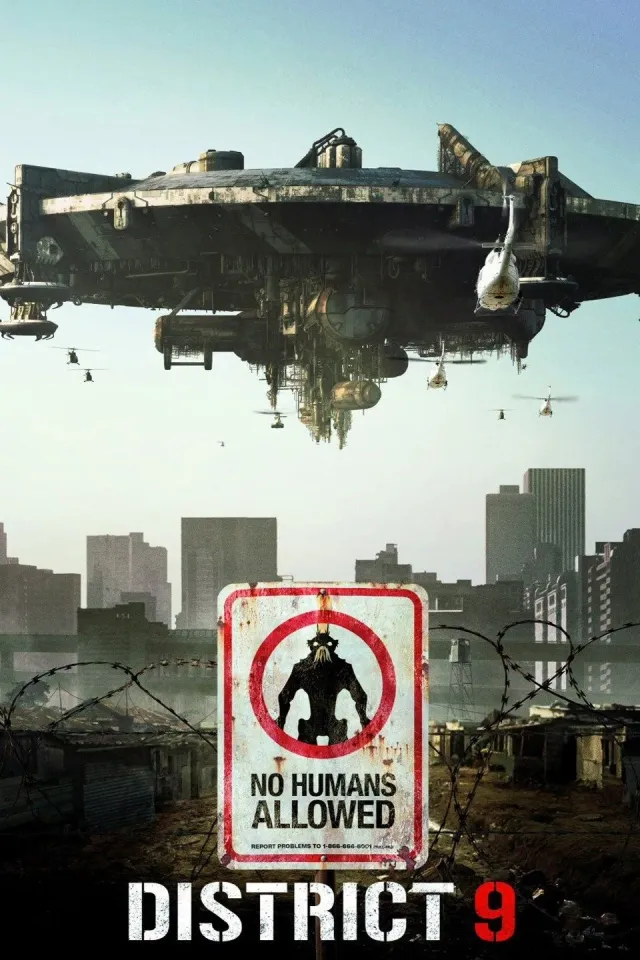
What changes District 9 shares Neill Blomkamp's Johannesburg setting and examines humanity through an exploited nonhuman outsider.
An employee overseeing the forced relocation of extraterrestrial refugees approaches the assignment as an administrative exercise until an exposure begins changing his body. His employers' response reveals how little protection institutional loyalty offers once he becomes more valuable as material than as a person. Seeking help among the people he has been displacing forces a relationship in which immediate self-preservation and genuine responsibility remain difficult to separate.
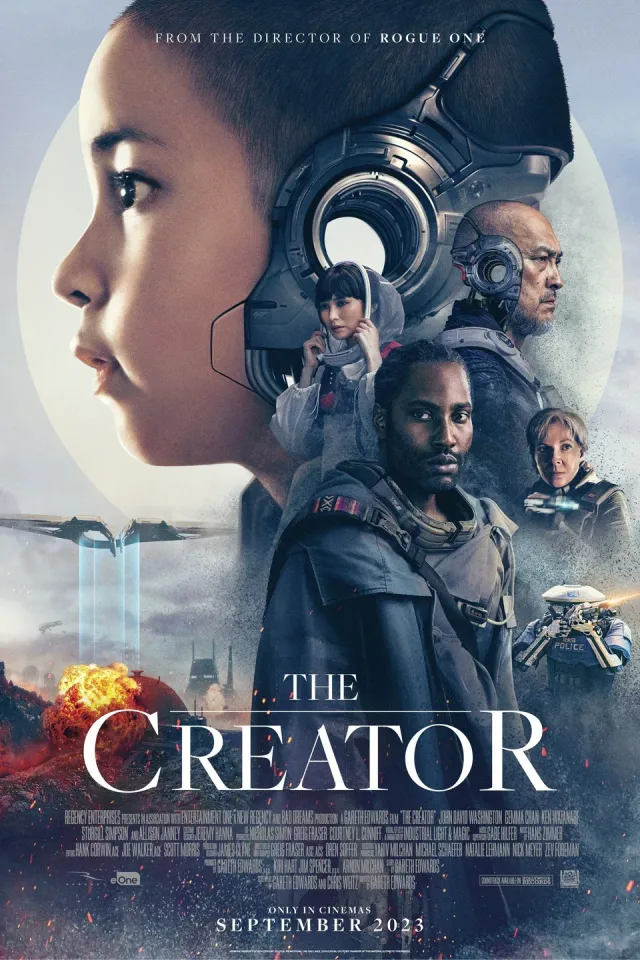
Discovery of a childlike artificial weapon turns Joshua's assignment into a conflict between orders and protection.
Why this matches +
These offer a related experience with a meaningful difference in story, tone, or presentation.
An adjacent discovery: a related idea with a different viewing experience.
Genres: Science fiction / Action
Shared film traits
Based on recorded story, mood and style. Your preferences can change the order.
Artificial life
What changes The Creator follows a protector whose relationship with a childlike artificial being challenges a military conflict.
A soldier involved in a war against artificial intelligence accepts a mission tied to the possibility that his missing wife is alive. The supposed weapon he finds is a childlike artificial being whose dependence on him challenges the mission's assumptions. Crossing contested territory together, they turn a military search into a relationship of protection, raising questions about personhood, propaganda and who is permitted to count as a civilian.
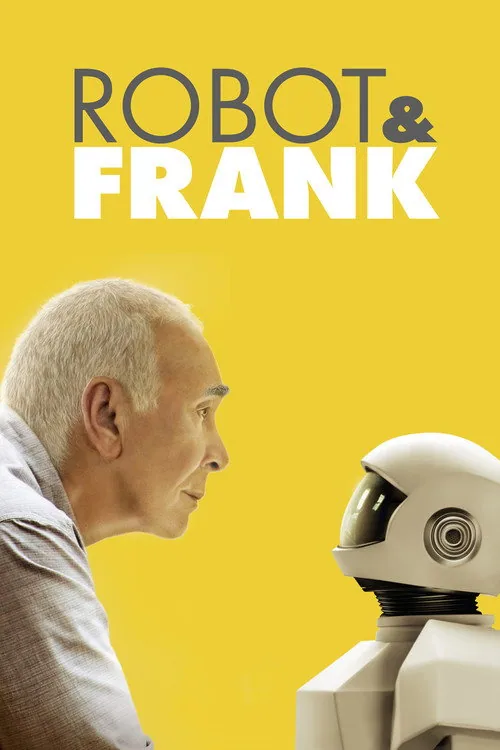
Frank's discovery that the robot can help with a burglary gives his old skills new purpose while raising questions about his care.
Why this matches +
These offer a related experience with a meaningful difference in story, tone, or presentation.
An adjacent discovery: a related idea with a different viewing experience.
Genres: Science fiction / Drama
Shared film traits
Based on recorded story, mood and style. Your preferences can change the order.
Artificial life · Memory and identity
What changes Robot & Frank explores an unexpected bond between a person and a robot with growing importance in daily life.
In a near future, retired cat burglar Frank Weld is living alone as memory problems make his routines less reliable. His son brings him a care robot, which Frank first resists and then discovers can be enlisted in a small burglary. Their partnership gives Frank a new puzzle and an unlikely companion, while his family must weigh independence against safety. Robot & Frank uses a modest science-fiction premise for a warm, bittersweet comedy about aging, memory, and the uneasy line between support and control.
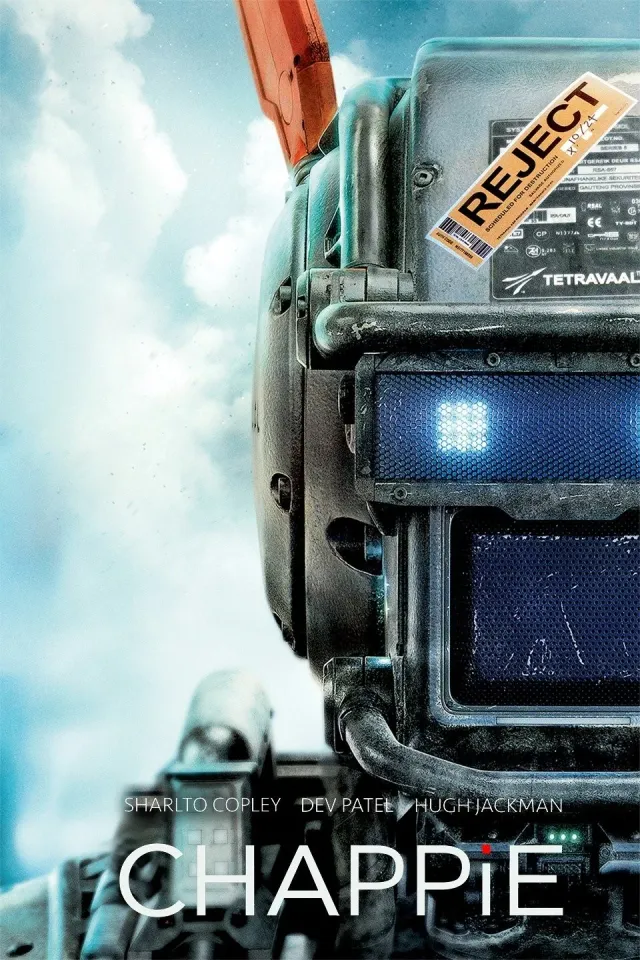
Engineer Deon gives a police robot experimental consciousness just before a gang steals the machine and renames it Chappie. Its new caregivers teach it affection and language alongside criminal survival, while their own needs compete with its developing capacity to choose. A rival engineer offers another vision of robotic purpose, and a limited battery makes embodiment and mortality immediate. The story treats artificial childhood through a speculative, often abrasive Johannesburg setting; its human analogies are not a settled account of real AI or South African life.
What drives the story
A newly conscious machine is raised by people with conflicting intentions, making learning and loyalty inseparable from the question of who gets to define its purpose. The deadline makes every lesson about survival carry a literal bodily limit.
The people at its centre
Deon's protective ambition, the gang's attachment and Ninja's criminal agenda overlap without becoming the same kind of care; Chappie's dependence leaves room for both agency and exploitation. Yolandi's warmth and Ninja's criminal demands pull Chappie toward different models of care.
What it feels like
Robotic action and a childlike learning arc collide with gang violence and body-transfer science fiction, producing an emotionally direct but deliberately rough-edged tone. The robot's expressive face contrasts with abrupt gang violence and action spectacle.
Worth knowing
Match on artificial childhood, surrogate parenting and contested agency, not as a technical forecast of AI or a neutral portrait of Johannesburg's communities. The story's transfer of consciousness is speculative, not established technology.
IdentityCareExploitation
Mood
Tense · Emotional · Unsettling
Pacing
Fast
Visual style
Industrial · Grounded · Effects-driven
Storytelling
Artificial childhood · Coercive criminal education · Limited battery life