Explore films connected to Circle through Collective judgment, Survival and sacrifice, Prejudice and fairness. Choose the qualities you want to carry into your next watch.
What should feel similar?
Find your next favourite
9 films · Closest overall matches
Hide films you’ve seen or don’t want. Saved on this device.
No matches for this combination yet.
Try another option or reset your choices to see more films.
Based on recorded story, mood and style. Your preferences can change the order.
Survival
What changes Circle: real-time pressure, dialogue-driven conflict and repeated moral decision points. Sunshine: slow burn and intense.
A small crew travels towards the dying Sun carrying a device intended to restore its power and save Earth. A signal from an earlier failed expedition presents a possible advantage and a dangerous diversion. As equipment, judgement and personal stability deteriorate, the mission's collective purpose is tested by the costs of sacrificing individuals and by an increasingly overwhelming encounter with the force they have come to alter.
Based on recorded story, mood and style. Your preferences can change the order.
Survival
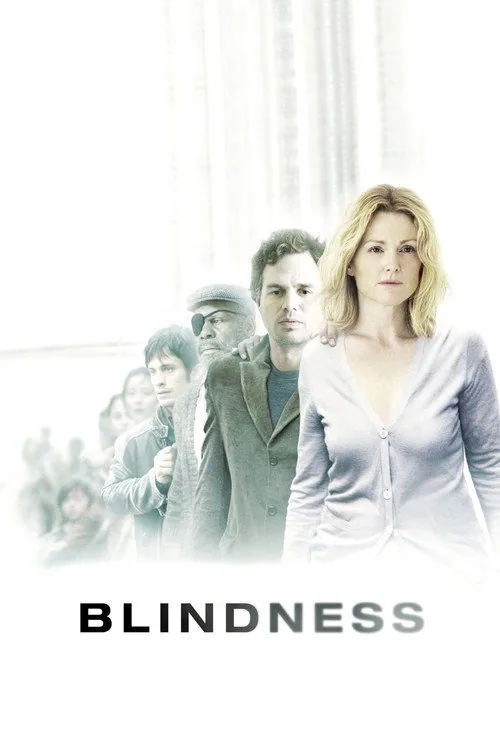
What changes Circle: real-time pressure, dialogue-driven conflict and repeated moral decision points. Blindness: crisis escalation, enclosed ensemble drama and survival-focused.
An unexplained epidemic of sudden blindness spreads through a city, and authorities confine the first affected people in an abandoned hospital. One woman remains sighted but hides that fact to stay with her husband and protect herself. Inside the quarantine, fear and scarcity erode social order while the group searches for food and a way out. Fernando Meirelles adapts José Saramago’s novel as an allegorical disaster drama about human behavior under pressure. The film includes sexual violence and disturbing depictions of disability.
Based on recorded story, mood and style. Your preferences can change the order.
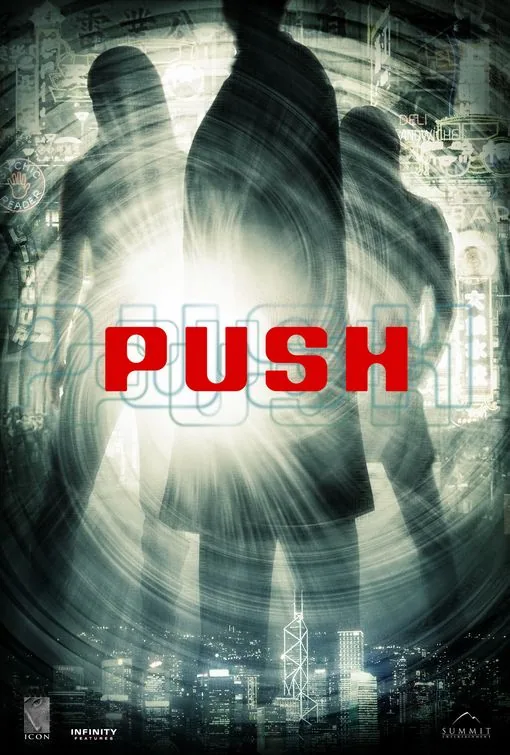
What changes Circle: real-time pressure, dialogue-driven conflict and repeated moral decision points. Push: escalating and action-driven.
In a city shaped by secret experiments, people with different psychic abilities try to survive while a government agency searches for a girl whose power could alter the balance between them. A young man with the ability to move objects joins a clairvoyant and a young watcher in a plan to find her and evade the agency. The science-fiction thriller builds its plot from contrasting abilities, uneasy alliances and a future that remains deliberately uncertain.
Based on recorded story, mood and style. Your preferences can change the order.
What changes Circle: real-time pressure, dialogue-driven conflict and repeated moral decision points. Voyagers: a contained ensemble story shifts from routine to increasingly unstable conflict.
A group of children are raised and sent aboard a long-distance spacecraft to reach a habitable planet generations later. When their adult supervisor dies, the young crew question the rules that have structured their lives, and their expedition becomes an experiment in power and desire. The enclosed science-fiction drama turns a mission into a study of social order, inherited purpose, and how quickly fragile systems can change.
Based on recorded story, mood and style. Your preferences can change the order.
What changes Circle: real-time pressure, dialogue-driven conflict and repeated moral decision points. It’s What’s Inside: reunion and device setup, rounds of social deception and twist-driven reveal.
A group of college friends reunites at a mansion before a wedding, where an estranged former friend arrives with a mysterious device. The gadget allows them to swap bodies, turning a party game into a volatile test of identity, envy, and old grievances. As the friends try to determine who occupies which body and what everyone wants, the night spirals into deception and danger. The science-fiction thriller uses a contained social gathering and shifting perspectives to question how well friends know one another—or themselves.
Based on recorded story, mood and style. Your preferences can change the order.
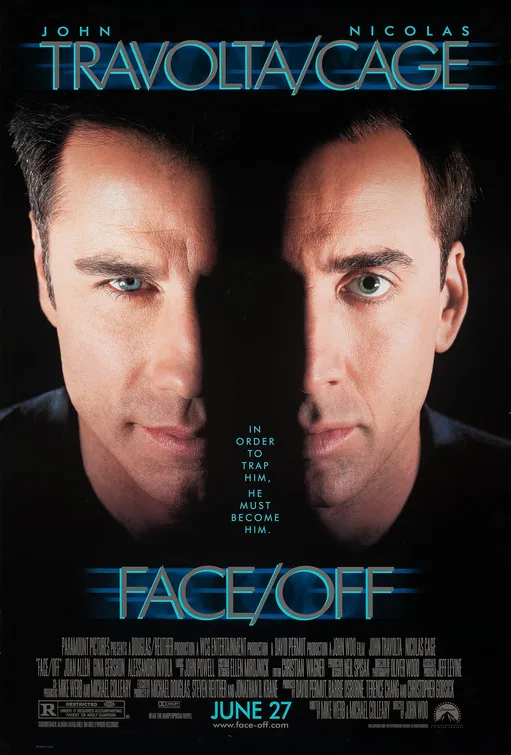
What changes Circle: real-time pressure, dialogue-driven conflict and repeated moral decision points. Face/Off: fast.
An agent pursuing the man who killed his son undergoes a secret procedure to assume the criminal's face and obtain information about a bomb. When the prisoner awakens and takes the agent's appearance in return, the operation becomes a struggle over who can make a true account of identity believable. Each man's access to the other's household exposes relationships the pursuit has neglected, while the bodies meant to function as disguises make returning to an ordinary life dangerously uncertain. The premise gives each man the other’s appearance, but the moral and relational histories remain unequal.
Based on recorded story, mood and style. Your preferences can change the order.
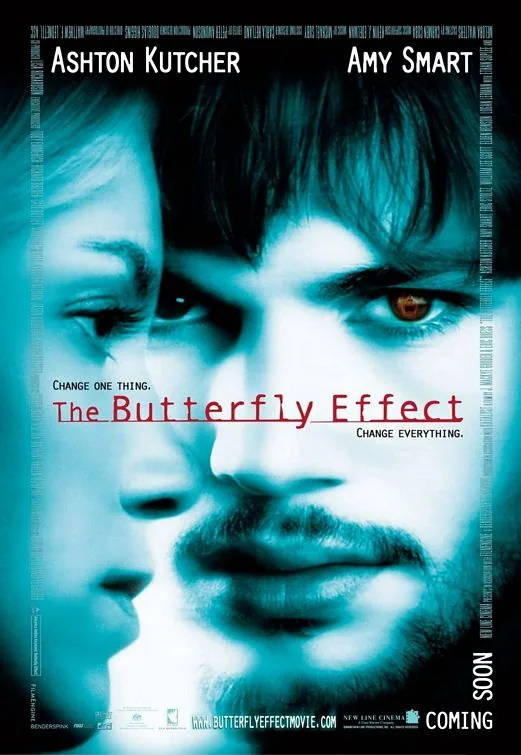
What changes Circle: real-time pressure, dialogue-driven conflict and repeated moral decision points. The Butterfly Effect: measured and escalating.
A young man discovers that reading his childhood journals lets him revisit moments he once lost to blackouts. Hoping to protect the people damaged by those years, he intervenes in the past and returns to lives reshaped by unintended consequences. Each attempt to repair an intimate history makes responsibility harder to separate from the desire to control other people's futures.
Based on recorded story, mood and style. Your preferences can change the order.
Survival
What changes Circle: real-time pressure, dialogue-driven conflict and repeated moral decision points. Spiderhead: contained psychological tension, experiment-driven scenes and rebellion escalation.
At a remote, comfortable-looking penitentiary, inmates receive mind-altering drugs through an implanted device in exchange for reduced sentences. Jeff begins to question the experiments run by facility director Steve Abnesti after he forms a connection with fellow inmate Lizzy and observes how the drugs affect consent and behavior. Joseph Kosinski’s science-fiction thriller adapts a George Saunders story, blending dark humor with a controlled setting to examine free will, institutional power, and the limits of human experimentation.
Based on recorded story, mood and style. Your preferences can change the order.
Survival
What changes Circle: real-time pressure, dialogue-driven conflict and repeated moral decision points. Mad Max: Fury Road: fast and intense.
A captive drifter becomes entangled in an armoured convoy diverted by a trusted driver who is secretly helping women escape a ruler's control. Pursuit across a resource-starved wasteland forces people with sharply different histories to cooperate while fuel, water and bodily autonomy remain instruments of power. Repeated movement between flight and confrontation makes survival depend on whether distrust can become collective action before the road runs out.
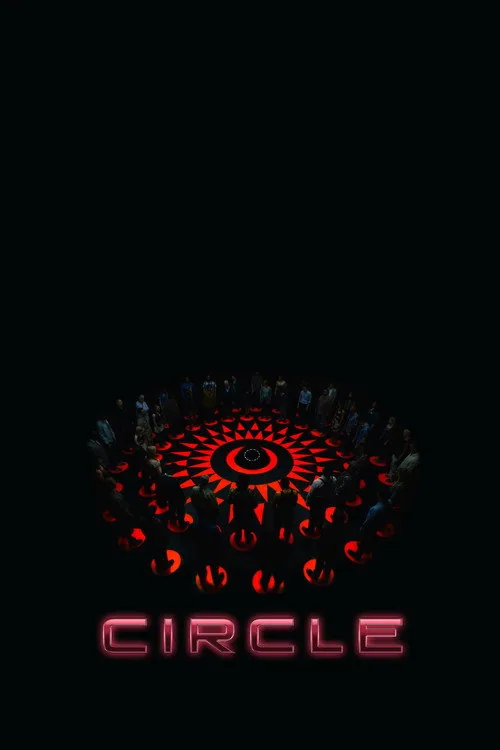
Fifty strangers wake in a dark chamber arranged around a central device, each standing on a marked spot and unable to leave without being killed. They soon realize that the device eliminates one person at regular intervals and that the group can influence who is chosen. Aaron Hann and Mario Miscione’s science-fiction thriller confines its story to a single room, using voting, alliances, and arguments to test how people assign value and responsibility when survival seems to require choosing someone else to die.
What drives the story
The strangers try to understand the chamber’s rules while confronting repeated choices about who will be eliminated next.
The people at its centre
Temporary alliances and arguments expose how strangers weigh fairness, fear, and personal safety under shared pressure.
What it feels like
A minimalist, dialogue-led thriller depends on moral debate and group dynamics rather than location changes or action set pieces.
Worth knowing
The film stages a contained social-survival experiment, distinct from ensemble stories in which the characters can freely escape their setting.
Collective judgmentSurvival and sacrificePrejudice and fairness
Mood
Tense · Claustrophobic · Analytical
Pacing
Real-time pressure · Dialogue-driven conflict · Repeated moral decision points