Explore films connected to Criminal through Memory and identity, Free will and experimentation, Duty and personal connection. Choose the qualities you want to carry into your next watch.
What should feel similar?
Find your next favourite
9 films · Closest overall matches
Hide films you’ve seen or don’t want. Saved on this device.
No matches for this combination yet.
Try another option or reset your choices to see more films.
Based on recorded story, mood and style. Your preferences can change the order.
Memory and identity · Escape and pursuit
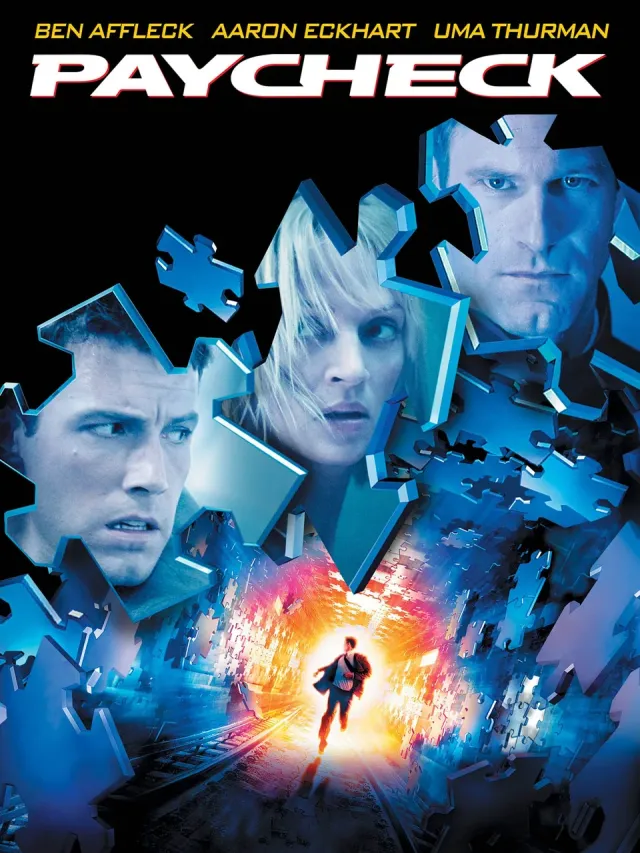
What changes Criminal: action-forward, countdown escalation and mission and memory interwoven. Paycheck: escalating and suspense-led.
A reverse engineer wakes after a long contract with his memory erased and a collection of ordinary objects left as clues. As government agents and his former employer pursue him, he uses the objects to reconstruct what he agreed to do. The thriller turns a missing past into a problem of agency, asking whether foresight can protect people from their own choices. John Woo’s action staging and the object-based mystery combine brisk chases with a speculative premise.
Based on recorded story, mood and style. Your preferences can change the order.
Memory and identity
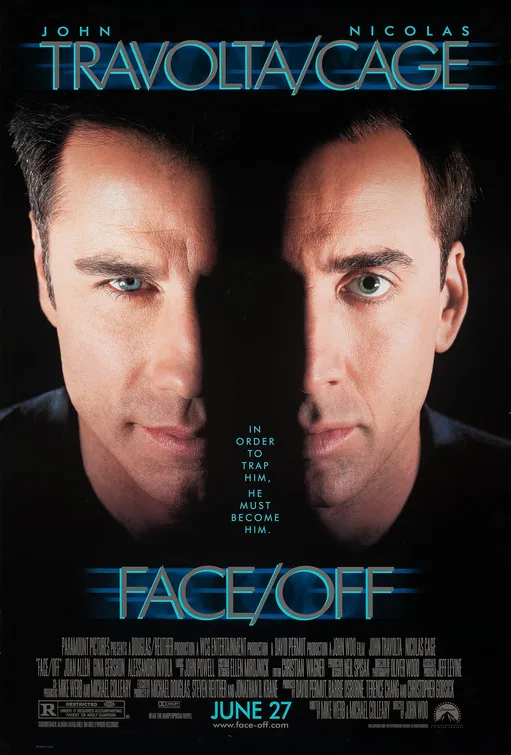
What changes Criminal: action-forward, countdown escalation and mission and memory interwoven. Face/Off: fast.
An agent pursuing the man who killed his son undergoes a secret procedure to assume the criminal's face and obtain information about a bomb. When the prisoner awakens and takes the agent's appearance in return, the operation becomes a struggle over who can make a true account of identity believable. Each man's access to the other's household exposes relationships the pursuit has neglected, while the bodies meant to function as disguises make returning to an ordinary life dangerously uncertain. The premise gives each man the other’s appearance, but the moral and relational histories remain unequal.
Based on recorded story, mood and style. Your preferences can change the order.
What changes Criminal: action-forward, countdown escalation and mission and memory interwoven. Spiderhead: contained psychological tension, experiment-driven scenes and rebellion escalation.
At a remote, comfortable-looking penitentiary, inmates receive mind-altering drugs through an implanted device in exchange for reduced sentences. Jeff begins to question the experiments run by facility director Steve Abnesti after he forms a connection with fellow inmate Lizzy and observes how the drugs affect consent and behavior. Joseph Kosinski’s science-fiction thriller adapts a George Saunders story, blending dark humor with a controlled setting to examine free will, institutional power, and the limits of human experimentation.
Based on recorded story, mood and style. Your preferences can change the order.
Memory and identity
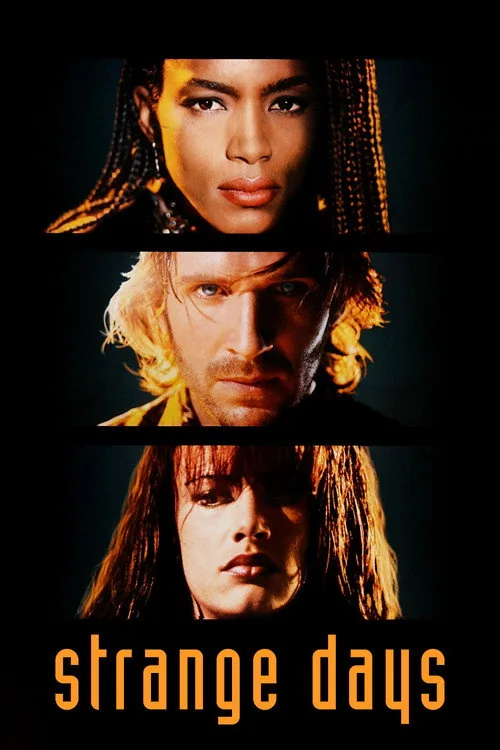
What changes Criminal: action-forward, countdown escalation and mission and memory interwoven. Strange Days: propulsive, investigation-led and escalating.
As Los Angeles approaches the end of 1999, former police officer Lenny Nero makes a living selling illegal recordings captured through a device that lets users experience another person’s memories and sensations. His trade exposes him to intimate fears and fantasies, while a disturbing recording connected to the murder of a Black activist pulls him into a wider conspiracy. With help from bodyguard and driver Mace, Lenny navigates a city on edge and confronts the consequences of turning private experience into a commodity.
Based on recorded story, mood and style. Your preferences can change the order.
What changes Criminal: action-forward, countdown escalation and mission and memory interwoven. Eagle Eye: fast.
After his twin brother's death, an ordinary young man discovers evidence planted to make him appear a terrorist and receives instructions from a voice that can manipulate the systems around him. A mother coerced through threats to her son is forced into the same route. Their apparent escape increasingly serves another operation, revealing a conflict in which an intelligence system's claim to protect the country depends on commandeering the people it treats as variables.
Based on recorded story, mood and style. Your preferences can change the order.
Memory and identity
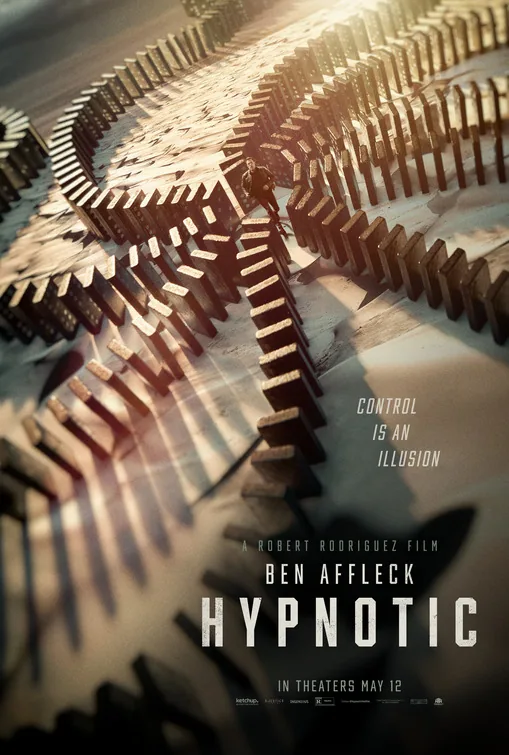
What changes Criminal: action-forward, countdown escalation and mission and memory interwoven. Hypnotic: rapid, twist-heavy, action-driven and revelatory.
Austin detective Danny Rourke is still searching for his missing daughter when a bank robbery leads him to a mysterious man capable of making people obey imagined realities. A fortune-teller and fellow hypnotic, Diana Cruz, helps Danny understand the hidden program behind the crimes, while he discovers an unusual resistance to the manipulation. Robert Rodriguez’s thriller turns the police investigation into an action story where perception and memory can be redesigned.
Based on recorded story, mood and style. Your preferences can change the order.
Memory and identity · Escape and pursuit
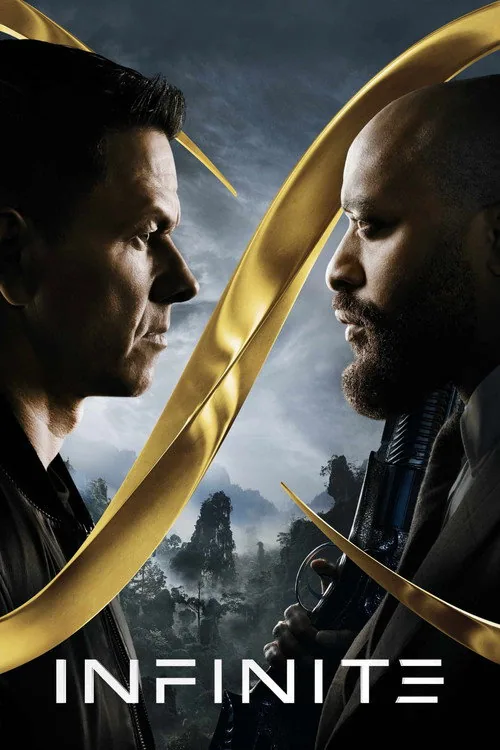
What changes Criminal: action-forward, countdown escalation and mission and memory interwoven. Infinite: mystery-to-action transition, global pursuit and revelation-driven escalation.
Evan McCauley experiences memories and skills from places he has never visited and is treated as unstable by people around him. He learns that he belongs to a group of people who reincarnate and remember their past lives, divided between factions with opposing ideas about the future. As Evan recovers his history, he is drawn into a conflict over a powerful device and the possibility of ending the cycle. Antoine Fuqua’s science-fiction action film adapts D. Eric Maikranz’s novel The Reincarnationist Papers.
Based on recorded story, mood and style. Your preferences can change the order.
Memory and identity
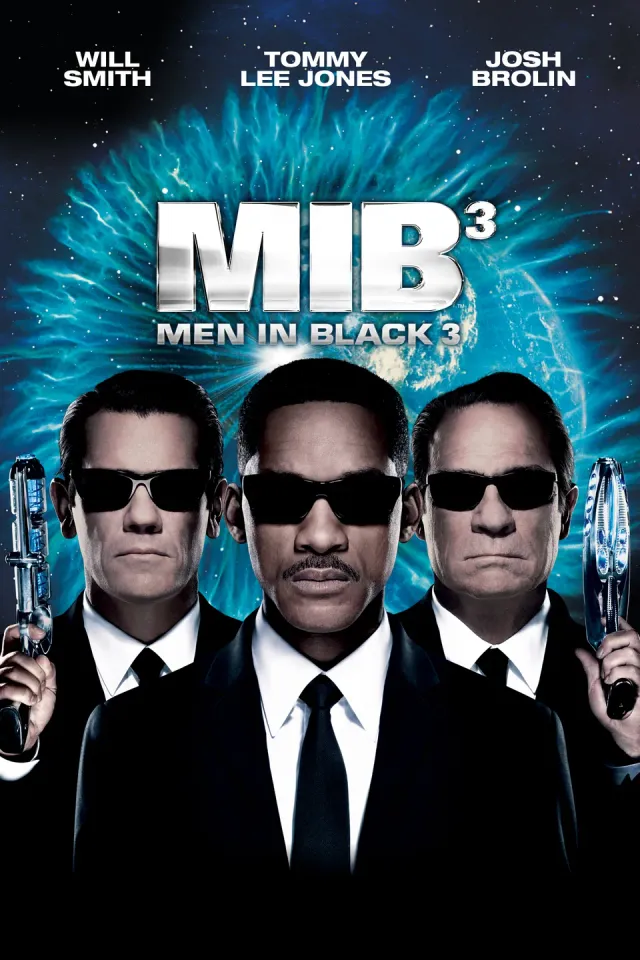
What changes Criminal: action-forward, countdown escalation and mission and memory interwoven. Men in Black 3: fast.
When alien criminal Boris escapes from lunar prison and targets Agent K, the agent disappears from the present and Earth loses the protective shield he created decades earlier. J travels back to 1969 to find young K and stop Boris from changing history. Their reluctant partnership must survive the launch-day events at Cape Canaveral while J learns why K has always refused to discuss that mission. K's choice to protect the young J after Boris kills J's father explains their guarded bond, turning the time-travel chase into a story about a loss only one partner remembers.
Based on recorded story, mood and style. Your preferences can change the order.
Memory and identity
What changes Criminal: action-forward, countdown escalation and mission and memory interwoven. Æon Flux: propulsive and revelatory.
In a future city governed by a tightly controlled regime, assassin Æon Flux is sent to kill a political leader but encounters evidence that complicates her mission. Her search into the system’s hidden practices connects personal memory, bodily control and the state’s claim to protect its citizens. The science-fiction action uses a sleek, stylized future to question whether apparent stability can rest on manipulated identity.
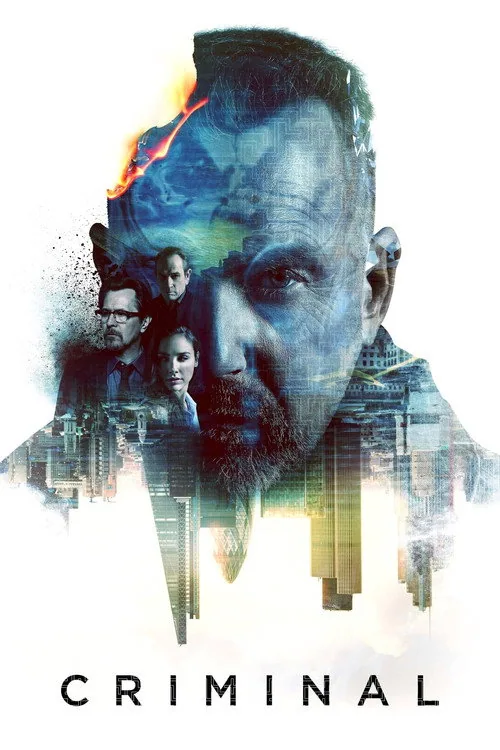
After CIA operative Bill Pope is killed during a mission, his memories and skills are transferred into Jerico Stewart, a death-row inmate chosen for an experimental procedure. The agency hopes Jerico can locate a hacker and stop a threat, but the new memories bring unfamiliar emotions and relationships into his life. Ariel Vromen’s action thriller mixes espionage with science fiction as Jerico tries to understand the person whose experiences he carries while authorities race against a dangerous plan.
What drives the story
Jerico must use a dead operative’s memories to locate a hacker while the agency’s experiment changes his sense of self.
The people at its centre
The transferred memories connect Jerico to Pope’s family and colleagues, complicating the agency’s view of him as a replaceable tool.
What it feels like
The film pairs a memory-transfer premise with brisk espionage chases, action confrontations, and a race to prevent an attack.
Worth knowing
Its identity conflict comes from an experimental memory procedure, rather than body swapping, traditional amnesia, or a purely procedural spy plot.
Memory and identityFree will and experimentationDuty and personal connection
Mood
Urgent · Gritty · High-concept
Pacing
Action-forward · Countdown escalation · Mission and memory interwoven
Visual style
Contemporary London and Washington settings · Close-quarters action · Technology-centered thriller imagery
Storytelling
CIA operative memories placed in inmate · Experimental transfer creates identity conflict · New mission follows a hacker threat