Based on recorded story, mood and style. Your preferences can change the order.
Expect uneasy and raw, with escalating and handheld pacing.
Three Seattle high-school students discover a mysterious underground object and begin developing telekinetic abilities. Andrew, who has been filming his life, records their experiments as the powers grow from party tricks into dangerous tests of control. The found-footage perspective keeps the story close to his isolation and the friends' changing loyalties as the boys disagree over how far their abilities should be used.
Based on recorded story, mood and style. Your preferences can change the order.
Investigation
What changes Glass: measured and escalating. The Batman: slow burn.
A masked vigilante in his second year of activity follows a series of murders aimed at exposing powerful figures in a decaying city. Cooperation with a detective and contact with a nightclub worker draw him into connections among organised crime, public institutions and his own family's legacy. His pursuit of a self-styled truth-teller forces him to reconsider whether fear and vengeance can offer the city anything beyond another model of coercion.
Based on recorded story, mood and style. Your preferences can change the order.
Investigation
Expect uneasy and adventurous, with nonlinear and escalating pacing.
A paramedic survives an accident and begins seeing possible events before they occur. Her intervention connects three teenagers whom a pursuer believes will eventually cause his death, while investigation of her mother's work reveals how their powers and his fear are related. Learning to read the visions becomes inseparable from accepting a protective role she did not seek. The superhero thriller turns an apparently confusing perception into a means of coordination, with an enemy's attempt to prevent the future helping create the group he fears.
Based on recorded story, mood and style. Your preferences can change the order.
What changes Glass: measured and escalating. Black Adam: fast.
A superpowered figure awakens in a country living under occupation, bringing ancient punishment into conflict with people who need present-day protection. An international superhero team attempts to regulate his violence, while a local family's concerns expose the limits of treating external authority as automatically legitimate. A buried history complicates the hero's public identity, making the decision about who may exercise force inseparable from whose suffering defines the emergency.
Based on recorded story, mood and style. Your preferences can change the order.
What changes Glass: measured and escalating. Hancock: brisk and tonal shift.
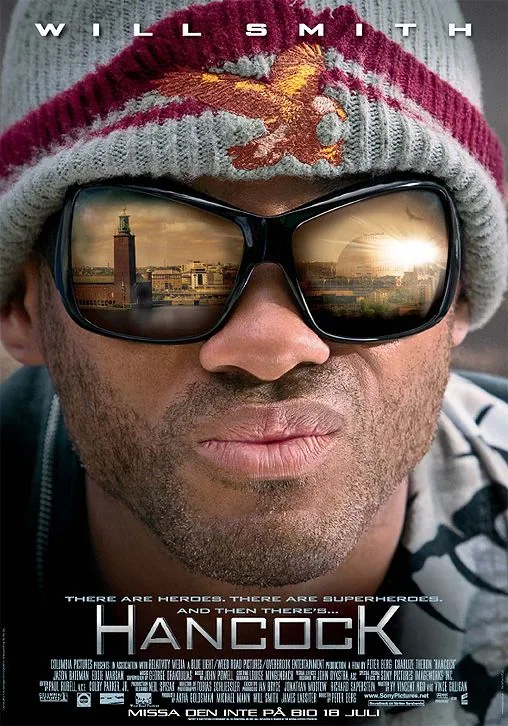
A superpowered man repeatedly saves people while damaging their surroundings and alienating those he helps. A public-relations professional offers to rebuild his reputation by teaching accountability, but intimacy with that man's family reveals a connection to a past the hero cannot remember. The apparent rehabilitation comedy shifts toward a supernatural relationship whose closeness has physical consequences. Protection therefore comes to require more than improved manners or a better costume: he must consider whether remaining near the people he wants is itself a danger.
Based on recorded story, mood and style. Your preferences can change the order.
Investigation
Expect cool and tense, with measured pacing.
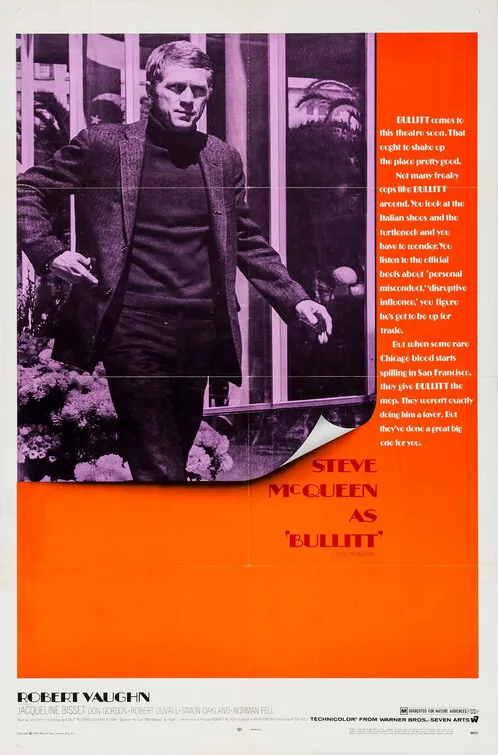
A San Francisco detective is assigned to protect a witness whose testimony could advance an ambitious politician's public agenda. After an attack undermines the arrangement, the detective pursues discrepancies that the sponsor would prefer subordinated to immediate blame and control. Street-level investigation and careful attention to identities expose the distance between protecting a person, producing a useful witness, and preserving the appearance of official competence.
Based on recorded story, mood and style. Your preferences can change the order.
What changes Glass: measured and escalating. Spider-Man: steady.
A shy student gains extraordinary abilities after a genetically altered spider bites him, initially seeing a chance to earn money and impress the girl he admires. A preventable personal loss changes his understanding of what those abilities require. As he begins protecting New York, a scientist transformed by his own experiment becomes an adversary whose family connection makes public duty inseparable from private loyalty and secrecy.
Based on recorded story, mood and style. Your preferences can change the order.
What changes Glass: measured and escalating. The Dark Knight: intense.
A vigilante and a police lieutenant support a prosecutor whose public legitimacy appears capable of weakening organised crime without relying on a masked outsider. A theatrical criminal exploits that effort by turning crimes into public tests of loyalty, fear and principle. As the attacks reach relationships beyond the official campaign, the promise of restoring order becomes difficult to separate from surveillance, deception and the costs imposed on particular people.
Based on recorded story, mood and style. Your preferences can change the order.
What changes Glass: measured and escalating. Batman: steady.
A reclusive heir uses a costumed identity to confront crime in a city whose institutions cannot command public confidence. A disfigured criminal's theatrical rise turns violence into a campaign for attention, drawing the vigilante's private history into public danger. A photographer's interest complicates the separation between the man and his symbol, making protection, retaliation, and self-concealment difficult to keep distinct.
Three men associated with extraordinary strength, protection and criminal design are confined in a psychiatric facility whose specialist insists their abilities can be explained away. Visitors challenge that account, while one detainee works to turn confinement into a public demonstration. The argument over evidence becomes a struggle over who has the authority to define exceptional identity and who controls its visibility. A deliberately restricted superhero story builds toward exposure rather than the expansive battle its characters imagine their narrative requires.
What drives the story
Institutional confinement attempts to redefine extraordinary abilities as delusion while a calculating prisoner engineers an escape designed to make denial impossible.
The people at its centre
David's reliance on his son, Kevin's connection with Casey and Elijah's bond with his mother provide separate witnesses to identities the clinician seeks to dismantle.
What it feels like
Long conversations, surveillance and controlled rooms delay physical confrontation, making frustrated expectations about superhero scale part of the film's experience.
Worth knowing
The story's invented psychology and superhuman premises are not a model of real psychiatric conditions; preserve its institutional suppression plot and specific trilogy context.
IdentityEvidenceInstitutional power
Mood
Uneasy · Restrained · Tragic
Pacing
Measured · Escalating
Visual style
Surveillance framing · Institutional interiors
Storytelling
Confined superhumans · Disputed abilities · Engineered public exposure