The hospital’s surgical workload provides a serious counter-rhythm to the doctors’ pranks. A football game and a staged suicide further blur care, competition and spectacle without making the war itself disappear.
Why this matches +
Selected for the central appeal: Wartime comedies about irreverent performers, institutional censorship and the limits of humor.
Genres: War / Comedy
Shared film traits
Based on recorded story, mood and style. Your preferences can change the order.
War and civilian life
What changes MASH uses irreverent humor to challenge military authority amid wartime suffering.
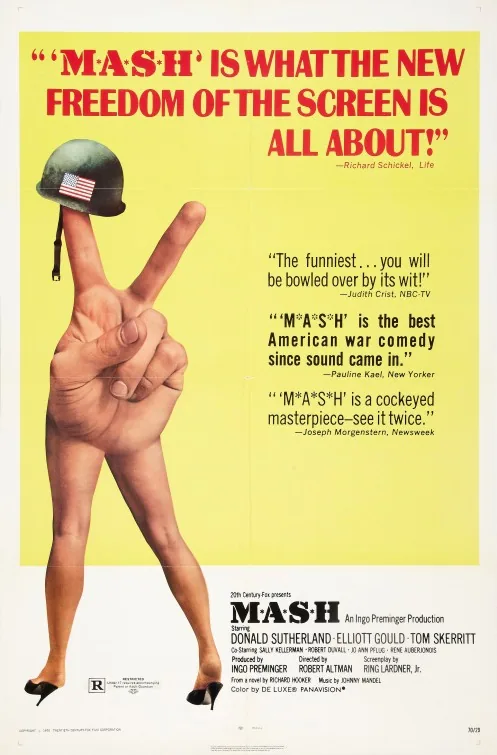
Set at a mobile army surgical hospital during the Korean War, Robert Altman’s film follows surgeons Hawkeye Pierce and Duke Forrest as they perform difficult operations and resist military discipline through drinking, practical jokes and irreverence. Their comedy targets rank and hypocrisy, but the film’s treatment of head nurse Margaret Houlihan also includes sexual humiliation and a prank involving a secretly exposed shower. That conduct is part of the feature’s gendered counterculture humor, not harmless banter. Wounded soldiers and the pressures of surgery keep the camp’s performance of freedom beside the casualties it cannot control. Released in 1970, the film’s anti-authoritarian tone also carries a Vietnam-era resonance. It is distinct from the later television series and should not be presented as a straightforward celebration of military medicine.
Chickie sets out to deliver beer to enlisted friends, and each encounter complicates his cheerful idea of what the gesture can accomplish.
Why this matches +
Selected for the central appeal: Wartime comedies about irreverent performers, institutional censorship and the limits of humor.
Genres: Drama / War
Shared film traits
Based on recorded story, mood and style. Your preferences can change the order.
War and civilian life
What changes The Greatest Beer Run Ever follows an American civilian whose upbeat mission encounters the realities of the Vietnam War.
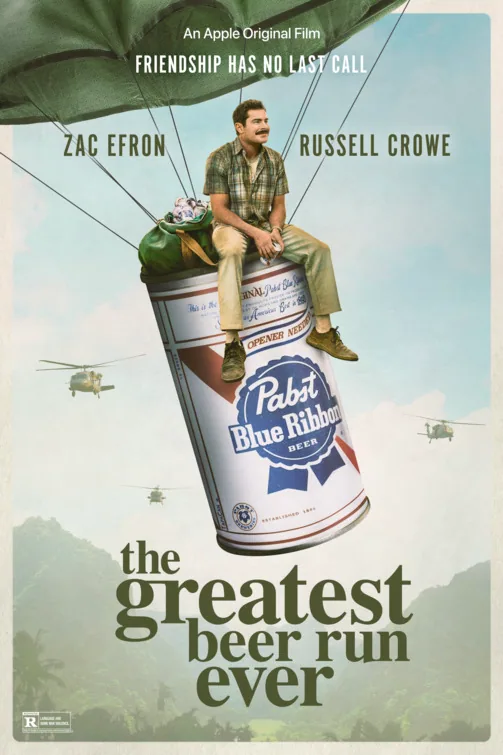
In 1967, New Yorker Chickie Donohue decides to carry beer to friends serving in Vietnam, treating the trip as a morale-boosting gesture. His route through bases and conflict zones gives him a direct view of a war that his family and neighbors debate from home. Peter Farrelly’s drama balances a comic premise with a changing understanding of friendship, service and what civilians can know about a war from a distance.
A journalist follows an eccentric former soldier whose account links a secret military program with unusual beliefs.
Why this matches +
These offer a related experience with a meaningful difference in story, tone, or presentation.
An adjacent discovery: a related idea with a different viewing experience.
Genres: Comedy / War
Shared film traits
Based on recorded story, mood and style. Your preferences can change the order.
War and civilian life
What changes The Men Who Stare at Goats blends military absurdity with a journalist's encounter with wartime operations.
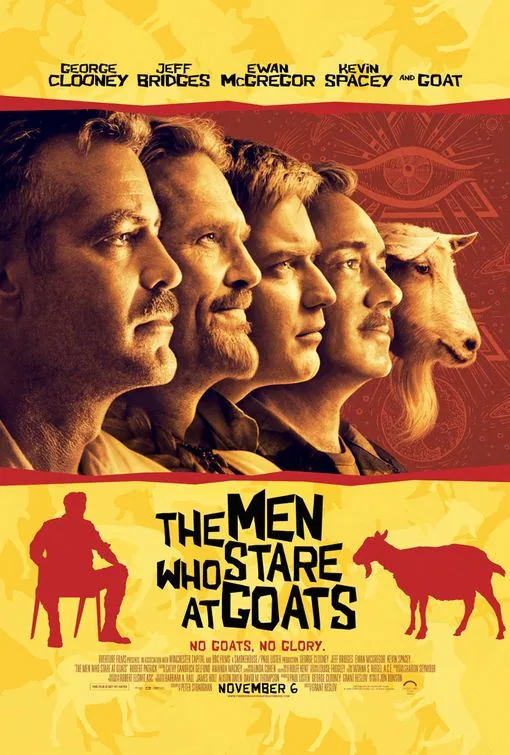
A journalist in Iraq meets a former soldier who claims to have trained in a secret program that explored unconventional mental techniques for military use. Their journey brings together military ambition, spiritual language and the absurdity of institutions trying to make unusual ideas operational. The comedy draws on a fictionalized account of reported claims, using dry humor to question authority and the stories people tell to give purpose to conflict.
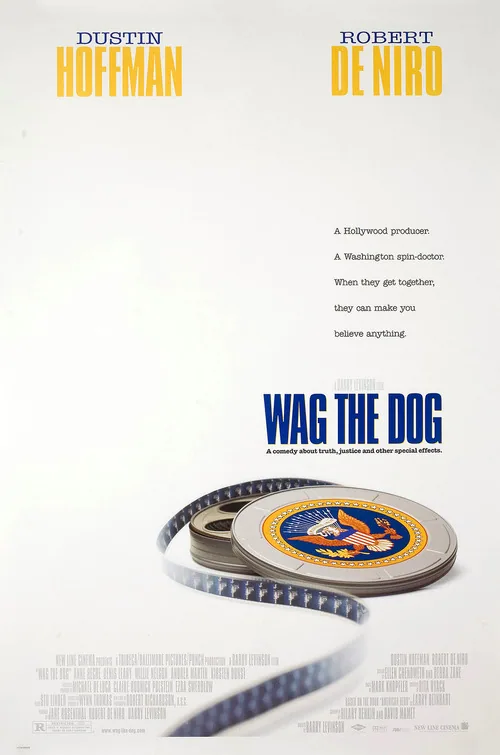
A political crisis becomes a media production in which a fictional war is assembled from repeatable images and a marketable narrative.
Why this matches +
These offer a related experience with a meaningful difference in story, tone, or presentation.
An adjacent discovery: a related idea with a different viewing experience.
Genres: Drama / Comedy
Shared film traits
Based on recorded story, mood and style. Your preferences can change the order.
What changes Wag the Dog satirizes the manufacture of political spectacle through media and entertainment.
With a presidential sex scandal threatening an election, political consultant Conrad Brean hires Hollywood producer Stanley Motss to invent a distant war that can redirect the news. Motss treats the crisis as a production problem, assembling images, slogans, music and a fictional hero with the same craft he would use for a movie. Brean manages government messaging while the fabricated conflict begins to acquire an independent life in the media. The film’s comedy comes from watching public belief depend on the details of a story that exists mainly because two professionals know how to stage it. As the campaign grows, it becomes less controllable, even for the people who made it. The satire targets both political spin and entertainment’s ability to make images feel like evidence.
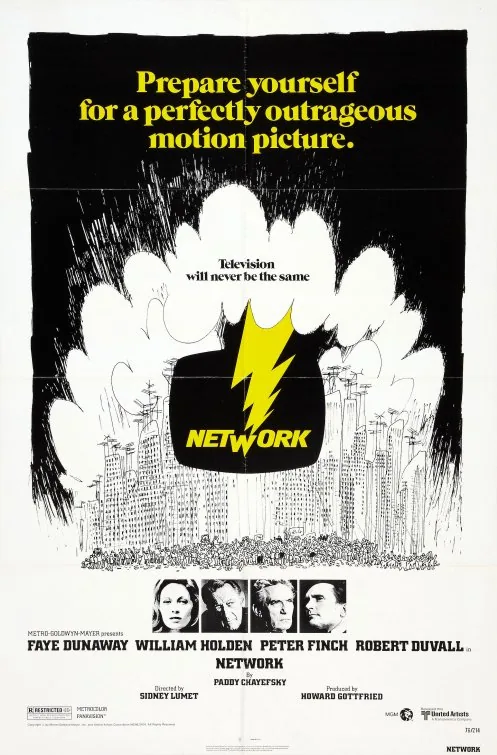
Ratings convert Beale's breakdown into a product, and every attempt to restore control becomes another negotiation between truth, profit and public appetite.
Why this matches +
These offer a related experience with a meaningful difference in story, tone, or presentation.
An adjacent discovery: a related idea with a different viewing experience.
Genres: Drama / Comedy
Shared film traits
Based on recorded story, mood and style. Your preferences can change the order.
What changes Network satirizes broadcasting, entertainment and the institutions controlling what reaches an audience.
When veteran news anchor Howard Beale learns he will be dismissed, he announces on air that he will kill himself, then turns a farewell broadcast into an angry ratings sensation. Network executive Diana Christensen sells the outburst as entertainment, while division president Max Schumacher worries about the erosion of journalism and begins an affair with her. As Beale's populist persona grows, corporate leaders exploit his audience and eventually object when his message threatens a merger. The network answers a business problem with a lethal programming decision, turning the news division's cynicism into the plot's final spectacle.
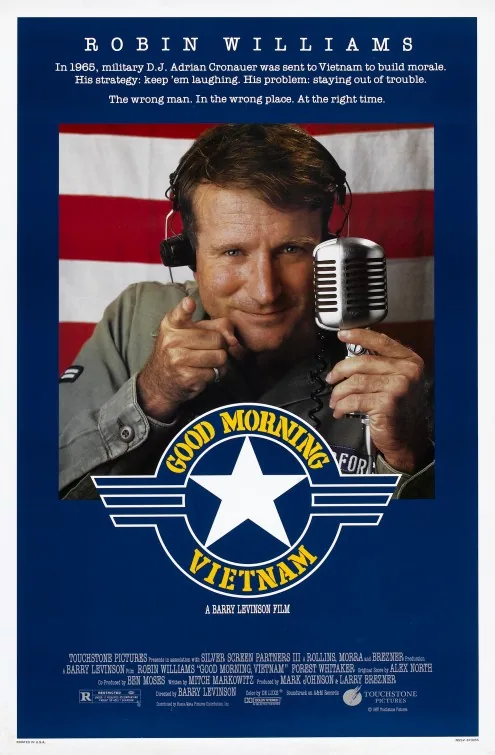
A radio presenter brings irreverent comedy and popular music to American troops in Saigon, delighting listeners while antagonizing officers who regulate what may be said. Relationships outside the studio expose realities that cheerful broadcasting and censored news cannot reconcile. His confidence that wit can bridge every division is tested by violence and divided loyalties he does not understand. The film moves between exuberant performance and disillusionment, making the entertainer's freedom of expression only one part of a larger wartime imbalance.
What drives the story
An unconventional broadcaster's popularity protects his insubordination until censorship and local violence reveal the limits of performing morale inside a war.
The people at its centre
Cronauer's rapport with troops contrasts with his uncertain understanding of Vietnamese acquaintances, whose obligations do not revolve around his desire for friendship or romance.
What it feels like
Rapid comic monologues and music-driven energy are interrupted by violence and quieter encounters that unsettle the presenter's control over the tone.
Worth knowing
This is a fictionalized use of a broadcaster's name and situation; its American performer's awakening cannot stand in for a comprehensive Vietnamese experience of the war.
ExpressionCensorshipDisillusionment
Mood
Witty · Bittersweet · Reflective
Pacing
Episodic
Visual style
Radio performance · Contrasting street encounters
Storytelling
Military radio outsider · Censored news · Unequal wartime friendships