The prophecy recruits Ahmad as the outsider in a Norse war band, turning language and cultural misunderstanding into part of the team's survival problem.
Why this matches +
Selected for the central appeal: A mercenary band’s useful heroic legend collides with the truth behind the ruler who hires it.
Genres: Fantasy / Thriller
Shared film traits
Based on recorded story, mood and style. Your preferences can change the order.
War and civilian life
What changes An outsider joins seasoned fighters whose response to a seemingly supernatural threat depends on collective physical skill; a darker northern village siege replaces the Greek mercenaries’ manipulated public legend.
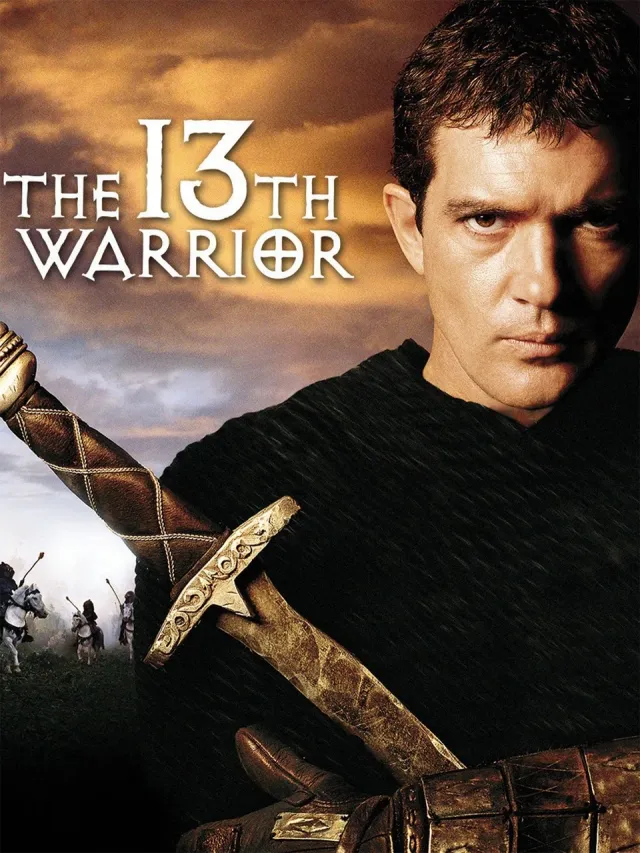
After an affair sends him away from Baghdad, poet and diplomat Ahmad ibn Fadlan joins a Norse party traveling north. A king asks the warriors to help defend his people from an enemy they cannot identify, and a prophecy requires thirteen fighters, including one who is not Norse. Ahmad is chosen, initially hindered by language and unfamiliar customs. He learns enough to fight beside the others as they investigate villages and confront the raiders, whose identity challenges the group's assumptions. His account of the journey becomes a story of cultural distance, shared danger and earned trust.
A former mentor's mistaken explanation of tyranny gives way to a partnership whose bodily bond with the ruler makes resistance demand a painful sacrifice.
Why this matches +
Selected for the central appeal: A mercenary band’s useful heroic legend collides with the truth behind the ruler who hires it.
Genres: Fantasy / Adventure
Shared film traits
Based on recorded story, mood and style. Your preferences can change the order.
What changes A fighter trades on a performed heroic myth before recognizing the ruler whose power he helped sustain; an actual dragon and staged slayings replace a largely human explanation of Hercules’s feats.
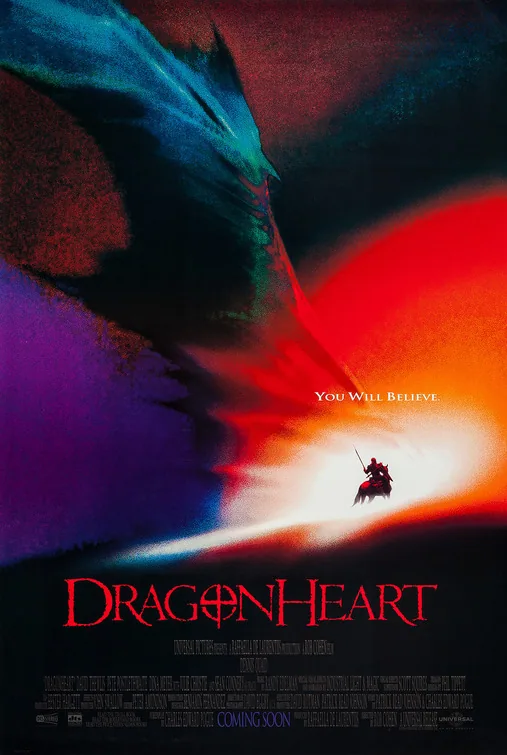
A disillusioned knight blames dragons for the cruelty of a prince he once trained, not knowing that the dragon who saved the ruler's life remains physically bound to him. Meeting the last dragon produces an unlikely partnership in staged monster slayings, but renewed contact with the kingdom's suffering makes profitable deception harder to sustain. Defeating tyranny eventually requires confronting the shared life that makes harming the enemy threaten the friend.
The arriving Tao Tei creatures create a repeating siege structure: the defenders must anticipate each attack and adapt their formations along the wall.
Why this matches +
Related viewing experiences with the specific differences recorded for each pair.
An adjacent discovery: a related idea with a different viewing experience.
Genres: Fantasy / Action
Shared film traits
Based on recorded story, mood and style. Your preferences can change the order.
War and civilian life
What changes Pragmatic outsiders discover that disciplined collective defense may matter more than private reward; real fantastic monsters and an enormous siege replace the source’s exposed myths and corrupt employer.
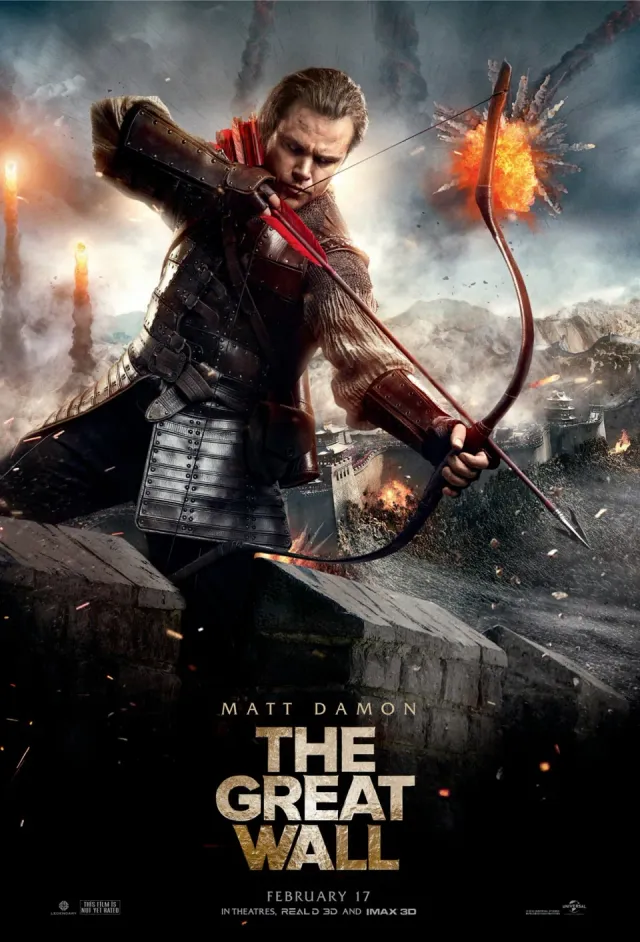
Two European mercenaries searching for gunpowder reach the Great Wall and are captured by a Chinese military order preparing for the return of a monstrous force. One of them chooses to help defend the wall against the creatures, while the other is more interested in escape and profit. The conflict becomes a sequence of large-scale battles that test the army’s systems and the mercenaries’ motives. The film’s fantasy premise and cross-cultural framing have drawn criticism for centering a European outsider within a Chinese historical setting, an issue that affects how its spectacle reads.
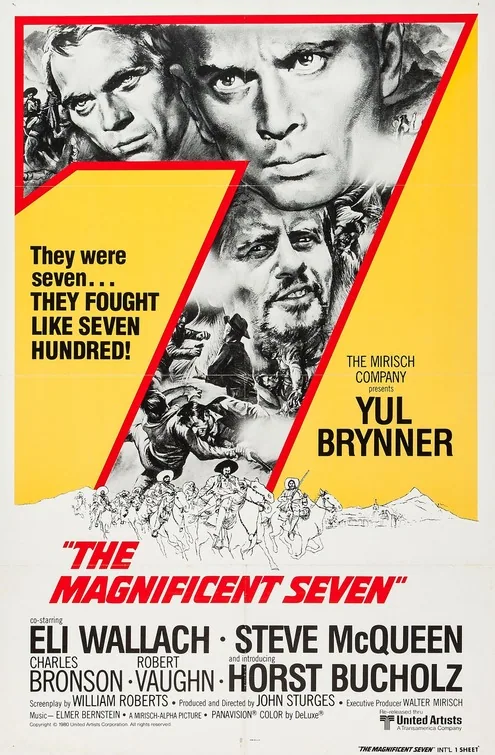
The village’s harvest attracts Calvera’s raids; the seven must prepare the farmers to resist until the next attack comes.
Why this matches +
Related viewing experiences with the specific differences recorded for each pair.
An adjacent discovery: a related idea with a different viewing experience.
Genres: Drama / Action
Shared film traits
Based on recorded story, mood and style. Your preferences can change the order.
War and civilian life
What changes A small hired band must decide what professional violence owes to the people it protects; a village’s genuine request and western gunfights replace a royal deception and mythic reputation.
When bandits repeatedly take food from a Mexican village, its residents hire gunfighter Chris Adams to defend them. Chris recruits six other men, each bringing different skills and reasons to accept the dangerous assignment. The group trains the villagers and prepares for Calvera’s return, but the hired fighters’ commitment is tested once they understand the cost of staying. John Sturges’s Western transposes the structure of Akira Kurosawa’s Seven Samurai into a borderlands story about collective defense and the limits of hired courage.
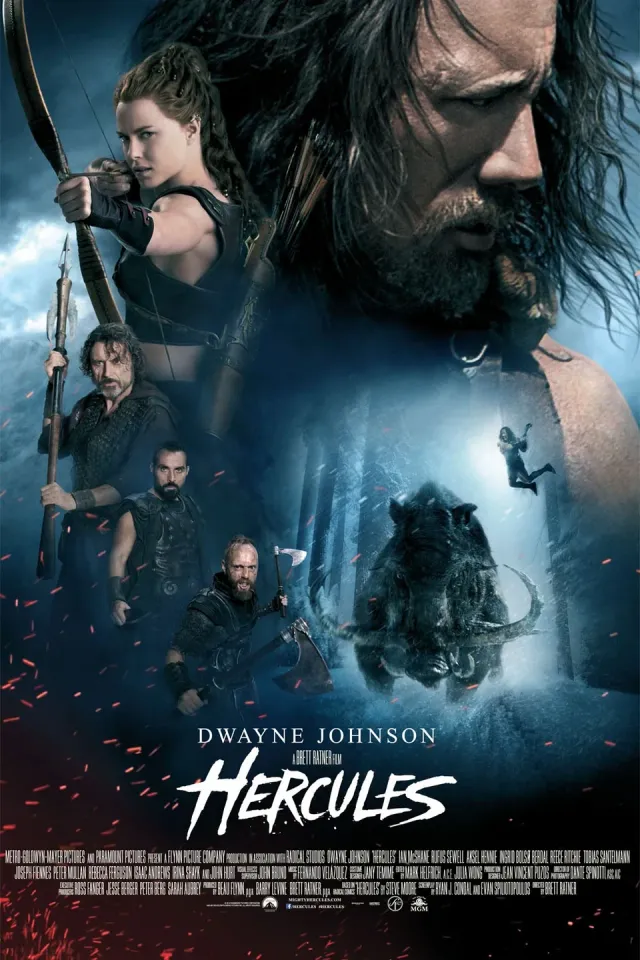
A band of mercenaries trades on stories that present its leader as a demigod, making collective skill look like the power of one extraordinary man. Hired to train an army against an apparent threat, they gradually discover that the client's account conceals a different use for their victories. Hercules's private guilt makes the public legend both useful and difficult to inhabit. The adventure recasts mythic heroism as a contested narrative whose meaning depends on whom the celebrated fighter chooses to serve.
What drives the story
A lucrative military training contract becomes a deception when mercenaries discover that their employer has defined the enemy to conceal his own aggression.
The people at its centre
The team's loyalty sustains Hercules's reputation, while his grief makes him vulnerable to an explanation of his past that others have controlled.
What it feels like
Muscular battles, joking camaraderie and staged demystification of legendary feats create grounded-seeming fantasy spectacle without fully resolving the hero's exceptional status.
Worth knowing
Specify the 2014 mercenary interpretation rather than importing Disney's gods-and-training arc or other Hercules releases; the Twelve Labors function largely as manufactured reputation.