The teleportation accident begins as a technical mishap, then becomes a slow biological crisis that neither observation nor affection can halt.
Why this matches +
Selected for the central appeal: A scientist's irreversible invisibility experiment turns a secret laboratory into a dangerous setting of unchecked power.
Genres: Science fiction / Drama
Shared film traits
Based on recorded story, mood and style. Your preferences can change the order.
Artificial life
What changes A scientist's experiment radically changes his body and judgment, endangering people close to him; transformation into an insect rather than invisibility.
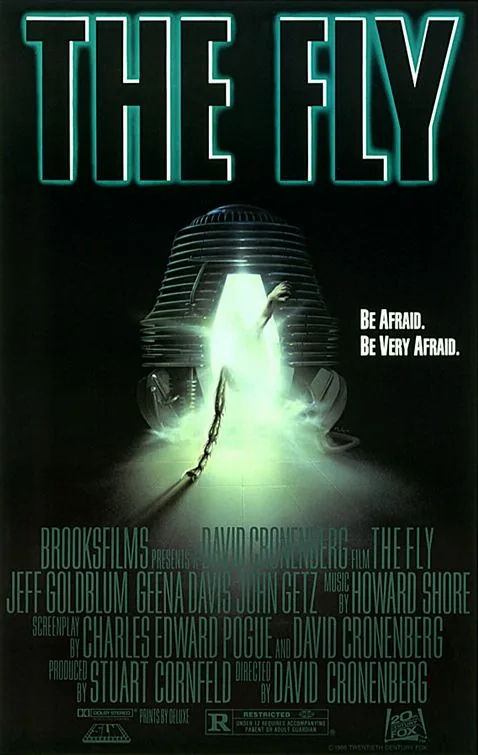
Scientist Seth Brundle invites journalist Veronica Quaife to document his experiments with teleportation. When he tests the device on himself without noticing a fly has entered the pod, his body begins changing in stages. At first Seth mistakes the increased strength and appetite for improvement; Veronica recognizes the physical and emotional deterioration before he can accept it. As the transformation becomes irreversible, their intimacy turns into a struggle over care, fear and whether there is anything left to save. The film treats scientific ambition as the trigger, but its central horror is watching a person remain emotionally present while his body becomes frighteningly unfamiliar.
The experiment turns an abstract debate about mortality into a crisis the team must manage inside its own workplace.
Why this matches +
These offer a related experience with a meaningful difference in story, tone, or presentation.
An adjacent discovery: a related idea with a different viewing experience.
Genres: Horror / Science Fiction
Shared film traits
Based on recorded story, mood and style. Your preferences can change the order.
What changes A secret scientific experiment goes wrong and endangers colleagues inside a contained facility; resurrection rather than invisibility.
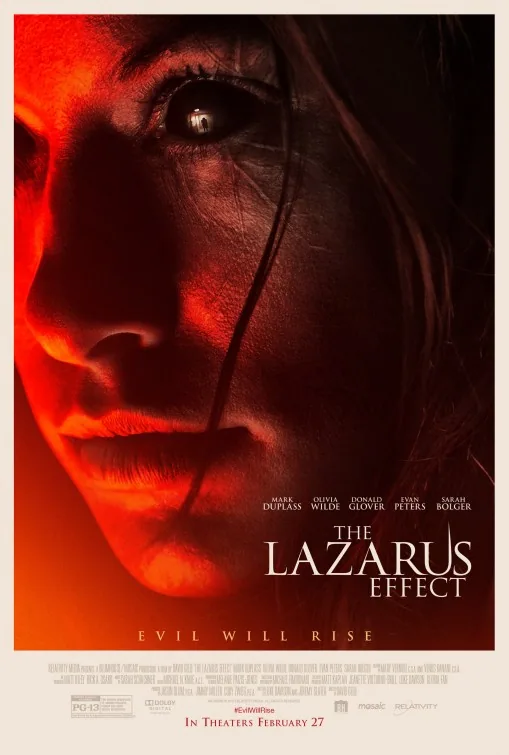
A medical research team develops a process that can restore life after death, but an experiment produces a result more dangerous than anyone anticipated. The scientists’ desire to extend knowledge collides with their fear of losing control over what they have created. This contained science-fiction horror uses a laboratory setting to explore the boundary between research ambition and moral responsibility.
Angelo’s effort to enhance Jobe is redirected by the organization funding the research, with increasingly severe results.
Why this matches +
These offer a related experience with a meaningful difference in story, tone, or presentation.
An adjacent discovery: a related idea with a different viewing experience.
Genres: Science fiction / Horror
Shared film traits
Based on recorded story, mood and style. Your preferences can change the order.
Artificial life
What changes An experiment intended to increase human capability gives a subject dangerous power and destabilizes the scientist's control; virtual-reality enhancement.
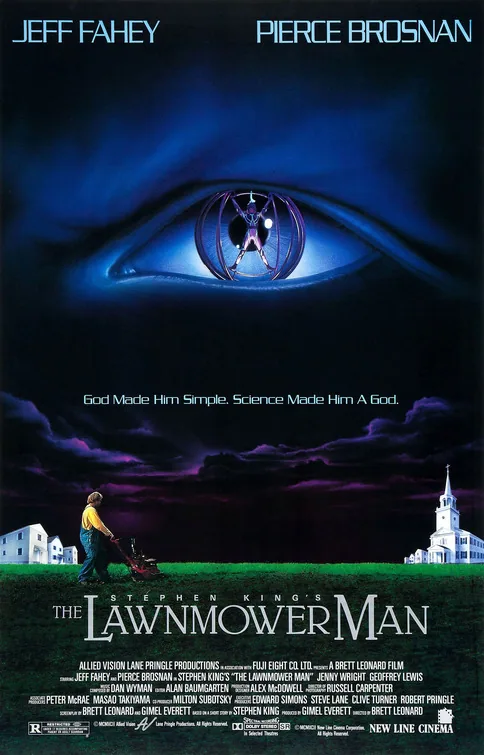
Scientist Lawrence Angelo uses virtual reality and experimental drugs in an effort to increase intelligence, first testing the process on animals before recruiting Jobe Smith, a gentle gardener with an intellectual disability. Jobe’s abilities rise quickly, and he develops powers beyond the researchers’ original aims. Angelo’s military-backed employer alters the treatment behind his back, pushing Jobe toward aggression and control. As the experiment expands through immersive computer simulations, Angelo realizes he has enabled a dangerous transformation and tries to stop it. The film turns early digital technology into a science-fiction story about power, consent and unintended consequences.
Eddie's experiments with consciousness produce physical transformations that make the search for knowledge increasingly dangerous.
Why this matches +
These offer a related experience with a meaningful difference in story, tone, or presentation.
An adjacent discovery: a related idea with a different viewing experience.
Genres: Science fiction / Horror
Shared film traits
Based on recorded story, mood and style. Your preferences can change the order.
Survival
What changes A scientist's research changes his body and threatens his identity and relationships; altered consciousness and more surreal body horror.
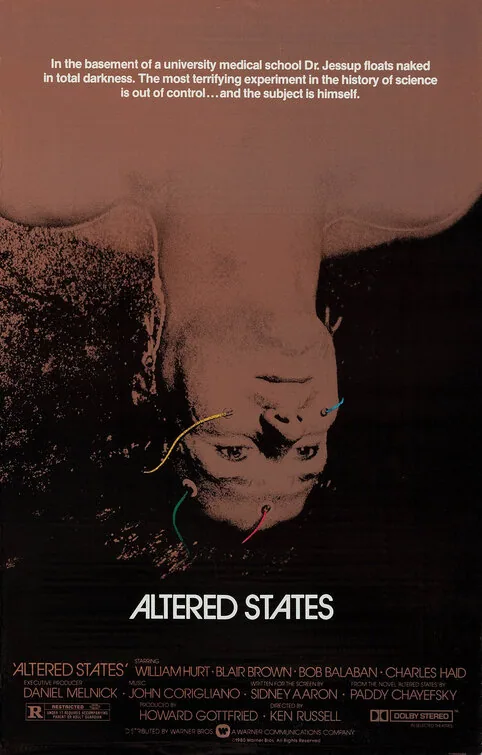
Scientist Eddie Jessup studies altered consciousness through sensory deprivation and experimental substances, hoping to reach a more fundamental state of human experience. His research begins changing his body as well as his perceptions, placing his work, marriage, and identity under strain; the experiment's consequences force those closest to him to decide whether understanding the unknown is worth risking the self they recognize.
Crawford’s need to prove his innocence is complicated by how the machine changes his own perception and body.
Why this matches +
These offer a related experience with a meaningful difference in story, tone, or presentation.
An adjacent discovery: a related idea with a different viewing experience.
Genres: Horror / Science fiction
Shared film traits
Based on recorded story, mood and style. Your preferences can change the order.
Survival
What changes Researchers' experiments unlock a dangerous hidden reality and trigger gruesome physical consequences; cosmic horror rather than an invisible attacker.
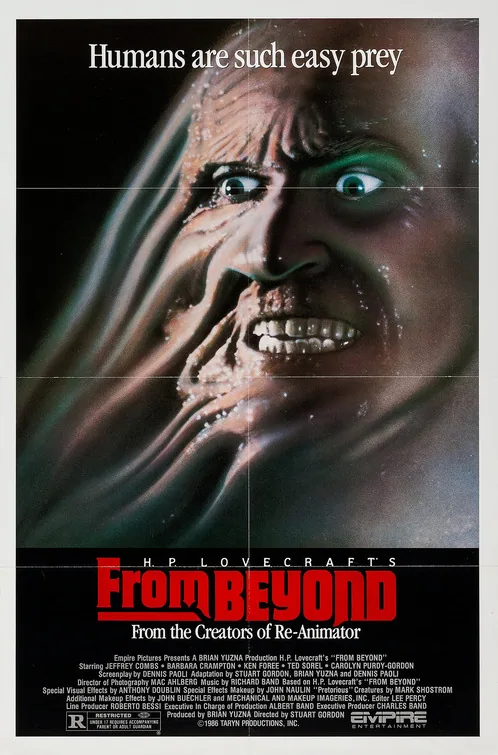
Scientist Crawford Tillinghast activates the Resonator, a device designed by his colleague Edward Pretorius to reveal forms of existence beyond ordinary perception. The experiment exposes Crawford to unseen creatures and ends with Pretorius dead, leaving Crawford accused of murder and confined to a psychiatric hospital. Dr. Katherine McMichaels believes his account and takes him back to the house where the machine was built, accompanied by detective Bubba Brownlee. When they restart the Resonator, they encounter a reality where desire, bodies and perception can be radically altered. Pretorius returns transformed and the experiment becomes a struggle to escape a world that keeps intruding into their own.
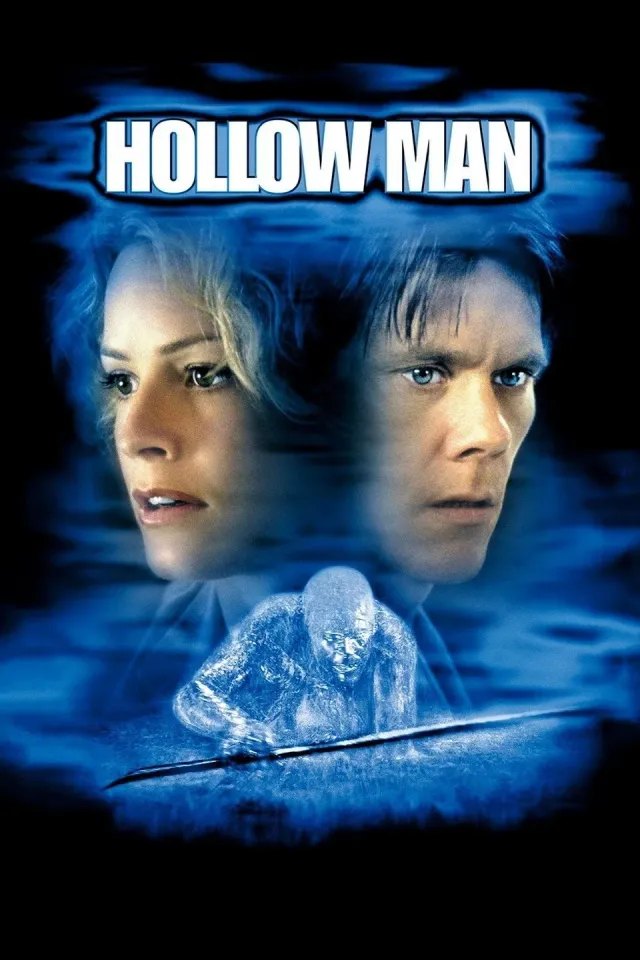
Hollow Man (2000), directed by Paul Verhoeven, follows A scientist conducting a secret invisibility experiment volunteers as the first human test subject. When the procedure works but cannot be reversed, isolation and paranoia distort his judgment and put his colleagues in danger inside the laboratory. The premise uses invisibility to make unchecked scientific ambition tangible, shifting a laboratory breakthrough into a study of secrecy, power, and dehumanization.
What drives the story
The experiment's apparent success becomes a containment problem as the team searches for a reversal and the invisible subject grows harder to control.
The people at its centre
Professional trust among the researchers gives way to fear as the test subject's decisions threaten those closest to the project.
What it feels like
Clinical lab spaces and visual-effects-driven suspense support a steadily more violent science-fiction thriller.
Worth knowing
Its danger grows from a failed experiment and abuse of power, rather than from an external creature invading a community.