Explore films connected to Identity through identity and recognition, justice for victims, evidence and deception. Choose the qualities you want to carry into your next watch.
What should feel similar?
Find your next favourite
9 films · Closest overall matches
Hide films you’ve seen or don’t want. Saved on this device.
No matches for this combination yet.
Try another option or reset your choices to see more films.
Based on recorded story, mood and style. Your preferences can change the order.
Investigation
What changes Identity: revelation-driven, investigative and rapid reversals. Fire: clue-driven, progressive revelations and mystery-led.
When a physiotherapist mysteriously disappears, a police investigation begins to reconstruct his last movements and question the people in his orbit. What first appears to be a disappearance grows into a crime mystery as officers uncover private secrets and competing accounts. The Tamil thriller keeps the central uncertainty alive: did the man leave on his own, or was something more sinister done to him? Its plot is built around clues, testimony, and the suspicion that ordinary relationships can conceal a violent truth.
Based on recorded story, mood and style. Your preferences can change the order.
Investigation · Memory and identity
What changes Identity: revelation-driven, investigative and rapid reversals. Spellbound: slow reveal and suspenseful.
At a Vermont mental hospital, psychoanalyst Constance Petersen realizes that the new director is not the man he claims to be. He says he has amnesia and believes he may have killed the real Dr. Edwardes, so Constance helps him flee and tries to discover his identity. Their journey moves from hospital corridors to a colleague’s home and into dream analysis, where visual clues may distinguish guilt from memory. Romance and professional judgment pull Constance in opposite directions as she pursues evidence that could clear him.
Based on recorded story, mood and style. Your preferences can change the order.
Investigation · Memory and identity
What changes Identity: revelation-driven, investigative and rapid reversals. Maareesan: slow-burn revelation, road-movie episodes and crime-thriller turns.
Petty thief Dhaya breaks into a house in Kanyakumari and finds Velan, an older man who mistakes him for his son and claims to have memory loss. Dhaya lets him out hoping to exploit his money, then accompanies him on a road trip to meet a relative. Their uneasy arrangement grows into a bond as the two travel, while police investigate a murder connected to a series of killings. The Tamil drama thriller lets comic mismatches and changing motives gradually reveal a more complicated story about memory, justice, and the people who use vulnerability for their own ends.
Based on recorded story, mood and style. Your preferences can change the order.
Investigation
What changes Identity: revelation-driven, investigative and rapid reversals. Eleven: clue-driven, escalating and slasher intensity.
A serial killer leaves bodies in remote locations, and the case changes hands when ACP Ranjith is incapacitated and another officer, Aravindan, takes over. As the death toll grows, the investigation reveals a pattern linking apparently separate victims and tests the officers' ability to anticipate the next attack. The Tamil-Telugu slasher thriller combines police procedure with a high body count, using its title as a countdown that gives the investigation a clear sense of escalation.
Both share a suspenseful and procedural atmosphere.
Why this matches +
Genres: action / crime
Shared film traits
Based on recorded story, mood and style. Your preferences can change the order.
Investigation
What changes Identity: revelation-driven, investigative and rapid reversals. U.S. Marshals: pursuit and investigation, tightening and reversal.
Fugitive Mark Roberts is captured by Deputy Marshal Sam Gerard after an aircraft crash, but Roberts insists that he has been framed for murder. When a covert federal operation kills one of the prisoners in custody, Gerard and his team pursue Roberts again while trying to understand the protected files and agencies involved. The sequel brings the marshals' relentless pursuit into conflict with evidence that their apparent target may be the only person telling the truth.
Based on recorded story, mood and style. Your preferences can change the order.
Investigation · Memory and identity
What changes Identity: revelation-driven, investigative and rapid reversals. Rekhachithram: methodical, clue-driven and steadily revealing.
A transferred police officer reopens a decades-old disappearance after an apparent suicide and a confession point toward a woman who vanished during the making of a 1985 Malayalam film. Vivek Gopinath follows archival clues, witnesses, and the production’s history, turning a present-day investigation into a reconstruction of an obscured past. The film blends police procedural suspense with affectionate attention to Malayalam cinema and the possibility of an alternate history.
Based on recorded story, mood and style. Your preferences can change the order.
Investigation
What changes Identity: revelation-driven, investigative and rapid reversals. HIT: The Third Case: nonlinear, investigation-driven and violent escalation.
Arjun Sarkaar is a formidable officer in the Homicide Intervention Team whose investigation into a brutal case ends with him imprisoned for murder. Through flashbacks, the film reveals how his work and choices led to that outcome, turning a police procedural into a character study of force, judgment, and revenge. The third installment in the HIT franchise pairs crime-scene investigation with a darker portrait of an investigator whose pursuit of justice may cross the line he is meant to uphold.
Based on recorded story, mood and style. Your preferences can change the order.
Investigation
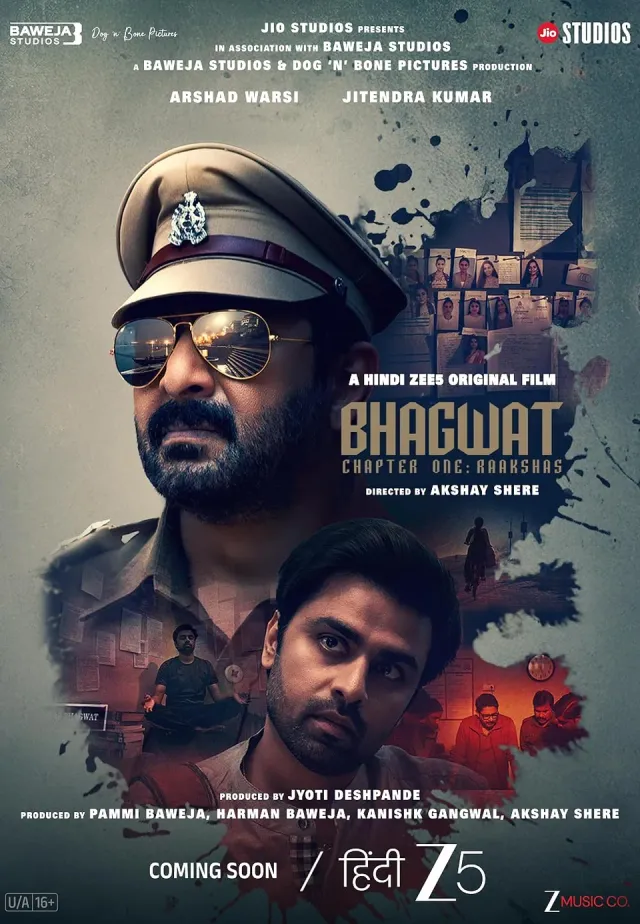
What changes Identity: revelation-driven, investigative and rapid reversals. Bhagwat Chapter One: Raakshas: case-driven, revealing and tense.
In 2009 Robertsganj, a young woman named Poonam disappears, but police initially dismiss her parents' report as an elopement. A politician exploits the case to inflame communal tensions, even as the missing-person investigation points toward a serial predator. Inspector Vishwas Bhagwat pursues the truth while the town's assumptions about gender, caste, and religion shape who is believed and who is blamed. This Hindi crime thriller treats the investigation as a contest over evidence and public narrative, not just a hunt for a killer.
Based on recorded story, mood and style. Your preferences can change the order.
Investigation · Memory and identity
What changes Identity: revelation-driven, investigative and rapid reversals. Maternal Instinct: evidence-led, cumulative and interview-driven.
Netflix's documentary reconstructs the Taylor Parker case, in which a woman maintained a false pregnancy story and committed a violent crime against a friend whose baby she wanted to claim. Through interviews and investigative material, it follows how deception, trust, and a murder trial became intertwined in a small East Texas community. Maternal Instinct is a true-crime account focused on the people around the case and the evidence that transformed a private lie into a public criminal investigation.
After blackmailer Amar is murdered and his body destroyed, police recruit a protected eyewitness known as Ann to identify the killer. Ann has a photographic memory but cannot reliably recognize faces, making her testimony both powerful and uncertain. Inspector Allen Jacob works with her and another officer to reconstruct the crime, while the investigation reveals how Amar's victims and associates are connected. This Malayalam thriller uses the gap between visual detail and personal recognition to turn a police case into a puzzle about identity, evidence, and deception.
What drives the story
A witness able to retain visual detail but not faces becomes central to solving a murder and identifying its culprit.
The people at its centre
Ann's perceptual limits and Allen's investigative judgment create dependence, uncertainty, and room for manipulation.
What it feels like
The thriller stacks clues and reversals around what a witness can actually recognize and prove.
Worth knowing
Its identity puzzle rests on a specific eyewitness condition and police inquiry, rather than a masked-killer premise.
identity and recognitionjustice for victimsevidence and deception