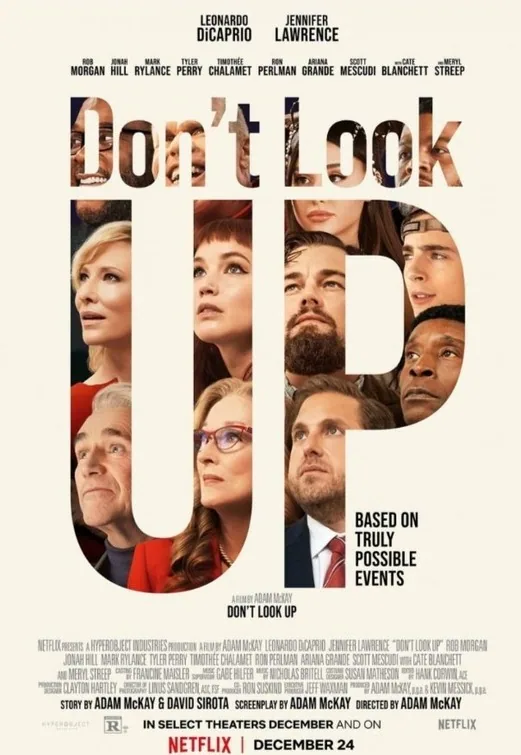
A verified threat is repeatedly converted into material for electoral calculation and profit, letting control of public interpretation displace the work of preventing catastrophe.
Why this matches +
Selected for the central appeal: An apparently ordinary outsider exposes institutions that mistake slogans and spectacle for competence.
Genres: Comedy / Science fiction
Shared film traits
Based on recorded story, mood and style. Your preferences can change the order.
What changes Political and commercial media systems refuse usable knowledge while rewarding flattering spectacle; an approaching disaster and scientists’ frustration replace the average man’s accidental authority.
Two astronomers discover a comet headed toward Earth, but communicating the danger places them inside political and entertainment systems that reward a different story. A commercial proposal reframes destruction as opportunity, while access and publicity divide people who began with the same evidence. The approaching deadline makes distraction less an incidental failure of attention than a practical process through which institutions postpone action until the consequences can no longer be negotiated.
Chance’s literal gardening remarks are repeatedly interpreted as metaphor by people eager to find wisdom and leadership in him.
Why this matches +
Related viewing experiences with the specific differences recorded for each pair.
An adjacent discovery: a related idea with a different viewing experience.
Genres: Comedy / Drama
Shared film traits
Based on recorded story, mood and style. Your preferences can change the order.
What changes A socially unprepared outsider is treated as a political authority because elites hear what they want in simple statements; restrained contemporary ambiguity replaces crude future-world literalism.
Chance is a sheltered gardener whose knowledge of the outside world comes largely from television and the routines of the wealthy household where he lives. After he is forced to leave, a series of coincidences brings him into contact with influential people who interpret his simple observations as political wisdom. As Chance moves through elite social circles, the gap between what he means and what others hear becomes the film’s central comic device. Hal Ashby’s satire examines media, class, celebrity, and the appetite for meaning in public life.
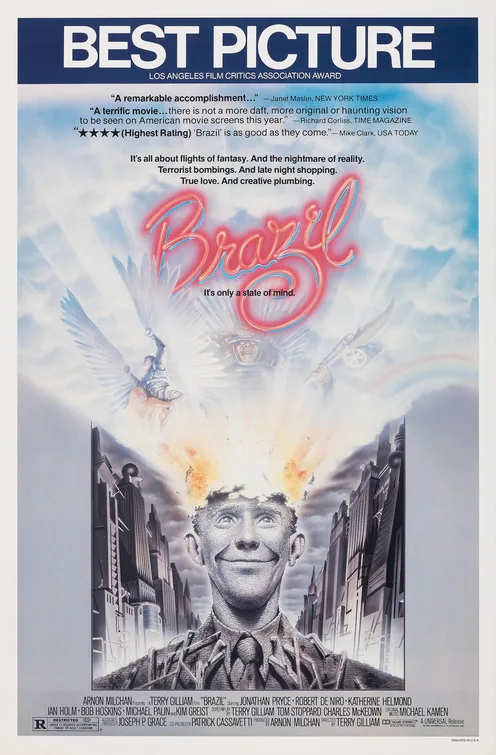
An office worker's attempt to correct a bureaucratic injustice makes him increasingly vulnerable to the system he serves.
Why this matches +
Related viewing experiences with the specific differences recorded for each pair.
An adjacent discovery: a related idea with a different viewing experience.
Genres: Science fiction / Drama
Shared film traits
Based on recorded story, mood and style. Your preferences can change the order.
What changes Corporate-bureaucratic routines make institutions absurd and undermine practical human needs; dense nightmare imagery and a functionary’s fantasies replace the source’s blunt comic future.
A low-ranking bureaucrat escapes a suffocating state through elaborate fantasies, until an administrative error draws him into the machinery of detention and interrogation. His search for a woman resembling his dream companion places romantic longing against an institution that treats responsibility as a paperwork problem. Absurd inventions, domestic vanity and casual official cruelty turn a personal escape story into a nightmare of organised incompetence.
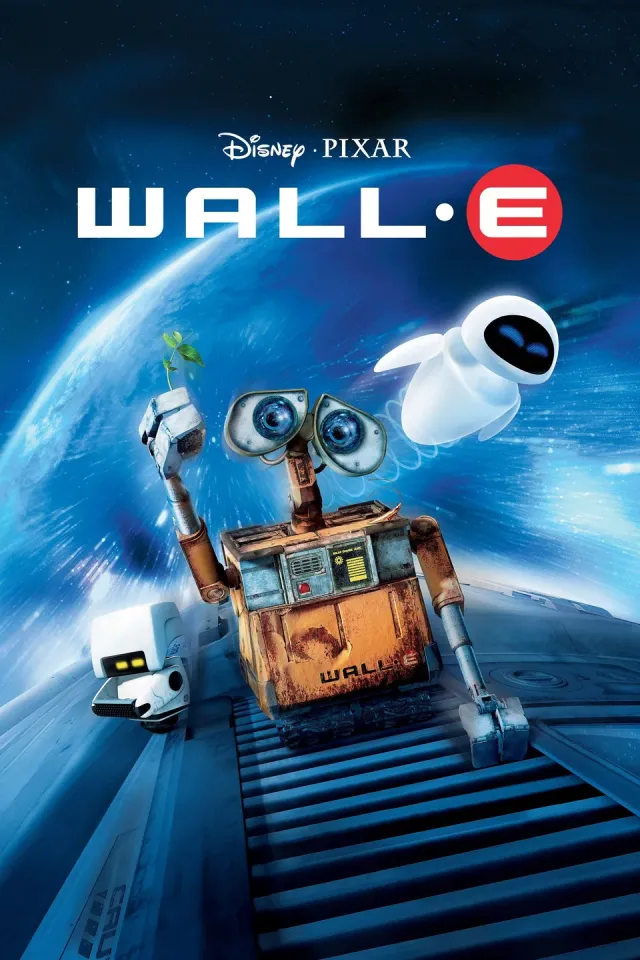
A lonely worker's attachment to a visitor introduces disruptive evidence into an order built around continuing a comfortable routine.
Why this matches +
Related viewing experiences with the specific differences recorded for each pair.
An adjacent discovery: a related idea with a different viewing experience.
Genres: Animation / Science fiction
Shared film traits
Based on recorded story, mood and style. Your preferences can change the order.
What changes A corporate-managed future has lost ordinary competence until an overlooked worker helps recover a livable world; gentle animation, automation and consumer passivity replace crude adult satire and the source’s reductive reproductive premise.
A solitary waste-compacting robot continues working on an abandoned Earth, collecting objects that suggest kinds of companionship he has never experienced. The arrival of an advanced probe creates an attachment that carries him beyond the ruined planet to a population living inside an automated system of comfort. Small acts of attention and persistence become unexpectedly important to deciding whether that system can accommodate a different future.
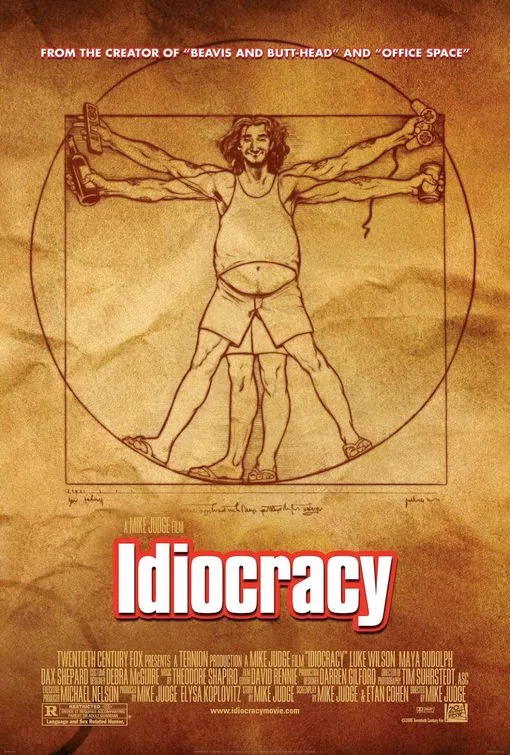
An average soldier and a woman recruited for a suspended-animation experiment wake centuries later in a society dominated by commercial slogans, anti-intellectual politics and failing infrastructure. Joe’s ordinary abilities make him appear exceptional, but his proposed solutions meet institutions that reward spectacle over competence. The film turns corporate branding, media and political theater into broad comic targets, while grounding its future population in a reproductive premise that carries eugenic assumptions. That premise should not be repeated as science or a theory of social worth. The sharper profile is about the institutions the satire depicts and the reductive explanation it uses to get there.
What drives the story
Accidental time displacement puts Joe inside failing institutions where his practical knowledge is needed but difficult to apply through a culture built around advertising and spectacle. Joe’s competence is ordinary, while institutional incentives make ordinary problem-solving seem extraordinary.
The people at its centre
Joe wants to return to his old life but becomes responsible for people who cannot judge his advice; Rita’s improvisation offers competence the system overlooks. Rita survives through improvisation rather than serving only as Joe’s reward or guide.
What it feels like
Obscene slogans, blunt visual jokes and deliberately exaggerated incompetence create an unsubtle comedy of consumer and institutional absurdity. Advertising slogans and bodily comedy make the satire deliberately crude and visual.
Worth knowing
Compare with satirical futures about corporate power and public institutions, while rejecting the reproductive premise as scientific fact or a measure of human value. The film’s reproductive opening is a satirical device with eugenic assumptions, not a scientific forecast.