Parallel lives of a persecuted civilian and a self-important dictator converge through resemblance, turning mistaken identity into a platform against authoritarian power.
Why this matches +
Selected for the central appeal: Coming-of-age stories that combine wartime persecution with satire, imagination and human connection.
Genres: Comedy / War
Shared film traits
Based on recorded story, mood and style. Your preferences can change the order.
War and civilian life
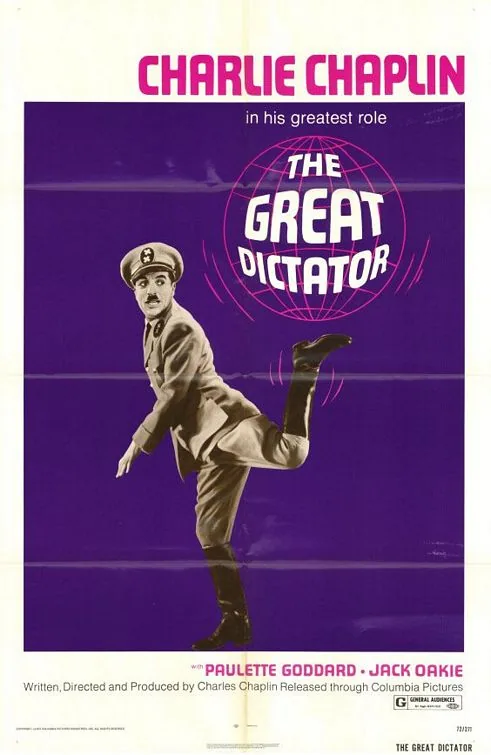
What changes The Great Dictator uses broad satire to expose fascist power and antisemitic persecution.
A Jewish barber returns from a long recovery after wartime service to find his neighbourhood subject to a dictatorship's escalating persecution. His resemblance to the country's ruler creates a separate line of confusion while the ruler pursues military expansion and competes with another authoritarian leader. Everyday resistance and comic misunderstandings expose the cruelty behind ceremonial grandeur, eventually giving an ordinary man an extraordinary opportunity to reject the language of domination.
A romantic comic courtship gives way to a father's sustained attempt to translate coercive, lethal conditions into rules his child can emotionally survive.
Why this matches +
Selected for the central appeal: Coming-of-age stories that combine wartime persecution with satire, imagination and human connection.
Genres: Drama / Comedy
Shared film traits
Based on recorded story, mood and style. Your preferences can change the order.
War and civilian life
What changes Life Is Beautiful mixes comedy and a child's perspective with the horrors of Nazi persecution.
A playful Italian waiter courts a schoolteacher by treating everyday obstacles as occasions for invention. Years later, persecution and deportation transform the meaning of his improvisations when he tries to shelter their young son from understanding the concentration camp around them. His invented game becomes an act of parental care under conditions it cannot control, holding a child's limited perspective beside the audience's knowledge of the danger.
A planned childhood elopement creates a search that exposes failures of attention among the adults responsible for the missing pair.
Why this matches +
These offer a related experience with a meaningful difference in story, tone, or presentation.
An adjacent discovery: a related idea with a different viewing experience.
Genres: Comedy / Drama
Shared film traits
Based on recorded story, mood and style. Your preferences can change the order.
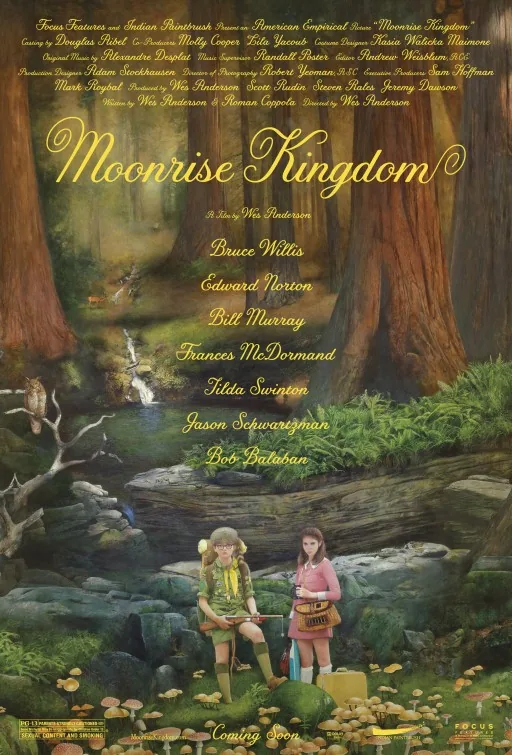
What changes Moonrise Kingdom shares a whimsical visual style and young outsiders finding connection amid adult conflict.
Two isolated children secretly arrange to leave their families and scout routines to live together on a New England island. Their disappearance draws troubled adults into a search as an approaching storm raises the practical risks of the plan. What begins as an idealised escape reveals how little emotional security the surrounding institutions provide, while affection and makeshift alliances offer imperfect alternatives to simply returning each child to the old arrangement.
Independent assassination and revenge plans converge around a cinema, with concealed identities repeatedly threatened by linguistic and behavioural scrutiny.
Why this matches +
These offer a related experience with a meaningful difference in story, tone, or presentation.
An adjacent discovery: a related idea with a different viewing experience.
Genres: Drama / Thriller
Shared film traits
Based on recorded story, mood and style. Your preferences can change the order.
War and civilian life
What changes Inglourious Basterds uses irreverent, fictionalized wartime storytelling against Nazi figures, with far more graphic violence.
In occupied France, a Jewish cinema owner prepares a private act of revenge while an American unit and Allied operatives pursue separate plans against Nazi leadership. Their schemes depend on performances of identity, language and social confidence that can fail in a moment. The intersecting plots transform ordinary conversations, screenings and drinking games into contests over who recognises the deception first.
A traumatized child insists on continuing reconnaissance while adult attempts to protect him collide with his determination to remain inside the conflict that destroyed his family.
Why this matches +
These offer a related experience with a meaningful difference in story, tone, or presentation.
An adjacent discovery: a related idea with a different viewing experience.
Genres: War / Drama
Shared film traits
Based on recorded story, mood and style. Your preferences can change the order.
War and civilian life
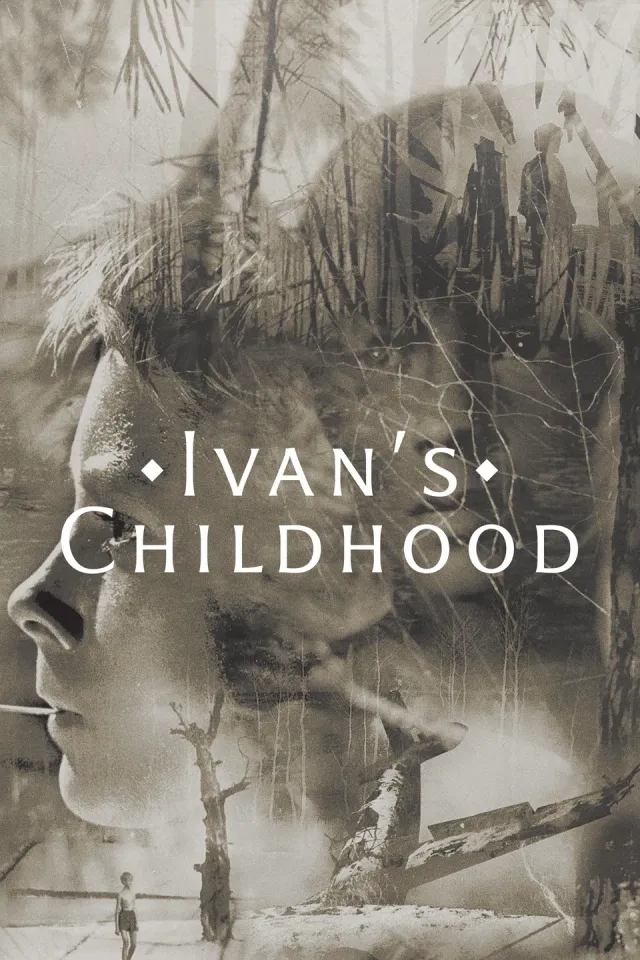
What changes Ivan's Childhood sees World War II through a child's experience, with a much grimmer tone.
A boy whose family has been destroyed by war crosses dangerous territory to report intelligence to Soviet soldiers. Officers attempt to redirect him toward safety, but revenge and the disappearance of ordinary childhood make another life difficult for him to imagine. Dreams interrupt the military present with tactile images of affection and freedom. The film places a child's usefulness to war beside what that usefulness cannot restore, refusing to let competence in danger stand as proof that his damaged world has become acceptable.
A boy in wartime Germany measures himself against the Nazi ideals supplied by his youth group and an imaginary version of Hitler. Discovering that his mother is hiding a Jewish teenager makes those beliefs difficult to reconcile with an actual person living nearby. Their uneasy conversations unfold as the war approaches home, turning a childish search for acceptance into a painful confrontation with propaganda, courage and loss.
What drives the story
An indoctrinated child's secret encounter with a persecuted teenager gradually undermines the ideology through which he interprets his world.
The people at its centre
The boy's dependence on an imaginary authority conflicts with his mother's example and an increasingly reciprocal relationship with the hidden girl.
What it feels like
Absurdist comedy and a child's limited perspective coexist with persecution and sudden grief, producing tonal changes rather than continuous lightness.
Worth knowing
The imaginary companion externalises indoctrination, not a literal supernatural presence; satire does not erase the Holocaust and wartime danger surrounding the characters.
PrejudiceIdentityFamily
Mood
Humorous · Bittersweet · Emotional · Unsettling
Pacing
Steady
Visual style
Stylized · Warm
Storytelling
Coming of age · Social commentary · Character study