Explore films connected to King Arthur: Legend of the Sword through Identity, Power, Responsibility. Choose the qualities you want to carry into your next watch.
What should feel similar?
Find your next favourite
9 films · Closest overall matches
Hide films you’ve seen or don’t want. Saved on this device.
No matches for this combination yet.
Try another option or reset your choices to see more films.
Both share themes of power and responsibility, plus an adventurous atmosphere.
Why this matches +
Genres: Fantasy / Action
Shared film traits
Based on recorded story, mood and style. Your preferences can change the order.
Expect adventurous and exuberant, with fast pacing.
A mortal thief tries to recover his murdered lover by bargaining with a defeated god whose lost powers could challenge Egypt's new ruler. Their journey through divine territories joins personal restoration to a struggle over who controls the conditions of death and passage beyond it. The god's assumptions about kingship must change if the alliance is to mean more than exchanging favors. Lavish fantasy spectacle turns stolen body parts and magical resources into stages of a quest linking rulership with obligations toward vulnerable mortals.
Both share themes of power, plus an intense and adventurous atmosphere.
Why this matches +
Genres: Fantasy / Adventure
Shared film traits
Based on recorded story, mood and style. Your preferences can change the order.
Expect adventurous and playful, with fast and escalating pacing.
A farm boy's accidental possession of magical beans lifts a visiting princess into a realm above the clouds. Joining the rescue exposes him to an adviser who wants the giants' command crown for his own political ascent. A private mistake becomes a threat to the kingdom when the separation between worlds is breached. The adventure makes low social status compatible with practical courage, while the struggle over a magical instrument of obedience complicates the difference between rescuing people and simply possessing overwhelming force.
Based on recorded story, mood and style. Your preferences can change the order.
Political resistance
Expect adventurous and epic, with fast pacing.
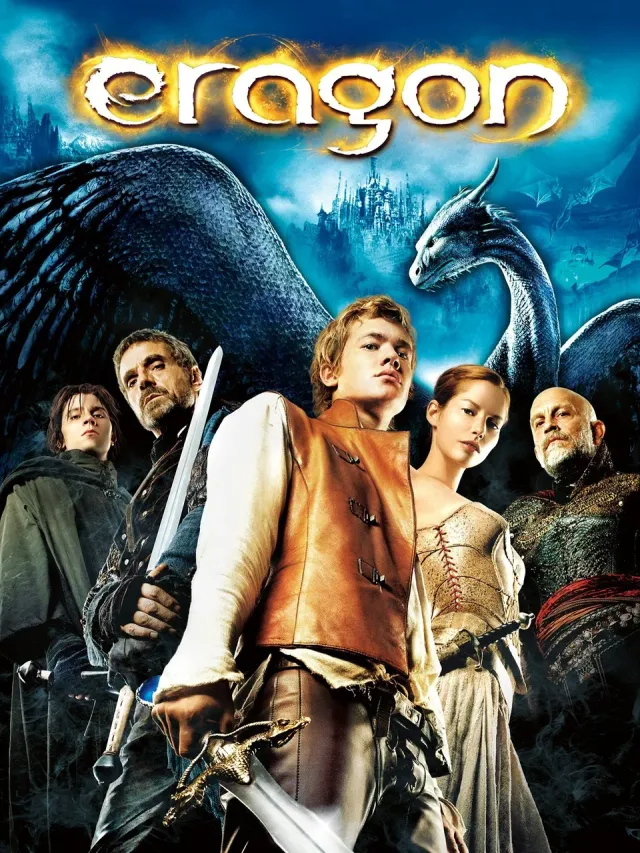
A farm boy finds a stone that hatches into a dragon, bringing him into a persecuted legacy whose significance he does not yet understand. Violence against his household forces departure with a mentor who knows more about the bond than he initially reveals. Learning to act with the dragon turns private loss toward a rebellion, while the urge to rescue a captive exposes the difference between having unusual power and knowing how to use it without sacrificing those offering help.
Based on recorded story, mood and style. Your preferences can change the order.
What changes King Arthur: Legend of the Sword: fast and nonlinear. Excalibur: epic.
A magical sword gives a young man a claim to kingship in a land exhausted by competing rulers. Building a shared order requires more than possessing the object, as intimate betrayal, manipulated lineage and the ruler's own failures fracture the court that gathers around him. A later search for renewal turns the kingdom's physical condition into an image of damaged authority, making recovery depend on acts that neither military victory nor hereditary certainty can supply alone. The mythic cycle makes the pursuit of unity depend on authority born through desire, coercion and concealed lineage.
Both share themes of power, plus an adventurous atmosphere.
Why this matches +
Genres: Fantasy / Action
Shared film traits
Based on recorded story, mood and style. Your preferences can change the order.
Political resistance
What changes King Arthur: Legend of the Sword: fast and nonlinear. The Sword and the Sorcerer: action-led and quest-like.
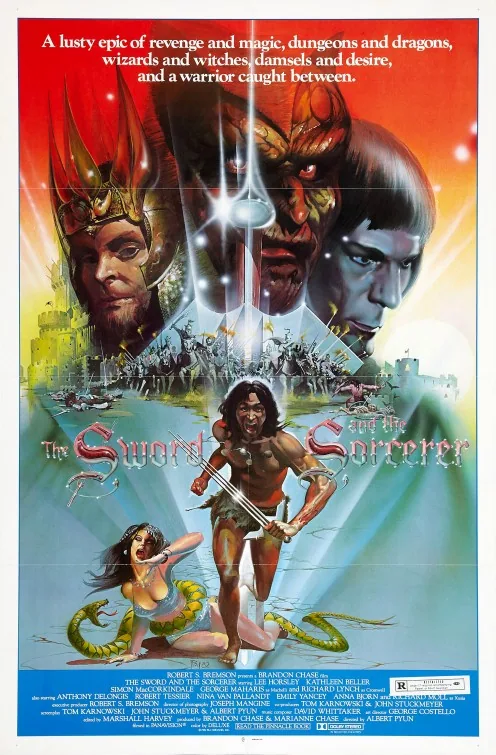
A tyrant's forces threaten a kingdom, and a mercenary carrying a distinctive three-bladed sword is drawn into the resistance organized by a princess. As old loyalties and claims to power re-emerge, the conflict expands from a paid assignment into a fight over who will rule. The film favors practical, rough-edged adventure and swordplay over elaborate mythology, giving its fantasy world a pulpy tone.
Based on recorded story, mood and style. Your preferences can change the order.
Political resistance
What changes King Arthur: Legend of the Sword: fast and nonlinear. Maleficent: Mistress of Evil: steady and escalating.
An engagement meant to connect a human kingdom and a magical realm becomes the setting for a carefully prepared accusation against the bride's guardian. Separation introduces the guardian to others who share her history of exclusion, while wedding preparations conceal a plan aimed at the wider community. A conflict framed as a choice between marriage and maternal loyalty is revealed as a use of both attachments by an authority seeking war. The fantasy sequel tests how to defend vulnerable people without accepting the enemy's demand that difference must culminate in extermination.
Both share themes of power and responsibility, plus an adventurous atmosphere.
Why this matches +
Genres: Fantasy / Adventure
Shared film traits
Based on recorded story, mood and style. Your preferences can change the order.
Political resistance
What changes King Arthur: Legend of the Sword: fast and nonlinear. Dragonheart: steady.
A disillusioned knight blames dragons for the cruelty of a prince he once trained, not knowing that the dragon who saved the ruler's life remains physically bound to him. Meeting the last dragon produces an unlikely partnership in staged monster slayings, but renewed contact with the kingdom's suffering makes profitable deception harder to sustain. Defeating tyranny eventually requires confronting the shared life that makes harming the enemy threaten the friend.
Based on recorded story, mood and style. Your preferences can change the order.
Expect extravagant and romantic, with fast pacing.
A Chicago cleaner discovers that her genetic identity gives her a legal claim within a vast dynasty treating inhabited planets as assets. Rival heirs pursue her through rescue offers, procedural recognition and proposed intimacy, each seeking control of a value she did not know she possessed. A modified former soldier helps her navigate a system in which apparent elevation can be another transaction. The space fantasy links domestic class frustration to a literal economy of harvested lives, making refusal of inherited privilege as consequential as obtaining it.
Based on recorded story, mood and style. Your preferences can change the order.
Political resistance
What changes King Arthur: Legend of the Sword: fast and nonlinear. 47 Ronin: steady.
A mixed ancestry outcast raised among supernatural beings finds a precarious place in a Japanese lord's household. After a rival and a witch engineer that lord's disgrace and death, his samurai become masterless and forbidden to seek revenge. They recruit the outsider for a dangerous effort to avenge their master, even as loyalty to their code makes personal survival uncertain.
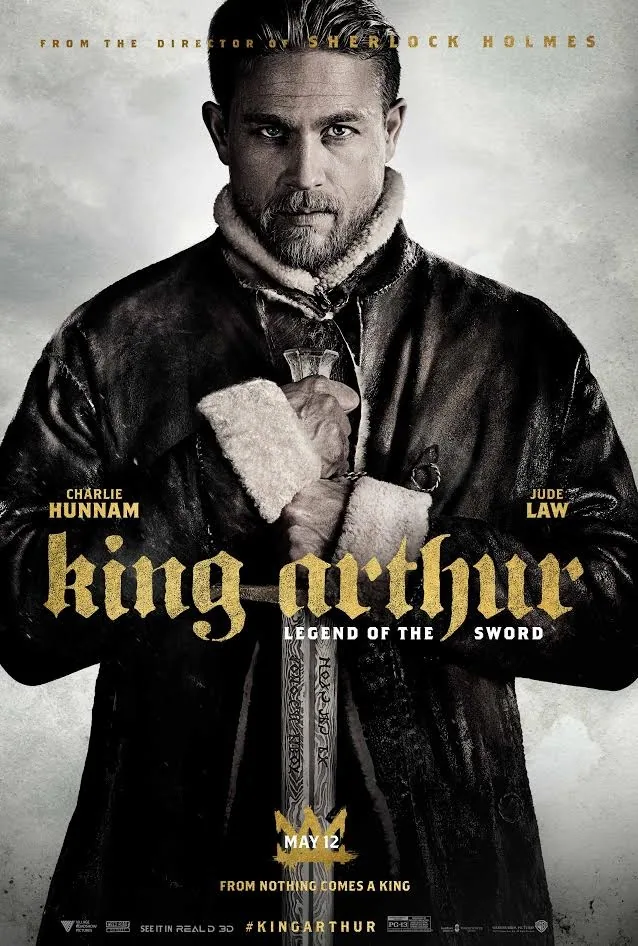
A royal child survives a coup and grows up outside the court, learning to protect a small urban community rather than preparing for a throne. Pulling a buried sword exposes the identity he has avoided and draws a resistance group toward him. Its power requires confronting the violence he only partly remembers, while his uncle's rule depends on repeated private sacrifice. The fantasy turns succession into a contested vocational demand: accepting inherited authority must become something other than imitating the domination used to obtain it.
What drives the story
A hidden heir's accidental recognition activates a rebellion, but wielding its central weapon requires recovering the childhood event that made withdrawal seem necessary.
The people at its centre
Arthur's street loyalties complicate the resistance's demand that he become a symbol, while Vortigern converts intimate bonds into resources for power.
What it feels like
Rapid montage, irreverent dialogue and enormous magical confrontations mix urban caper energy with a heavily stylized origin legend.
Worth knowing
Specify this magical, street-raised reinterpretation rather than the 2004 military film; recovered lineage and exceptional force are story conventions, not a factual account of rightful government.