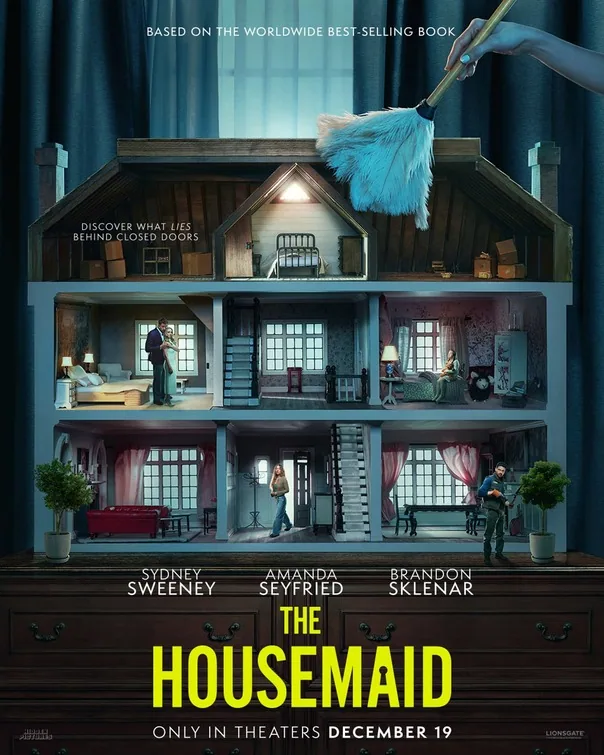
Both share themes of class and survival, plus a claustrophobic atmosphere.
Why this matches +
Genres: Thriller / Drama
Shared film traits
Based on recorded story, mood and style. Your preferences can change the order.
What changes Panic Room: fast and escalating. The Housemaid: slow-burn and revelation-led.
Recently paroled Millie accepts a live-in housekeeping job with the wealthy Winchester family, hoping that regular work will give her a stable start. Her attic room, the household's sharp divisions and Nina Winchester's unpredictable behavior soon make the position feel less secure than it appeared. As Millie observes the marriage and the family's routines, competing accounts of what happens inside the house turn domestic service into a suspenseful contest over trust and control.
Based on recorded story, mood and style. Your preferences can change the order.
Escape and pursuit
Expect tense and unsettling, with escalating and suspense-led pacing.
A psychiatrist's daughter is kidnapped, and the people holding her demand that he obtain a secret number from a traumatized young patient. As he tries to reach her through a history she can barely articulate, the hostage-takers tighten the deadline and the investigation reveals connections the doctor did not know. The thriller ties a puzzle to an intimate rescue, testing whether care and trust can survive when both are being used as leverage.
Based on recorded story, mood and style. Your preferences can change the order.
Escape and pursuit
What changes Panic Room: fast and escalating. No Good Deed: tight real-time pressure with sudden reversals.
A woman alone at home offers shelter to a stranger whose car has broken down, then realizes that his charm conceals a violent danger. The visit becomes a struggle over control of domestic space, as she searches for a way to protect herself and her family. The thriller relies on limited locations and escalating intimidation, with trust turning into the central survival question.
Both centre on home defence and constrained rescue.
Why this matches +
Genres: Thriller / Action
Shared film traits
Based on recorded story, mood and style. Your preferences can change the order.
Survival · Escape and pursuit
What changes Panic Room: fast and escalating. Breaking In: deadline-driven escalation.
Shaun Russell takes her children to a remote, technologically secured home and finds that burglars have entered while the family is away. When the thieves hold the children inside, Shaun must use the property’s security systems and her own resourcefulness to break back in. The thriller reverses the home-invasion setup by making a mother the pursuer, with each barrier and camera becoming part of a rescue strategy.
Based on recorded story, mood and style. Your preferences can change the order.
Escape and pursuit
What changes Panic Room: fast and escalating. The Town: heist-driven and escalating.
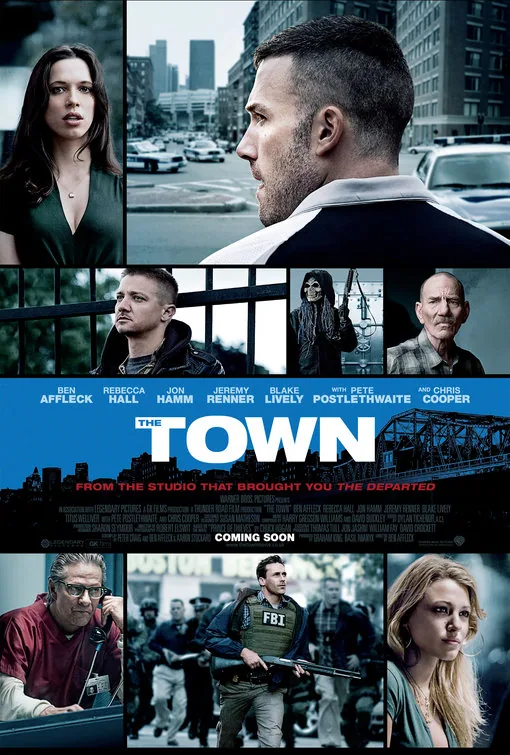
Doug MacRay leads a crew of bank robbers from Charlestown, a Boston neighbourhood where criminal work has become an inherited expectation. After a robbery, the crew takes bank manager Claire as a hostage and later discovers that she lives nearby. Doug approaches her under a false identity, but their growing relationship makes continued secrecy dangerous. His closest friend Jem is volatile and loyal to the life they know, while FBI agent Adam Frawley intensifies pressure on the crew. Doug begins planning a way out, yet his attempt to leave risks exposing Claire and destabilizing the only family-like bond he has maintained. The crime plot is therefore also a struggle over whether a place and its loyalties can be escaped.
Based on recorded story, mood and style. Your preferences can change the order.
Survival · Escape and pursuit
What changes Panic Room: fast and escalating. Alone: a compact structure follows one woman’s route through the wilderness.
After leaving a painful relationship, Jessica drives toward a new start but is abducted by a man who has been targeting women along the road. She escapes into remote woodland and must evade him while dealing with injury, exhaustion and isolation. The survival thriller keeps its character count small and its focus on practical movement, turning ordinary rural spaces into a pursuit route with few safe choices.
Based on recorded story, mood and style. Your preferences can change the order.
Survival · Escape and pursuit
What changes Panic Room: fast and escalating. Drop: a real-time dinner date tightens under a sequence of phone demands.
A widowed therapist goes on a date at a high-end restaurant while her child is cared for at home. Anonymous messages begin appearing on her phone, escalating into a threat that demands she follow instructions without revealing what is happening. The contained thriller turns a modern social device into a coercive channel, placing Violet between public composure, private grief, and the immediate responsibility of keeping her child safe.
Based on recorded story, mood and style. Your preferences can change the order.
What changes Panic Room: fast and escalating. Animals: deadline-driven and escalating investigation.
A mayoral candidate and his wife resort to a ransom scheme after their son is kidnapped, setting off a dangerous night. The thriller follows a missing-child pursuit through political image, money and family responsibility. The parents' choices could expose secrets and force a reckoning with who they are when control disappears, putting the private urgency of a ransom demand beside the public consequences of a campaign.
Based on recorded story, mood and style. Your preferences can change the order.
Expect tense and disturbing, with escalating pacing.
A married lawyer tries to contain a brief affair as the other participant’s attempts to continue the relationship become threats against his household. His secrecy delays his wife’s chance to understand the danger, so the thriller’s suspense grows partly from his own choices rather than from Alex alone. Domestic rooms become sites of surveillance and siege, while the film increasingly aligns viewers with the family’s fear. The ending changed after test screenings, but director Adrian Lyne said he made the change for dramatic reasons rather than because audiences demanded a harsher fate; the alternate ending later circulated on home video.
Recently divorced Meg Altman moves with her diabetic daughter Sarah into a New York townhouse equipped with a reinforced panic room. On their first night, burglars enter to retrieve hidden money in that very room, forcing mother and daughter to shelter inside while the intruders search for a way in. The burglars’ motives are not identical: Junior wants the cash, Burnham is reluctant to harm anyone, and Raoul escalates the threat. When Sarah’s blood sugar falls, the supposedly secure room becomes a trap that Meg must leave despite the danger outside.
What drives the story
A sealed room reverses its purpose when Sarah needs medicine; safety depends on Meg choosing when to risk leaving it.
The people at its centre
Meg’s protective instincts are tested by the need to expose herself to danger, while Sarah’s diabetes makes their dependence immediate and concrete.
What it feels like
Fincher’s moving camera maps the townhouse and its hidden spaces, turning architecture, monitors and locks into a tightly controlled suspense system.
Worth knowing
It is a contained home-invasion thriller driven by a mother’s rescue attempt, not a conventional hostage drama centered on police pursuit.
MotherhoodPrivacySurvival
Mood
Tense · Claustrophobic · Suspenseful
Pacing
Fast · Escalating
Visual style
Confined · Architectural · Restrained
Storytelling
Home invasion · Constrained rescue · Contained thriller