A hostage crisis on a financial news show forces its crew to investigate a market loss in real time.
Why this matches +
Selected for the central appeal: Contained thrillers in which an unseen adversary controls a public crisis through threats and communication.
Genres: Thriller / Crime
Shared film traits
Based on recorded story, mood and style. Your preferences can change the order.
Investigation
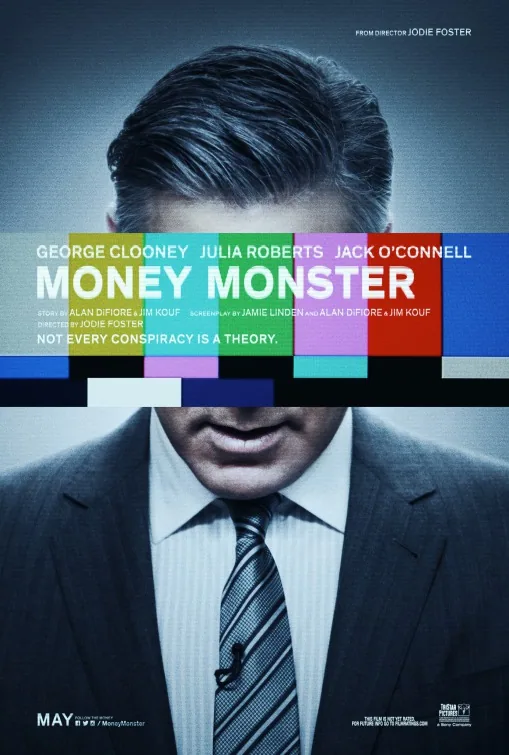
What changes Money Monster traps a media figure in a public hostage spectacle where a gunman forces him to answer for perceived wrongdoing, moving the crisis from a street booth to a live television studio.
When a disgruntled investor takes financial television host Lee Gates and his crew hostage live on air, the broadcast becomes an improvised investigation into a sudden market collapse. Producer Patty Fenn tries to keep the show on air while uncovering what happened to the missing money and locating the company's chief executive. Jodie Foster's thriller links media spectacle to financial accountability, making communication and public evidence part of the rescue effort.
An air marshal must find a hidden attacker aboard a packed flight while staged evidence turns passengers and officials against him.
Why this matches +
These offer a related experience with a meaningful difference in story, tone, or presentation.
An adjacent discovery: a related idea with a different viewing experience.
Genres: Action / Thriller
Shared film traits
Based on recorded story, mood and style. Your preferences can change the order.
Investigation
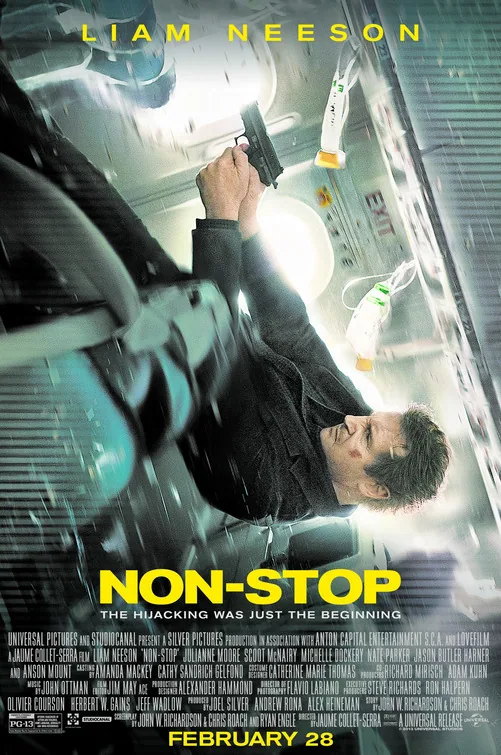
What changes Non-Stop follows a threatened professional receiving messages from an unseen adversary during a confined crisis, moving from a public phone booth to an aircraft.
An air marshal on a transatlantic flight receives anonymous messages predicting a passenger will die every twenty minutes unless money is transferred. Each attempt to investigate makes him look more suspicious to the people around him, while the limited cabin becomes both crime scene and public pressure chamber. The puzzle depends on who can be trusted when evidence keeps changing hands.
The film's engine follows limited control makes careful listening central to the rescue; this keeps the stakes tied to observable choices.
Why this matches +
These offer a related experience with a meaningful difference in story, tone, or presentation.
An adjacent discovery: a related idea with a different viewing experience.
Genres: Action / Crime
Shared film traits
Based on recorded story, mood and style. Your preferences can change the order.
Investigation
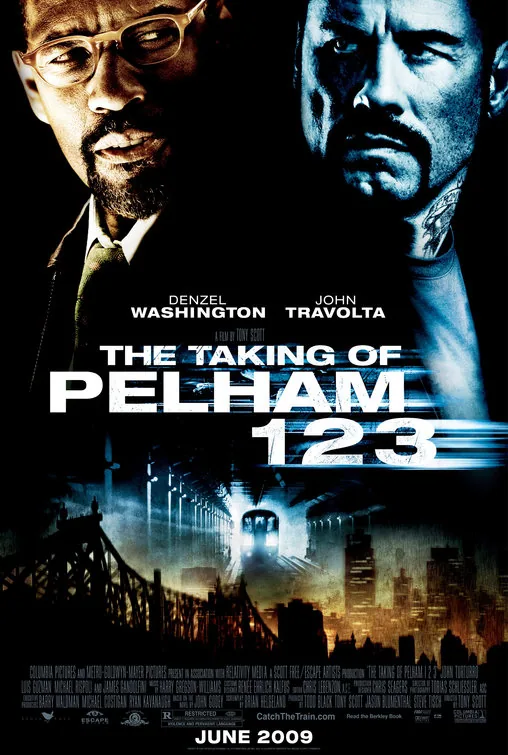
What changes The Taking of Pelham 123 turns phone negotiations with an armed criminal into a high-pressure public standoff, with a subway dispatcher handling a hostage train rather than a target trapped in a booth.
A New York subway dispatcher becomes the key negotiator when armed men hijack a train and demand a ransom. As police and city officials coordinate a response, the dispatcher tries to understand the leader’s motives and keep passengers alive. The remake turns transit into a ticking-clock thriller about communication, leverage and difficult choices during a constrained rescue.
Joe’s access to information is narrow, making each new detail vulnerable to his own assumptions.
Why this matches +
These offer a related experience with a meaningful difference in story, tone, or presentation.
An adjacent discovery: a related idea with a different viewing experience.
Genres: Thriller / Crime
Shared film traits
Based on recorded story, mood and style. Your preferences can change the order.
Investigation
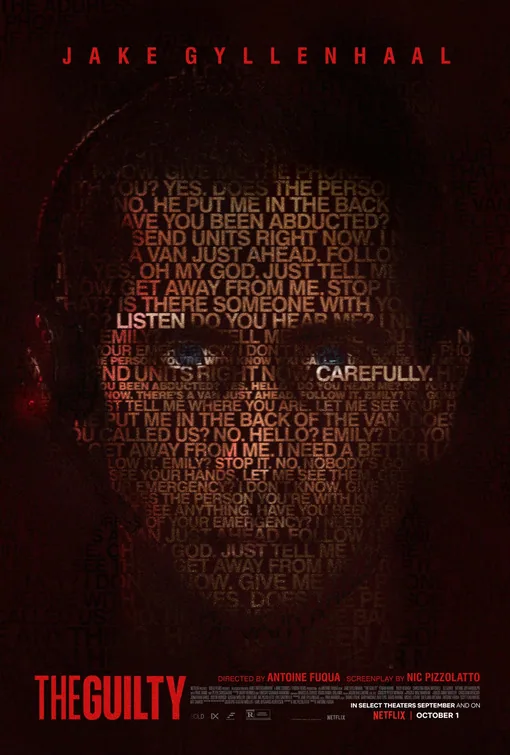
What changes The Guilty builds real-time suspense around a person confined to an emergency-call desk interpreting voices and incomplete information, following a responder rather than the threatened caller.
LAPD officer Joe Baylor is temporarily assigned to an emergency call center and receives a call from a woman who appears to have been abducted. With limited information and no ability to leave his post, he tries to direct officers and gather clues while other calls interrupt his attention. The contained thriller builds tension through voice, inference and the mismatch between Joe’s certainty and what he can actually know.
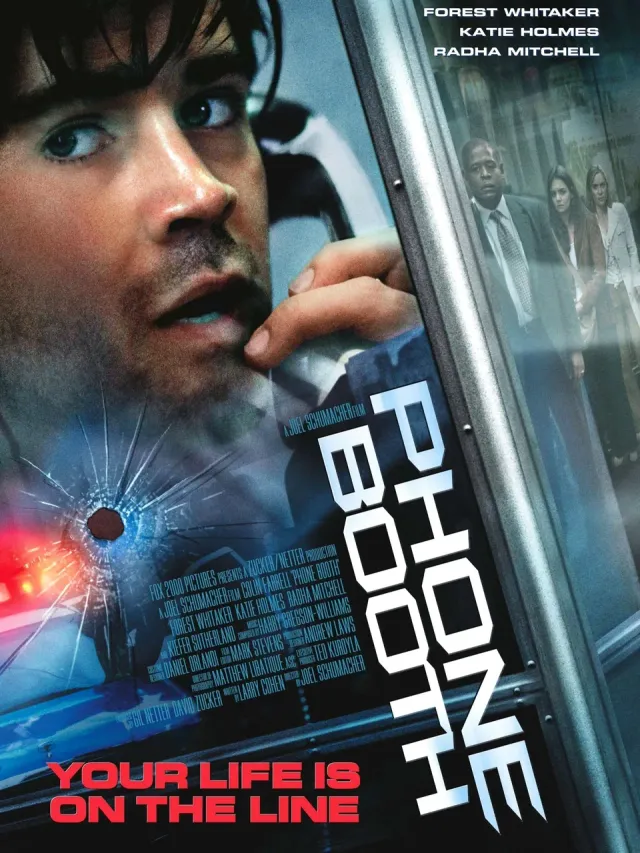
New York publicist Stuart Shepard uses a Times Square phone booth to call an actor with whom he is having an affair, believing the location keeps his wife from tracing him. When the call ends, the phone rings again. An unseen caller threatens to shoot Stuart if he leaves the booth and begins exposing lies he has told to his wife, girlfriend and clients. Police surround the area after a nearby man is killed, and a crowd watches as the standoff turns into a public confession. Stuart tries to identify the caller and survive a situation in which every attempt to regain control can endanger someone else.
What drives the story
The booth turns Stuart’s private dishonesty into a visible hostage crisis, while the caller uses surveillance and exposure as weapons.
The people at its centre
Stuart’s polished public persona crumbles under scrutiny, but the caller’s claimed moral authority remains inseparable from coercive violence.
What it feels like
Schumacher compresses the thriller into a single crowded location, using phone calls, cross-cut reaction and real-time pressure to heighten confinement.
Worth knowing
Its appeal is the contained moral standoff and suspense clock, not a procedural investigation with a fully balanced account of justice.
HonestySurveillanceAccountability
Mood
Tense · Claustrophobic · Urgent
Pacing
Fast · Real-time · Escalating
Visual style
Urban · Confined · High contrast
Storytelling
Hostage standoff · Real-time thriller · Moral reckoning