The wish-fulfillment superhero premise is anchored in Billy’s refusal to trust another home; power becomes meaningful only when he accepts the foster family he has tried to avoid.
Why this matches +
These films explore a related idea in a different style, setting or audience.
An adjacent discovery: a related idea with a different viewing experience.
Genres: Action / superhero fantasy
Shared film traits
Based on recorded story, mood and style. Your preferences can change the order.
What changes A foster child gains adult superhero powers in a lighter comic origin story.
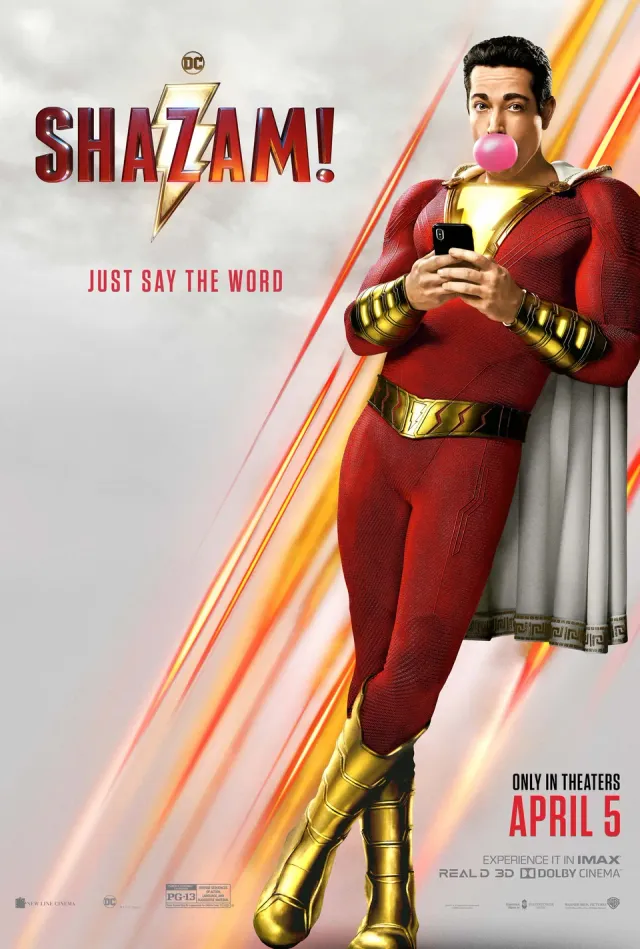
Foster teenager Billy Batson keeps running from placements while searching for the mother he lost at a carnival. A wizard gives him the power to become an adult champion, and Billy initially treats the transformation as a shortcut to money and popularity with his new foster brother Freddy. Their experiments turn serious when Dr. Sivana, rejected by the same wizard as a child, returns carrying the Seven Deadly Sins. Billy must decide whether his new family is temporary shelter or the people he is willing to protect.
An involuntary bond with coveted technology makes a financially vulnerable family the target of a corporation attempting to convert the device into military power.
Why this matches +
These films explore a related idea in a different style, setting or audience.
An adjacent discovery: a related idea with a different viewing experience.
Genres: Action / Science fiction
Shared film traits
Based on recorded story, mood and style. Your preferences can change the order.
What changes A young man becomes an armored hero while protecting his family.
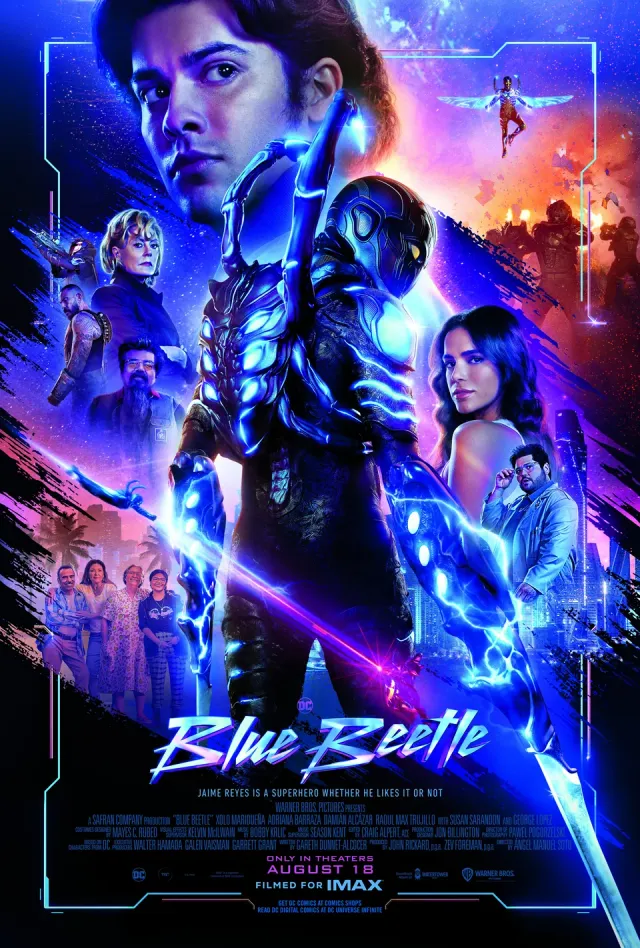
A recent graduate returns to his family in a city where corporate power and financial pressure have narrowed their options. An alien device unexpectedly bonds with him, turning an ordinary attempt to find work into a struggle over technology a weapons company wants to control. Protecting his relatives requires learning to cooperate with a power he did not choose, while the family refuses to remain merely the private vulnerability of a solitary hero.
A bereaved inventor's investigation creates a conflict between using technology to protect people and adapting it to satisfy revenge.
Why this matches +
These films explore a related idea in a different style, setting or audience.
An adjacent discovery: a related idea with a different viewing experience.
Genres: Animation / Science fiction
Shared film traits
Based on recorded story, mood and style. Your preferences can change the order.
What changes An animated young inventor processes loss and forms a superhero team.
A gifted adolescent drawn to informal robot competitions is introduced to a research community that offers a more constructive use for his abilities. After a devastating loss, an unfinished caregiving robot becomes both a companion and a potential tool in an investigation. Recruiting a group of young specialists turns grief into action, but the wish to punish someone responsible threatens to override the principles of care built into the machine helping him.
The brothers' wish to join human society gives the Superfly investigation personal stakes; defeating a threat is also their attempt to change how the city sees them.
Why this matches +
These films explore a related idea in a different style, setting or audience.
An adjacent discovery: a related idea with a different viewing experience.
Genres: Action / Adventure
Shared film traits
Based on recorded story, mood and style. Your preferences can change the order.
What changes Teenage mutant brothers seek acceptance in a stylized animated team adventure.
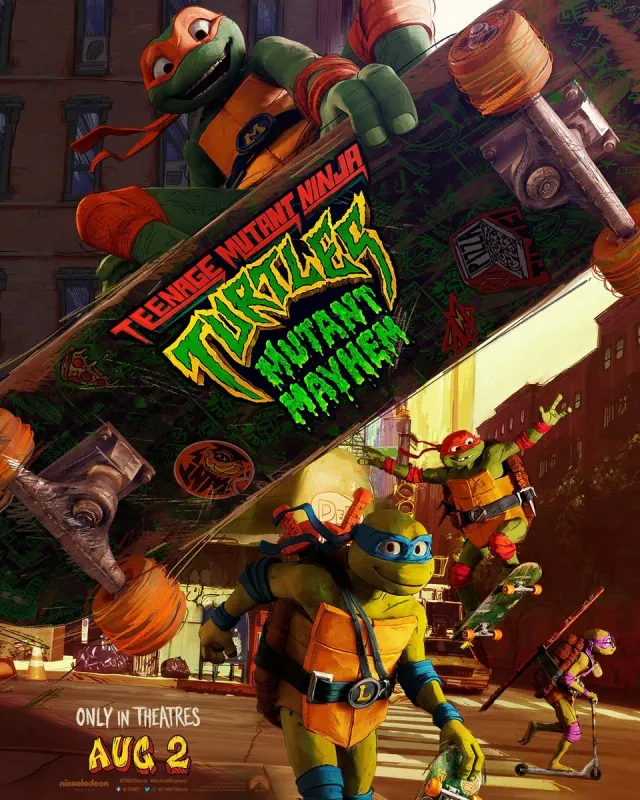
Raised in a sewer by a wary Splinter, the four turtle brothers long to be accepted by the human teenagers they watch from hiding. After rescuing April O'Neil, they help her investigate Superfly, a mutant who is stealing technology and gathering other outcasts. The Turtles hope that stopping him will persuade New Yorkers to welcome them as heroes, but Splinter's fear of humans and Superfly's ambition pull them toward different kinds of safety. Their mission becomes both a fight against a citywide threat and a test of whether belonging can be earned without concealment.
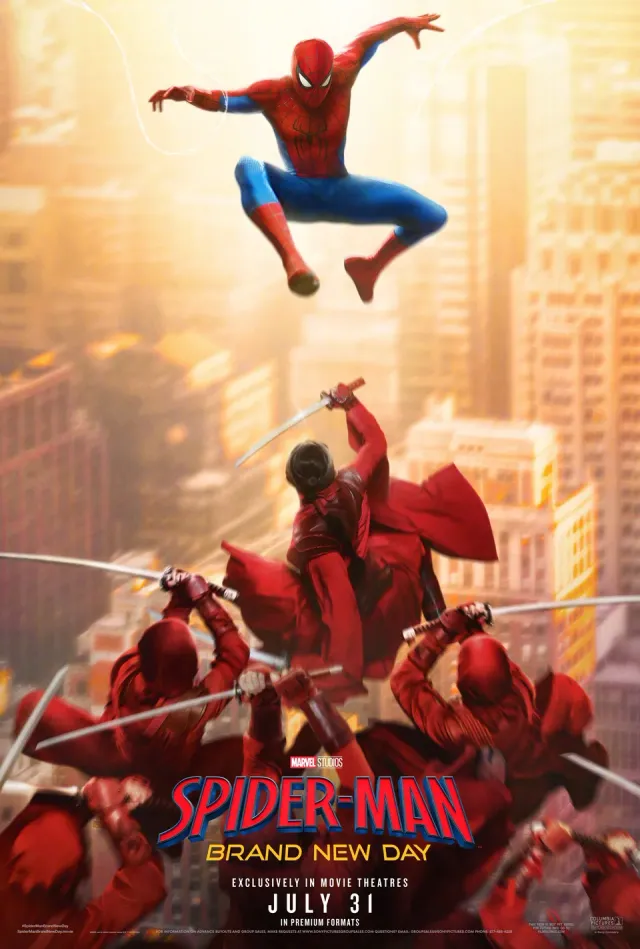
After a spell makes the world forget Peter Parker, he protects New York anonymously and avoids reconnecting with MJ and Ned. A body-hopping, invisible threat targets the Department of Damage Control, pulling Peter into its investigation alongside Frank Castle; his spider-DNA also begins changing, giving him organic webs and blinding headaches. These physical changes and the city’s escalating danger test whether keeping his identity hidden still protects the people he loves. The released film mixes street-level crime with telepathy and possession while keeping Peter’s loneliness at the center.
What drives the story
The premise begins with a deliberate sacrifice of personal recognition; the new threats pressure Peter to decide whether anonymity still protects the people he loves.
The people at its centre
Peter’s restraint is complicated by the return of MJ and Ned to New York, while his trust with police detective Jean DeWolff grows through visible service rather than public identity.
What it feels like
Urban crime, a body-hopping supernatural threat and Peter’s unexplained biological changes converge in a street-level Marvel story; its late subplots widen the scale even as the personal theme remains his anonymity.
Worth knowing
A fit for Spider-Man stories about responsibility after a personal reset; it depends on earlier franchise events and combines crime action with new power changes.
Anonymityresponsibilitybelonging
Mood
Reflective · tense · energetic
Pacing
Investigation · escalating
Visual style
New York street action · bodily transformation
Storytelling
Secret identity · new powers · street-level pursuit