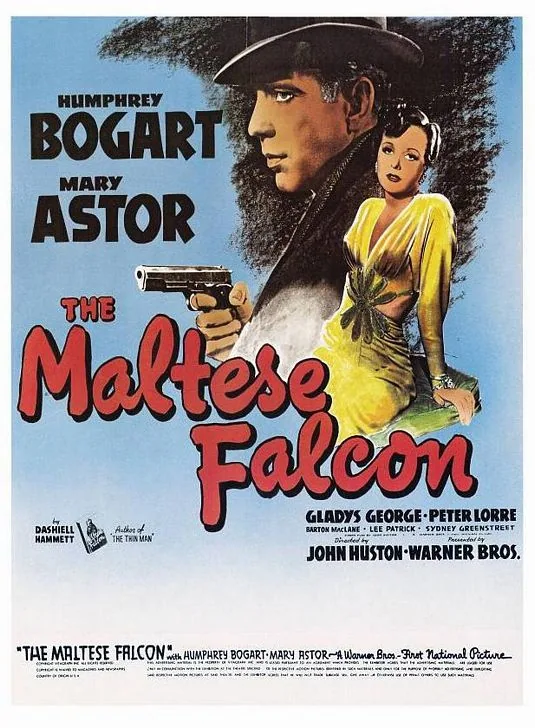
A detective manoeuvres among rival seekers of an object whose supposed value makes everyone unreliable.
Why this matches +
Selected for the central appeal: Hard-boiled detective mysteries involving blackmail, crime networks and morally tangled clients.
Genres: Crime / Mystery
Shared film traits
Based on recorded story, mood and style. Your preferences can change the order.
Investigation · Criminal underworld
What changes The Maltese Falcon follows a private detective through a maze of deceitful clients, murder and competing criminals, with a sought-after object rather than the Sternwood family's secrets.
A private detective's new client draws him into a search for a valuable statuette after his partner is killed. Competing collectors and criminals offer changing stories about the object and one another, leaving him to negotiate without trusting any account completely. Professional self-protection and attraction become difficult to separate as the pursuit exposes how readily people betray partners for a promised prize.
The apparent film leads Welles through a chain of intermediaries to the people who made and concealed it.
Why this matches +
These offer a related experience with a meaningful difference in story, tone, or presentation.
An adjacent discovery: a related idea with a different viewing experience.
Genres: Crime / Drama
Shared film traits
Based on recorded story, mood and style. Your preferences can change the order.
Investigation · Criminal underworld
What changes 8mm follows a private investigator hired by a wealthy client whose inquiry uncovers a disturbing criminal underworld, with far more explicit violence and a contemporary setting.
Private investigator Tom Welles is hired to determine whether an 8mm reel found in a wealthy man’s safe shows the real murder of a young woman. His search takes him from the family who wants an answer to the underground pornography world of Los Angeles and New York, where he teams with clerk Max California. The investigation exposes deliberate cruelty and pushes Welles toward a moral breaking point; the thriller is notably grim and disturbing in its subject matter.
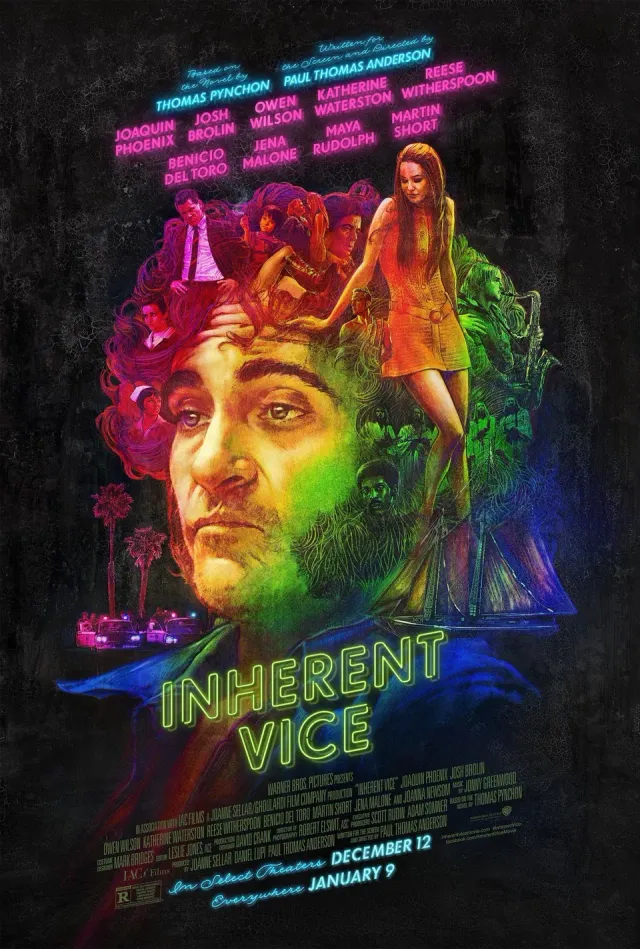
A request to prevent one disappearance expands into a shifting network of property, policing and narcotics that Doc cannot organize into a complete account. Each lead expands Doc’s involvement without granting him a stable map of the people or institutions involved.
Why this matches +
These offer a related experience with a meaningful difference in story, tone, or presentation.
An adjacent discovery: a related idea with a different viewing experience.
Genres: Crime / Comedy
Shared film traits
Based on recorded story, mood and style. Your preferences can change the order.
Investigation · Criminal underworld
What changes Inherent Vice follows a private investigator through a deliberately winding network of disappearances and crime, filtering noir through a 1970s counterculture haze.
Los Angeles private investigator Doc Sportello’s former lover Shasta asks him to protect real-estate developer Mickey Wolfmann from a plan to confine him, pulling Doc into overlapping disappearances, police pressure and a web of drug and property interests. His attachment to Shasta keeps the investigation personal even as each clue makes a stable explanation harder to hold. Bigfoot’s presence offers both antagonism and an uneasy form of companionship, while the city’s changing institutions suggest a counterculture being absorbed or displaced. The film adapts Thomas Pynchon through digressions and tonal drift; its incomplete map is part of the experience, not a mystery whose final answer neatly solves the system.
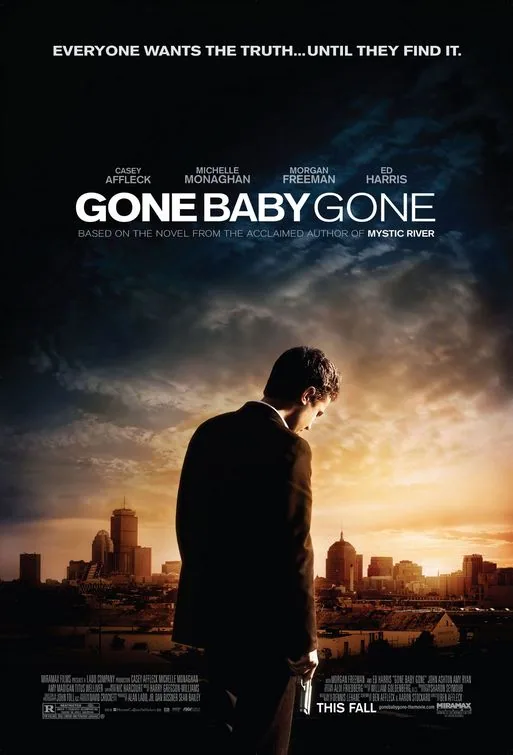
A child's disappearance leads investigators from factual uncertainty towards an ethical conflict about protection and lawful action.
Why this matches +
These offer a related experience with a meaningful difference in story, tone, or presentation.
An adjacent discovery: a related idea with a different viewing experience.
Genres: Crime / Mystery
Shared film traits
Based on recorded story, mood and style. Your preferences can change the order.
Investigation
What changes Gone Baby Gone sends private detectives into a morally fraught missing-child investigation, shifting the emphasis from classic noir repartee to contemporary neighborhood choices.
Two private investigators familiar with a working-class Boston neighbourhood help search for a missing child. Access to people who distrust police gives them useful leads, but conflicting stories complicate the difference between criminal danger and inadequate care. As the investigation crosses loyalties within the community and the police, recovering the truth creates choices that evidence alone cannot settle.
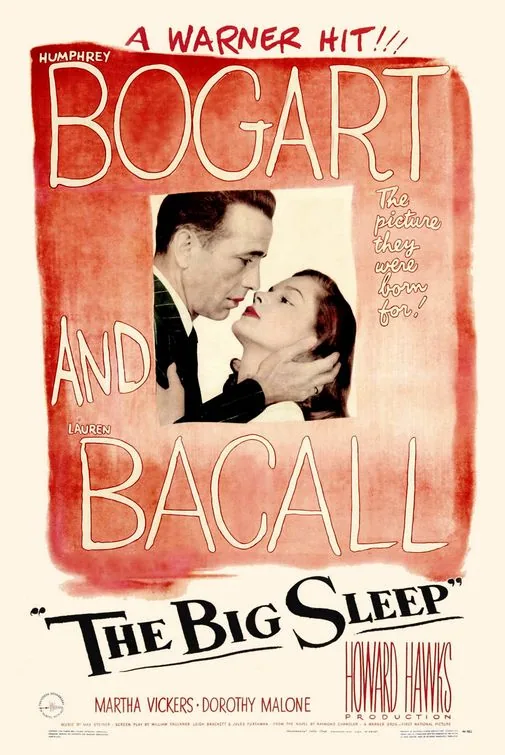
Private detective Philip Marlowe is hired by General Sternwood to handle debts involving his younger daughter, Carmen, but the general's older daughter Vivian suspects the real concern is the disappearance of Sean Regan. Marlowe's inquiries lead through blackmail photographs, a dead bookseller, vanished evidence and gangster Eddie Mars. Each answer opens another complication involving the Sternwoods and the people trying to exploit them. The investigation deliberately resists a tidy map of motives, keeping Marlowe's loyalty and composure central as he tries to protect the family from a criminal world that has entered its home.
What drives the story
The assignment expands from a small debt problem into overlapping blackmail and disappearance cases, making uncertainty part of the detective's working environment.
The people at its centre
Marlowe's exchanges with Vivian mix suspicion and attraction, while his professional reserve contrasts with the family's secrets and unstable loyalties.
What it feels like
Shadowed interiors, sharp dialogue and a maze of suspects create classic noir atmosphere; the plot's deliberate opacity rewards mood and performance over puzzle solving.
Worth knowing
Choose it for Bogart-era detective noir and verbal sparring; viewers seeking a completely untangled mystery may find its causal threads intentionally murky.