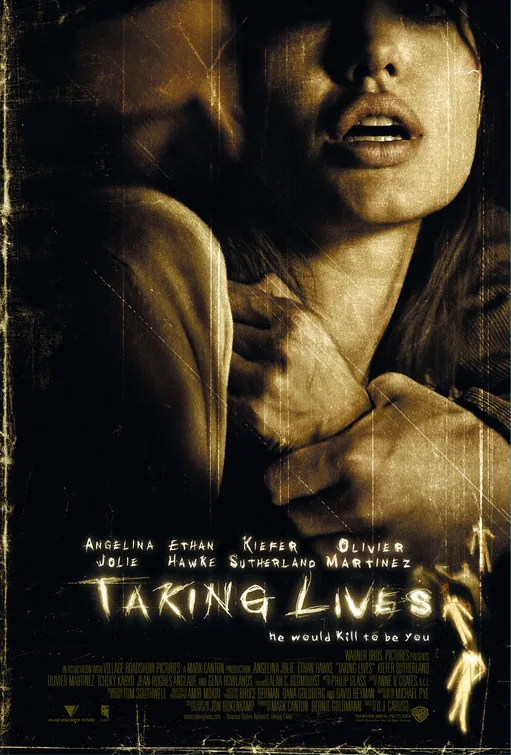
Helen uses her expertise to help detectives link murders to famous serial killers while confronting a new threat.
Why this matches +
Selected for the central appeal: An injured forensic expert guides a rookie officer through clues left by a serial killer.
Genres: Thriller / Crime
Shared film traits
Based on recorded story, mood and style. Your preferences can change the order.
Investigation
What changes An expert confined by trauma works with police to interpret a serial killer's staged crimes and protect the next target.
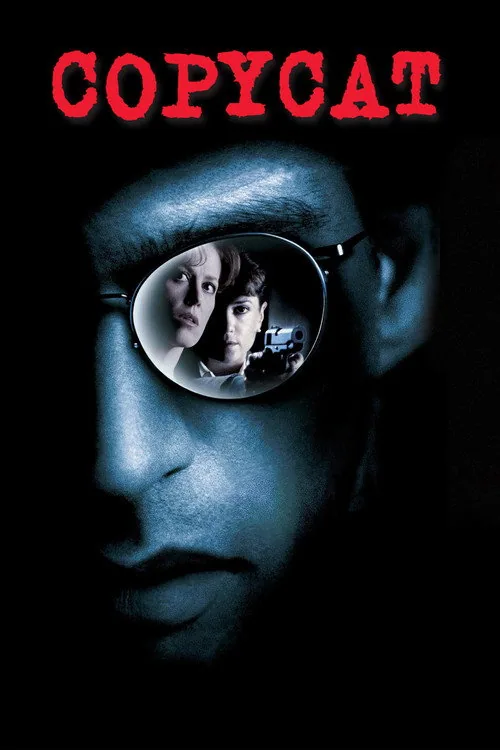
Criminal psychologist Helen Hudson becomes agoraphobic after an attack by a serial killer she once studied. When a new series of murders in San Francisco appears to imitate notorious killers, detectives M. J. Monahan and Ruben Goetz seek Helen’s expertise. She analyzes the patterns from her apartment while the perpetrator tries to draw her into the investigation. Jon Amiel’s thriller pairs a remote specialist with active investigators, making the murderer’s copycat method and Helen’s recovery central to the case.
The film's engine follows the case is structured around information that can be staged; this keeps the stakes tied to observable choices.
Why this matches +
These offer a related experience with a meaningful difference in story, tone, or presentation.
An adjacent discovery: a related idea with a different viewing experience.
Genres: Crime / Mystery
Shared film traits
Based on recorded story, mood and style. Your preferences can change the order.
Investigation
What changes Investigators interpret clues left by a calculating criminal while trying to protect a vulnerable victim.
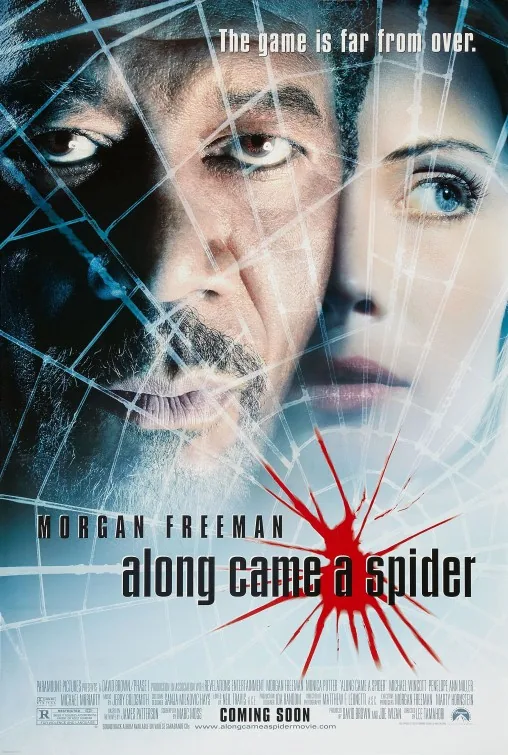
Detective Alex Cross is drawn into a case after the kidnapping of a senator’s daughter from a guarded school. A Secret Service agent connected to the abduction becomes both a source of information and a source of doubt. The investigation tests Cross’s ability to distinguish calculated performance from genuine evidence.
A patterned murder investigation develops into a contest over whether the detectives can refuse the emotional roles their opponent is preparing for them.
Why this matches +
These offer a related experience with a meaningful difference in story, tone, or presentation.
An adjacent discovery: a related idea with a different viewing experience.
Genres: Thriller / Mystery
Shared film traits
Based on recorded story, mood and style. Your preferences can change the order.
Investigation
What changes Detectives follow a serial killer's carefully staged clues, combining forensic investigation with a race to stop further murders.
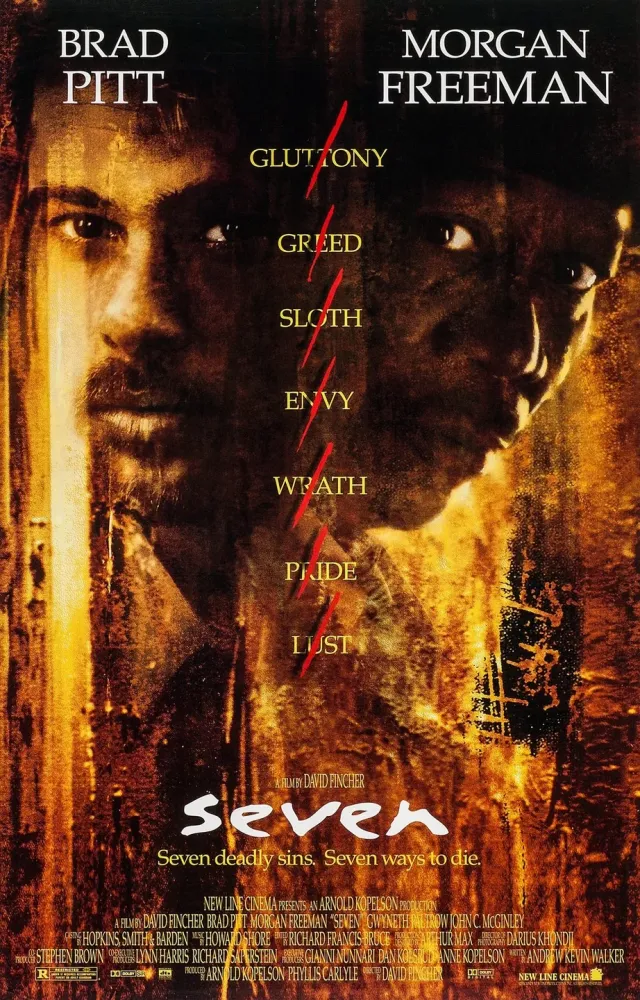
A weary detective approaching retirement and an impatient younger partner investigate killings arranged around a moralising pattern. Each crime scene expands the sense that their unseen opponent is treating the city as both evidence and audience for a private doctrine. Their work exposes different responses to pervasive cruelty, while the intrusion of the case into ordinary hopes for a home makes professional distance increasingly difficult to maintain.
a killer’s use of victims’ lives creating an investigative pattern
Why this matches +
These offer a related experience with a meaningful difference in story, tone, or presentation.
An adjacent discovery: a related idea with a different viewing experience.
Genres: Crime / Mystery
Shared film traits
Based on recorded story, mood and style. Your preferences can change the order.
Investigation
What changes Investigators use behavioral and forensic clues to identify a serial killer who deliberately manipulates the evidence.
An FBI profiler is asked to identify a serial killer who evades capture by assuming victims’ identities. Her interviews and reconstruction of crimes bring her close to people connected to the case, where trust is hard to distinguish from professional access. The thriller builds around identity theft, forensic inference and the danger of accepting a suspect’s story as the investigator’s own.
Clancy’s ability to glimpse possible outcomes draws him into an FBI search for a murderer who appears able to do the same.
Why this matches +
These offer a related experience with a meaningful difference in story, tone, or presentation.
An adjacent discovery: a related idea with a different viewing experience.
Genres: Thriller / Crime
Shared film traits
Based on recorded story, mood and style. Your preferences can change the order.
Investigation
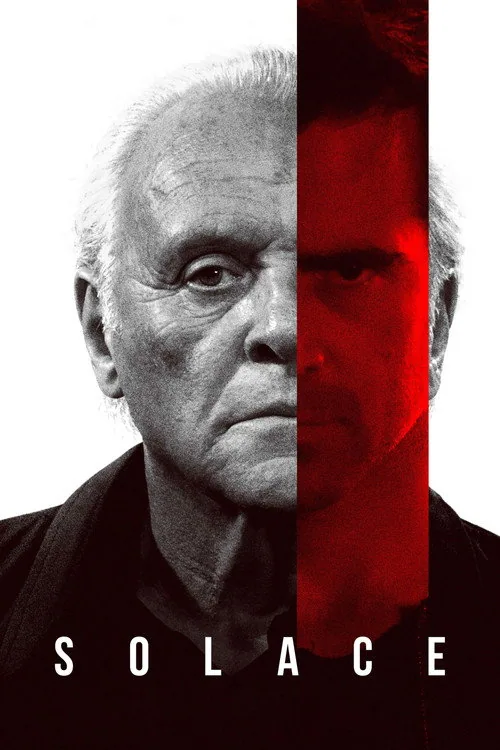
What changes A specialist with unusual investigative abilities assists law enforcement in tracking a serial killer through a pattern of clues.
When a series of murders defeats an FBI investigation, agent Joe Merriwether asks retired physician and psychic John Clancy for help. Clancy’s visions provide fragments of possible futures, but a killer named Charles Ambrose appears to possess similar abilities and stay ahead of the bureau. Afonso Poyart’s thriller turns the pursuit into a contest between two men who can glimpse what may happen, while Clancy’s private grief shapes his reluctance to return to investigative work.
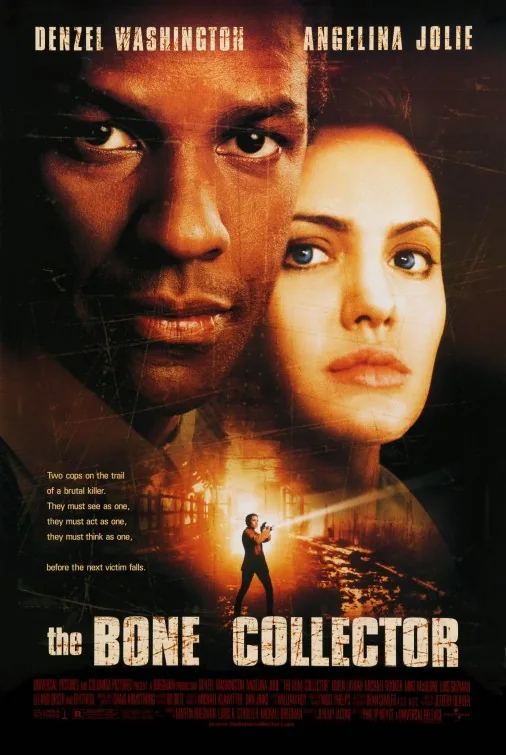
Forensic detective Lincoln Rhyme is confined by a severe injury, but his analytical knowledge remains essential when a serial killer leaves clues at crime scenes. Rookie officer Amelia Donaghy becomes the investigator who can gather evidence and translate Rhyme's deductions into action. Their partnership turns a procedural hunt into a story about dependence, competence and the risks of interpreting a killer's staged messages.
What drives the story
A series of staged crimes brings an experienced forensic mind and a new officer into a difficult partnership.
The people at its centre
Rhyme's dependence on Amelia's fieldwork challenges his control, while she gains confidence in her judgment.
What it feels like
Clues and time pressure create a dark, methodical thriller rhythm.
Worth knowing
The film's engine is forensic collaboration, not a lone detective's unrestricted pursuit.
InvestigationTrustDisability
Mood
Grim · Methodical · Suspenseful
Pacing
Investigation-led · Escalating
Visual style
Dark urban crime imagery · Procedural detail
Storytelling
Serial killer · Forensic clues · Remote partnership