Explore films connected to The Bugs Bunny/Road Runner Movie through Comic rivalry, Animation history, Performance. Choose the qualities you want to carry into your next watch.
What should feel similar?
Find your next favourite
9 films · Closest overall matches
Hide films you’ve seen or don’t want. Saved on this device.
No matches for this combination yet.
Try another option or reset your choices to see more films.
Based on recorded story, mood and style. Your preferences can change the order.
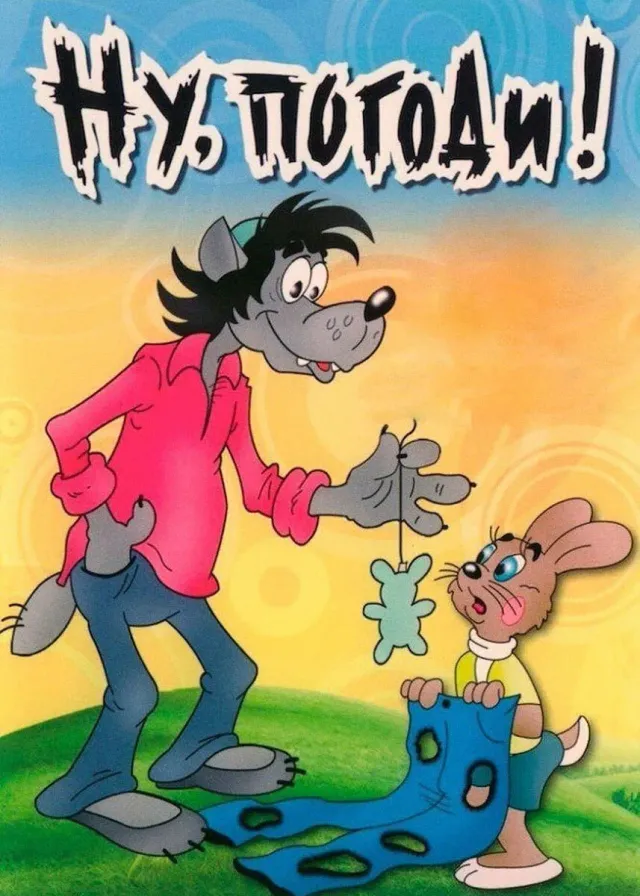
What changes The Bugs Bunny/Road Runner Movie: anthology-like, sketch-based, energetic and short-form rhythm. Well, Just You Wait!: episodic and short-form.
This catalogue entry points to the Soviet animated series commonly known by its Russian title Nu, pogodi!, rather than a conventional feature film. Its early shorts establish the recurring comic pattern: a wolf tries to catch a rabbit through public spaces and everyday activities, and each elaborate pursuit ends in failure. The comedy is largely visual, built from timing, slapstick and the contrast between the wolf’s schemes and the rabbit’s composure. Because the entry groups a series beginning in 1969, its runtime and story should not be described as if it were one self-contained feature. The recurring pursuit makes failed plans, not spoken explanation, the source of each punchline. Settings and musical cues change, but the chase relation remains familiar.
Based on recorded story, mood and style. Your preferences can change the order.
Music and performance
What changes The Bugs Bunny/Road Runner Movie: anthology-like, sketch-based, energetic and short-form rhythm. Melody Time: episodic and variable.
This 1948 Disney package feature contains seven musical segments with different characters, animation styles and sources: a seasonal courtship, a piano performance, Johnny Appleseed’s folk legend, Little Toot’s coming-of-age story, a poem set to music, a samba interlude and Pecos Bill’s tall tale. There is no single protagonist or shared plot; each short begins a new relationship between sound and image. Some later television and home-video editions alter the lineup, so the version matters when describing what a viewer will see. The shifts between abstract music, folklore and comic adventure are the film’s core experience, not interruptions on the way to one climax. Its family-oriented format spans playful material and older-story elements that may need context for contemporary audiences.
Based on recorded story, mood and style. Your preferences can change the order.
Escape and pursuit
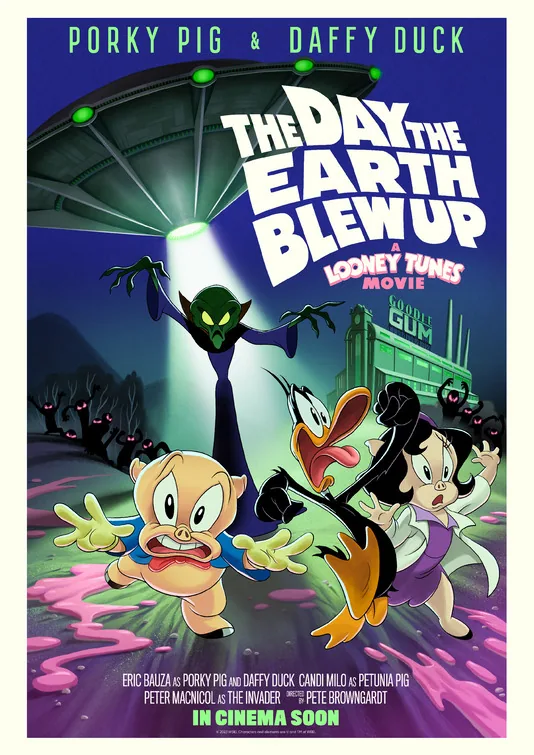
What changes The Bugs Bunny/Road Runner Movie: anthology-like, sketch-based, energetic and short-form rhythm. The Day the Earth Blew Up: A Looney Tunes Movie: rapid, gag-driven and escalating.
Porky Pig and Daffy Duck are working at a chewing-gum factory when they discover an alien scheme that threatens Earth. Their attempt to alert the world becomes a string of chaotic chases, slapstick escapes and improbable teamwork. The animated feature gives the classic Looney Tunes pair a science-fiction adventure built around fast timing, visual jokes and the friction between Porky's caution and Daffy's impulsive confidence.
Based on recorded story, mood and style. Your preferences can change the order.
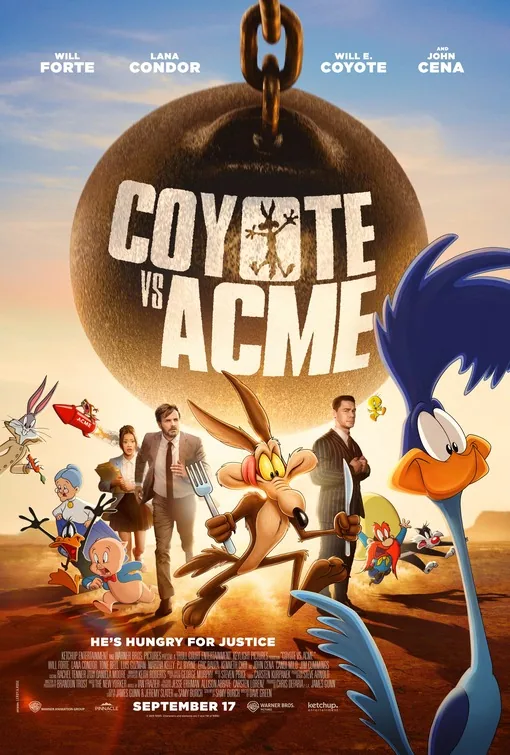
What changes The Bugs Bunny/Road Runner Movie: anthology-like, sketch-based, energetic and short-form rhythm. Coyote vs. Acme: comic set pieces and courtroom escalation.
After a lifetime of failed gadgets, Wile E. Coyote takes the Acme Corporation to court over the products that repeatedly backfired on him. A human attorney helps bring the case, while the corporation’s defense turns the familiar pursuit of the Road Runner into a legal showdown. The live-action and animation blend uses cartoon logic to examine responsibility for a long record of mishaps.
Based on recorded story, mood and style. Your preferences can change the order.
Escape and pursuit
What changes The Bugs Bunny/Road Runner Movie: anthology-like, sketch-based, energetic and short-form rhythm. Beavis and Butt-Head Do America: episodic and fast-moving.
After discovering that their television has disappeared, Beavis and Butt-Head leave their familiar town and travel across the country to find it. Their simple goal repeatedly collides with adult institutions, mistaken assumptions and situations they barely understand. The animated road comedy expands the television characters' deliberately narrow perspective into a national journey, making the gap between their expectations and the world around them its main joke.
Based on recorded story, mood and style. Your preferences can change the order.
Music and performance
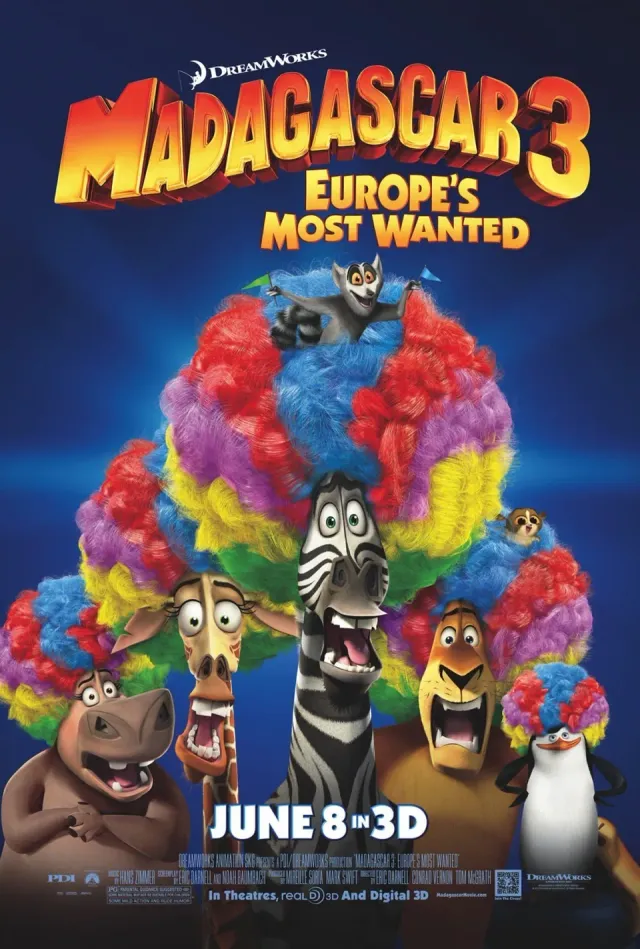
What changes The Bugs Bunny/Road Runner Movie: anthology-like, sketch-based, energetic and short-form rhythm. Madagascar 3: Europe's Most Wanted: fast.
Animals hoping to return to their old zoo take refuge in a failing traveling circus while a relentless official pursues them. Claiming to be performers offers immediate safety but creates obligations to a troupe whose confidence has been damaged. Inventing a new act makes belonging feel possible before the deception is exposed and the original destination finally becomes reachable. The animated sequel turns the desire to go home into a test of whether familiarity still contains the kind of life the group has learned to want.
Based on recorded story, mood and style. Your preferences can change the order.
Memory and identity
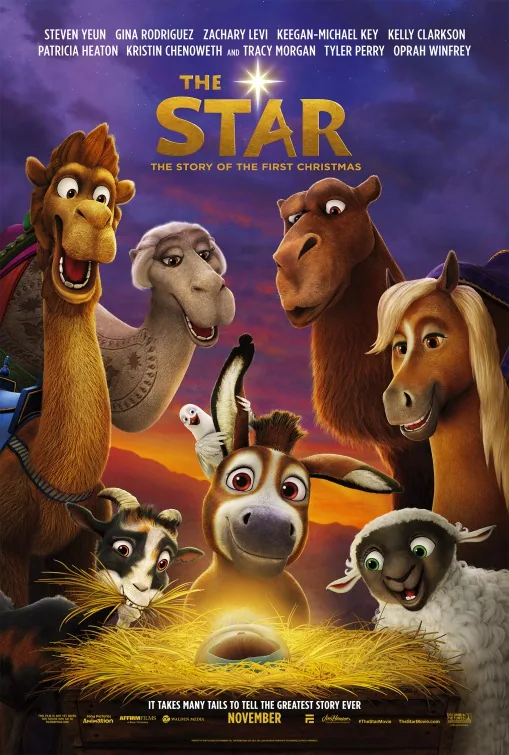
What changes The Bugs Bunny/Road Runner Movie: anthology-like, sketch-based, energetic and short-form rhythm. The Star: travel episodes move toward a shared arrival.
A small donkey escapes his familiar routine and joins other animals on a journey that becomes connected to the Nativity story. Along the way, the group faces danger, learns cooperation and discovers that their ordinary roles can matter in a much larger event. The animated family comedy retells a religious story from an animal-centered perspective, using adventure and humor to make its themes accessible.
Based on recorded story, mood and style. Your preferences can change the order.
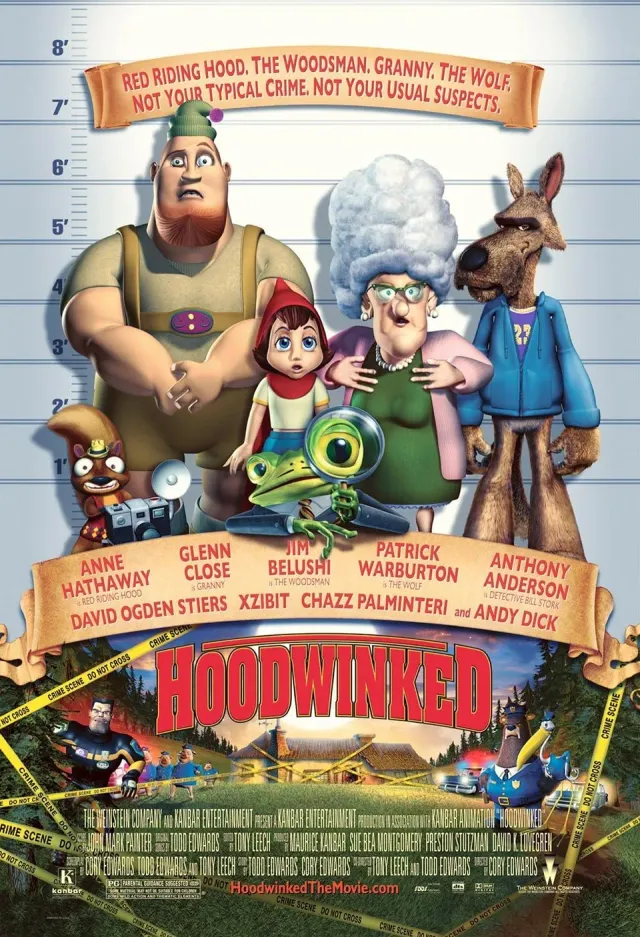
What changes The Bugs Bunny/Road Runner Movie: anthology-like, sketch-based, energetic and short-form rhythm. Hoodwinked!: nonlinear and brisk.
An apparently familiar confrontation at a grandmother's house becomes a police inquiry in which each participant tells a different version of the day. Red, the wolf, the woodsman and Granny turn out to have occupations and motives that complicate the roles their appearances suggested. Repeated scenes reveal connections to a campaign against local businesses, allowing testimony to become a practical route toward an overlooked culprit. The animated comedy uses fairy-tale recognition as material for an ensemble puzzle about the danger of assuming one already knows the story.
Based on recorded story, mood and style. Your preferences can change the order.
Memory and identity
What changes The Bugs Bunny/Road Runner Movie: anthology-like, sketch-based, energetic and short-form rhythm. Spy x Family Code: White: a vacation comedy escalates into a franchise-scale rescue mission.
Spy Twilight takes a family trip as part of a mission that requires Operation Strix to appear successful. Loid, Yor, and Anya each conceal their real roles, while the child’s curiosity turns a routine outing into a crisis involving a secret recipe and a national threat. The animated feature blends domestic comedy with spy action, using the family’s mutual ignorance and genuine affection to create both suspense and warmth.
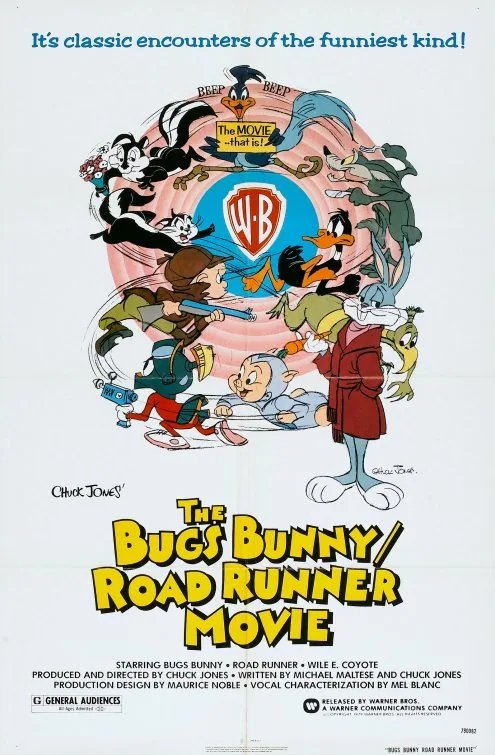
Bugs Bunny welcomes viewers to his elaborate mansion and uses the rooms as a frame for a tour through the history of Looney Tunes chase comedy. Classic shorts and rivalries supply the main attractions, from Bugs’s encounters with familiar adversaries to the long-running pursuit between Wile E. Coyote and the Road Runner. The film moves between Bugs’s commentary and excerpts from earlier cartoons, turning a collection of animated shorts into a self-conscious retrospective. Its closing image returns to the endless chase as part of the cartoon universe’s continuing night sky.
What drives the story
Bugs turns the mansion tour into a guided look at the characters, timing, and chase patterns that made the shorts recognizable.
The people at its centre
The framing device lets the film move between historical clips and Bugs’s commentary while keeping a comic host at the center.
What it feels like
Repeated rivalry sketches create a lively retrospective with familiar payoffs and very little need for a continuous plot.
Worth knowing
This is a compilation feature built around Looney Tunes shorts and animation history, not a newly plotted Bugs Bunny adventure.