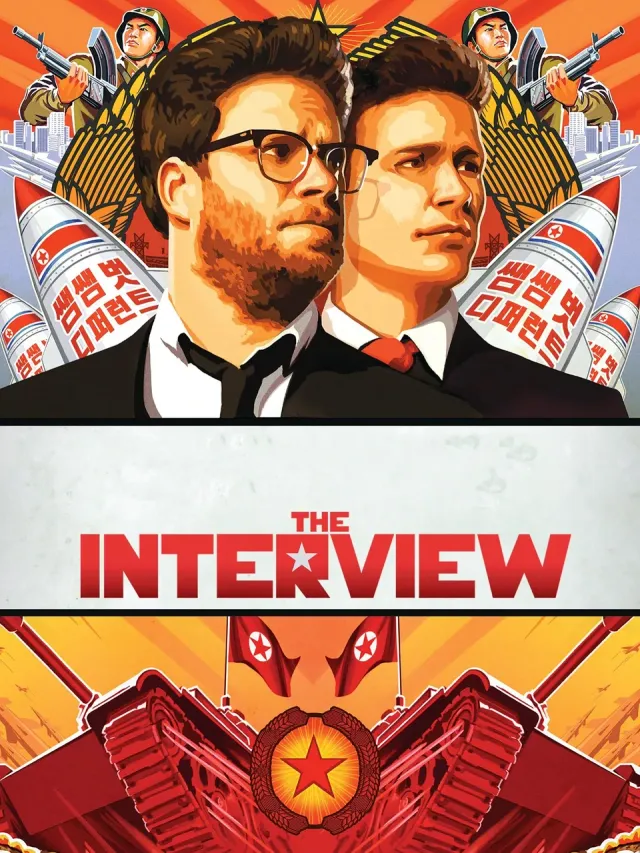
The planned interview becomes a covert mission, but Dave’s growing sympathy for Kim makes the promised assassination harder to carry out.
Why this matches +
Selected for the central appeal: Outrageous political satires about authoritarian leaders, mistaken identities and public spectacle.
Genres: Action / Adventure
Shared film traits
Based on recorded story, mood and style. Your preferences can change the order.
What changes The Interview uses outrageous comedy to satirize a dictator's public image and an American encounter with him.
Talk-show host Dave Skylark and producer Aaron Rapaport are invited to interview North Korean leader Kim Jong Un after learning he watches their celebrity program. The CIA recruits the pair to use the trip for an assassination, turning a media visit into an increasingly chaotic covert operation. Dave’s unexpected rapport with Kim complicates the assignment, while Aaron worries about the moral and political consequences of what they have agreed to do. The comedy sends celebrity culture and state spectacle into absurd collision, deliberately treating geopolitical stakes as material for farce.
pursuing a conspiracy while questioning the force’s heroic assumptions. This pressure determines what the protagonist must do next and which risks become unavoidable.
Why this matches +
Selected for the central appeal: Outrageous political satires about authoritarian leaders, mistaken identities and public spectacle.
Genres: Action / Comedy
Shared film traits
Based on recorded story, mood and style. Your preferences can change the order.
Political resistance
What changes Team America: World Police mocks authoritarian politics and international intervention through deliberately crude farce.
An international puppet police force recruits a stage actor to stop a terrorist threat and weapons plot. Their missions enter a satirical version of global politics, targeting interventionist heroics and celebrity activism. This action comedy uses elaborate puppetry, songs and deliberately crude humor to build miniature spectacle about how political certainty becomes performance.
Financial dependence installs a reckless ruler, allowing trivial affronts and incompetent espionage to escalate into a national conflict without a proportionate public purpose.
Why this matches +
Selected for the central appeal: Outrageous political satires about authoritarian leaders, mistaken identities and public spectacle.
Genres: Comedy
Shared film traits
Based on recorded story, mood and style. Your preferences can change the order.
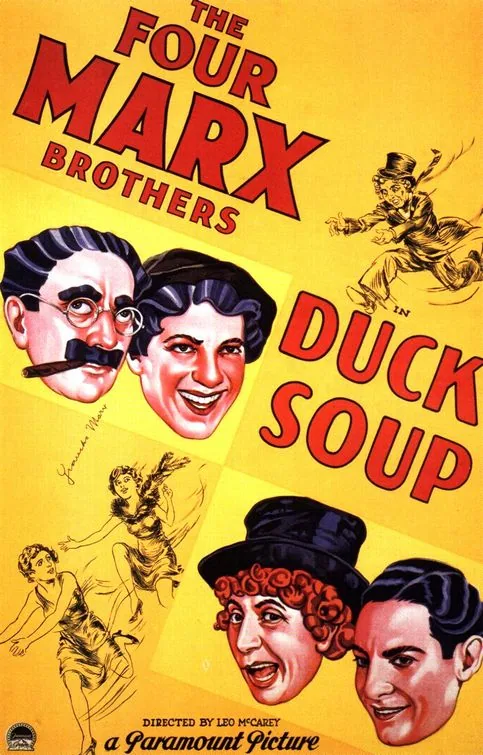
What changes Duck Soup turns an absurd national leader and political maneuvering into anarchic satire.
A struggling nation's financial rescue depends on appointing a leader whose appetite for insults rapidly overwhelms any coherent responsibility for government. Rival statesmen court the same wealthy benefactor while spies repeatedly confuse their own assignments. Personal vanity acquires the machinery of public authority, turning diplomacy, trials and eventually war into occasions for verbal and physical disorder rather than evidence that anyone understands the crisis he claims to command.
Ali’s unorthodox methods accidentally make him popular even as political rivals use him for their own ends.
Why this matches +
These offer a related experience with a meaningful difference in story, tone, or presentation.
An adjacent discovery: a related idea with a different viewing experience.
Genres: Comedy
Shared film traits
Based on recorded story, mood and style. Your preferences can change the order.
Political resistance
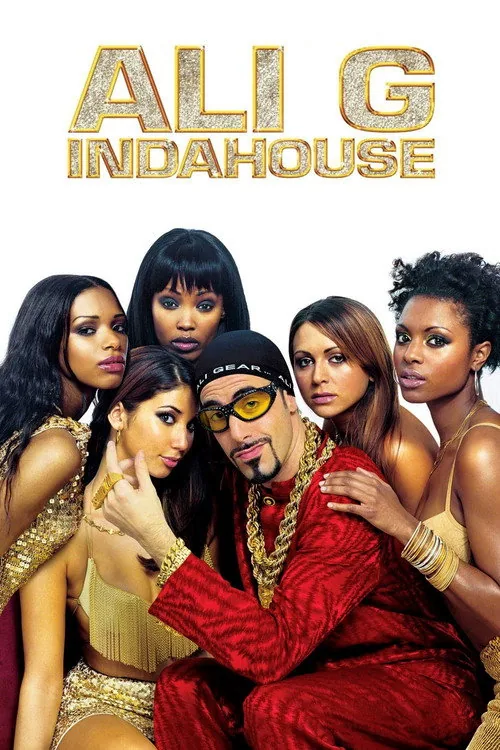
What changes Ali G Indahouse follows a foolish public figure who stumbles into political power and media spectacle.
Ali G leads a group of wannabe gangsters in Staines and campaigns to save the leisure centre where he runs an after-school club. His protest brings him to the attention of a politician who wants to exploit Ali’s public image to damage the Prime Minister. Unexpectedly elected as a member of Parliament, Ali’s crude behavior and absurd policy ideas begin to affect government popularity and international events. Mark Mylod’s political comedy expands Sacha Baron Cohen’s Ali G character into a fictional story that satirizes British politics through deliberately provocative, often vulgar humor.
A minister's careless phrase draws him into a transatlantic policy debate whose participants try to control how war is described.
Why this matches +
These offer a related experience with a meaningful difference in story, tone, or presentation.
An adjacent discovery: a related idea with a different viewing experience.
Genres: Comedy / Dark comedy
Shared film traits
Based on recorded story, mood and style. Your preferences can change the order.
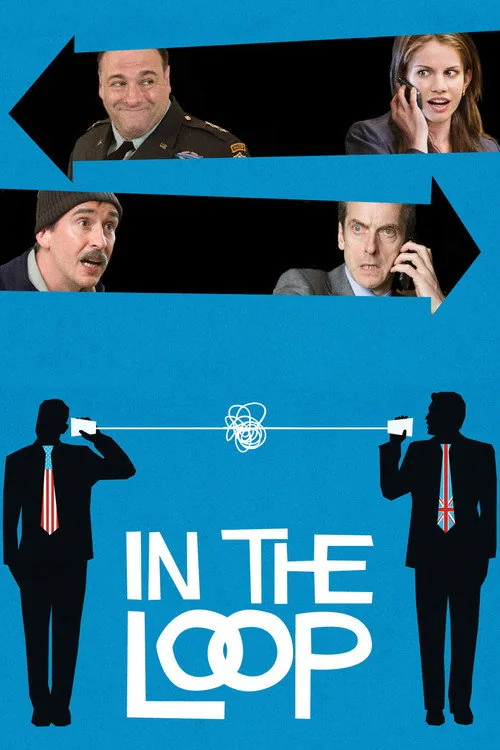
What changes In the Loop uses biting comedy to expose the incompetence and self-interest behind international political decisions.
After a British minister casually describes a possible war as unforeseeable, his remark is seized on by political aides in London and Washington as policy begins drifting toward military intervention. The minister, his advisers, and a furious communications director are pulled into meetings where every phrase can be spun into support or resistance. Armando Iannucci's ensemble satire follows the bureaucratic scramble behind public decisions, using rapid insults and conflicting agendas to show how momentum can outpace judgment. Its comedy targets the machinery and language of government rather than the battlefield.
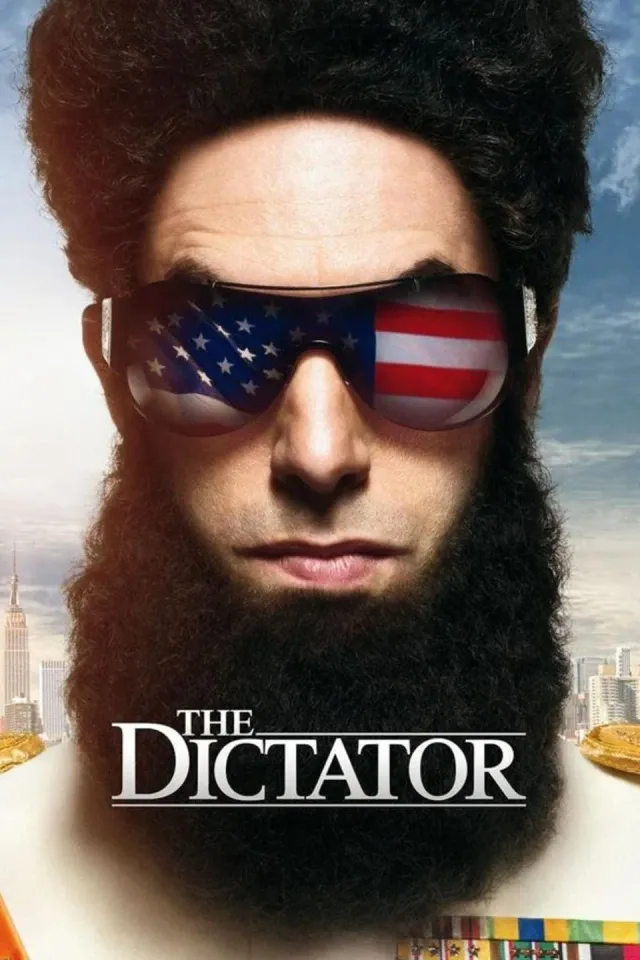
Admiral-General Aladeen, the authoritarian ruler of fictional Wadiya, travels to New York to address the United Nations about his country’s nuclear program. His uncle Tamir has him kidnapped, replaces him with a dim-witted lookalike and expects the substitute to sign away control of Wadiya’s oil. Shorn of his beard and status, Aladeen is left in the city and taken in by Zoey, who runs an egalitarian food cooperative. He tries to get back to the UN while learning how ordinary people see him, and Zoey tries to keep his arrogance from undoing their uneasy alliance. The satire follows his struggle to reclaim political power and decide what kind of leader he wants to be.
What drives the story
Removing Aladeen’s public identity lets Tamir stage a constitutional transfer; the former ruler must find his way back to the UN before the substitute signs it.
The people at its centre
Aladeen’s certainty that everyone should serve him clashes with Zoey’s cooperative ideals. Their relationship is comic because neither initially understands the other’s values.
What it feels like
A deliberately crude political farce that uses absurd escalation, vulgarity and fictional-country satire rather than realistic geopolitics. Its jokes can be abrasive and provocative.
Worth knowing
A fit for broad, deliberately offensive political satire about a dictator stripped of status; Wadiya is fictional, and the comedy is not a reliable account of any real country.
PowerIdentitySatire
Mood
Crude · Absurd · Provocative
Pacing
Fish-out-of-water · Confrontation
Visual style
Broad caricature · Political spectacle
Storytelling
Authoritarian ruler · Identity replacement · Political farce