Based on recorded story, mood and style. Your preferences can change the order.
From the same film series.
What changes The Final Destination: set-piece escalation and inevitable recurrence. Final Destination 3: escalating.
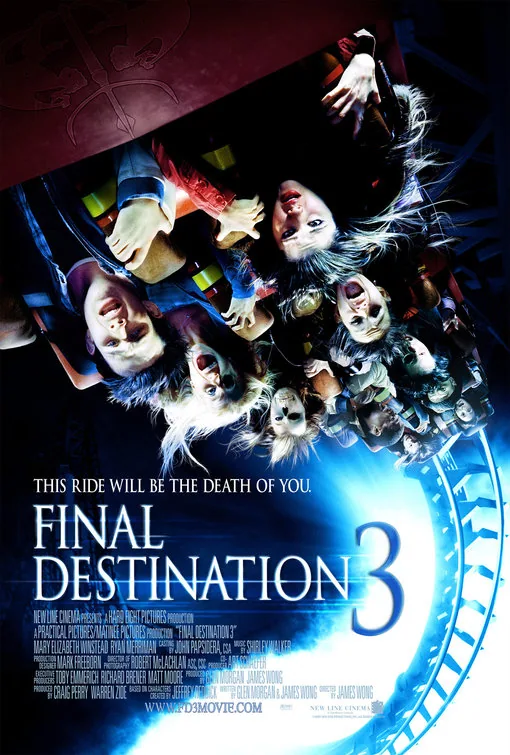
A teenager's vision of a roller-coaster disaster prompts several people to leave the ride, while people close to her remain aboard. Later deaths suggest that survival has only changed the route by which the group will be reached. Photographs taken before the accident appear to contain warnings, making her search a struggle to interpret images quickly enough while grief and another survivor's theories challenge the hope that each visual clue carries one usable meaning.
Based on recorded story, mood and style. Your preferences can change the order.
What changes The Final Destination: set-piece escalation and inevitable recurrence. Final Destination: escalating.
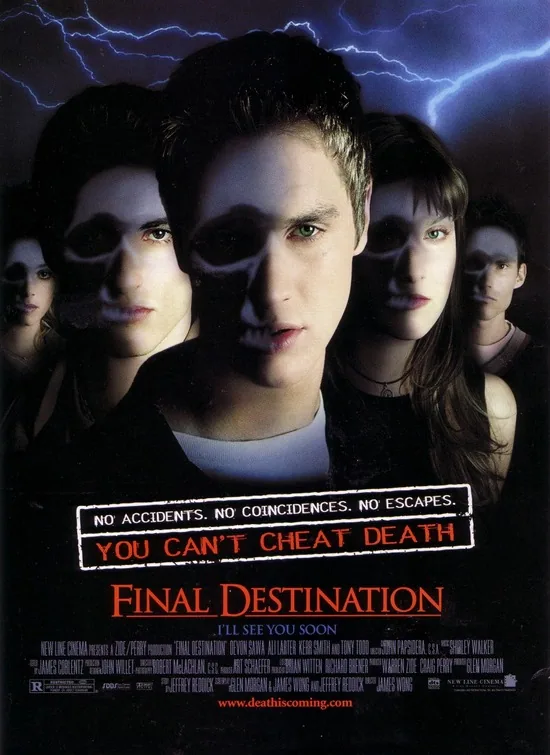
A student panics after a vision of his departing aircraft exploding and is removed with several classmates and a teacher. Watching the disaster happen confirms the warning without giving the survivors an explanation for the accidents that follow. As suspicion shifts between the young man and an apparently larger pattern, ordinary spaces become clues to deaths that seem scheduled, making the attempt to save someone inseparable from uncertainty about who will be exposed next.
Based on recorded story, mood and style. Your preferences can change the order.
What changes The Final Destination: set-piece escalation and inevitable recurrence. The Return of the Living Dead: one-night escalation toward catastrophe.
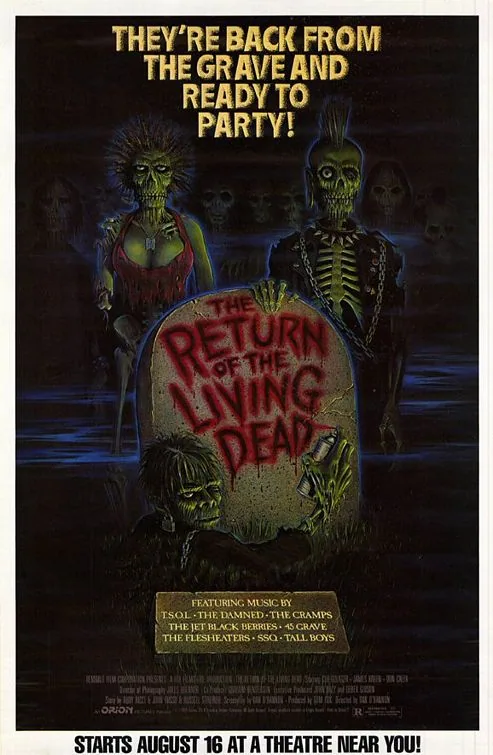
A chemical accident at a medical-supply warehouse releases an unstoppable gas that reanimates the dead, forcing workers, a mortician and a group of punks into a desperate night of survival. Dan O'Bannon mixes horror with punk irreverence, rapid banter and a bleak refusal of easy containment. The film helped popularize brain-eating zombies while making the genre's familiar emergency procedures part of its joke.
Both share themes of fear, plus a gruesome and suspenseful atmosphere.
Why this matches +
Genres: Horror / Thriller
Shared film traits
Based on recorded story, mood and style. Your preferences can change the order.
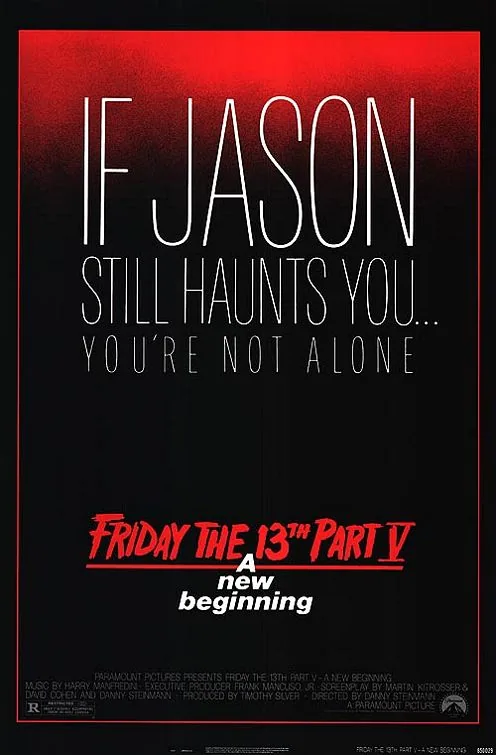
What changes The Final Destination: set-piece escalation and inevitable recurrence. Friday the 13th: A New Beginning: steady kills and reveal-driven.
Years after a childhood encounter with violence at Camp Crystal Lake, Tommy Jarvis is sent to a halfway house where residents struggle with their own histories. A new killing spree begins, reviving fears about Jason Voorhees and leaving the group unsure whether the legend has returned. The slasher mystery uses a vulnerable community and unreliable assumptions to sustain its sequence of suspicion and attacks.
Based on recorded story, mood and style. Your preferences can change the order.
Escape and pursuit
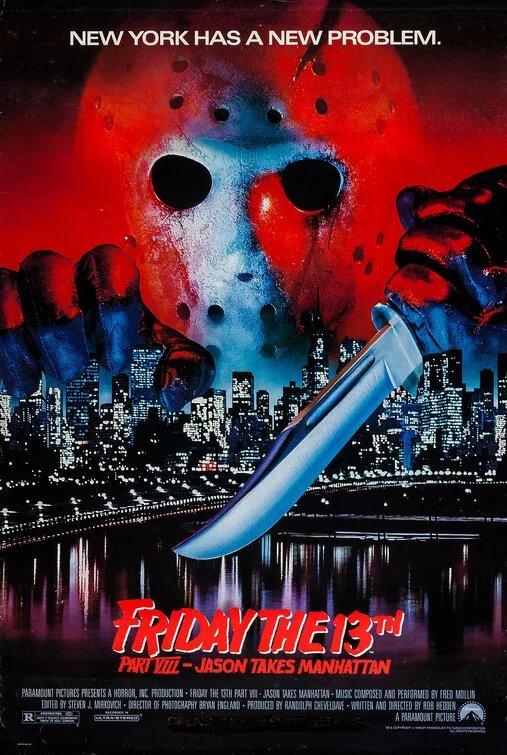
What changes The Final Destination: set-piece escalation and inevitable recurrence. Friday the 13th Part VIII: Jason Takes Manhattan: a confined shipboard threat expands into a city chase.
A graduating class boards a ship for a trip to New York, unaware that Jason Voorhees has followed them aboard. As the killer attacks the passengers, a small group tries to survive the voyage and later escape through the city. The sequel carries the franchise's familiar slasher threat into a cruise setting and then a recognizable urban landscape.
Both share themes of fate and fear, plus a suspenseful atmosphere.
Why this matches +
Genres: Horror
Shared film traits
Based on recorded story, mood and style. Your preferences can change the order.
Escape and pursuit
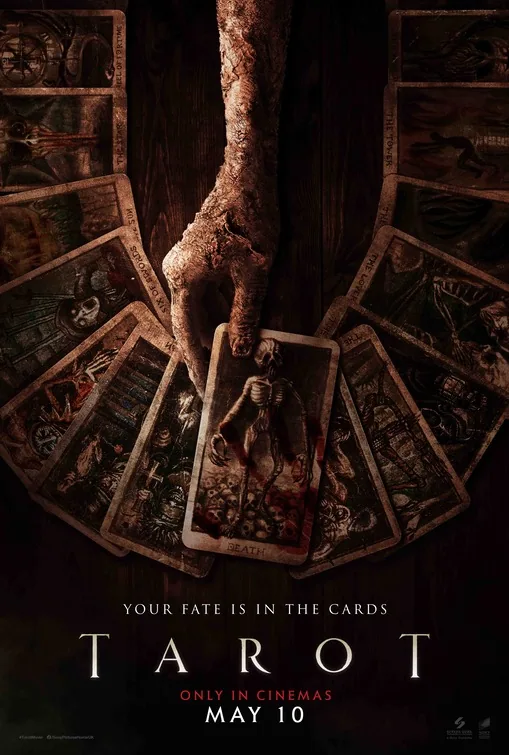
What changes The Final Destination: set-piece escalation and inevitable recurrence. Tarot: a sequence of ominous predictions propels the ensemble toward a deadline.
A group of college friends use a strange tarot deck during a birthday weekend, then begin experiencing deaths that echo the cards they drew. Their attempt to understand the deck becomes a race to break its supernatural pattern. The horror uses recognizable fortune-telling imagery as a set of rules, pairing youthful group dynamics with the fear that a playful choice has created a threat no one can negotiate with.
Based on recorded story, mood and style. Your preferences can change the order.
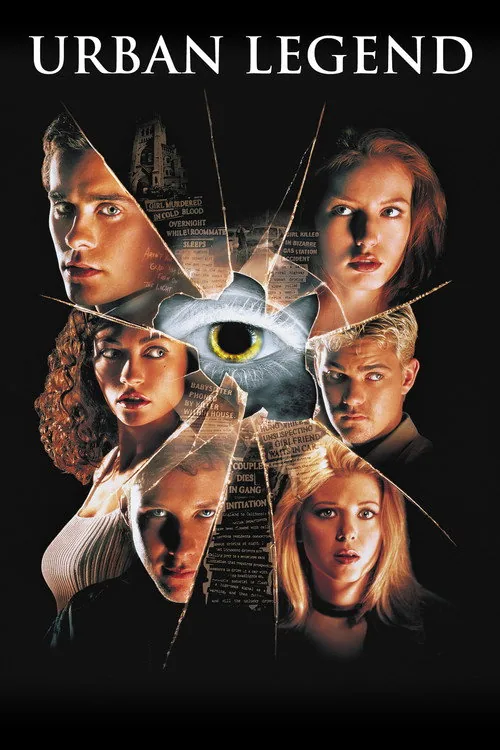
What changes The Final Destination: set-piece escalation and inevitable recurrence. Urban Legend: clue-driven slasher structure, rising body count and mystery reveal.
At Pendleton University, a series of murders appear to recreate well-known urban legends. Student Natalie becomes suspicious that the deaths are connected to a massacre from the school’s past, while her friend Paul helps her investigate and campus authorities dismiss her concerns. As the killings draw closer to her social circle, Natalie must work out which stories are clues and who is using them. Jamie Blanks’s slasher film turns familiar folklore into a campus murder mystery.
Based on recorded story, mood and style. Your preferences can change the order.
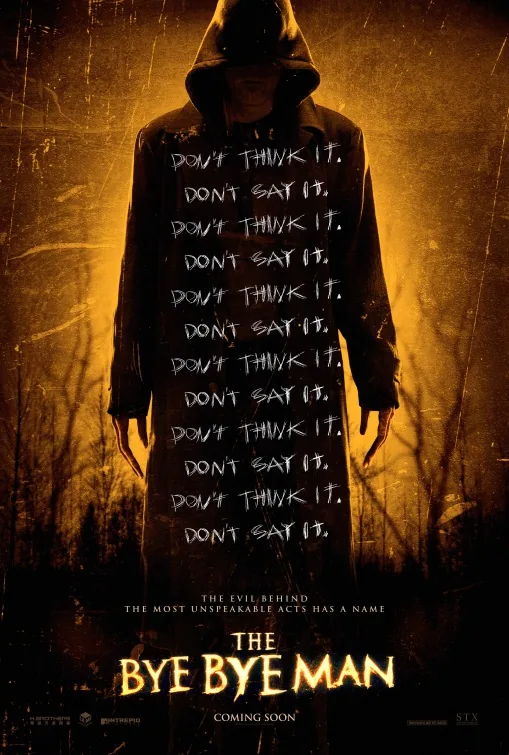
What changes The Final Destination: set-piece escalation and inevitable recurrence. The Bye Bye Man: mystery discovery builds toward psychological and physical danger.
Three college students uncover a supernatural figure connected to a rule about not speaking or thinking his name. Their attempts to understand the legend make the threat harder to escape, while suspicion fractures their relationships. The horror film uses a contagious idea as its central mechanism, combining occult mystery with a story about how fear and doubt can spread through a close group.
Both share themes of fear, plus a suspenseful atmosphere.
Why this matches +
Genres: Horror / Thriller
Shared film traits
Based on recorded story, mood and style. Your preferences can change the order.
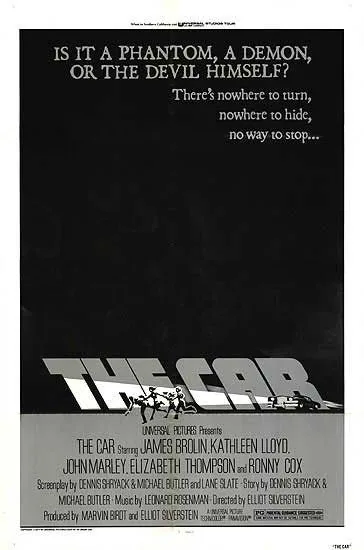
What changes The Final Destination: set-piece escalation and inevitable recurrence. The Car: escalating, repetitive attacks and showdown.
A sleek black automobile begins killing people on the roads around a small desert town, leaving local officers unable to identify a driver or explain its behavior. After the sheriff is killed, Chief Deputy Wade Parent takes charge while trying to protect his partner Lauren and the community's children. The car's attacks become more brazen, and attempts to stop it reveal that ordinary policing and firepower may not be enough. The town's response builds toward a confrontation in the surrounding landscape.
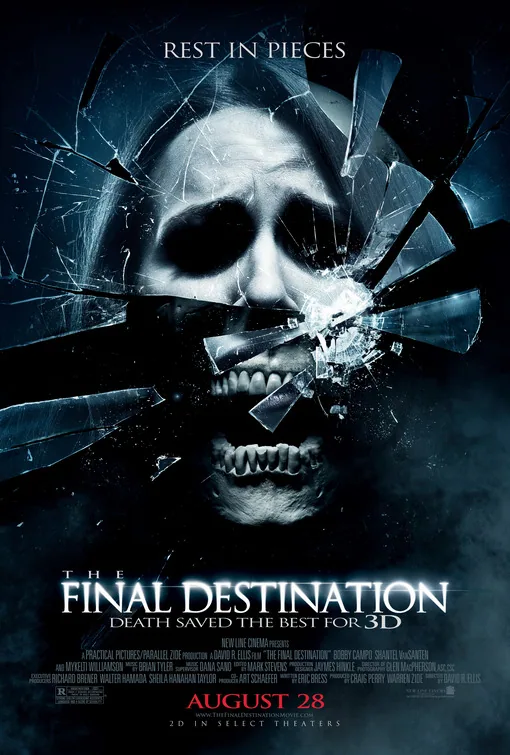
College student Nick O’Bannon sees a premonition of a racetrack disaster that kills him, his girlfriend Lori and their friends. His panic gets several people out before the crash, but the survivors soon die in a chain of seemingly ordinary accidents. Nick becomes convinced that the order of deaths reflects the sequence they would have died in at the speedway. He and Lori try to read clues in the scenes around them and interrupt the next fatal event, while the group’s attempts to cheat the pattern repeatedly create new danger. The story turns everyday objects and split-second choices into a grim sequence of traps that nobody can fully control.
What drives the story
The escape from the speedway starts a new problem rather than ending the threat; Nick tries to infer an invisible design from the accidents that follow.
The people at its centre
Nick’s visions make him responsible for people who do not know whether to trust him. Lori provides emotional grounding but shares the danger created by his attempts to change events.
What it feels like
A franchise entry centered on elaborate accident set pieces and escalating gore. The suspense comes from scanning ordinary environments for the next mechanical hazard.
Worth knowing
A fit for supernatural puzzle-horror built around foreknowledge and fatal accidents; it is graphic, fatalistic and more interested in elaborate set pieces than psychological realism.
MortalityFateFear
Mood
Gruesome · Suspenseful · Fatalistic
Pacing
Set-piece escalation · Inevitable recurrence
Visual style
Elaborate accident staging · Digital gore effects
Storytelling
Premonition saves a group · Death sequence pursuit · Pattern detection