Based on recorded story, mood and style. Your preferences can change the order.
Investigation
What changes The Good Shepherd: nonlinear recollection and slow institutional drama. The Amateur: a procedural investigation transforms into a self-directed revenge mission.
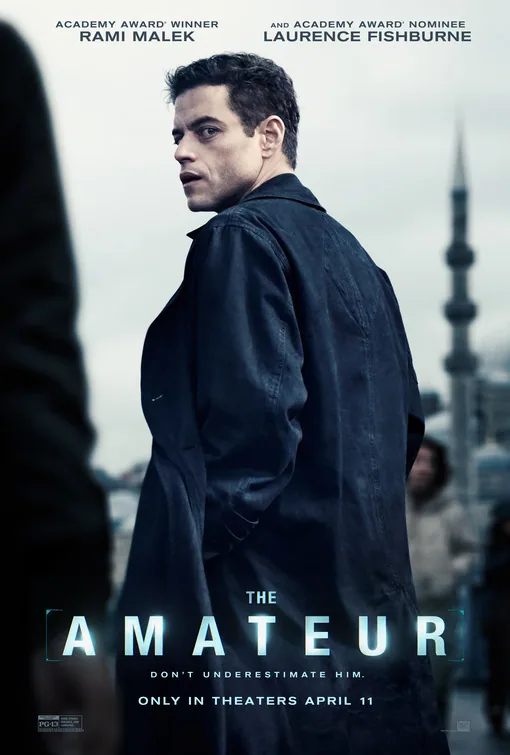
After his wife is killed in a terrorist attack, CIA cryptographer Charlie Heller discovers that the agency will not pursue the perpetrators. He uses his technical expertise to pressure the institution into training him, then follows the clues himself. The thriller turns an office specialist into an unconventional operative, centering grief, moral compromise, and the gap between decoding violence and confronting it directly.
Based on recorded story, mood and style. Your preferences can change the order.
Investigation
What changes The Good Shepherd: nonlinear recollection and slow institutional drama. Arlington Road: slow-burn suspicion escalates into a conspiracy thriller.
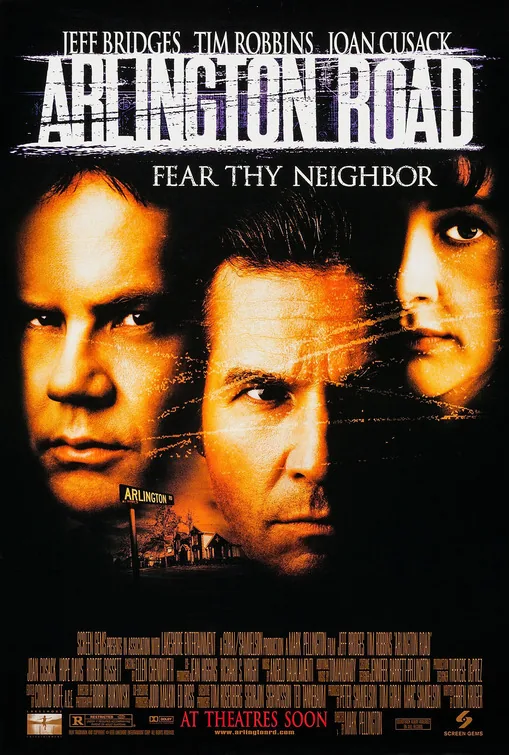
After his wife dies in a violent incident, university professor Michael Faraday becomes convinced that his new neighbors are hiding a terrorist plan. As he gathers clues, his fear and personal grief make it harder to judge what is evidence and what is suspicion. The suburban conspiracy thriller uses ordinary neighborly contact and civic anxiety to build toward a final deception.
Both centre on concealed identity and political manipulation.
Why this matches +
Genres: Action / Crime
Shared film traits
Based on recorded story, mood and style. Your preferences can change the order.
What changes The Good Shepherd: nonlinear recollection and slow institutional drama. Dhurandhar: a multi-chapter espionage saga builds through changing loyalties and operations.
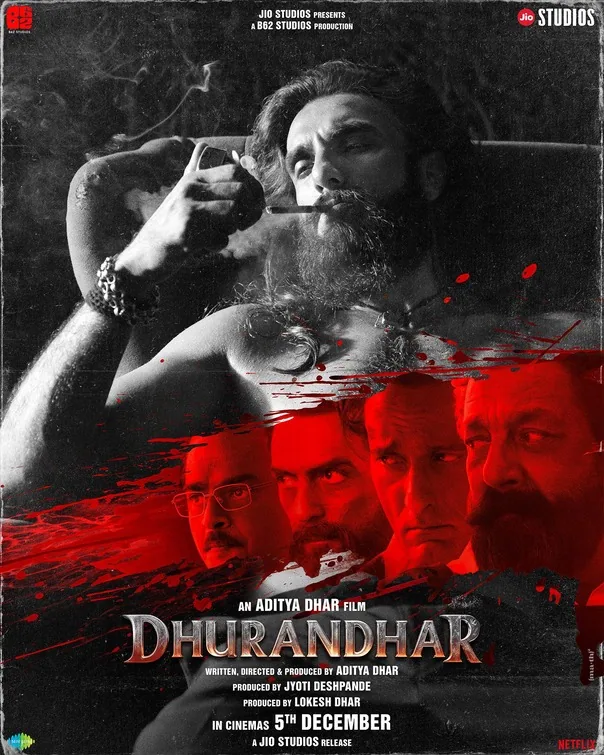
An Indian intelligence officer is sent undercover into Karachi’s criminal and political networks after a hostage crisis sharpens the conflict between agencies and militants. The long-form action thriller moves through shifting alliances, covert operations, and questions of national loyalty, framing espionage as a life that requires a carefully maintained identity. Its chaptered structure gives the story the scale of a political saga.
Based on recorded story, mood and style. Your preferences can change the order.
Investigation
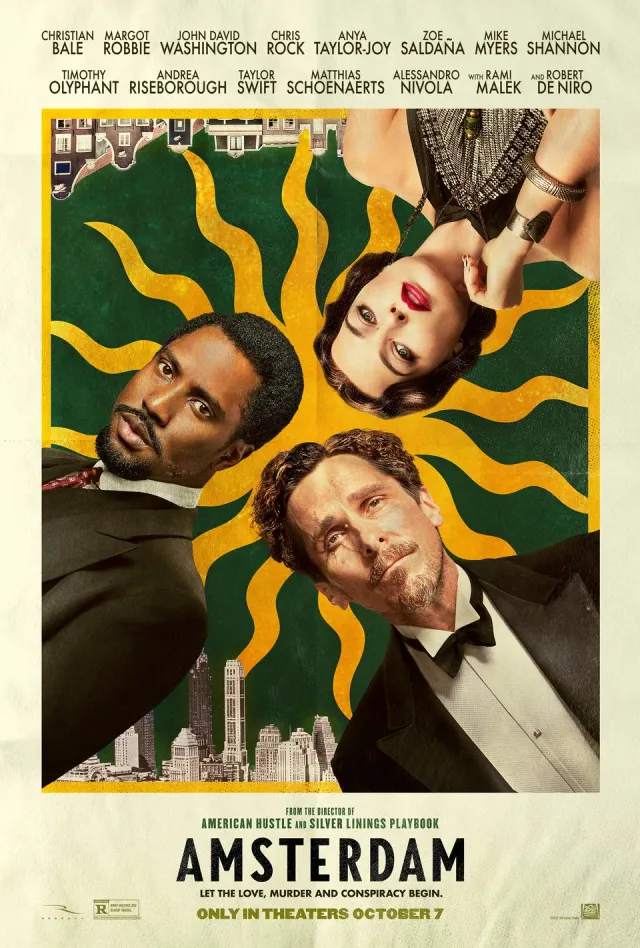
What changes The Good Shepherd: nonlinear recollection and slow institutional drama. Amsterdam: ensemble-driven and reveal-led.
In 1930s New York, doctor Burt Berendsen and lawyer Harold Woodman investigate the death of a military officer whose family they know. Their search draws them back to a friendship formed in wartime Europe and into a political conspiracy involving wealthy industrialists. The film mixes murder mystery, historical satire and personal loyalty, using an eccentric ensemble to trace how a private crime connects to a threat against democratic government.
Based on recorded story, mood and style. Your preferences can change the order.
Investigation
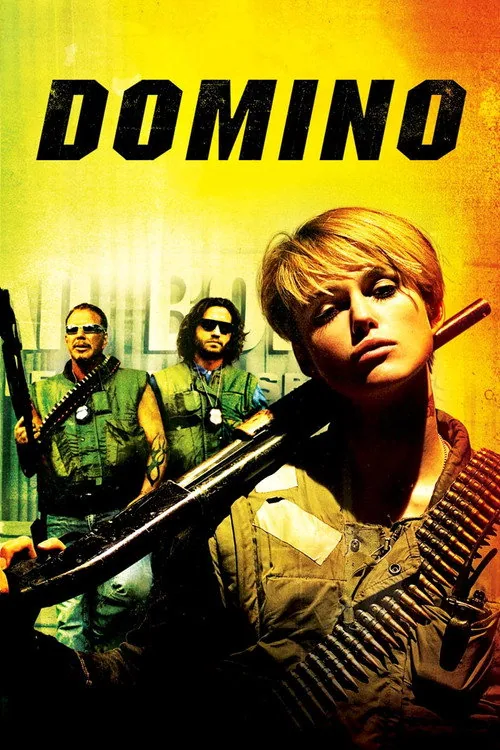
What changes The Good Shepherd: nonlinear recollection and slow institutional drama. Domino: rapid-fire and fragmented chronology.
Loosely inspired by the life of Domino Harvey, the film follows a former model who leaves a privileged career to become a bounty hunter in Los Angeles. Working with a veteran partner and a former convict, Domino enters a world of fugitive arrests, unstable alliances, and a scheme involving a large amount of stolen money. Tony Scott presents the events through a highly stylized, fragmented account shaped by interrogation and memory, emphasizing velocity, dark humor, and the protagonist’s self-invention.
Based on recorded story, mood and style. Your preferences can change the order.
Investigation
What changes The Good Shepherd: nonlinear recollection and slow institutional drama. Black Bag: a contained suspect puzzle unfolds through meals, tests and and interviews.
British intelligence officer George Woodhouse is given one week to identify the person leaking a highly classified program. His wife Kathryn is among the suspects, forcing a professional investigation into the couple’s private life. The spy thriller treats loyalty as both a marriage question and an intelligence problem, relying on interrogation, inference, and social performance rather than spectacle as George tests what he can know about the people closest to him.
Both share themes of loyalty, plus a paranoid atmosphere.
Why this matches +
Genres: Crime / Action
Shared film traits
Based on recorded story, mood and style. Your preferences can change the order.
Investigation
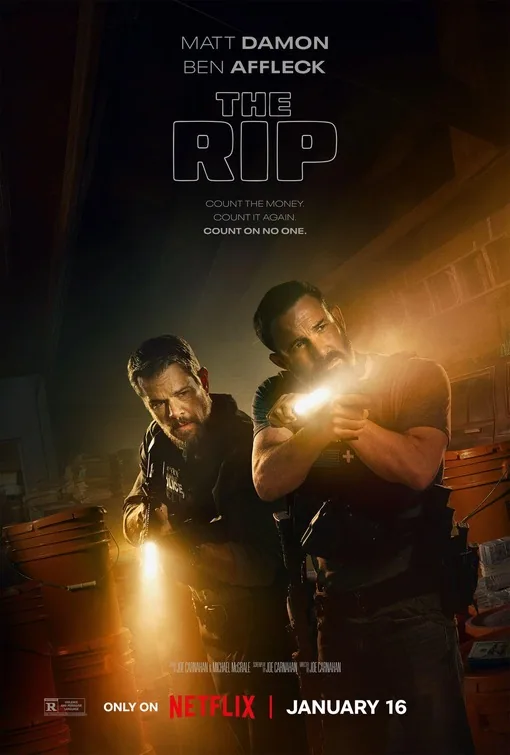
What changes The Good Shepherd: nonlinear recollection and slow institutional drama. The Rip: pressure-cooker escalation and contained timeline.
Miami police officers discover a cache of cash, and suspicion over the money strains trust within their team. The crime thriller turns a single discovery into a pressure test for loyalty, procedure and personal temptation. Its focus stays close to the officers, making evidence handling and changing trust among colleagues the engine of danger rather than a case-of-the-week structure.
Both centre on concealed identity and political manipulation.
Why this matches +
Genres: Thriller / Action
Shared film traits
Based on recorded story, mood and style. Your preferences can change the order.
Espionage and covert operations
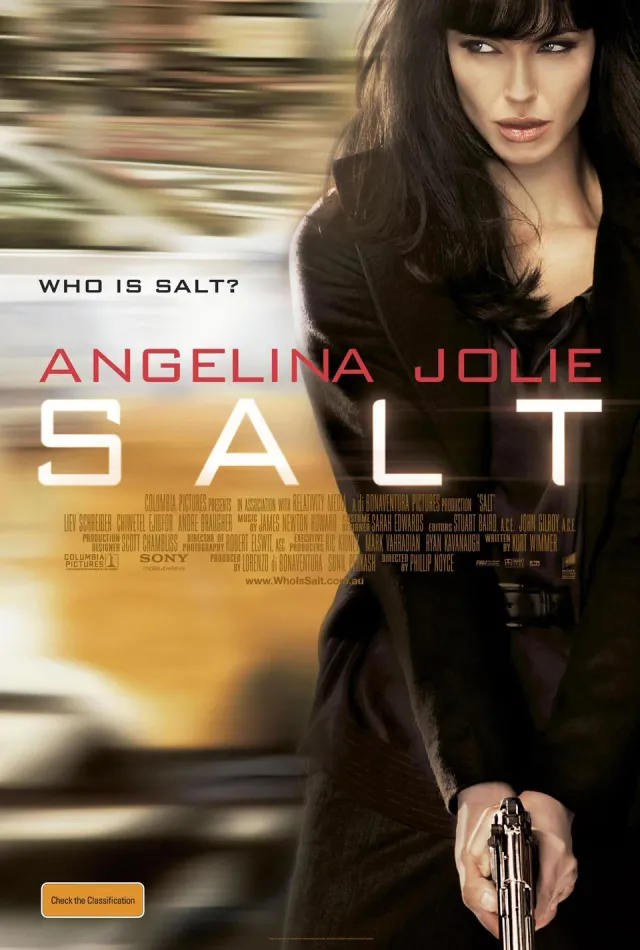
What changes The Good Shepherd: nonlinear recollection and slow institutional drama. Salt: rapid, reversal-heavy and continuous pursuit.
CIA officer Evelyn Salt’s routine interrogation of a Russian defector becomes an emergency when he identifies her as a sleeper agent assigned to kill the Russian president. With colleagues now treating her as a threat, Salt escapes custody and tries to find her missing husband while the intelligence agencies close in. The chase keeps her motives opaque: she adopts disguises, evades surveillance and moves through a conspiracy whose claims are hard to verify. Her actions eventually expose a plan to provoke conflict between the United States and Russia, leaving her to decide whether anyone in the system will believe her before it is too late.
Based on recorded story, mood and style. Your preferences can change the order.
Espionage and covert operations · Investigation
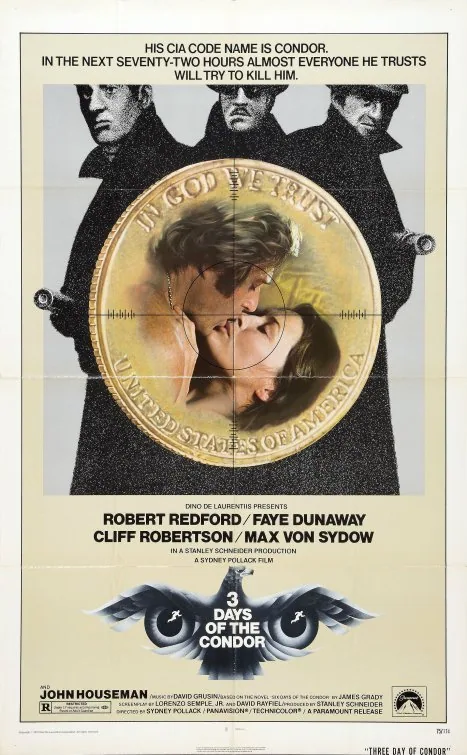
What changes The Good Shepherd: nonlinear recollection and slow institutional drama. Three Days of the Condor: fast pursuit and procedural.
Joe Turner works as a reader for a small CIA research office in New York, where he studies books and newspapers for ideas that might matter to intelligence work. Returning from lunch, he finds the office staff murdered and realizes that his codename, Condor, has made him a target. With no reliable colleague to trust, he kidnaps Kathy Hale and seeks shelter while trying to learn who ordered the killings and why. His search reveals that the threat may come from within the agency, making the skills he uses to analyze information relevant to his own survival. Turner tries to contact a higher authority but discovers that the usual channel could expose him to the same killers.
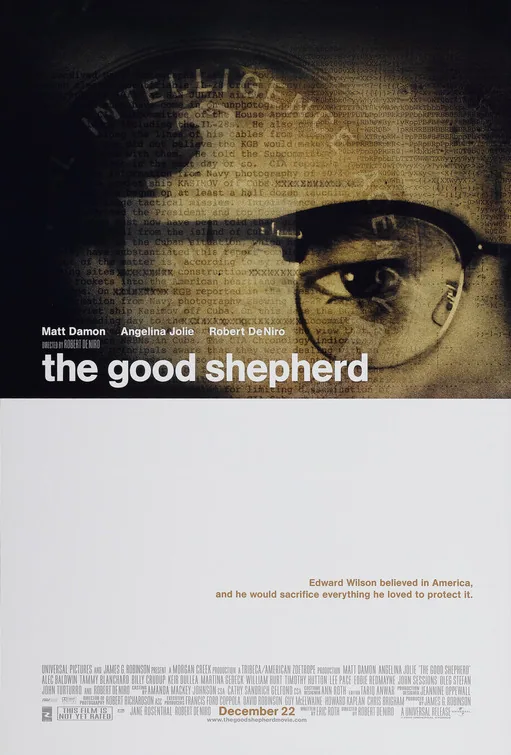
Edward Wilson is recruited into an intelligence service during the Second World War and rises into the CIA’s covert world, where personal loyalty and national security are difficult to separate. Years later, a botched operation at the Bay of Pigs prompts an internal investigation that sends him back through memories of his recruitment, marriage and increasingly secretive career. The film connects a single operational crisis to the gradual reshaping of a man who has made privacy and suspicion into habits. Its characters are fictional, even as the story borrows the atmosphere of real intelligence history.
What drives the story
The compromised Bay of Pigs operation gives the inquiry its immediate urgency; Edward’s older choices explain why he mistrusts nearly everyone involved.
The people at its centre
Edward’s professional secrecy damages his marriage and narrows his ability to trust. Colleagues share an institution but rarely share the full story with one another.
What it feels like
A long, muted espionage drama told through non-linear recollection and clipped conversations. Its deliberate pacing emphasizes the emotional cost of a secretive career over the mechanics of spy gadgets.
Worth knowing
Best for viewers interested in restrained intelligence dramas about institutional loyalty and private sacrifice. It is a fictional composite, not a documentary account of the CIA’s founding or the Bay of Pigs.
SecrecyLoyaltyIsolation
Mood
Muted · Patient · Paranoid
Pacing
Nonlinear recollection · Slow institutional drama
Visual style
Desaturated palette · Restrained staging
Storytelling
CIA career · Bay of Pigs inquiry · Marriage under strain