Suzanne manipulates young admirers into removing the obstacle she sees in her path to fame.
Why this matches +
Selected for the central appeal: Dark satires of fame, ambition and the boundary between an audience and a celebrity.
Genres: Crime / Drama
Shared film traits
Based on recorded story, mood and style. Your preferences can change the order.
What changes To Die For follows a fame-obsessed aspiring television personality willing to manipulate others and commit crimes for attention, but its central figure seeks news celebrity rather than a comedy slot.
Suzanne Stone wants to become a television personality and treats her local reporting job as a step toward national attention. When her husband and his wish for a conventional life threaten her plans, she cultivates a group of teenagers and pulls them into a murder scheme. Documentary interviews and direct-address monologues expose how she packages ambition as a story for viewers.
A newcomer's carefully performed devotion creates professional access that gradually exposes the established star's fear of replacement.
Why this matches +
These offer a related experience with a meaningful difference in story, tone, or presentation.
An adjacent discovery: a related idea with a different viewing experience.
Genres: Drama / Comedy
Shared film traits
Based on recorded story, mood and style. Your preferences can change the order.
Music and performance
What changes All About Eve follows a determined admirer who insinuates herself into a celebrated performer's life, using theatrical rivalry rather than a kidnapping satire.
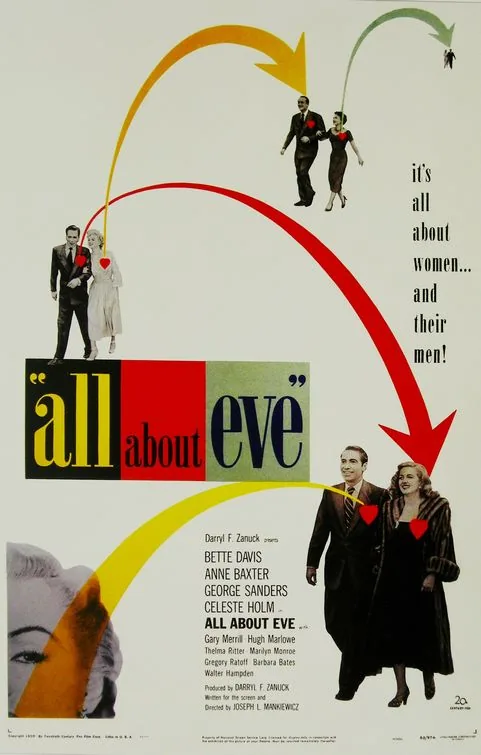
A theatre star takes an apparently devoted admirer into her professional and private circle, interpreting the newcomer's vulnerability as evidence of sincerity. Access to the household and backstage world gives the younger woman opportunities to make herself indispensable. As colleagues and friends begin responding to different versions of her story, generosity becomes difficult to distinguish from the granting of power to someone skilled at presenting ambition as service.
A theatrical comeback concentrates professional and personal crises into a production that its organiser treats as proof of his worth.
Why this matches +
These offer a related experience with a meaningful difference in story, tone, or presentation.
An adjacent discovery: a related idea with a different viewing experience.
Genres: Drama / Comedy
Shared film traits
Based on recorded story, mood and style. Your preferences can change the order.
Music and performance
What changes Birdman explores a performer's desperate pursuit of recognition and the gap between public image and private insecurity, with backstage theater replacing a fan's obsession.
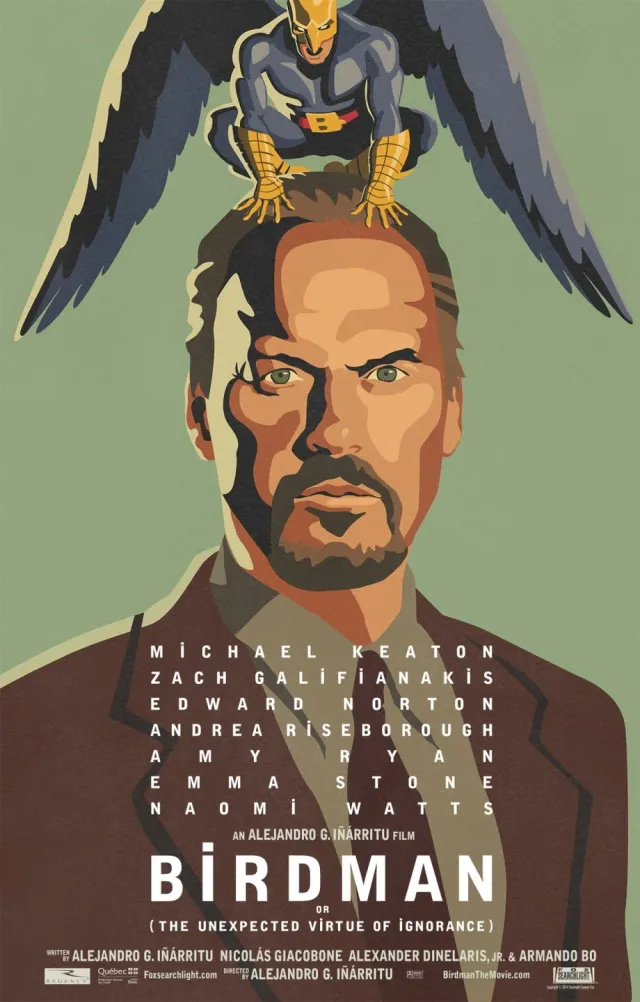
An actor best known for a superhero role mounts a Broadway production to prove that he still matters as an artist. Rehearsal problems, family strain and a volatile colleague repeatedly interrupt his attempt to control the public story of his return. A derisive inner voice and experiences that may be fantasies make professional ambition feel inseparable from an unstable need to be admired on his own terms.
A studio executive's attempt to identify a threatening writer overlaps with a murder investigation.
Why this matches +
These offer a related experience with a meaningful difference in story, tone, or presentation.
An adjacent discovery: a related idea with a different viewing experience.
Genres: Crime / Drama
Shared film traits
Based on recorded story, mood and style. Your preferences can change the order.
What changes The Player satirizes entertainment-industry ambition and violence, shifting the perspective from an outsider seeking a break to a powerful studio executive.
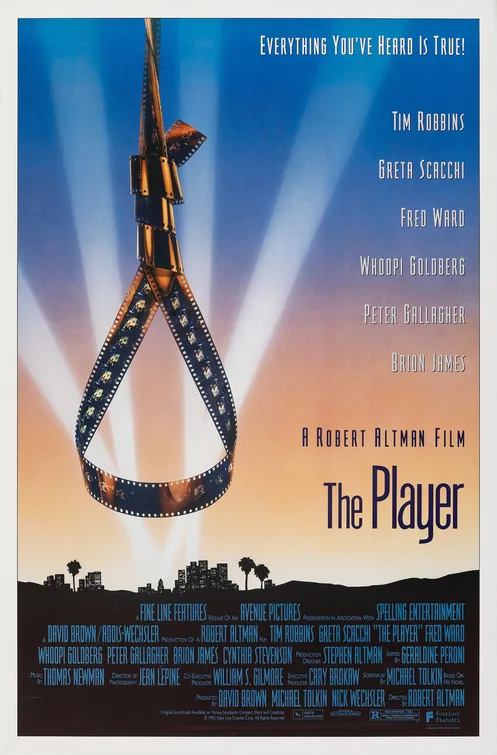
A powerful Hollywood studio executive begins receiving threatening messages from an unemployed writer and tries to identify who is sending them. The search soon becomes entangled with a murder and with the industry's culture of pitches, favors, and self-protection. As the studio's leaders keep performing confidence for one another, the investigation exposes a business where stories are constantly discussed and the people telling them are easily discarded.
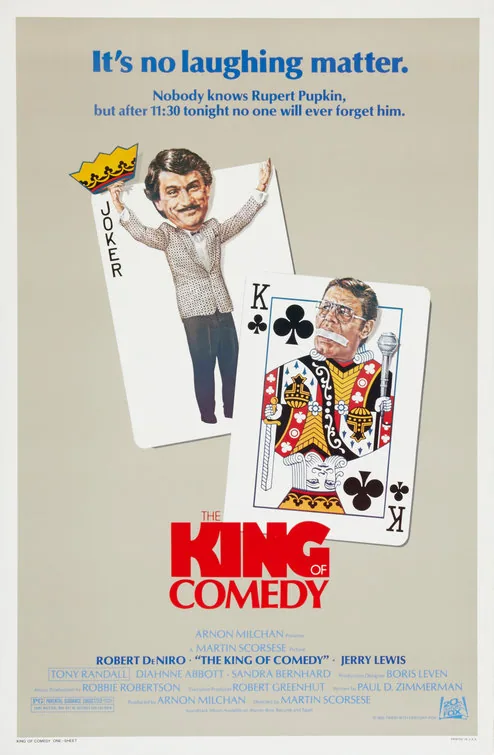
Aspiring comedian Rupert Pupkin becomes fixated on successful talk-show host Jerry Langford after a brief encounter. Rupert treats the meeting as the start of a friendship even as Langford’s staff reject his repeated requests for a performance slot. When ordinary persistence fails, Rupert and fellow stalker Masha kidnap Langford and demand that the network broadcast Rupert’s stand-up routine. The hostage plan gives Rupert the audience he has spent the film imagining, but its cost and aftermath remain troubling. Martin Scorsese’s film follows the gap between Rupert’s fantasy of celebrity and the actual isolation of a person who mistakes access to a famous stranger for intimacy.
What drives the story
Rupert’s belief that he is owed a stage turns rejection into a hostage scheme; the broadcast is both his forced entry into show business and an act with serious consequences.
The people at its centre
Rupert rehearses a confident public self while depending on imagined approval. Langford’s irritation and Masha’s shared obsession reveal different forms of entitlement and loneliness.
What it feels like
An uncomfortable show-business satire uses long pauses, awkward encounters and deliberately flat humor instead of the energy of a conventional backstage comedy.
Worth knowing
A fit for dark satires about fame, parasocial fixation and ambition. Viewers wanting a warm underdog story should know the film keeps Rupert’s fantasies and the harm he causes in sharp tension.
FameObsessionLoneliness
Mood
Awkward · Satirical · Unsettling
Pacing
Rejection loop · Sudden coercive escalation
Visual style
Muted New York interiors · Flat comic staging
Storytelling
Aspiring comedian · Hostage demand · Fantasy of celebrity