Based on recorded story, mood and style. Your preferences can change the order.
What changes The Lord of the Rings: journey and escape and split narrative lines. The Lord of the Rings: The Fellowship of the Ring: epic.
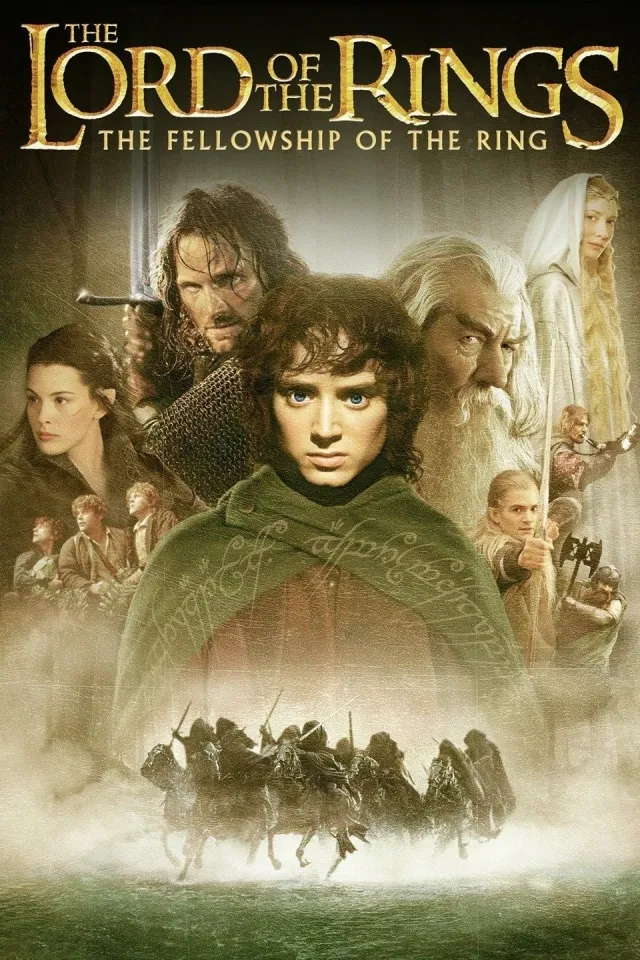
A provincial young hobbit inherits an object that offers corrupting power and attracts a force seeking domination far beyond his home. Leaving familiar safety with companions brings him into an alliance whose members disagree about whether the object should be destroyed or used. The journey tests loyalty through pursuit, loss and the growing recognition that responsibility cannot be transferred simply to whoever appears strongest.
Based on recorded story, mood and style. Your preferences can change the order.
What changes The Lord of the Rings: journey and escape and split narrative lines. The Hobbit: episodic, songful and quest-driven.
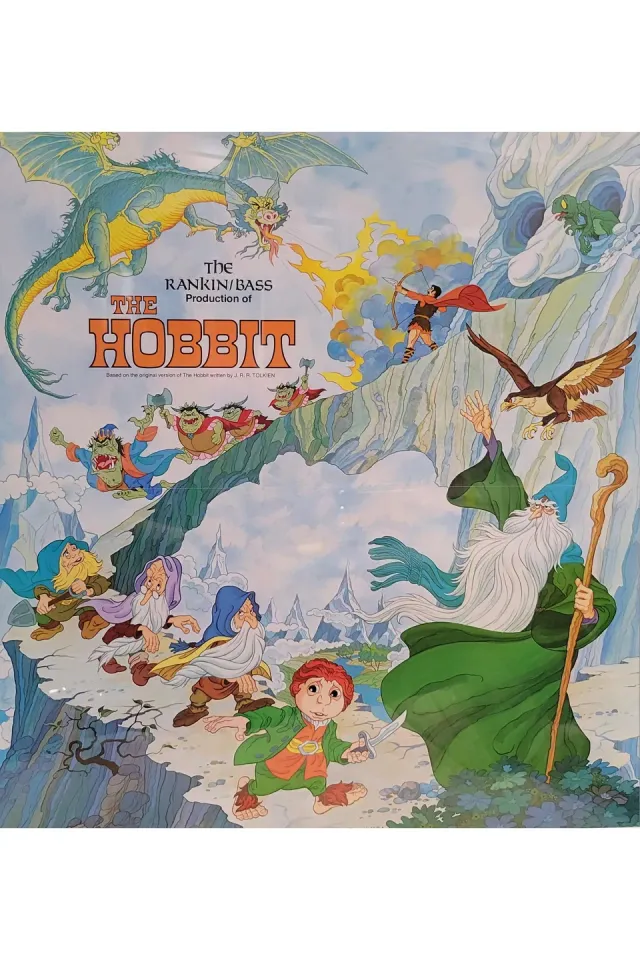
Bilbo Baggins is drawn from his comfortable life in the Shire into a journey with the wizard Gandalf and thirteen dwarves led by Thorin Oakenshield. The company hopes to reclaim the dwarves' homeland and treasure from the dragon Smaug. Along the way they face trolls, goblins, giant spiders, and other dangers, while Bilbo's caution and ingenuity become increasingly valuable. A magical ring helps him survive an encounter with Gollum, and the expedition leads toward a confrontation over competing claims and loyalties.
Both centre on protective flight and heroic responsibility.
Why this matches +
Genres: Fantasy / Children's
Shared film traits
Based on recorded story, mood and style. Your preferences can change the order.
Escape and pursuit
What changes The Lord of the Rings: journey and escape and split narrative lines. Return to Oz: quest structure with successive obstacles.
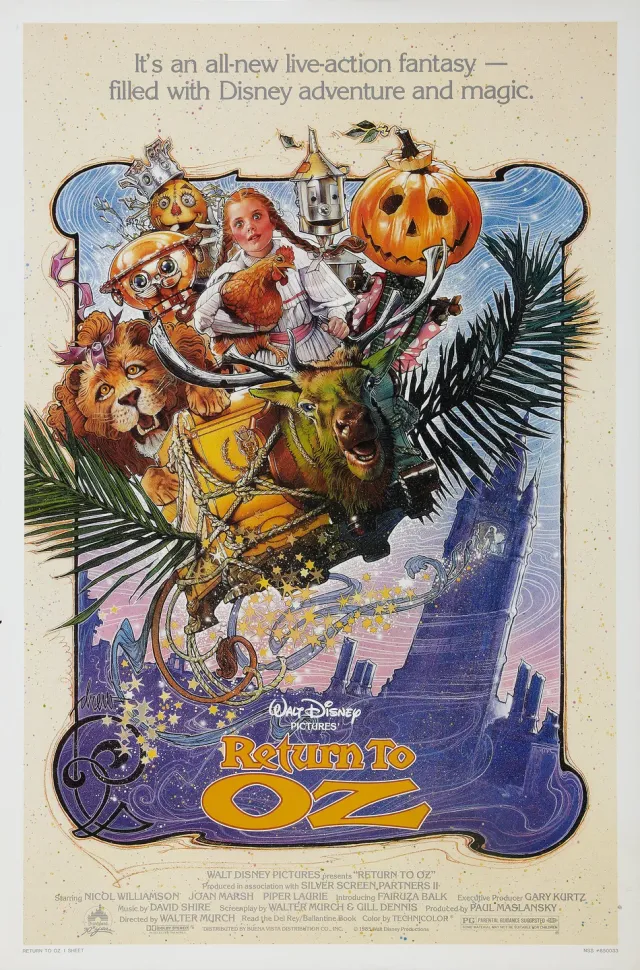
After a restless Dorothy is sent for treatment following her return from Oz, she awakens back in the strange land and finds the Emerald City deserted. She joins a talking hen, a mechanical man, a pumpkin-headed companion and the Gump on a quest to defeat Princess Mombi and the Nome King. The adventure uses practical creatures and a darker fairy-tale mood than a musical fantasy.
Based on recorded story, mood and style. Your preferences can change the order.
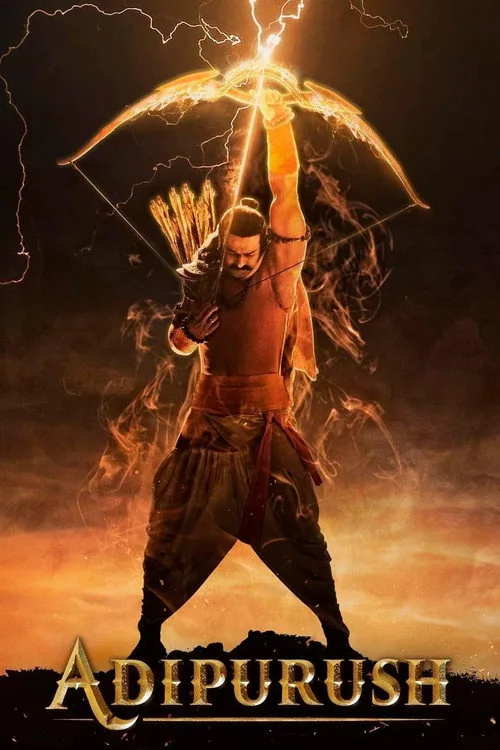
What changes The Lord of the Rings: journey and escape and split narrative lines. Adipurush: a quest toward lanka culminates in a large-scale confrontation.
This Hindi-language mythological fantasy retells an episode from the Ramayana through the conflict between exiled prince Raghava and the ruler Lankesh, who abducts Janaki. Raghava and his allies journey toward Lanka, gathering support for a rescue and a battle against the demon king’s forces. Om Raut’s film translates an epic familiar to many viewers into a large-scale spectacle, centering loyalty, devotion, and the effort to recover a loved one from captivity.
Based on recorded story, mood and style. Your preferences can change the order.
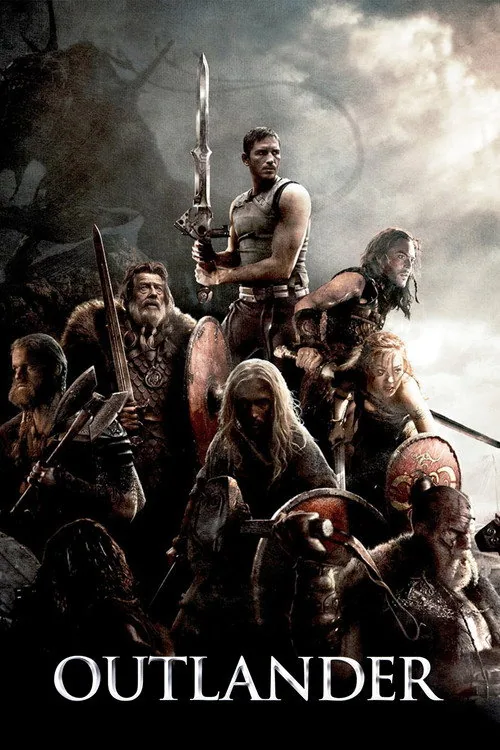
What changes The Lord of the Rings: journey and escape and split narrative lines. Outlander: adventure-driven, combat escalation and ensemble survival.
A spacecraft crashes in Scandinavia in 709 AD, leaving Kainan, a humanoid visitor, as the sole survivor. The settlement he reaches initially treats him as a dangerous stranger, but he warns its people that a predatory creature called the Moorwen has followed him to Earth. The creature’s attacks force the Vikings and Kainan to cooperate, even as his explanation reveals a painful connection between the monster and his own past. This science-fiction action film combines alien contact with a Viking-era survival story and a community defending itself from a shared threat.
Both centre on supernatural treasure quest and heroic responsibility.
Why this matches +
Genres: Action / Drama
Shared film traits
Based on recorded story, mood and style. Your preferences can change the order.
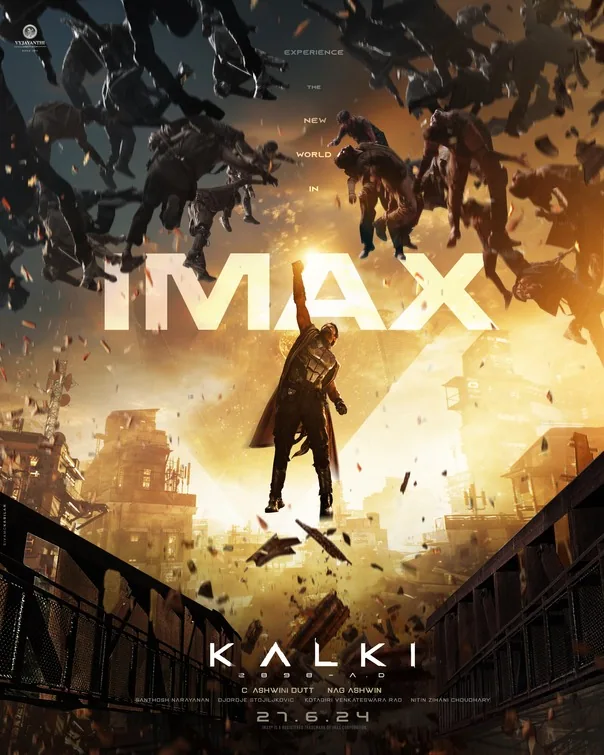
What changes The Lord of the Rings: journey and escape and split narrative lines. Kalki 2898 AD: a sprawling origin story moves between future conflict and mythic past.
A dystopian future is shaped by a powerful complex that exploits the population while a prophesied child becomes the focus of competing forces. A bounty hunter, a pregnant woman, and an immortal warrior are drawn together through an ancient story projected into a far-future world. The science-fantasy epic combines Indian mythology with large-scale action, framing technology and prophecy as rival forms of power over human life.
Based on recorded story, mood and style. Your preferences can change the order.
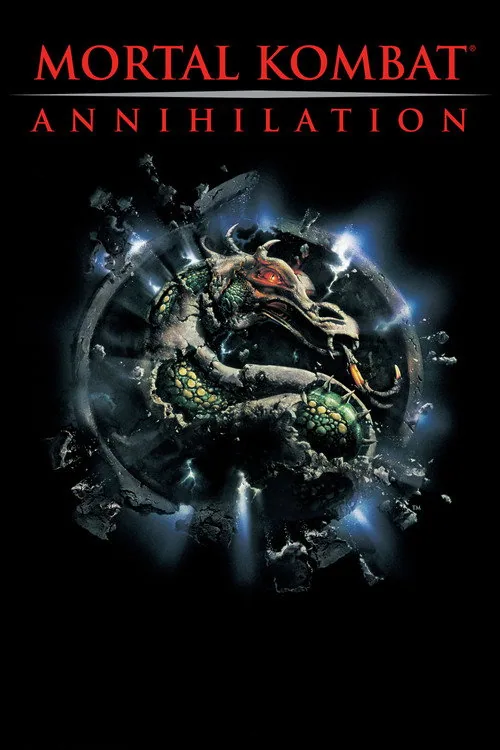
What changes The Lord of the Rings: journey and escape and split narrative lines. Mortal Kombat: Annihilation: fight-to-fight momentum, brief plot transitions and large final confrontation.
After the first film's tournament, Shao Kahn invades Earthrealm and threatens to merge it with the Outworld. Liu Kang, Sonya Blade, Jax, Kitana, and a new group of fighters race to stop him before the realms' boundary disappears. The sequel moves quickly through rival warriors, shifting alliances, and fantastical combat arenas, adapting more characters and lore from the game series into a high-energy continuation built around the fate of two worlds.
Based on recorded story, mood and style. Your preferences can change the order.
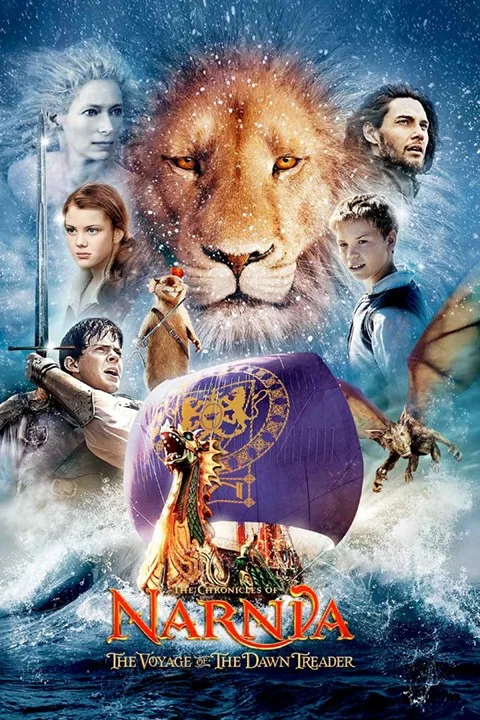
What changes The Lord of the Rings: journey and escape and split narrative lines. The Chronicles of Narnia: The Voyage of the Dawn Treader: episodic quest and maritime progression.
Edmund and Lucy are staying with their difficult cousin Eustace when a painting draws them into Narnia and aboard King Caspian's ship. The crew is searching for seven lords exiled by Caspian's uncle, but the voyage also brings them to islands where temptation and fear distort what they want. Lucy's self-doubt and Eustace's greed become personal trials, while a green mist threatens the wider crew. To reach the end of the journey, the travelers must recover the lords' swords and learn what courage means beyond winning a fight.
Both centre on supernatural treasure quest and heroic responsibility.
Why this matches +
Genres: Fantasy / Action
Shared film traits
Based on recorded story, mood and style. Your preferences can change the order.
Escape and pursuit
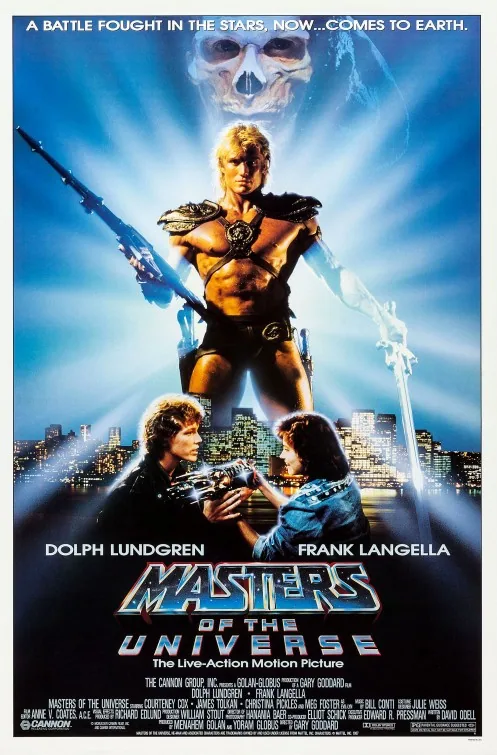
What changes The Lord of the Rings: journey and escape and split narrative lines. Masters of the Universe: fast-moving.
On the distant world of Eternia, the heroic He-Man and his companions battle Skeletor for control of Castle Grayskull. A device called the Cosmic Key transports the group to Earth, where two young people become caught in the conflict and help the heroes search for a way back. The struggle crosses science-fiction gadgets and fantasy warfare as Skeletor's ambition threatens both worlds.
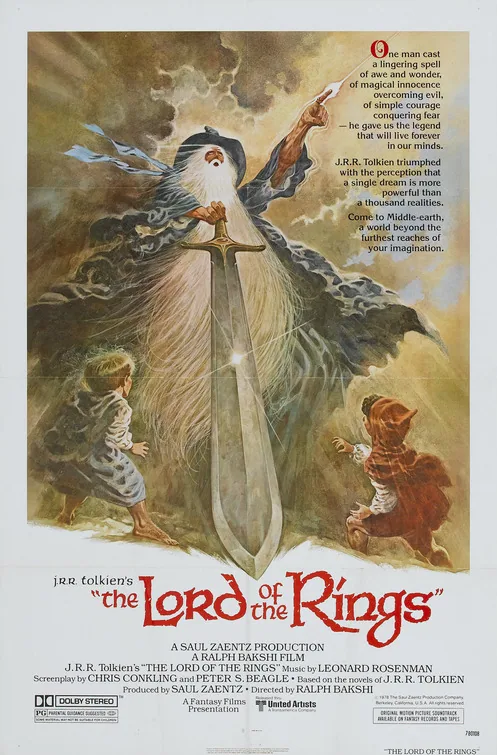
Frodo Baggins inherits a dangerous Ring and leaves the Shire with companions to prevent it from returning to the dark lord Sauron. Gandalf and Aragorn guide the journey as the hobbits encounter riders, allies and enemies across Middle-earth. The animated feature covers much of The Fellowship of the Ring and continues into parts of The Two Towers, following the company’s separation and the urgent movement toward Mordor. Ralph Bakshi’s adaptation compresses Tolkien’s sprawling narrative into a stylized, unfinished first installment.
What drives the story
The Ring’s pull makes every stage of the journey a risk, while the company’s separation creates parallel attempts to evade capture and continue toward Mordor.
The people at its centre
Frodo’s reliance on Sam deepens as Gandalf and Aragorn offer different forms of guidance. The fellowship’s breakdown changes the story from group travel to divided responsibilities.
What it feels like
Rotoscoping, painted backgrounds and abrupt transitions give the fantasy a distinctive, sometimes uncanny visual texture. The film ends before the full story is resolved.
Worth knowing
For viewers curious about experimental animation and Tolkien adaptations. This version is an incomplete 1978 adaptation, not a self-contained retelling of the complete trilogy.
TemptationFriendshipCourage
Mood
Mythic · Ominous · Unfinished
Pacing
Journey and escape · Split narrative lines
Visual style
Rotoscoped animation · Painted fantasy backgrounds
Storytelling
Ring quest · Fellowship separation · Epic adaptation