Tony’s insubordination first serves the bootlegging business and then makes him a power in his own right, so success continually generates a more dangerous rival.
Why this matches +
Selected for the central appeal: A charismatic young criminal’s rise exposes the damage that violent success inflicts on family and friendship.
Genres: Crime / Drama
Shared film traits
Based on recorded story, mood and style. Your preferences can change the order.
Criminal underworld
What changes A pre-Code gangster’s rapid ascent turns appetite and swagger into a fatal threat to his own intimate world; a different crime boss and family conflict replace Tom’s Prohibition friendships and respectable brother.
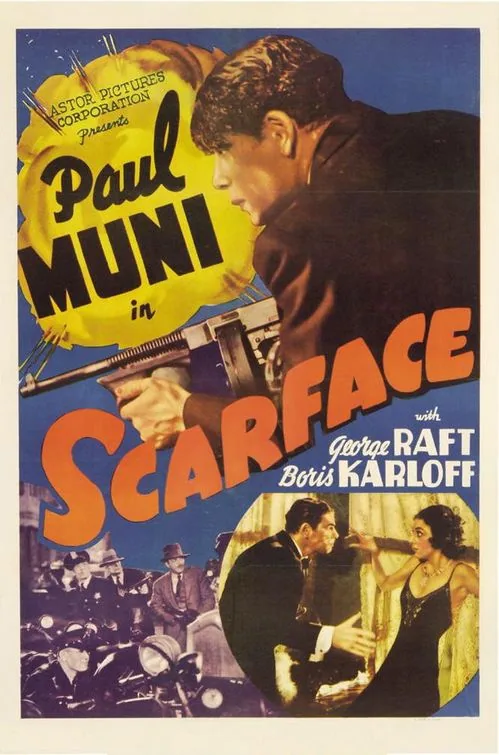
In Prohibition-era Chicago, ambitious gunman Tony Camonte helps Johnny Lovo seize territory from rival bootleggers, then ignores the limits Lovo tries to place on his expansion. Tony’s rapid rise brings the police and competing gangs closer, while his possessive attachment to his sister Cesca makes his private life another source of conflict. His friend Guino Rinaldo becomes part of that family tension, and the gang war Tony has helped intensify finally turns inward. The film’s ending uses the city’s “The World Is Yours” billboard to sharpen the gap between the gangster’s ambition and the violence that destroys him.
A summons to revisit an old betrayal opens a nonlinear reconstruction of criminal friendship whose missing pieces unsettle the narrator's account of responsibility.
Why this matches +
Related viewing experiences with the specific differences recorded for each pair.
An adjacent discovery: a related idea with a different viewing experience.
Genres: Crime / Drama
Shared film traits
Based on recorded story, mood and style. Your preferences can change the order.
Criminal underworld
What changes Childhood friends build criminal identities whose adult costs expose the instability of loyalty and success; a long, fragmented recollection replaces the compact, forward-moving rise and fall.
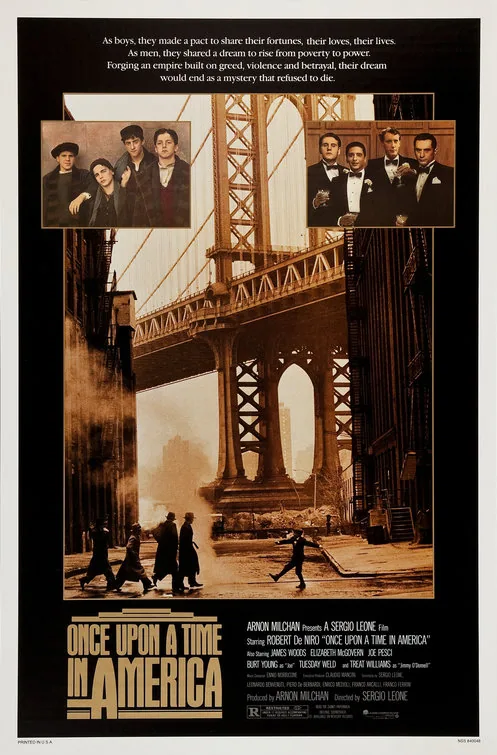
An ageing gangster returns to New York after decades away, responding to signs that the betrayals he believed settled may conceal another history. Memories move between childhood alliances, Prohibition-era success and damaged relationships with women whose lives his ambitions repeatedly violate. The shifting chronology makes loyalty difficult to disentangle from possessiveness and regret, while the return asks whether recovering the past can offer anything more stable than another self-serving story.
An ambitious outsider's criminal ascent creates obligations and enemies that his increasingly paranoid need for control cannot manage.
Why this matches +
Related viewing experiences with the specific differences recorded for each pair.
An adjacent discovery: a related idea with a different viewing experience.
Genres: Crime / Drama
Shared film traits
Based on recorded story, mood and style. Your preferences can change the order.
Criminal underworld
What changes A magnetic outsider’s criminal success grows inseparable from excess and family damage; lavish, graphic modern drug-empire tragedy replaces the terse pre-Code Prohibition milieu.
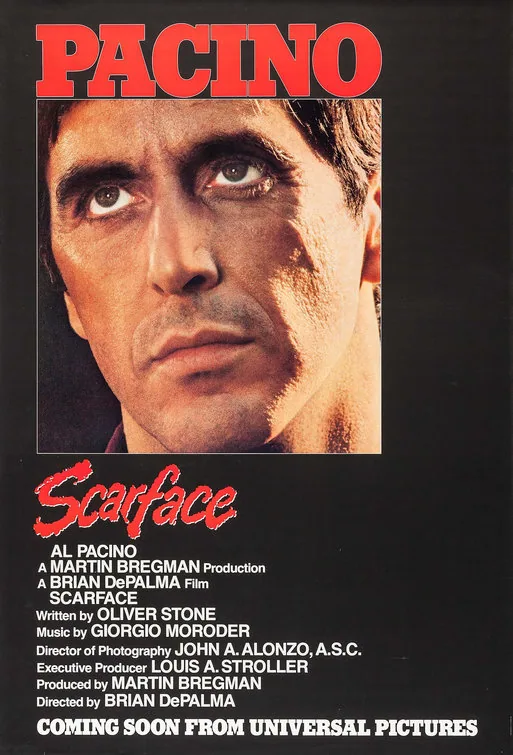
A Cuban immigrant arrives in Miami with little status and enters the cocaine trade, using aggression and opportunism to rise through its hierarchy. Wealth brings an extravagant household and political connections, but his possessiveness and distrust damage the relationships that initially supported him. As business obligations collide with personal limits, the empire becomes a trap built from the same appetites that made its expansion possible.
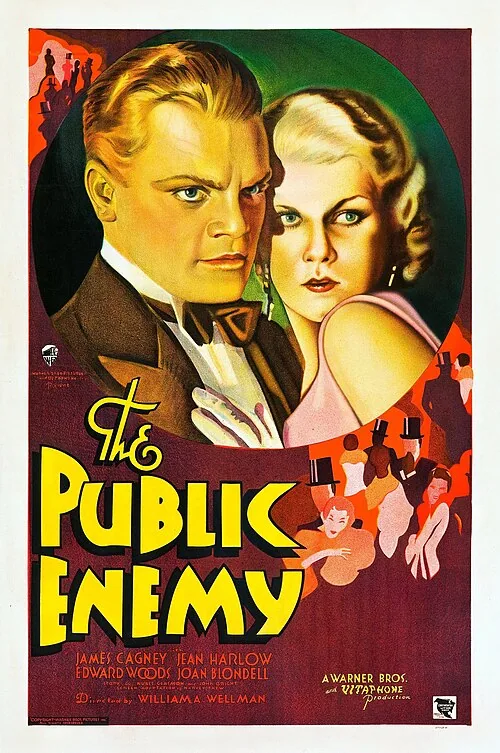
In 1900s Chicago, Tom Powers and his friend Matt Doyle begin with petty theft and are drawn into organized crime by a mentor who abandons them when a robbery goes wrong. Tom grows into a confident Prohibition-era gangster, while his older brother Mike's enlistment and moral refusal to accept criminal money expose the family cost of Tom's success. A horse-racing death and a gang rivalry destabilize Tom's position, and violence becomes increasingly difficult to outrun. William A. Wellman's film opens with a disclaimer that it does not intend to glorify criminals, but James Cagney's performance gives Tom dangerous charisma. The story's rise-and-fall structure helped shape the gangster film while retaining the social world of its pre-Code moment.
What drives the story
A childhood partnership in petty theft becomes an adult criminal ascent, disrupted by a gang war and the consequences of treating violence as routine.
The people at its centre
Tom's brother Mike rejects both his methods and his money; Matt remains his closest companion but cannot protect him from the world they chose.
What it feels like
A compact early sound film favors blunt confrontations and sudden violence, with Cagney's restless energy driving the gangster-cycle momentum.
Worth knowing
For viewers interested in foundational crime cinema. Its pre-Code depiction and historical style differ from modern underworld epics, and charisma should not be confused with moral endorsement.