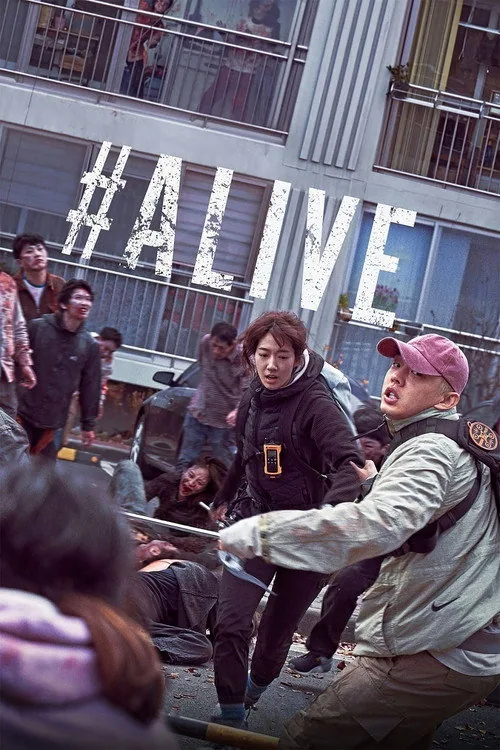
Joon-woo attempts to stay alive in his apartment until contact with Yoo-bin makes a joint escape possible.
Why this matches +
Selected for the central appeal: Fast-moving outbreak survival stories about trapped strangers, sacrifice and family protection.
Genres: Horror / Thriller
Shared film traits
Based on recorded story, mood and style. Your preferences can change the order.
Survival · Escape and pursuit
What changes #Alive traps a survivor amid a sudden zombie outbreak and a desperate search for human connection.
When a zombie outbreak overwhelms Seoul, video-game player Oh Joon-woo is trapped alone in his family's apartment as phones and utilities begin to fail. He uses a drone and social media to assess the streets, then discovers another survivor, Kim Yoo-bin, in a nearby building. The pair coordinate across balconies and hallways while rationing food, avoiding the infected, and resisting despair. This Korean survival thriller turns a familiar apartment block into a vertical maze and treats digital connection as both a practical tool and an emotional lifeline.
A newly awakened survivor must evaluate successive offers of safety in a violently transformed society.
Why this matches +
Selected for the central appeal: Fast-moving outbreak survival stories about trapped strangers, sacrifice and family protection.
Genres: Horror / Thriller
Shared film traits
Based on recorded story, mood and style. Your preferences can change the order.
Survival
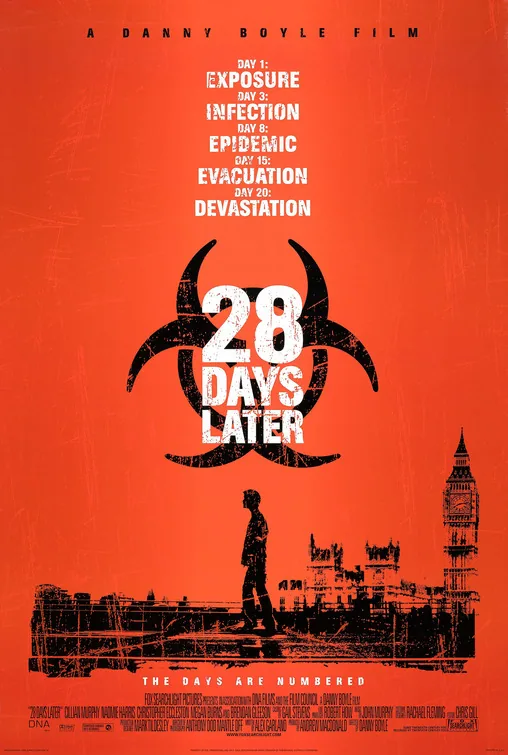
What changes 28 Days Later follows survivors forming uneasy alliances while fleeing a fast-moving infection.
A bicycle courier wakes in an abandoned hospital and finds London emptied by a rage infection. Joining other survivors, he travels in search of safety while learning how quickly familiar moral rules have collapsed. A promise of military protection raises a different kind of danger, shifting the struggle from escaping infected attackers to judging what uninfected people are prepared to do.
Columbus’s survival rules help him avoid danger but cannot supply the companionship he wants; the road forces him to test trust against self-protection.
Why this matches +
These offer a related experience with a meaningful difference in story, tone, or presentation.
An adjacent discovery: a related idea with a different viewing experience.
Genres: Horror / Comedy
Shared film traits
Based on recorded story, mood and style. Your preferences can change the order.
Survival
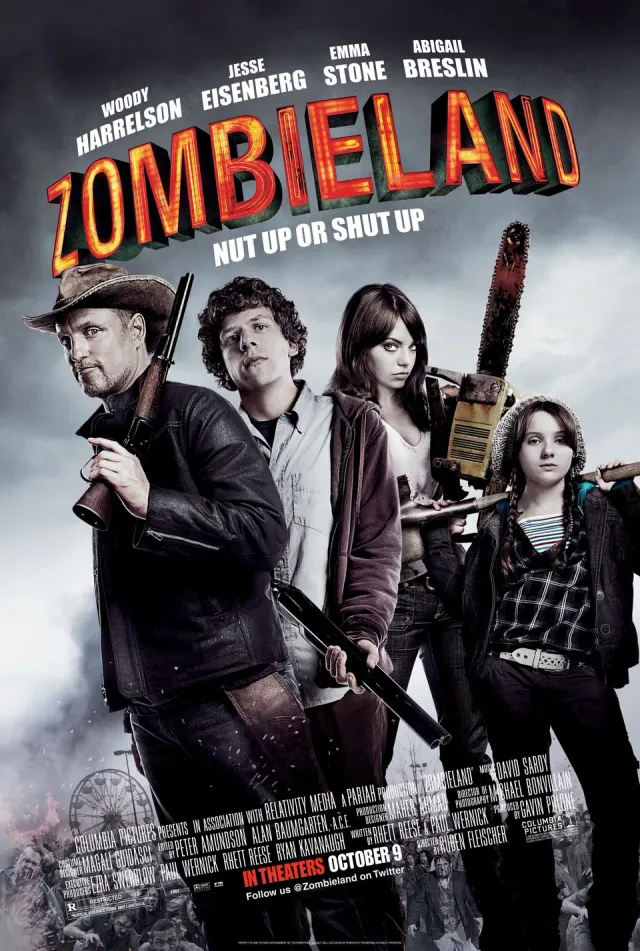
What changes Zombieland follows a group crossing an outbreak-ravaged landscape and learning to rely on one another, with a comic tone.
In a United States devastated by a zombie outbreak, anxious college student Columbus survives by following a strict set of rules. On the road he joins Tallahassee, a fearless hunter who is looking for Twinkies, and later sisters Wichita and Little Rock, who have learned to fend for themselves through deception. Their uneasy group travels toward a California amusement park, with each new encounter testing whether trust is more dangerous than the zombies. The horror-comedy lets the characters’ mismatched coping styles carry the road story as much as the undead threat. The film uses the rules as a way to narrate fear, then reveals that personal connection cannot be reduced to a checklist.
Two households attempt a protected alliance, then an ambiguous security breach makes every precaution appear either necessary or evidence of concealed betrayal.
Why this matches +
These offer a related experience with a meaningful difference in story, tone, or presentation.
An adjacent discovery: a related idea with a different viewing experience.
Genres: Horror / Drama
Shared film traits
Based on recorded story, mood and style. Your preferences can change the order.
Survival
What changes It Comes at Night explores fear and mistrust among people sheltering from an outbreak.
A family survives an unexplained contagious threat through isolation, strict rules and the willingness to exclude outsiders. Accepting another household seems to increase their chance of survival, but incomplete information and a disturbing breach of routine turn cooperation back into suspicion. The adolescent son experiences the enclosure through desire, dreams and terror that provide no reliable map of danger. The horror concentrates on decisions made without certainty, showing how the effort to protect a family can become destructive before anyone establishes what actually happened.
A salvage plan for escape uncovers failed research, compressing departure into a countdown where corporate recovery goals conflict with the workers' survival.
Why this matches +
These offer a related experience with a meaningful difference in story, tone, or presentation.
An adjacent discovery: a related idea with a different viewing experience.
Genres: Horror / Science Fiction
Shared film traits
Based on recorded story, mood and style. Your preferences can change the order.
Survival · Escape and pursuit
What changes Alien: Romulus traps a group in narrow spaces with lethal creatures and tests who will risk themselves for others.
Young workers on a company-controlled colony plan to escape their restricted futures by salvaging equipment from an apparently abandoned station. The station contains the remains of biological research, and their limited window for departure becomes a struggle against infection, predation, and corporate priorities. A synthetic member of the group faces conflicting directives, making the meaning of protection depend on whose survival the system considers worth preserving.
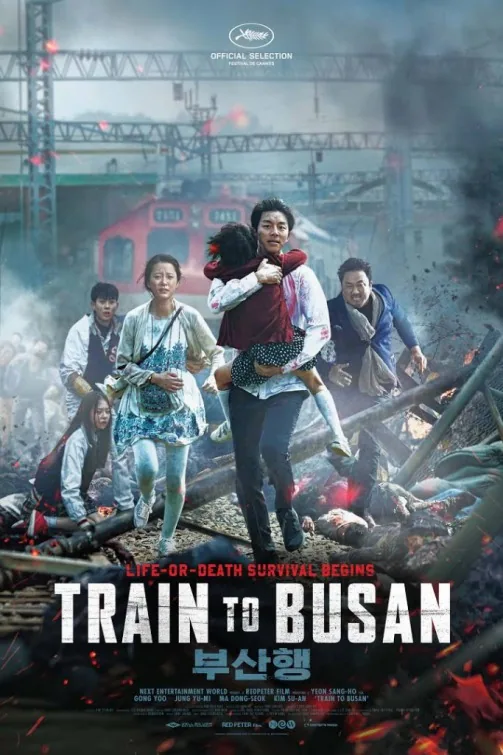
Work-focused fund manager Seok-woo boards an express train to Busan with his young daughter Su-an, hoping to get her to her mother. A fast-moving outbreak begins during departure, and the train’s narrow cars turn travel into a sequence of blocked exits, desperate alliances and sudden changes in who can be trusted. Seok-woo’s first instinct is to protect himself and Su-an alone, but other passengers make the costs of that instinct harder to ignore. A husband and pregnant wife, a baseball team and several isolated riders are forced to decide whether survival means shutting a door or helping someone reach the next car. The journey toward a city believed to be safe becomes a test of caregiving, fear and collective responsibility under pressure.
What drives the story
A fixed train route turns each car boundary into a tactical and moral problem as the outbreak changes the group’s options.
The people at its centre
Seok-woo’s growth is measured in whom he is willing to protect; the warm, stubborn Sang-hwa and his pregnant wife provide a contrasting model of mutual care.
What it feels like
The film uses tight corridors, glass doors and moving geography for clear, escalating action, then gives emotional pauses room to land.
Worth knowing
For viewers wanting high-pressure zombie survival where cooperation and family bonds matter as much as combat. The contained train setting distinguishes it from open-world outbreak spectacles.