Explore films connected to Who's That Girl through Freedom and authority, deception, romance. Choose the qualities you want to carry into your next watch.
What should feel similar?
Find your next favourite
9 films · Closest overall matches
Hide films you’ve seen or don’t want. Saved on this device.
No matches for this combination yet.
Try another option or reset your choices to see more films.
Based on recorded story, mood and style. Your preferences can change the order.
Escape and pursuit · Romance and intimacy
What changes Who's That Girl: rapid farce, episodic detours, mistaken assumptions and romantic change of course. The Lovebirds: breakup setup, murder triggers pursuit, comic investigative set pieces and relationship resolution.
Jibran and Leilani decide to break up while driving to a dinner party, but their argument is interrupted when they witness a cyclist’s murder and are mistaken for the killers. With police closing in, the former couple follows clues through New Orleans in an effort to clear their names and identify the people behind the crime. Their improvised investigation sends them through parties, bars, and criminal schemes while forcing them to work together. Michael Showalter’s romantic comedy combines a relationship crisis with a fast-moving night of mistaken identity and pursuit.
Based on recorded story, mood and style. Your preferences can change the order.
Criminal underworld
What changes Who's That Girl: rapid farce, episodic detours, mistaken assumptions and romantic change of course. Mike & Nick & Nick & Alice: mob conflict establishes the danger, time shift complicates the relationships and two nicks and mike attempt to change events.
Mob associates Mike and Nick are caught in a dangerous chain of events involving Alice, the woman they both love, and a criminal boss whose plans turn against them. A time-travel twist brings another version of Nick into the crisis, creating a second chance to prevent a murder and reshape the loyalties among the group. The action comedy uses the doubled character and shifting timeline for both banter and suspense, while keeping the core conflict rooted in friendship, betrayal, and the violent rules of organized crime.
Based on recorded story, mood and style. Your preferences can change the order.
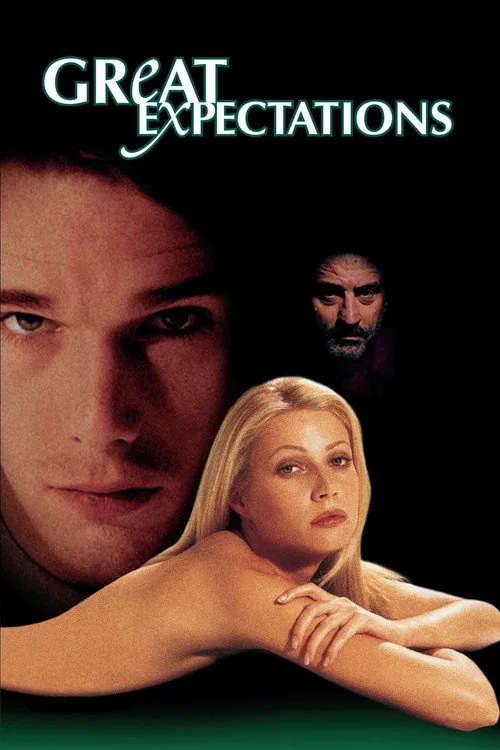
What changes Who's That Girl: rapid farce, episodic detours, mistaken assumptions and romantic change of course. Great Expectations: youth-to-adulthood progression, romantic longing and melodramatic revelations.
Young Florida artist Finn Bell helps an escaped convict and later meets Estella, the guarded niece of a wealthy, reclusive woman who invites him to paint. Years later, Finn unexpectedly receives support from an unknown benefactor and moves to New York, where he hopes to reconnect with Estella. Alfonso Cuarón relocates Dickens's story to contemporary settings and frames it through vivid color, youthful longing, and art, asking how ambition and fantasy can distort a person's memory of love.
Based on recorded story, mood and style. Your preferences can change the order.
Escape and pursuit · Criminal underworld
What changes Who's That Girl: rapid farce, episodic detours, mistaken assumptions and romantic change of course. Rumble in the Bronx: set-piece driven and escalating.
Hong Kong police officer Keung travels to New York for his uncle's wedding and becomes involved in a local gang conflict. His efforts to help a shop owner bring him into escalating chases and confrontations across the neighborhood. The action comedy uses the fish-out-of-water premise to introduce fast physical set pieces and a hero who relies on agility more than weapons.
Both share themes of romance, plus a comic and romantic atmosphere.
Why this matches +
Genres: Comedy / Romance
Shared film traits
Based on recorded story, mood and style. Your preferences can change the order.
Romance and intimacy
What changes Who's That Girl: rapid farce, episodic detours, mistaken assumptions and romantic change of course. The Valet: light, romantic, ensemble-driven and episodic.
Antonio is a Los Angeles valet whose ordinary routine changes after he is photographed beside actress Olivia Allan and her married billionaire partner. To quiet the publicity, Olivia and the developer present Antonio as her boyfriend, drawing him into an unfamiliar social world. As Antonio’s family and neighborhood respond to the arrangement, the film follows a staged romance that becomes entangled with class, reputation, gentrification and the people who depend on him.
Based on recorded story, mood and style. Your preferences can change the order.
Escape and pursuit · Criminal underworld
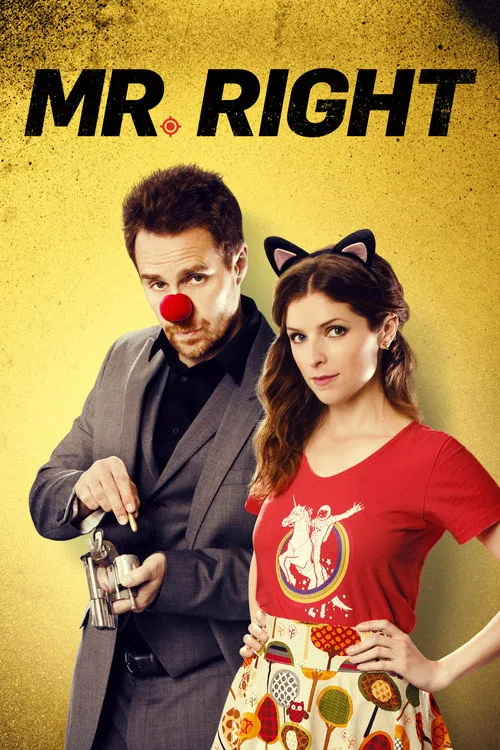
What changes Who's That Girl: rapid farce, episodic detours, mistaken assumptions and romantic change of course. Mr. Right: fast comic action, romantic beats between fights and escalating pursuit.
After a painful breakup, Martha meets Francis, a charming man who reveals that he is a former hitman who now kills the people who hire him. Their fast-growing romance continues even as old employers and a network of assassins try to reach him. Martha is drawn into Francis's violent world and discovers that she has a more unusual response to danger than he expected. The action comedy sets courtship alongside choreographed confrontations, using the pair's eccentric chemistry to play with the idea of a romantic partner who is also a lethal outlaw.
Based on recorded story, mood and style. Your preferences can change the order.
Criminal underworld
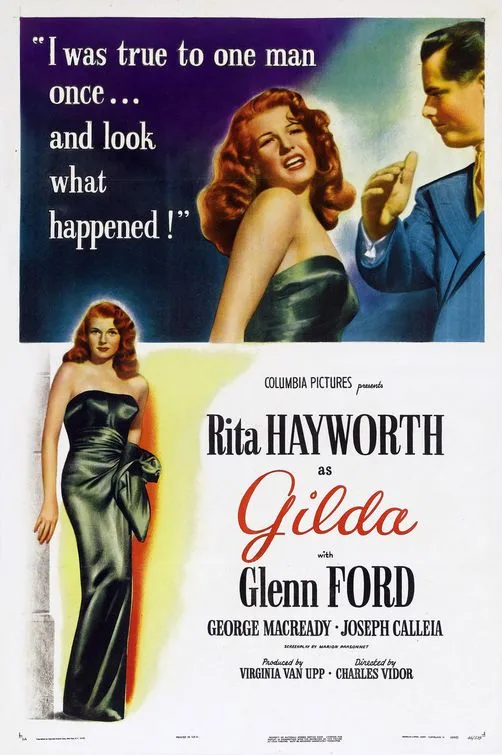
What changes Who's That Girl: rapid farce, episodic detours, mistaken assumptions and romantic change of course. Gilda: measured and escalating.
Johnny Farrell’s narration begins in a world of gambling, suspicion and male control when he meets Gilda again as the wife of his employer, Ballin Mundson. Their history is conveyed through jealousy and accusation, but the film’s glamorous musical numbers make Gilda a performer who can command the room rather than merely the object of Johnny’s story. The triangle’s power shifts as loyalty, desire and ownership become difficult to separate, and the ending reframes the couple without resolving the coercive terms that shaped their conflict. Its noir voice and studio spectacle invite a reading of how men interpret a woman they cannot control.
Based on recorded story, mood and style. Your preferences can change the order.
Romance and intimacy
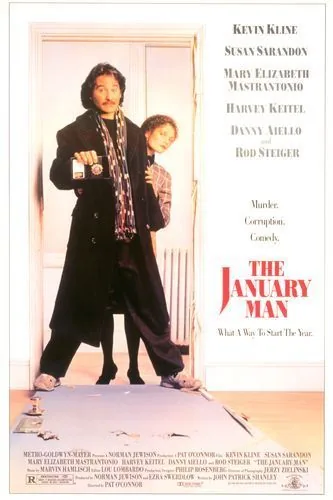
What changes Who's That Girl: rapid farce, episodic detours, mistaken assumptions and romantic change of course. The January Man: investigation proceeds through pattern recognition and a succession of character encounters.
A serial killer has been murdering women in Manhattan for months when the mayor pressures police commissioner Frank Starkey to bring back his estranged brother Nick, a gifted former detective who left the force in disgrace. Nick agrees to return, but his appointment revives old family and romantic tensions, especially because Frank’s wife Christine is Nick’s former partner. As Nick studies the pattern of the killings, he draws on an eccentric circle of New Yorkers and unconventional reasoning. The investigation becomes entangled with political ambition and the brothers’ unresolved history, blending a murder mystery with a stylized portrait of city life.
Based on recorded story, mood and style. Your preferences can change the order.
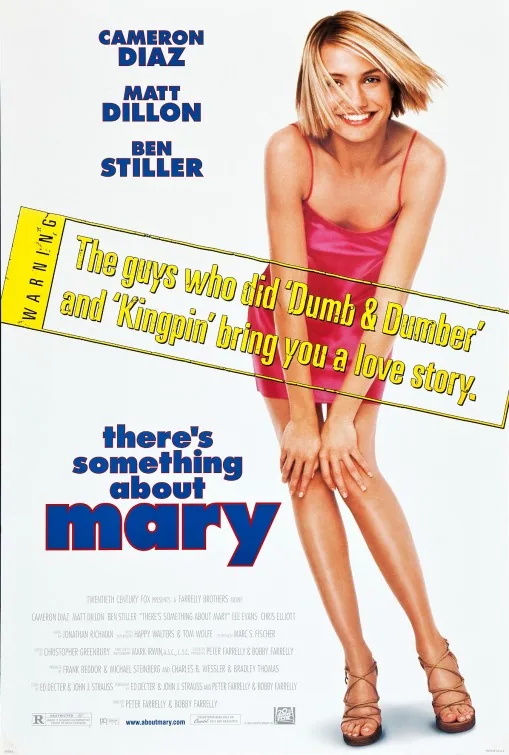
What changes Who's That Girl: rapid farce, episodic detours, mistaken assumptions and romantic change of course. There's Something About Mary: escalating gags and brisk.
Years after an embarrassing high-school date with Mary Jensen, Ted hires private investigator Pat Healy to find her in Florida. Pat locates her but becomes attracted to her himself and lies to Ted about what he has learned. Other men also compete for Mary’s attention, often presenting themselves through carefully managed stories, while Ted eventually travels to meet her again. Mary is warm and independent, but the men’s schemes repeatedly turn her into the prize in their rivalry. The comedy builds from escalating deceptions and humiliations rather than from a serious mystery about her character. The misunderstanding escalates through increasingly elaborate false stories, even as Mary remains more straightforward than her pursuers.
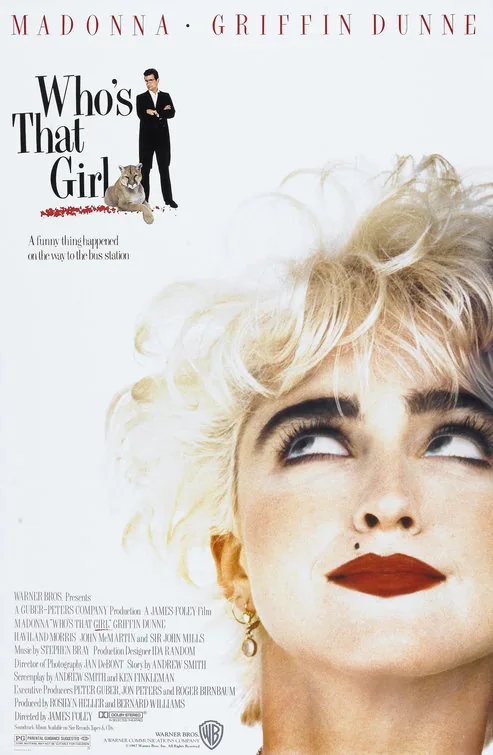
Nikki Finn leaves prison on parole after being framed for her boyfriend Johnny’s murder and plans to expose the men who killed him. Her parole officer assigns tax attorney Loudon Trott to drive her to a bus, but a series of detours involving a stolen safe-deposit key, a cougar and a wedding derail the simple trip. Loudon is engaged to Wendy, whose wealthy father controls his career, while Nikki’s unpredictability keeps pulling him away from the schedule and the respectable future he has accepted. The pair’s search for proof turns into a chase through Manhattan that tests Loudon’s caution and Nikki’s ingenuity. The comedy mixes slapstick city escapades with a romance built around two people who distrust the lives they are supposed to want.
What drives the story
Nikki acts impulsively but keeps a clear objective, while Loudon’s careful professional habits conceal growing dissatisfaction.
The people at its centre
Their forced proximity becomes an alliance as Nikki challenges Loudon’s engagement and career expectations.
What it feels like
The film uses a parolee’s mobility and a lawyer’s social status to reverse who appears to control the situation.
Worth knowing
A high-energy romantic farce about a wrongly convicted woman and a cautious attorney pulled into her search for justice.