Rusty is asked to investigate Carolyn's murder, then must defend himself when his affair and the evidence make him the prime suspect.
Why this matches +
Selected for the central appeal: Courtroom mysteries about a murder defense, surprising testimony and carefully concealed motives.
Genres: Crime / Drama
Shared film traits
Based on recorded story, mood and style. Your preferences can change the order.
Investigation
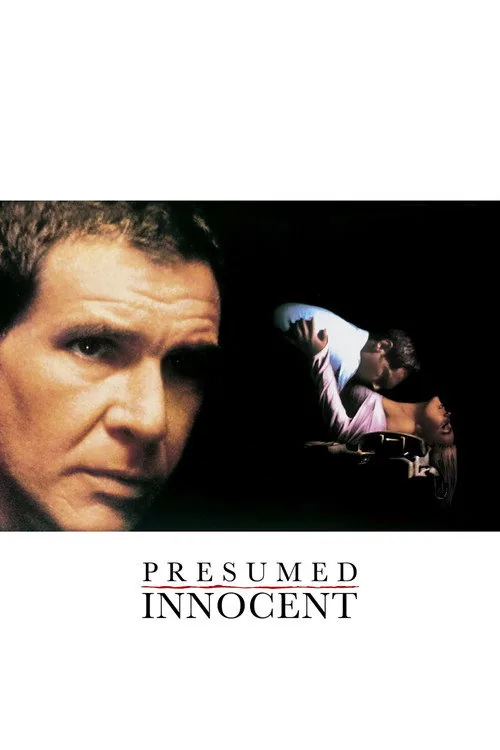
What changes Presumed Innocent centers a murder prosecution whose testimony and personal relationships complicate the case.
Prosecutor Rusty Sabich is assigned to investigate the murder of colleague Carolyn Polhemus, despite having had an affair with her. When the evidence turns toward him, Rusty becomes both the official investigator and the defendant in a case led by political rivals within the prosecutor's office. His marriage, professional reputation, and complicated memories of Carolyn are placed under scrutiny as the courtroom tests whether legal knowledge can protect someone from the system he helped operate.
A confessed killing appears straightforward until the defense builds its case around the wife's allegation and a contested legal category. The trial tests how language can authorize or constrain what the jury hears.
Why this matches +
Selected for the central appeal: Courtroom mysteries about a murder defense, surprising testimony and carefully concealed motives.
Genres: Crime / Drama
Shared film traits
Based on recorded story, mood and style. Your preferences can change the order.
Investigation
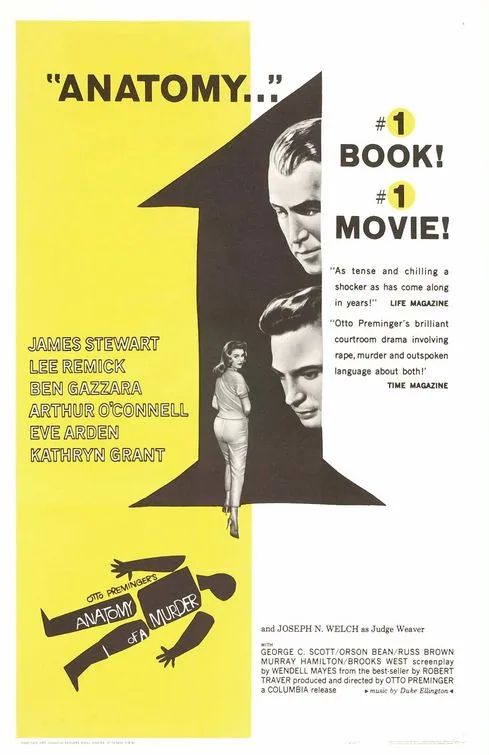
What changes Anatomy of a Murder follows a defense lawyer testing conflicting accounts in a murder trial.
When Lieutenant Frederick Manion admits killing tavern owner Barney Quill, defense lawyer Paul Biegler takes the case after Manion's wife says Quill raped her. In court, the account of the killing and the limits of what the law will allow become matters of strategy, euphemism and performance. Biegler's team contests the prosecution while the defendant's own motives remain difficult to read. Otto Preminger's film is notable for giving legal argument time and texture, but its courtroom procedure is a dramatic construction rather than a guide to how every real trial works.
A planned murder fails and is repurposed into a frame-up, forcing the investigator to distinguish staged evidence from the sequence of actions the objects actually permit.
Why this matches +
These offer a related experience with a meaningful difference in story, tone, or presentation.
An adjacent discovery: a related idea with a different viewing experience.
Genres: Thriller / Crime
Shared film traits
Based on recorded story, mood and style. Your preferences can change the order.
Investigation
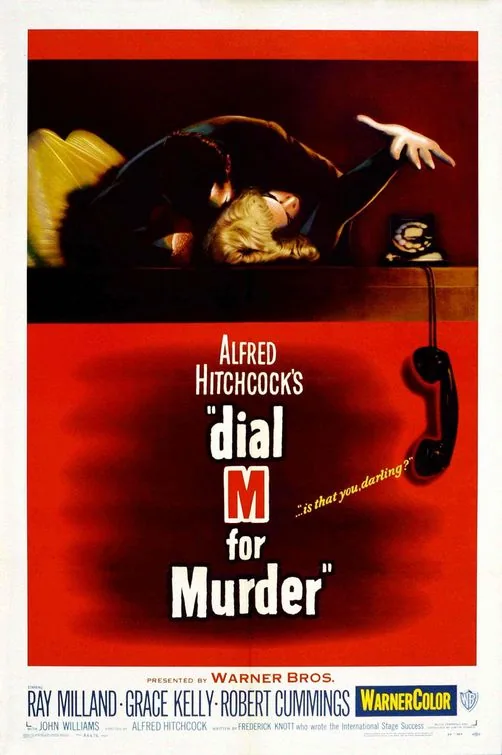
What changes Dial M for Murder turns a planned killing on deceptive testimony and small pieces of evidence.
A retired tennis player who knows about his wealthy wife's affair arranges her murder through a former acquaintance he can blackmail. The plan depends on a telephone call, a concealed key and a carefully prepared alibi, but her unexpected resistance leaves him improvising a different crime narrative. As police and her lover reconstruct the evidence, ordinary domestic objects become tests of which apparently plausible account can survive an exact demonstration.
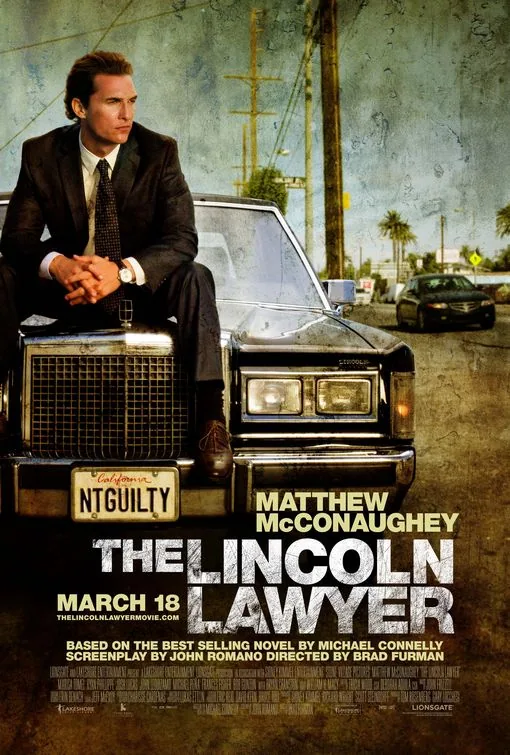
The apparent mismatch between Roulet’s polished account and earlier evidence creates an investigation that threatens Mickey’s legal obligations and personal safety.
Why this matches +
These offer a related experience with a meaningful difference in story, tone, or presentation.
An adjacent discovery: a related idea with a different viewing experience.
Genres: Crime / Drama
Shared film traits
Based on recorded story, mood and style. Your preferences can change the order.
Investigation
What changes The Lincoln Lawyer follows a defense attorney whose client and case reveal unexpected dangers.
Defense attorney Mickey Haller runs his practice from the back seat of a Lincoln and takes a high-profile case involving wealthy client Louis Roulet, accused of assaulting a woman. The evidence seems to offer Mickey a chance at a lucrative, straightforward defense, but similarities to an older case begin to unsettle his certainty. As he investigates, he must navigate legal ethics, pressure from prosecutors and the safety of those close to him. Brad Furman’s adaptation turns courtroom procedure into a moral thriller about what a defense lawyer can know and what client confidentiality may require him to protect.
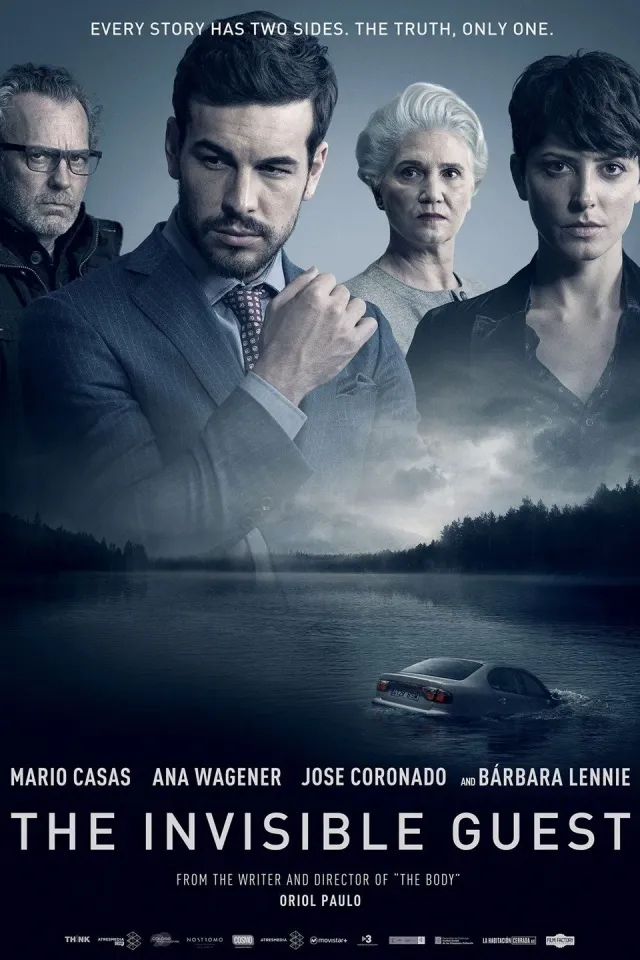
Virginia controls the conversation by challenging details Adrián hoped to present as settled.
Why this matches +
These offer a related experience with a meaningful difference in story, tone, or presentation.
An adjacent discovery: a related idea with a different viewing experience.
Genres: Crime / Mystery
Shared film traits
Based on recorded story, mood and style. Your preferences can change the order.
Investigation
What changes The Invisible Guest reconstructs an alleged murder through a defense strategy and changing accounts.
Businessman Adrián Doria is accused of murdering his lover and hires renowned attorney Virginia Goodman to prepare a defense before a key witness testifies. Over one tense meeting, they reconstruct competing versions of the crime and test what each account leaves out. The Spanish mystery thriller treats storytelling as a legal weapon, asking how much of a narrative can be trusted when every character has reason to conceal something.
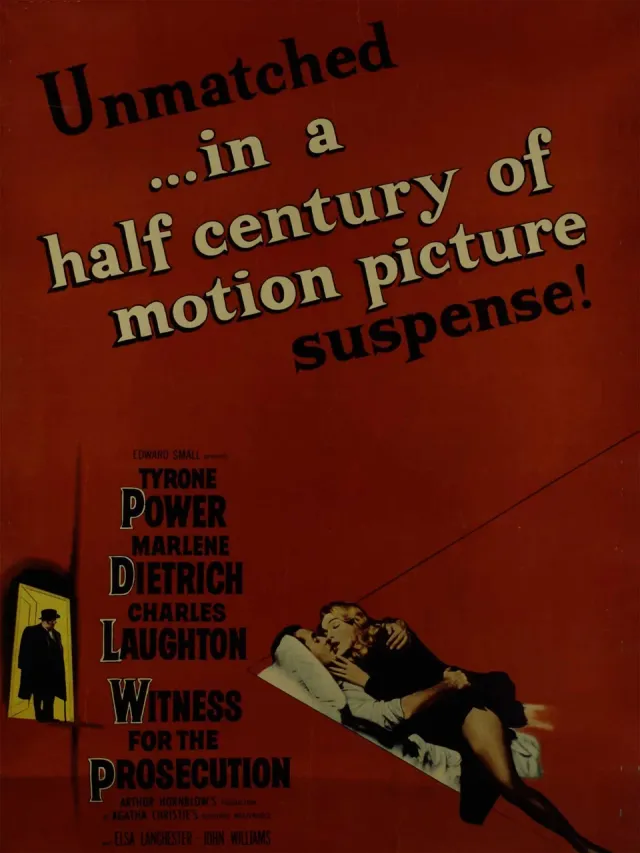
When Leonard Vole is accused of murdering a wealthy older woman, celebrated barrister Sir Wilfrid Robarts agrees to defend him despite his doctors’ orders to rest. The prosecution’s case appears strong, and Vole’s wife Christine becomes an unpredictable presence when she agrees to testify for the other side. The courtroom proceedings turn on character judgments, testimony and what the participants choose to reveal, with Elsa Lanchester’s nurse Miss Plimsoll providing dry comic counterpoint to Wilfrid’s stubbornness. Billy Wilder adapts Agatha Christie’s play and builds the mystery around performance as well as evidence. The defense strategy changes as Christine's testimony undermines Leonard's story. Wilfrid's health and persistence add a dry comic counterpoint to the trial's danger.
What drives the story
The trial places conflicting accounts beside one another, making credibility itself the central suspense mechanism.
The people at its centre
Wilfrid’s professional confidence is tested by Christine’s strategic independence; the defense depends on reading relationships as carefully as facts.
What it feels like
A largely courtroom-centered structure gains movement from sharp dialogue, witness reversals and darkly comic asides.
Worth knowing
A fit for classic legal mysteries where testimony and character performance shape the puzzle. Its famous reveal is best approached without spoilers, and its stage-derived setting differs from investigative procedurals.