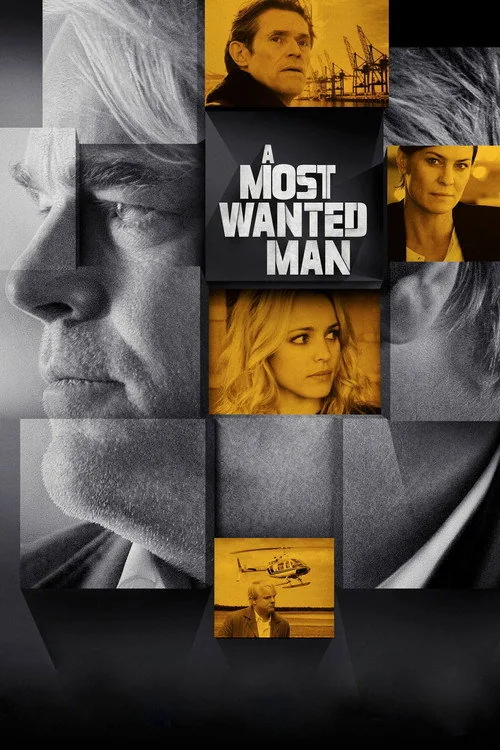
A subdued adult espionage thriller follows a Hamburg intelligence officer who tries to trace a funding network through a vulnerable asylum seeker while rival agencies press for a quick arrest.
What should feel similar?
Find your next favourite
5 films · Closest overall matches
Hide films you’ve seen or don’t want. Saved on this device.
No matches for this combination yet.
Try another option or reset your choices to see more films.
A politically motivated surveillance assignment turns a loyal operative's access to private evidence into a conflict between bureaucratic obedience and covert protection.
Why this matches +
A subdued adult espionage thriller follows a Hamburg intelligence officer who tries to trace a funding network through a vulnerable asylum seeker while rival agencies press for a quick arrest.
Genres: Drama / Thriller
Shared film traits
Based on recorded story, mood and style. Your preferences can change the order.
Political resistance
What changes The Stasi monitor develops sympathy for an artist under state surveillance, while Bachmann runs an operation intended to trace financing.
An East German surveillance officer is assigned to monitor a celebrated playwright and his partner, ostensibly for national security. Listening to their private life reveals artistic friendships, fear and a senior official's exploitative motive behind the operation. The officer's identification with people he is meant to expose creates small opportunities to intervene, but every altered report risks his position within an institution that treats conscience as disloyalty.
A retired intelligence officer reconstructs a failed operation to expose a mole hidden among the service’s most senior figures.
Why this matches +
A subdued adult espionage thriller follows a Hamburg intelligence officer who tries to trace a funding network through a vulnerable asylum seeker while rival agencies press for a quick arrest.
Genres: Drama / Thriller
Shared film traits
Based on recorded story, mood and style. Your preferences can change the order.
Investigation
What changes The operation hunts a mole inside Cold War British intelligence instead of cultivating a vulnerable outsider in post-9/11 Hamburg.
After a failed operation in Budapest, British intelligence suspects that a Soviet mole has reached the highest levels of the service. Retired officer George Smiley is quietly brought back to examine the evidence and identify which senior men can still be trusted. His investigation moves through fragmented memories, interviews and old case files rather than a sequence of action missions. Field agent Jim Prideaux’s experience of the failed operation gives the inquiry an emotional cost, while Smiley’s own history with his rival Karla complicates his return to a world built on concealment. Smiley’s marriage and long rivalry with Karla haunt the investigation, though the mole case remains his immediate problem.
An analyst observes a secret detention while the detainee's wife searches for him and officials try to contain the case.
Why this matches +
Pair notes identify differences in structure, tone, and audience.
An adjacent discovery: a related idea with a different viewing experience.
Genres: Drama / Thriller
Shared film traits
Based on recorded story, mood and style. Your preferences can change the order.
Investigation · Political resistance
What changes A detention and interrogation drive a more openly polemical ensemble, while the Hamburg story follows an officer trying to keep a source available.
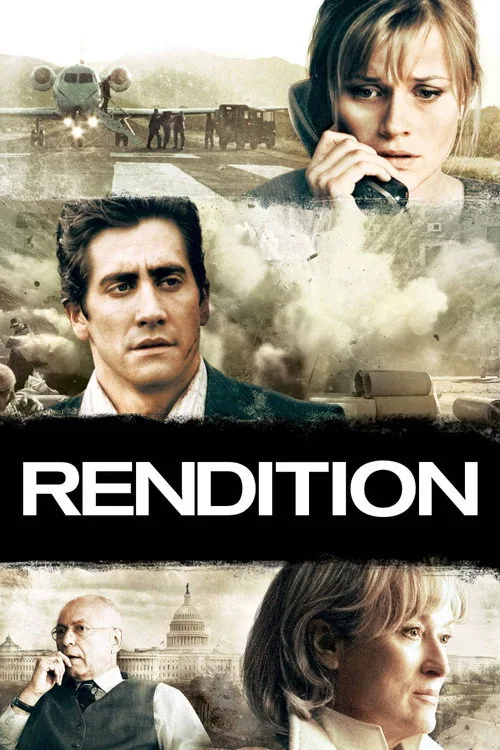
After a bombing in North Africa, Egyptian-born American engineer Anwar is detained during a flight and transferred to a secret interrogation site. His pregnant wife Isabella searches for answers in Washington while CIA analyst Douglas Freeman is assigned to observe the questioning and begins to doubt the process. A parallel story follows a young woman whose family is connected to the attack. The political thriller weaves these lives together to examine extraordinary rendition, torture, and the uncertain line between security work and abuse.
A field operation depends on locally negotiated trust that remote interference repeatedly disrupts, making deception a liability within the allied relationship as well as against the target.
Why this matches +
Pair notes identify differences in structure, tone, and audience.
An adjacent discovery: a related idea with a different viewing experience.
Genres: Thriller / Drama
Shared film traits
Based on recorded story, mood and style. Your preferences can change the order.
What changes A fabricated terrorist operation and pursuit scenes give it a faster action rhythm than the patient Hamburg surveillance.
A CIA field officer pursuing a terrorist network in the Middle East depends on people whose risks cannot be managed entirely from a remote command center. His American superior's improvised interventions undermine arrangements with a Jordanian intelligence chief who insists on trust and control. Attempts to manipulate appearances produce consequences for sources and civilians, exposing the distance between operational confidence and responsibility for those left inside the resulting story.
The compromised Bay of Pigs operation gives the inquiry its immediate urgency; Edward’s older choices explain why he mistrusts nearly everyone involved.
Why this matches +
Pair notes identify differences in structure, tone, and audience.
An adjacent discovery: a related idea with a different viewing experience.
Genres: Crime / Drama
Shared film traits
Based on recorded story, mood and style. Your preferences can change the order.
Investigation
What changes It spans decades of CIA history and family estrangement instead of following one source through a short operation.
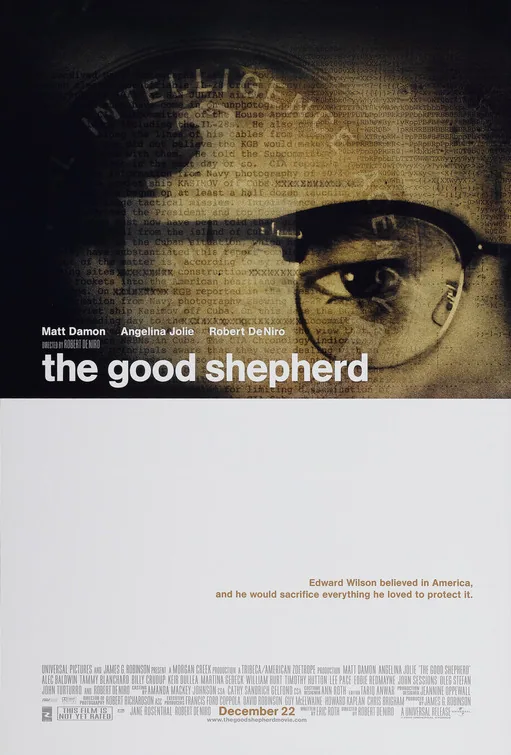
Edward Wilson is recruited into an intelligence service during the Second World War and rises into the CIA’s covert world, where personal loyalty and national security are difficult to separate. Years later, a botched operation at the Bay of Pigs prompts an internal investigation that sends him back through memories of his recruitment, marriage and increasingly secretive career. The film connects a single operational crisis to the gradual reshaping of a man who has made privacy and suspicion into habits. Its characters are fictional, even as the story borrows the atmosphere of real intelligence history.
Issa Karpov, a refugee from Chechnya who has endured torture, arrives illegally in Hamburg and attracts the attention of German intelligence officer Günther Bachmann. Bachmann’s team is already monitoring a respected Muslim philanthropist suspected of channeling money to extremist groups. Rather than arrest everyone at once, Bachmann tries to use an immigration lawyer and a banker to build a larger case while securing safety for Karpov. Competing German and American agencies bring their own priorities, turning the investigation into a study of surveillance, trust, and political pressure.
What drives the story
Bachmann tries to turn a refugee’s arrival and a suspected financial channel into a broader intelligence operation before rival agencies intervene.
The people at its centre
Bachmann’s patient strategy depends on fragile trust with Karpov, lawyer Annabel Richter, and banker Tommy Brue, each with separate motives.
What it feels like
The film favors quiet observation, conversation, and institutional maneuvering, with tension accumulating toward a sudden, decisive interruption.
Worth knowing
Its espionage suspense centers on intelligence work and the cost of competing security agendas, rather than on gadgets or action set pieces.
Security and civil libertiesTrust and manipulationInstitutional rivalry
Mood
Somber · Watchful · Suspenseful
Pacing
Measured · Conversation-driven · Quietly tense
Visual style
Muted urban palette · Observed city spaces · Restrained framing
Storytelling
Intelligence operation · Post-9/11 surveillance · Moral ambiguity