Ahmad’s return unsettles a family already adapting to a new arrangement.
Why this matches +
Selected for the central appeal: Intimate family dramas about conflicting obligations, class differences and consequences of partial knowledge.
Genres: Drama / Mystery
Shared film traits
Based on recorded story, mood and style. Your preferences can change the order.
What changes The Past shares Asghar Farhadi's focus on family separation and the consequences of incomplete accounts.
Ahmad returns to France from Iran to complete his divorce from Marie and finds himself drawn into the tensions of her current household. Her teenage daughter Lucie is troubled by the new relationship with Samir, while adults struggle to understand what the children know and what they have hidden. The family drama shows how prior relationships remain active in the present, turning silence and partial knowledge into sources of conflict.
Personal crises among a worker and her employers reveal the unequal labour sustaining a shared household.
Why this matches +
These offer a related experience with a meaningful difference in story, tone, or presentation.
An adjacent discovery: a related idea with a different viewing experience.
Genres: Drama
Shared film traits
Based on recorded story, mood and style. Your preferences can change the order.
What changes Roma connects family care and employment with class inequality and uneven obligations.
A domestic worker cares for a middle-class family in Mexico City while her own relationship exposes her to abandonment and uncertainty. Changes in the employers' marriage unfold alongside her pregnancy and the political tensions surrounding the household. Work, affection and class hierarchy remain inseparable as she supports children whose dependence on her does not erase the unequal conditions of their bond.
An abrupt change in caregiving exposes the imbalance of a marriage, then a custody dispute converts personal growth into competing public arguments.
Why this matches +
These offer a related experience with a meaningful difference in story, tone, or presentation.
An adjacent discovery: a related idea with a different viewing experience.
Genres: Drama
Shared film traits
Based on recorded story, mood and style. Your preferences can change the order.
What changes Kramer vs. Kramer examines separation, caregiving and a child's divided loyalties.
An advertising executive's wife leaves their marriage, forcing him to become the everyday parent to a son whose routines he barely knows. Awkward practical tasks gradually create a deeper relationship, while the demands of his job begin to conflict with care. When the mother returns seeking custody, their private reassessment of family becomes an adversarial legal process that threatens to simplify both parents' motives.
The search for Alyosha exposes how little attention his parents had given his emotional life.
Why this matches +
These offer a related experience with a meaningful difference in story, tone, or presentation.
An adjacent discovery: a related idea with a different viewing experience.
Genres: Drama
Shared film traits
Based on recorded story, mood and style. Your preferences can change the order.
What changes Loveless follows a separating couple whose child is caught between their competing needs.
In Moscow, a twelve-year-old boy disappears while his parents are consumed by a bitter divorce and plans for new lives. A volunteer search group joins the police effort as the adults’ self-involvement becomes harder to ignore. Andrey Zvyagintsev uses the missing-child investigation to frame a wider portrait of emotional neglect and social coldness, moving between procedural details and the family’s strained domestic life without offering easy reassurance.
A missing service weapon turns a father's investigation into a family crisis amid public unrest.
Why this matches +
These offer a related experience with a meaningful difference in story, tone, or presentation.
An adjacent discovery: a related idea with a different viewing experience.
Genres: Drama
Shared film traits
Based on recorded story, mood and style. Your preferences can change the order.
What changes The Seed of the Sacred Fig follows an Iranian family's conflict as trust erodes under social and political pressure.
Iman is appointed as an investigating judge in Tehran during political unrest, bringing both status and danger to his household. As protests intensify, his service weapon disappears and suspicion turns inward toward his wife and daughters. The inquiry unsettles family routines and trust, while the women face the public crisis differently from Iman. Mohammad Rasoulof's drama traces how state authority, fear and private relationships collide under pressure.
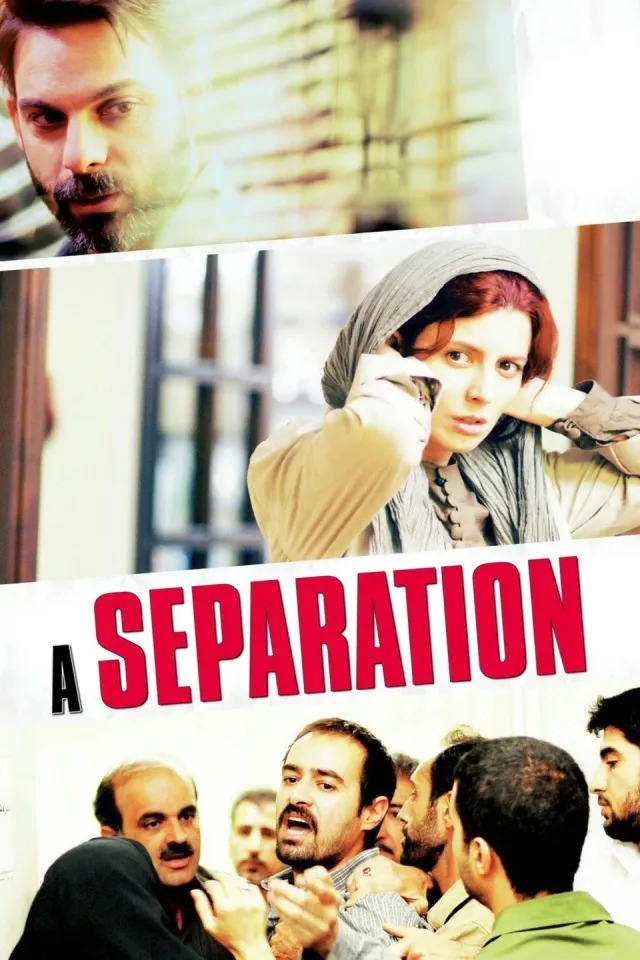
A couple's disagreement about leaving Iran leads to a household separation and the hiring of a caregiver for an elderly father. An incident between the caregiver and the husband produces accusations whose consequences reach both families. Class, religious obligation and partial knowledge complicate every account, while a daughter is pressed to navigate loyalties that the adults cannot reconcile.
What drives the story
A domestic arrangement produces a disputed incident whose interpretation threatens two families' futures.
The people at its centre
Parents, a child and a financially vulnerable caregiver carry incompatible loyalties and different costs for telling the truth.
What it feels like
Precise everyday exchanges accumulate the pressure of a thriller without reducing the people to simple villains.
Worth knowing
Its uncertainty concerns responsibility and incomplete knowledge rather than a puzzle designed around one surprising culprit.
TruthResponsibilityClass
Mood
Tense · Restrained · Morally complex
Pacing
Measured · Escalating
Visual style
Naturalistic · Contained
Storytelling
Conflicting testimony · Domestic conflict · Moral dilemma