A stalled production forces an artist to confront the personal evasions he has tried to convert into creative authority.
Why this matches +
Selected for the central appeal: Self-referential stories about creative block, storytelling formulas and blurred fiction.
Genres: Fantasy / Drama
Shared film traits
Based on recorded story, mood and style. Your preferences can change the order.
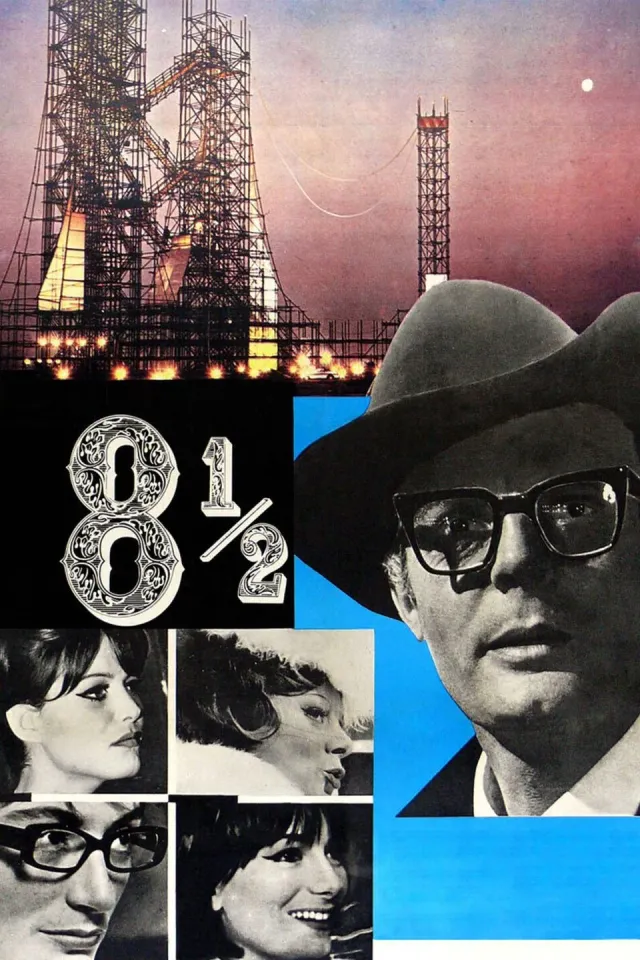
What changes 8½ follows a blocked filmmaker whose creative process merges with fantasy and self-examination.
A celebrated film director arrives at a production unable to explain clearly what he intends to make. Meetings with collaborators, family and lovers send him into memories and fantasies that repeatedly interrupt professional obligations. His apparent crisis of artistic inspiration exposes a larger habit of organising other people around incompatible wishes, making the search for a coherent film inseparable from the difficulty of taking responsibility for a contradictory life.
The auditor’s effort to find the narrator turns a literary device into a practical investigation of his own agency.
Why this matches +
Selected for the central appeal: Self-referential stories about creative block, storytelling formulas and blurred fiction.
Genres: Comedy / Drama
Shared film traits
Based on recorded story, mood and style. Your preferences can change the order.
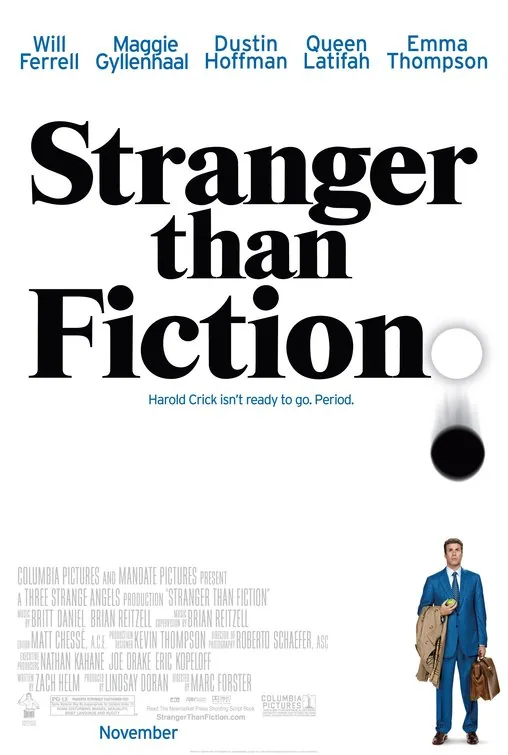
What changes Stranger than Fiction makes an author's writing directly shape a character's life and turns storytelling into the central premise.
An IRS auditor begins hearing a narrator describe his actions and becomes convinced that his life is being written toward an ending. He seeks help from a literary scholar while his routines bring him into contact with a baker he is auditing. The comedy uses a self-aware premise to ask whether a person can alter a story without losing the relationships and responsibilities that give life meaning.
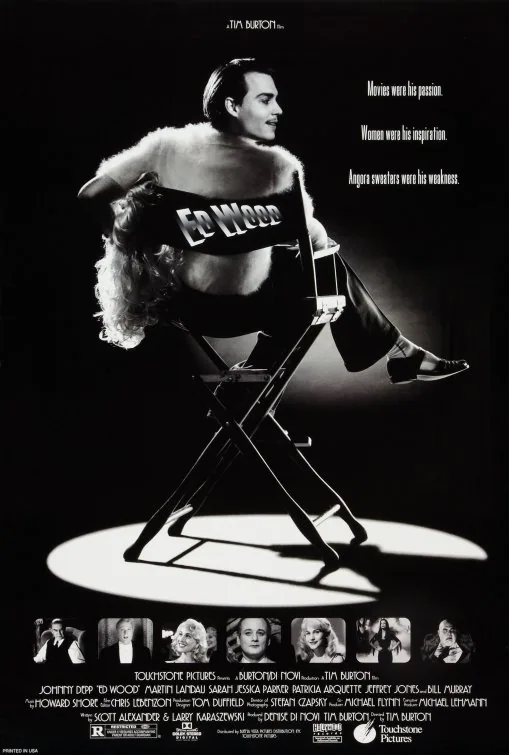
Repeated production failures force an outsider director to improvise resources and alliances, turning the act of continuing into both a communal achievement and a source of compromise. Small budgets push Ed toward improvised casts and increasingly dubious production bargains, even as he refuses to stop making films.
Why this matches +
These offer a related experience with a meaningful difference in story, tone, or presentation.
An adjacent discovery: a related idea with a different viewing experience.
Genres: Comedy / Drama
Shared film traits
Based on recorded story, mood and style. Your preferences can change the order.
What changes Ed Wood follows a filmmaker whose personal conviction and limited resources complicate the work he wants to make.
An aspiring filmmaker in 1950s Hollywood gathers an unconventional circle of performers and helpers around projects whose ambition exceeds their money and accepted measures of competence. His friendship with an aging horror actor gives both access and care, but loyalty can coexist with using someone's recognizable image to keep production possible. Persistent enthusiasm makes collaboration imaginable without resolving the distance between personal conviction, commercial demands and the films an audience actually sees. Burton’s stylized black-and-white portrait makes friendship and persistence more important than a claim that Ed’s films were secretly masterpieces.
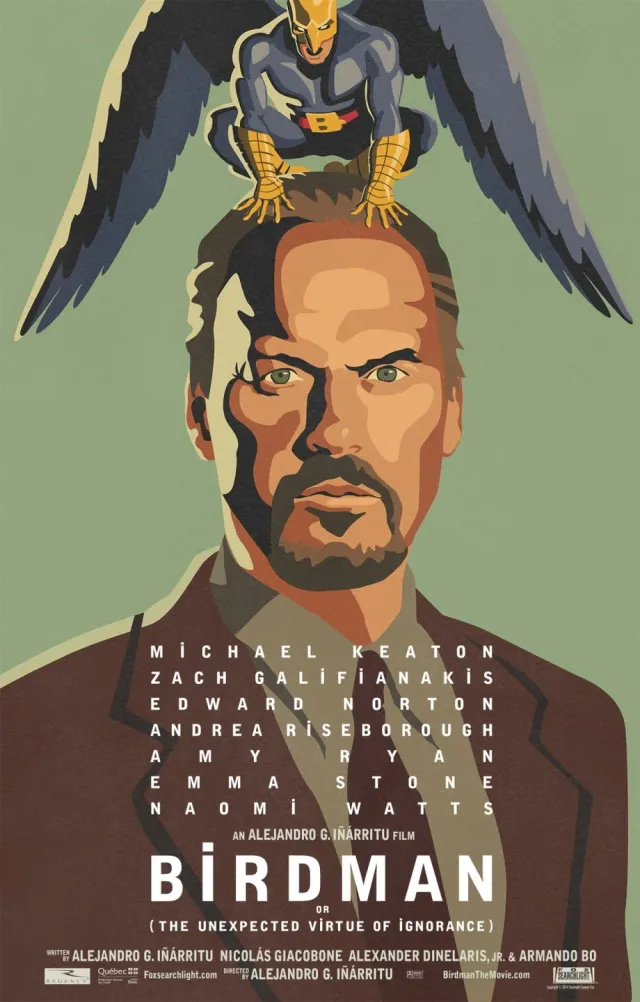
A theatrical comeback concentrates professional and personal crises into a production that its organiser treats as proof of his worth.
Why this matches +
These offer a related experience with a meaningful difference in story, tone, or presentation.
An adjacent discovery: a related idea with a different viewing experience.
Genres: Drama / Comedy
Shared film traits
Based on recorded story, mood and style. Your preferences can change the order.
What changes Birdman follows an artist whose creative ambition, insecurities and theatrical reality become difficult to separate.
An actor best known for a superhero role mounts a Broadway production to prove that he still matters as an artist. Rehearsal problems, family strain and a volatile colleague repeatedly interrupt his attempt to control the public story of his return. A derisive inner voice and experiences that may be fantasies make professional ambition feel inseparable from an unstable need to be admired on his own terms.
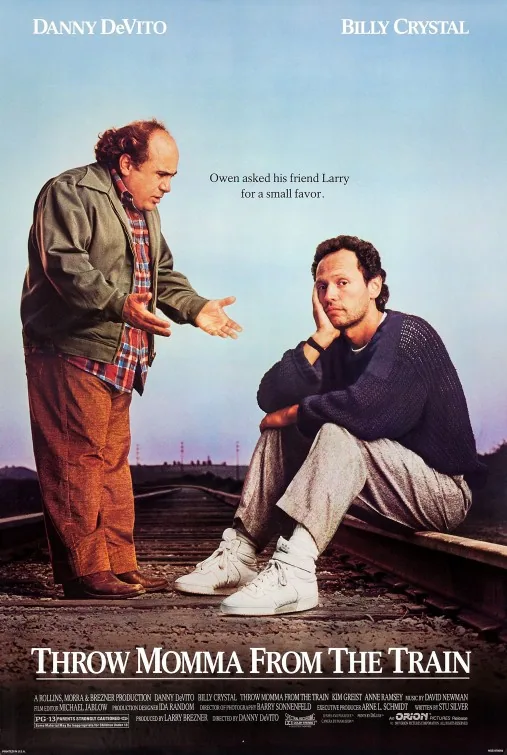
A student's literal reading of a crime novel sparks a murder-exchange scheme neither man can control.
Why this matches +
These offer a related experience with a meaningful difference in story, tone, or presentation.
An adjacent discovery: a related idea with a different viewing experience.
Genres: Comedy / Crime
Shared film traits
Based on recorded story, mood and style. Your preferences can change the order.
What changes Throw Momma from the Train combines writers, creative frustration and a crime plot with dark comedy.
Writing teacher Larry Donner becomes entangled with student Owen Lift, whose misunderstanding of a crime novel inspires him to propose exchanging murders. Their absurd plan grows more complicated as Larry's difficult former spouse and Owen's domineering mother disrupt the imagined symmetry, while the two men struggle to separate literary fantasy from real harm and discover that their shared frustration does not make them capable partners in crime.
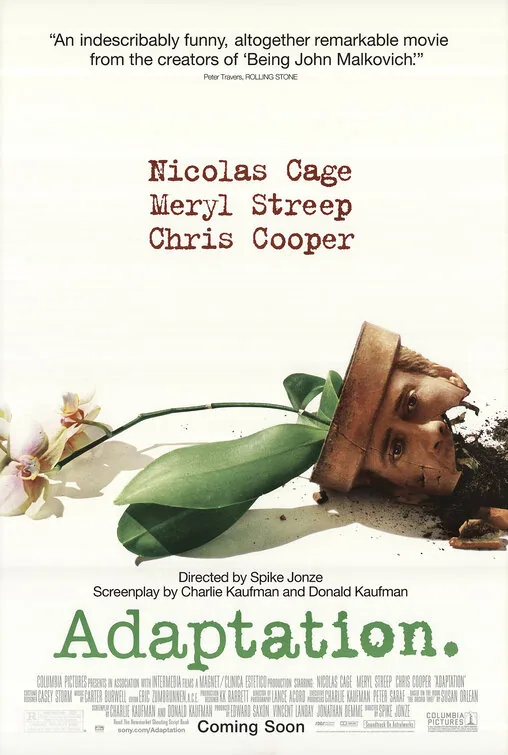
Screenwriter Charlie Kaufman struggles to adapt Susan Orlean's nonfiction book about orchid poacher John Laroche while feeling unable to write the kind of movie he thinks Hollywood expects. His confident twin brother Donald embraces conventional screenwriting lessons, and Charlie's fascination with Orlean makes research increasingly entangled with fantasy. The film eventually turns its own resistance to formula into a story that uses formula, crime and melodrama. By folding the writer, his brother and Orlean into a fiction that announces its inventions, it makes adaptation itself the subject and the joke.
What drives the story
A writer's inability to adapt a book becomes the film's plot; his effort to resist conventional story machinery eventually gives way to conspicuously conventional devices. The turn is both narrative event and self-critique.
The people at its centre
Charlie's self-consciousness makes every choice feel compromising, while Donald's ease with imitation first irritates and then unsettles him. Orlean's fictionalized presence exposes how research can become appropriation when the writer wants intimacy as well as material.
What it feels like
The early scenes dwell in anxious voice-over and stalled work; later, tone and genre change sharply. That shift asks viewers to notice the constructed boundary between a real book and the movie's invented resolution.
Worth knowing
Compare self-reflexive adaptations that expose their own compromises with genre. Charlie Kaufman, Susan Orlean and John Laroche are real people represented in fiction; Donald Kaufman is invented, and the romance, crime plot and violent Florida climax are not documentary biography. The ending's conventional machinery is the point of Charlie's reversal, not evidence about the real subjects.