A succession of personal and material disruptions forces a film production to revise its practical methods while preserving the appearance of a coherent finished story. Practical fixes keep the shoot moving, but completing the movie only contains private upheaval rather than resolving it.
Why this matches +
Selected for the central appeal: Affectionate backstage stories about outsiders, artistic ambition and unlikely creative communities.
Genres: Drama / Comedy
Shared film traits
Based on recorded story, mood and style. Your preferences can change the order.
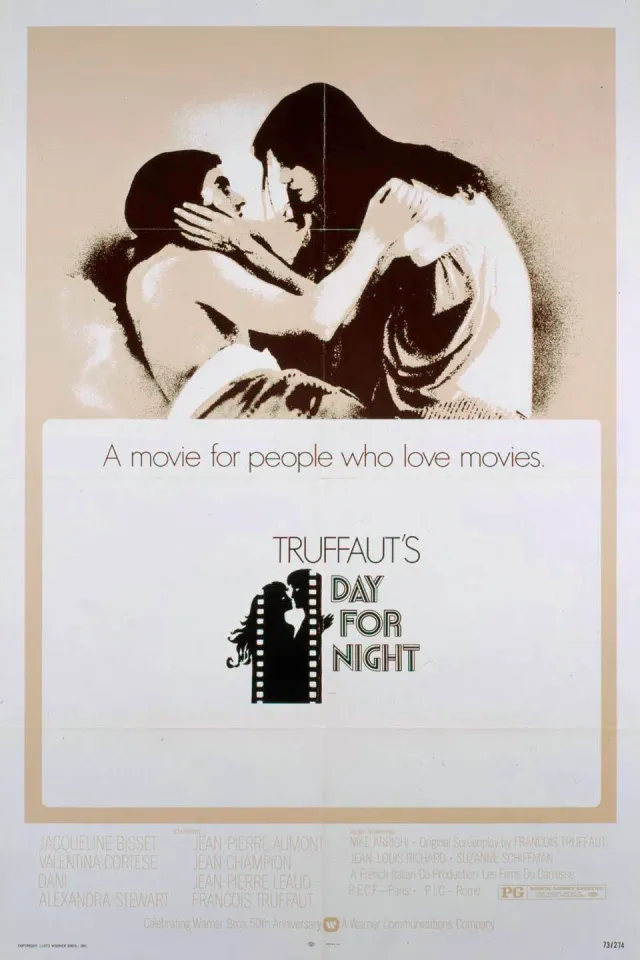
What changes Day for Night follows the practical chaos and personal bonds involved in making a film.
A director attempts to complete a melodrama while the production's cast and crew negotiate their own affairs, disappointments and practical crises. The film being made offers a familiar romantic story, but the labor around it depends on improvisation when real attachments refuse its tidy arrangements. Keeping the work moving becomes a form of collective care as well as professional compromise, revealing how a temporary community can absorb upheaval without making it disappear. The production’s daily crises reveal filmmaking as negotiated work, with care distributed unevenly across the ensemble.
A technological change threatens a star's livelihood and identity while someone linked to his past finds new opportunity.
Why this matches +
Selected for the central appeal: Affectionate backstage stories about outsiders, artistic ambition and unlikely creative communities.
Genres: Drama / Romance
Shared film traits
Based on recorded story, mood and style. Your preferences can change the order.
What changes The Artist uses stylized black-and-white filmmaking to follow a performer whose career depends on changing industry tastes.
A celebrated silent-film actor enjoys an established public identity just as recorded dialogue begins changing the industry around him. A young performer he briefly helps adapts to the new medium, and their careers move in opposite directions. Pride and fear make offers of assistance difficult to accept, turning professional obsolescence into a private crisis about whether affection can survive unequal success.
A young reporter's privileged access creates attachments that threaten the honesty of the article through which he hopes to become a professional.
Why this matches +
These offer a related experience with a meaningful difference in story, tone, or presentation.
An adjacent discovery: a related idea with a different viewing experience.
Genres: Drama / Comedy
Shared film traits
Based on recorded story, mood and style. Your preferences can change the order.
What changes Almost Famous follows a young outsider finding belonging among creative people while confronting the realities behind their work.
A teenage aspiring music writer receives an assignment to follow a rising rock band on tour. Access brings mentorship, excitement, and a precarious sense of belonging, but intimacy with the musicians and their companions makes honest reporting feel like betrayal. As professional ambition and adolescent attachment converge, he must decide whether being welcomed inside the story is compatible with describing how its glamour distributes care and harm.
Parallel days of work and wandering accumulate around a fading star and his companion before a historically charged threat redirects the film's apparently casual movement.
Why this matches +
These offer a related experience with a meaningful difference in story, tone, or presentation.
An adjacent discovery: a related idea with a different viewing experience.
Genres: Drama / Comedy
Shared film traits
Based on recorded story, mood and style. Your preferences can change the order.
What changes Once Upon a Time in Hollywood follows aging performers and their friendships within the film industry.
A television actor worried that his career is ending depends on the practical support of his longtime stunt double as Hollywood's tastes change around them. Their ordinary workdays, drives and encounters unfold near a rising actress enjoying the possibilities of her own career. The proximity of a violent historical threat gives this loosely organised portrait of friendship and professional anxiety an unease that its characters do not fully share.
The boy’s regular visits gradually reveal that Vincent’s apparent indifference is partly a shield against loss.
Why this matches +
These offer a related experience with a meaningful difference in story, tone, or presentation.
An adjacent discovery: a related idea with a different viewing experience.
Genres: Comedy / Drama
Shared film traits
Based on recorded story, mood and style. Your preferences can change the order.
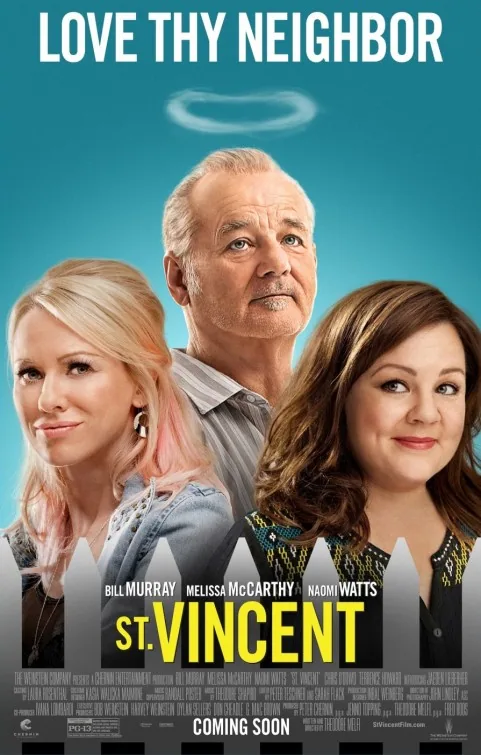
What changes St. Vincent follows an unlikely friendship that gives an isolated older person and a younger companion mutual support.
A lonely boy forms an unexpected bond with his elderly neighbor, a hard-drinking man whose rough manners conceal grief, debt and a complicated past. What begins as an after-school arrangement becomes a mentorship that changes how both see their lives. The comedy balances abrasive humor with tenderness, asking whether care can come from people who do not fit an idealized image of a role model.
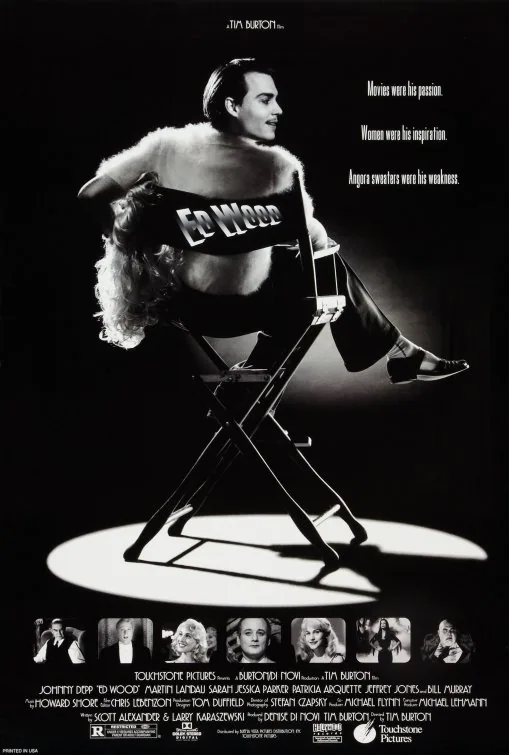
An aspiring filmmaker in 1950s Hollywood gathers an unconventional circle of performers and helpers around projects whose ambition exceeds their money and accepted measures of competence. His friendship with an aging horror actor gives both access and care, but loyalty can coexist with using someone's recognizable image to keep production possible. Persistent enthusiasm makes collaboration imaginable without resolving the distance between personal conviction, commercial demands and the films an audience actually sees. Burton’s stylized black-and-white portrait makes friendship and persistence more important than a claim that Ed’s films were secretly masterpieces.
What drives the story
Repeated production failures force an outsider director to improvise resources and alliances, turning the act of continuing into both a communal achievement and a source of compromise. Small budgets push Ed toward improvised casts and increasingly dubious production bargains, even as he refuses to stop making films.
The people at its centre
Ed's need for collaborators intersects with Lugosi's vulnerability and professional pride, while romantic acceptance depends partly on whether others allow his private self-expression to coexist with his public ambitions. Lugosi’s dependence and pride complicate Ed’s care for him, while Kathy’s acceptance intersects with Ed’s cross-dressing.
What it feels like
Black-and-white period imagery and affectionate comic staging make marginal filmmaking feel intimate, without requiring the depicted work to become conventionally accomplished. A warm, gothic comedy treats makeshift sets and technical failure as visible creative labor rather than hidden blemishes.
Worth knowing
Match on outsider art sustained through imperfect collaboration and chosen kinship, while keeping dramatized biographical episodes separate from verified fact and cross-dressing distinct from an assumed gender identity. The biopic fictionalizes episodes; cross-dressing should not automatically be translated into a specific gender identity.
ArtIdentityFriendship
Mood
Warm · Humorous · Bittersweet
Pacing
Episodic
Visual style
Black and white · Period pastiche · Backstage observation
Storytelling
Outsider production community · Improvised funding · Care for aging performer