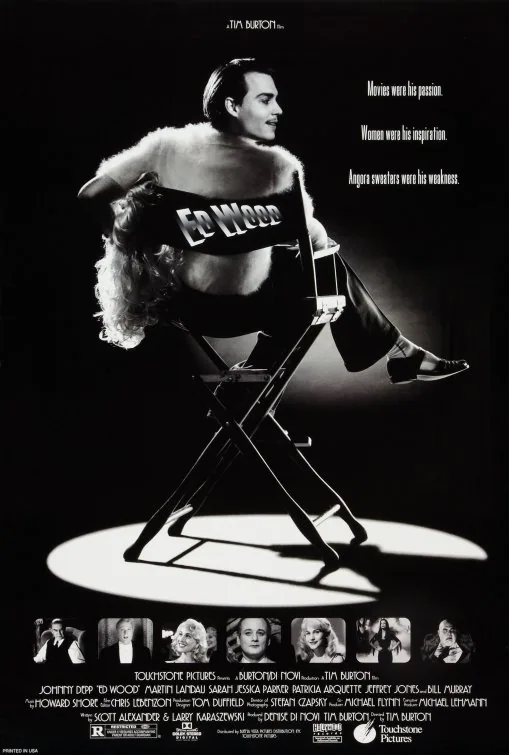
Repeated production failures force an outsider director to improvise resources and alliances, turning the act of continuing into both a communal achievement and a source of compromise. Small budgets push Ed toward improvised casts and increasingly dubious production bargains, even as he refuses to stop making films.
Why this matches +
Selected for the central appeal: Stories about filmmakers and performers balancing creative work with personal crises.
Genres: Comedy / Drama
Shared film traits
Based on recorded story, mood and style. Your preferences can change the order.
What changes Ed Wood follows a filmmaker and his improvised company through the practical chaos of making movies, using a biographical portrait of an outsider rather than an ensemble production drama.
An aspiring filmmaker in 1950s Hollywood gathers an unconventional circle of performers and helpers around projects whose ambition exceeds their money and accepted measures of competence. His friendship with an aging horror actor gives both access and care, but loyalty can coexist with using someone's recognizable image to keep production possible. Persistent enthusiasm makes collaboration imaginable without resolving the distance between personal conviction, commercial demands and the films an audience actually sees. Burton’s stylized black-and-white portrait makes friendship and persistence more important than a claim that Ed’s films were secretly masterpieces.
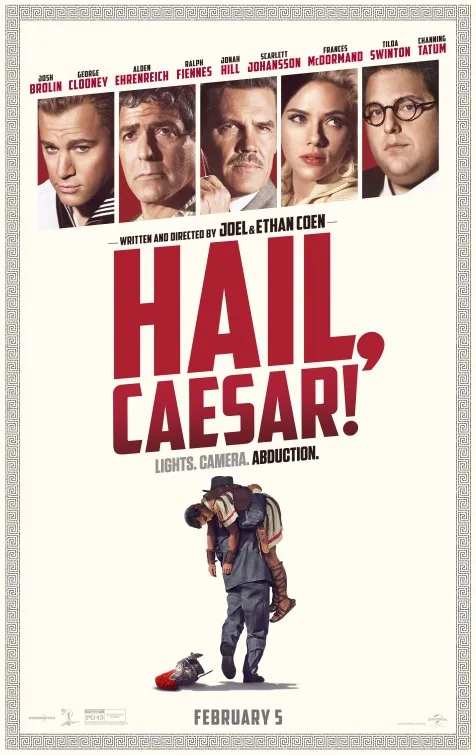
A studio manager contains simultaneous disruptions, with a star's kidnapping testing whether he regards the industry as empty deception or a vocation worth sustaining.
Why this matches +
These offer a related experience with a meaningful difference in story, tone, or presentation.
An adjacent discovery: a related idea with a different viewing experience.
Genres: Comedy / Drama
Shared film traits
Based on recorded story, mood and style. Your preferences can change the order.
What changes Hail, Caesar! moves among the overlapping crises of a film studio and its performers, emphasizing Hollywood satire and a fixer rather than one director's shoot.
A studio fixer moves among productions, scandals and performers whose public images require constant maintenance. The kidnapping of a major star adds a ransom problem to a workday already filled with miscasting, concealed pregnancy and aggressive gossip reporting. An alternative career offers escape from these recurring crises, yet the apparent disorder also reveals the collective labor behind popular illusion. The ensemble comedy treats movie-making as absurd, compromised work that can still command an unexpectedly sincere form of devotion.
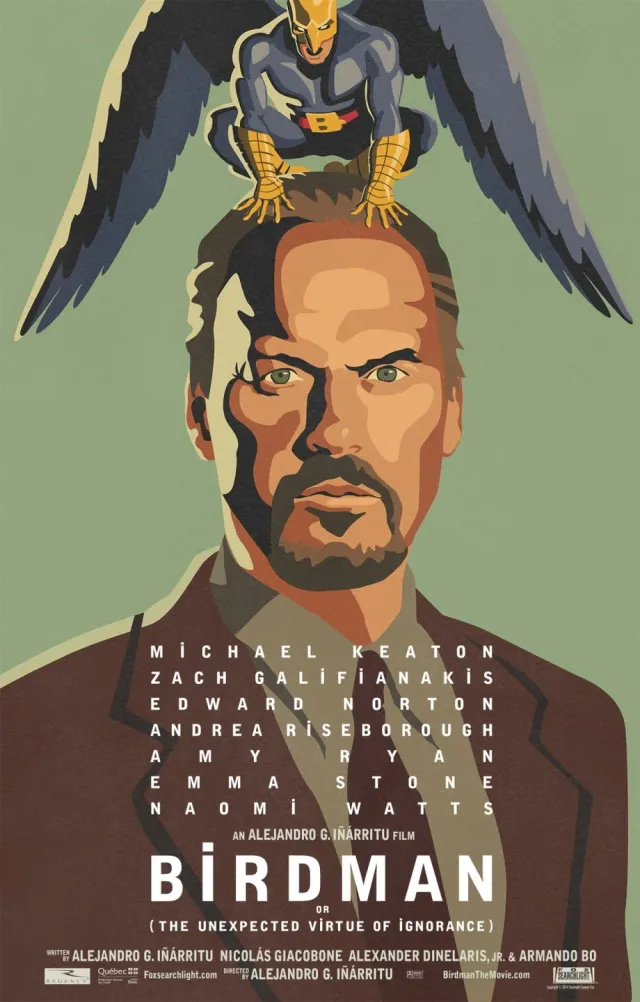
A theatrical comeback concentrates professional and personal crises into a production that its organiser treats as proof of his worth.
Why this matches +
These offer a related experience with a meaningful difference in story, tone, or presentation.
An adjacent discovery: a related idea with a different viewing experience.
Genres: Drama / Comedy
Shared film traits
Based on recorded story, mood and style. Your preferences can change the order.
What changes Birdman tracks performers and backstage pressures during a troubled production, shifting from filmmaking to theater and a lead actor's crisis.
An actor best known for a superhero role mounts a Broadway production to prove that he still matters as an artist. Rehearsal problems, family strain and a volatile colleague repeatedly interrupt his attempt to control the public story of his return. A derisive inner voice and experiences that may be fantasies make professional ambition feel inseparable from an unstable need to be admired on his own terms.
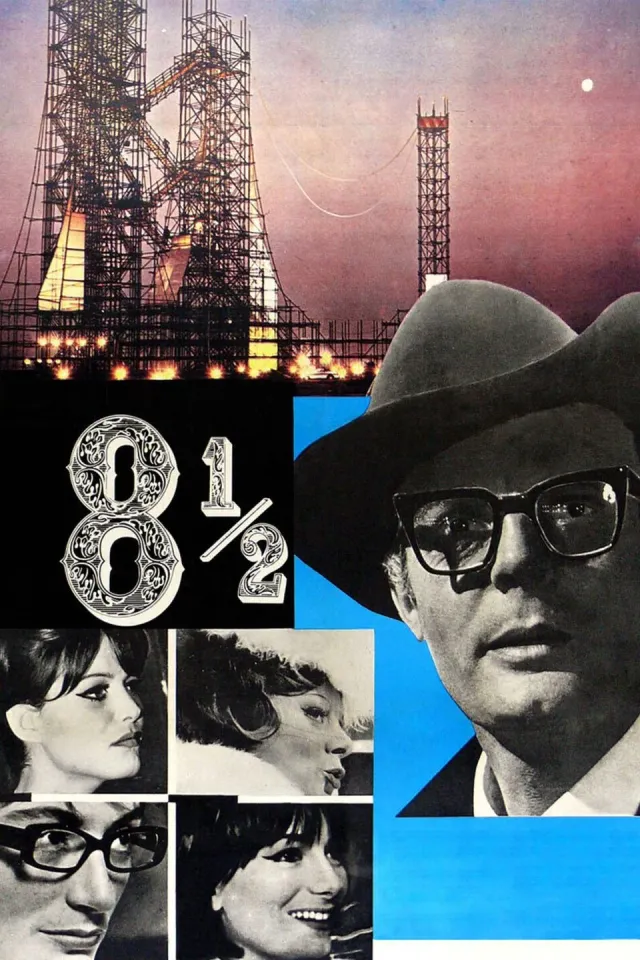
A stalled production forces an artist to confront the personal evasions he has tried to convert into creative authority.
Why this matches +
These offer a related experience with a meaningful difference in story, tone, or presentation.
An adjacent discovery: a related idea with a different viewing experience.
Genres: Fantasy / Drama
Shared film traits
Based on recorded story, mood and style. Your preferences can change the order.
What changes 8½ follows a director whose stalled production intersects with private confusion and fantasy, offering a more subjective portrait than Truffaut's collaborative set.
A celebrated film director arrives at a production unable to explain clearly what he intends to make. Meetings with collaborators, family and lovers send him into memories and fantasies that repeatedly interrupt professional obligations. His apparent crisis of artistic inspiration exposes a larger habit of organising other people around incompatible wishes, making the search for a coherent film inseparable from the difficulty of taking responsibility for a contradictory life.
A young reporter's privileged access creates attachments that threaten the honesty of the article through which he hopes to become a professional.
Why this matches +
These offer a related experience with a meaningful difference in story, tone, or presentation.
An adjacent discovery: a related idea with a different viewing experience.
Genres: Drama / Comedy
Shared film traits
Based on recorded story, mood and style. Your preferences can change the order.
What changes Almost Famous observes a temporary creative community on the road, following a young music journalist rather than a film crew.
A teenage aspiring music writer receives an assignment to follow a rising rock band on tour. Access brings mentorship, excitement, and a precarious sense of belonging, but intimacy with the musicians and their companions makes honest reporting feel like betrayal. As professional ambition and adolescent attachment converge, he must decide whether being welcomed inside the story is compatible with describing how its glamour distributes care and harm.
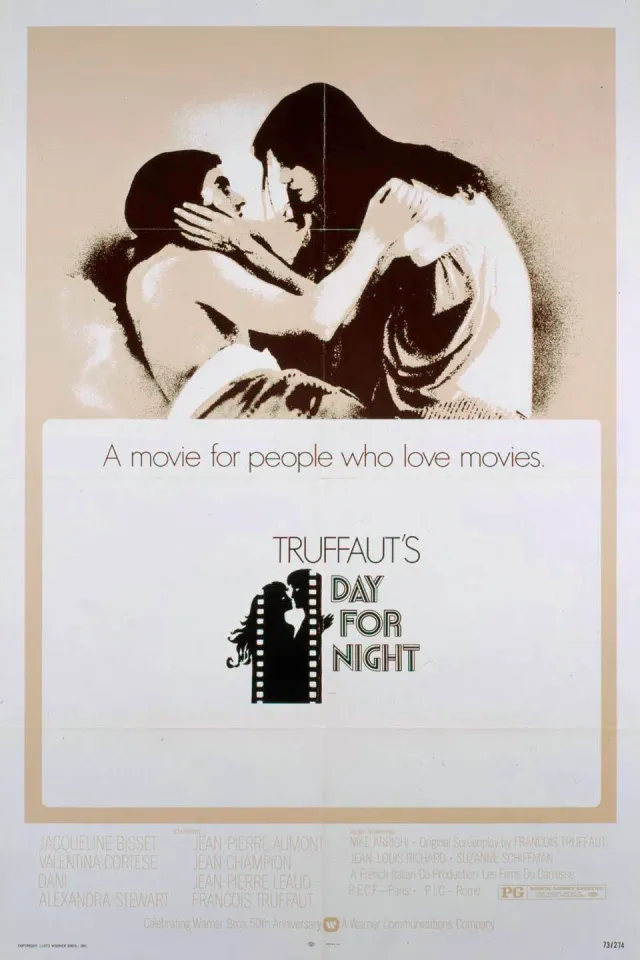
A director attempts to complete a melodrama while the production's cast and crew negotiate their own affairs, disappointments and practical crises. The film being made offers a familiar romantic story, but the labor around it depends on improvisation when real attachments refuse its tidy arrangements. Keeping the work moving becomes a form of collective care as well as professional compromise, revealing how a temporary community can absorb upheaval without making it disappear. The production’s daily crises reveal filmmaking as negotiated work, with care distributed unevenly across the ensemble.
What drives the story
A succession of personal and material disruptions forces a film production to revise its practical methods while preserving the appearance of a coherent finished story. Practical fixes keep the shoot moving, but completing the movie only contains private upheaval rather than resolving it.
The people at its centre
The director mediates actors' vulnerabilities and crew needs, while an immature performer's confusion between sympathy and love threatens people whose availability he takes for granted. Julie’s fragility and Alphonse’s emotional immaturity place unequal demands on colleagues trying to protect the production.
What it feels like
An affectionate backstage ensemble alternates technical problem-solving with intimate mishaps, treating cinematic illusion as visible collaborative labor rather than an effortless expression of genius. Clapperboards, sets and technical mishaps expose the mechanisms that a finished melodrama asks viewers to forget.
Worth knowing
Match on the temporary community that sustains art through disrupted private lives, not simply a film-industry setting or an assumption that affection for filmmaking removes its unequal dependencies. Its affection for filmmaking does not make every workplace relationship reciprocal or erase the director’s controlling perspective.
ArtCooperationLove
Mood
Warm · Humorous · Reflective
Pacing
Episodic
Visual style
Grounded · Backstage observation
Storytelling
Film production ensemble · Private disruptions · Collective practical improvisation