Garrigan’s access to Amin gives him comfort and influence, but each accommodation makes it harder to recognize the scale of state violence or to leave safely.
Why this matches +
Selected for the central appeal: Political dramas about populist ambition, corruption and the people who enable powerful leaders.
Genres: Drama
Shared film traits
Based on recorded story, mood and style. Your preferences can change the order.
What changes The Last King of Scotland follows an aide drawn into the privilege and coercion surrounding a charismatic ruler.
In the early 1970s, Scottish doctor Nicholas Garrigan travels to Uganda seeking work and adventure. After treating General Idi Amin, he is invited to become Amin’s personal physician and soon finds himself drawn into the ruler’s confidence and political circle. Garrigan accepts reassuring explanations for repression even as evidence of violence accumulates. His relationship with Amin shifts from fascination and privilege toward fear and complicity, and his attempt to leave becomes a desperate effort to survive. The film follows a fictional outsider within a real dictatorship, using Garrigan’s changing position to dramatize how proximity to power can obscure responsibility and danger.
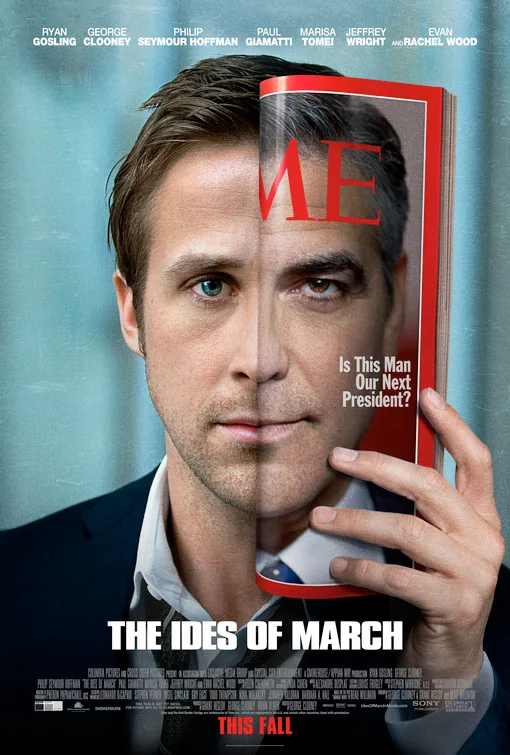
The primary campaign’s narrow window turns a single leak and endorsement into leverage that can redirect careers and the nomination.
Why this matches +
Selected for the central appeal: Political dramas about populist ambition, corruption and the people who enable powerful leaders.
Genres: Drama / Thriller
Shared film traits
Based on recorded story, mood and style. Your preferences can change the order.
What changes The Ides of March follows a political aide whose idealism erodes as he becomes entangled in a candidate's ruthless campaign.
Stephen Meyers is a committed junior strategist on Governor Mike Morris’s presidential campaign, where he works under veteran manager Paul Zara. As the Ohio primary approaches, a rival campaign offers Stephen a chance to defect, and a reporter probes the operation for damaging information. Stephen’s belief in Morris is tested by private compromises that threaten a young staffer and expose the gap between public ideals and campaign survival. George Clooney’s political drama treats loyalty as a series of bargains, with each character trying to control what the next person knows.
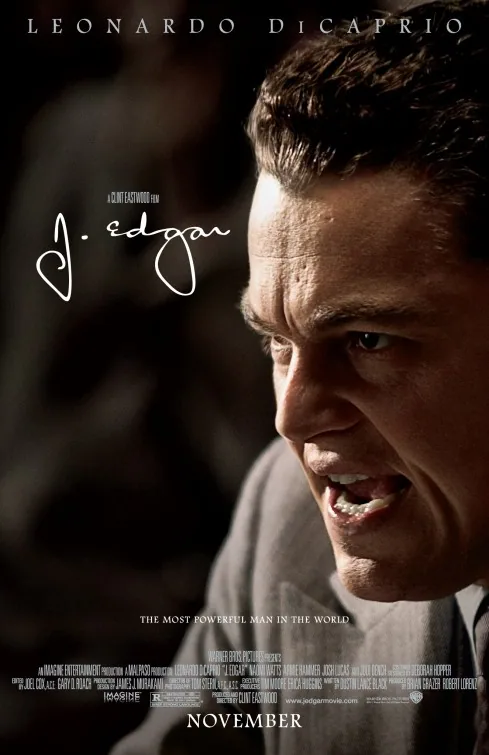
Hoover’s dictated memoir frames a non-linear career whose investigative innovations coexist with political surveillance and the cultivation of private files. The film shows how administrative power can be narrated as heroic necessity by the person who exercised it.
Why this matches +
These offer a related experience with a meaningful difference in story, tone, or presentation.
An adjacent discovery: a related idea with a different viewing experience.
Genres: Drama / Biography
Shared film traits
Based on recorded story, mood and style. Your preferences can change the order.
What changes J. Edgar follows a public official whose accumulation of influence depends on secrets and personal loyalties.
In old age, FBI director J. Edgar Hoover dictates a history of the bureau to a young agent, treating memory as a way to preserve his own authority. The film moves between the celebrated public story of investigative expansion and the private relationships that shaped Hoover’s dependence on Clyde Tolson and Helen Gandy. It presents the director’s recollections as partial: scenes of political surveillance and institutional growth sit beside a life of concealment, shame and control. Their intimacy is rendered through speculation and melodrama rather than conclusive documentation, and Hoover’s own account cannot settle what happened behind closed doors. The biopic’s central tension is not only truth versus lies, but who gets to author an institution’s legacy and what the archive leaves unspoken.
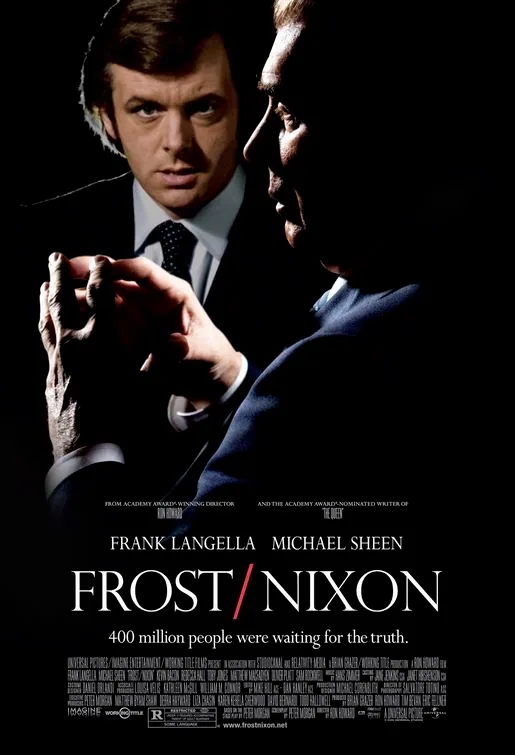
A privately financed interview becomes a struggle for control when the subject's rehabilitation strategy clashes with the interviewer's need to establish political accountability.
Why this matches +
These offer a related experience with a meaningful difference in story, tone, or presentation.
An adjacent discovery: a related idea with a different viewing experience.
Genres: Drama / History
Shared film traits
Based on recorded story, mood and style. Your preferences can change the order.
What changes Frost/Nixon examines the public image and private accountability of a powerful political figure.
A television interviewer risks money and professional credibility on conversations with a former president seeking to restore his reputation. The participants enter the sessions with different objectives, and Nixon's command of public performance initially defeats Frost's preparation. Researchers and producers press for accountability while commercial pressures threaten the project itself. The drama makes an interview into a contest over who can define the meaning of a political past, with reputational survival giving both men an urgent personal stake.
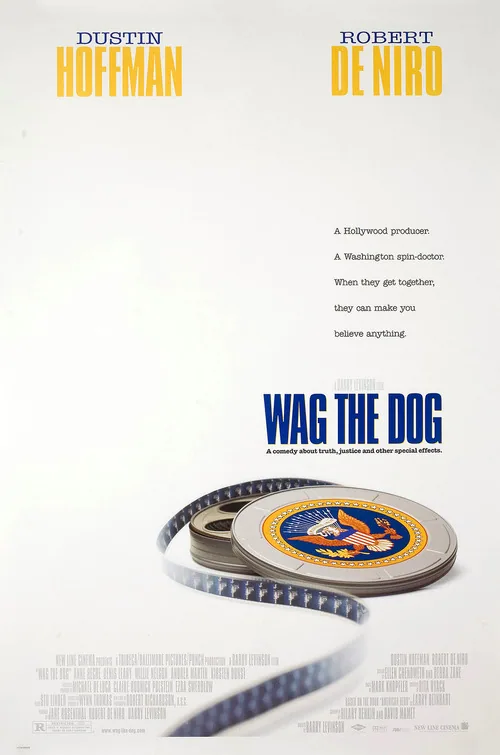
A political crisis becomes a media production in which a fictional war is assembled from repeatable images and a marketable narrative.
Why this matches +
These offer a related experience with a meaningful difference in story, tone, or presentation.
An adjacent discovery: a related idea with a different viewing experience.
Genres: Drama / Comedy
Shared film traits
Based on recorded story, mood and style. Your preferences can change the order.
What changes Wag the Dog satirizes the manipulation of public opinion by political insiders.
With a presidential sex scandal threatening an election, political consultant Conrad Brean hires Hollywood producer Stanley Motss to invent a distant war that can redirect the news. Motss treats the crisis as a production problem, assembling images, slogans, music and a fictional hero with the same craft he would use for a movie. Brean manages government messaging while the fabricated conflict begins to acquire an independent life in the media. The film’s comedy comes from watching public belief depend on the details of a story that exists mainly because two professionals know how to stage it. As the campaign grows, it becomes less controllable, even for the people who made it. The satire targets both political spin and entertainment’s ability to make images feel like evidence.
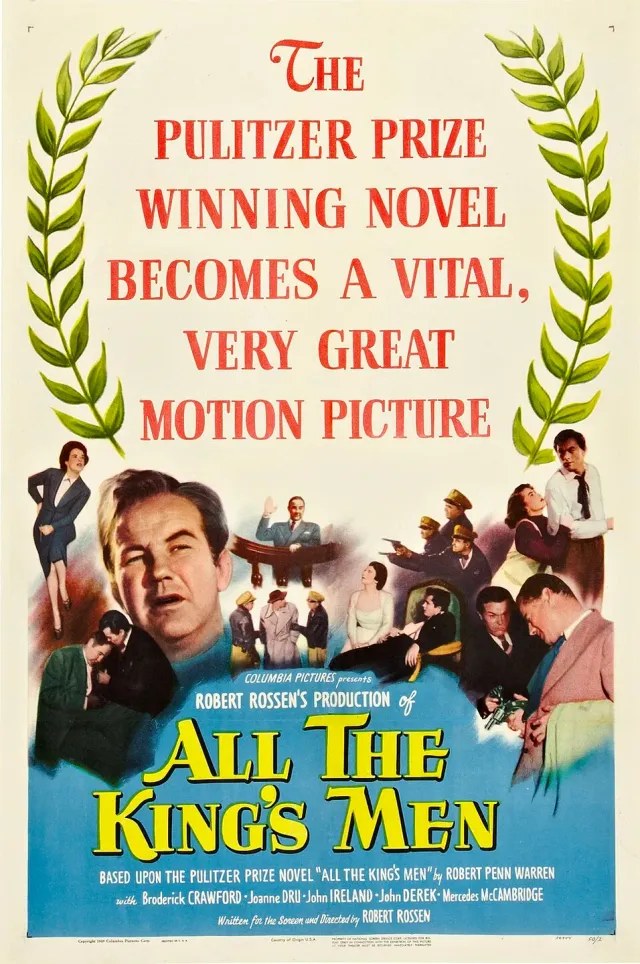
Country lawyer Jack Burden watches Willie Stark rise from a local reformer to a powerful state politician whose populist appeal increasingly depends on patronage and coercion. Jack's work as a political aide puts him close to the bargains behind the public speeches and ties his family's history to Stark's climb. The story asks whether exposing corruption can remain separate from helping it operate. The film opened in New York in 1949 but received its broader release in 1950, which explains the catalogue's 1950 dating and its alternate 1949 label.
What drives the story
Stark's campaign begins as a revolt against a rigged political order, then reproduces its leverage through loyalty, favors and intimidation. Jack's retrospective narration measures the cost of remaining inside that transformation.
The people at its centre
Jack's access makes him both observer and participant, while Stark's growing power changes the terms of their friendship. Anne and Adam Stanton connect the political story to Jack's family and personal loyalties.
What it feels like
Voice-over and shadowed compositions give the ascent a fatalistic, morally retrospective tone. Its compressed campaign drama centers the compromises surrounding a politician rather than offering a neutral record of Louisiana history.
Worth knowing
Pair it with political dramas about reformers who inherit and intensify the machinery they oppose. Willie Stark is a fictional character often compared with Huey Long, and the film shifts emphasis from Jack Burden's novelistic narration toward Stark's rise. Its 1950 catalogue year reflects the wider release after a 1949 New York opening; do not treat events as direct biography.
PowerComplicityClass
Mood
Tense · Accusatory · Disillusioned
Pacing
Escalating
Visual style
Noir · Grounded
Storytelling
Political rise and fall · Compromised observer · Patronage