A suspicious death leads a reporter through political relationships and corporate interests that resist a simple explanation.
Why this matches +
Selected for the central appeal: Investigative journalism dramas about patient reporting, corroboration and powerful institutions.
Genres: Drama / Thriller
Shared film traits
Based on recorded story, mood and style. Your preferences can change the order.
Investigation
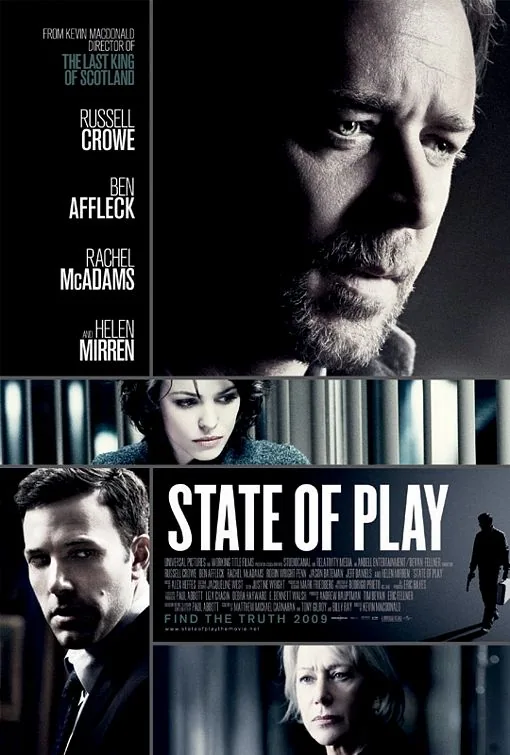
What changes State of Play follows journalists whose investigation uncovers a political conspiracy and tests editorial judgment.
A veteran newspaper reporter investigates the death of a congressional aide and discovers connections to the congressman’s private life and a defense contractor. His work intersects with a political blogger and editor as sources offer conflicting accounts and pressure grows to publish quickly. The newsroom thriller examines evidence, friendship and the cost of public scrutiny, while treating reporting as a process that can expose power but also damage people close to the reporter.
A local allegation expands into an investigation of systematic concealment, requiring documentary proof of institutional knowledge rather than another isolated accusation.
Why this matches +
Selected for the central appeal: Investigative journalism dramas about patient reporting, corroboration and powerful institutions.
Genres: Drama / Biography
Shared film traits
Based on recorded story, mood and style. Your preferences can change the order.
Investigation
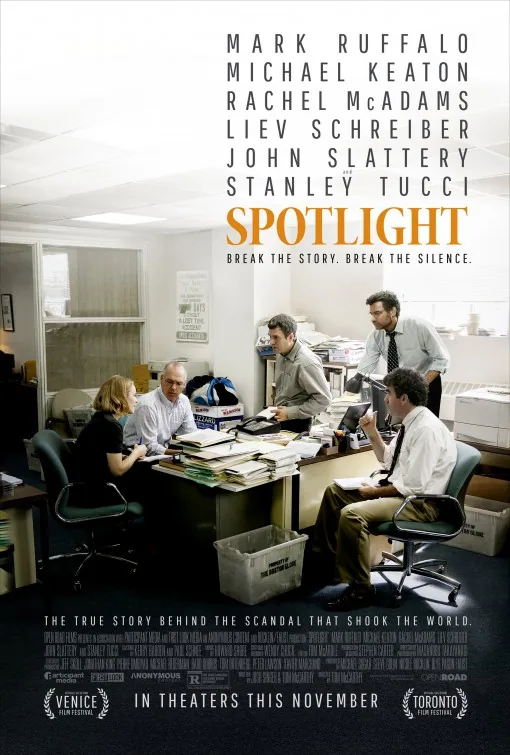
What changes Spotlight follows newspaper reporters corroborating sources and documents to expose institutional wrongdoing.
A newspaper's investigative team begins examining allegations against a Boston priest and encounters a pattern extending far beyond an individual offence. Reporters work through court records, reluctant witnesses and professional networks while institutional resistance repeatedly narrows what can be made public. The inquiry also forces them to confront how their own organisation previously missed opportunities to act, making publication a test of collective responsibility as well as evidentiary persistence.
The threat of publication links two risks: Wigand may lose his safety and livelihood, while CBS may suppress the interview to protect itself.
Why this matches +
Selected for the central appeal: Investigative journalism dramas about patient reporting, corroboration and powerful institutions.
Genres: Drama / Thriller
Shared film traits
Based on recorded story, mood and style. Your preferences can change the order.
Investigation
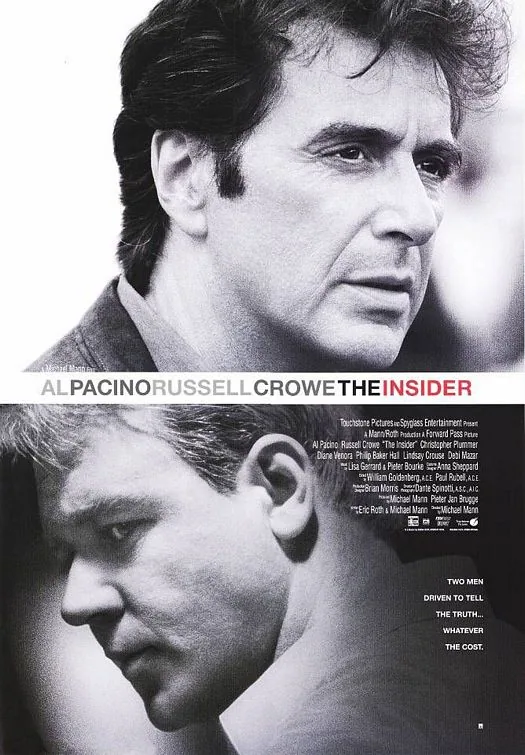
What changes The Insider follows journalists verifying a whistleblower's claims despite pressure from a powerful corporation.
CBS producer Lowell Bergman persuades former tobacco executive Jeffrey Wigand to explain what he knows about Brown & Williamson’s practices for a 60 Minutes investigation. Wigand’s confidentiality agreement, threats and family pressures make cooperation dangerous, while CBS executives worry about legal and financial exposure. As the broadcast is delayed and edited, Bergman must decide whether protecting the story means confronting the network that employs him. The film turns investigative reporting into a battle over sources, corporate pressure and newsroom independence, dramatizing real events without serving as a transcript of every participant’s perspective.
An elusive criminal's intermittent evidence creates a prolonged investigation whose uncertainty becomes a sustaining obsession of its own.
Why this matches +
These offer a related experience with a meaningful difference in story, tone, or presentation.
An adjacent discovery: a related idea with a different viewing experience.
Genres: Thriller / Mystery
Shared film traits
Based on recorded story, mood and style. Your preferences can change the order.
Investigation
What changes Zodiac follows investigators and reporters pursuing a case through documents, interviews and years of uncertainty.
A series of killings and public messages draws police officers and newspaper staff into a search for an offender who controls attention through selective disclosure. Years of interviews, uncertain identifications and jurisdictional boundaries make progress difficult to distinguish from renewed speculation. A cartoonist's growing private commitment to the case exposes the personal cost of treating an unresolved account as a problem that more persistence must eventually close.
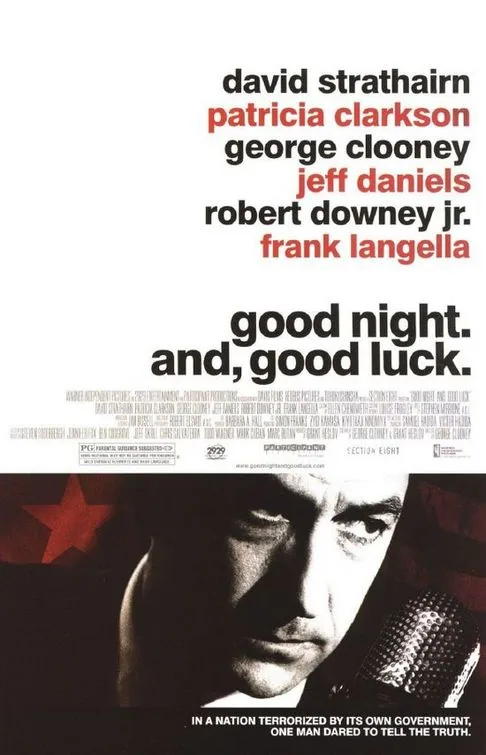
A newsroom's evidence-based challenge to political intimidation tests how far a commercial broadcaster will support the independence it publicly endorses.
Why this matches +
These offer a related experience with a meaningful difference in story, tone, or presentation.
An adjacent discovery: a related idea with a different viewing experience.
Genres: Drama / History
Shared film traits
Based on recorded story, mood and style. Your preferences can change the order.
Investigation
What changes Good Night, and Good Luck. depicts journalists confronting political power and the risks of public reporting.
A television news team challenges accusations and procedures associated with Senator McCarthy while working inside a network vulnerable to sponsors and political pressure. Decisions about evidence, wording and airtime make editorial independence a practical risk rather than an abstract professional virtue. Personal consequences unfold around the broadcasts, including scrutiny of colleagues whose lives do not fit institutional rules. The restrained historical drama presents journalism as coordinated work whose public authority depends on choices made under commercial and political constraint.
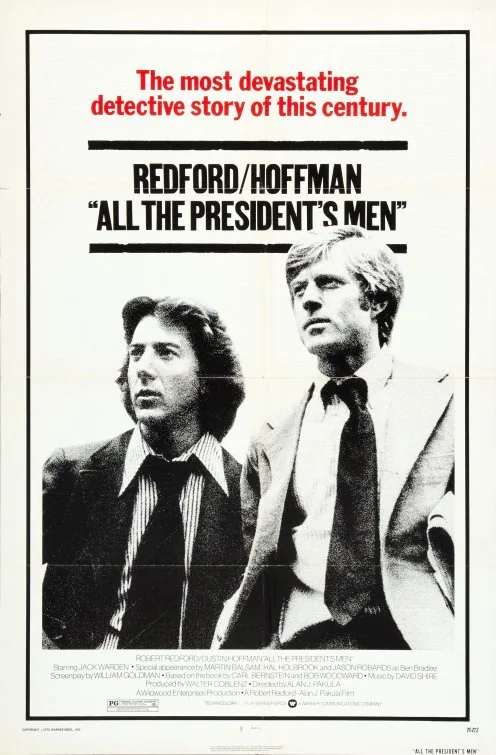
Two newspaper reporters investigate a burglary whose apparently minor details lead towards senior political figures. Interviews, records and reluctant sources gradually reveal a larger operation, but each claim requires corroboration before publication. Their progress depends less on a single revelation than on patient persistence inside a newsroom negotiating evidence, risk and the pressure exerted by powerful people.
What drives the story
Small inconsistencies accumulate into a publishable case through interviews, documents and repeated verification.
The people at its centre
Two contrasting reporters learn to collaborate under editors who demand stronger evidence than suspicion alone.
What it feels like
Procedural detail and institutional resistance create suspense through painstaking work.
Worth knowing
The attraction is verification under pressure; it avoids the rhythm of an action-led conspiracy chase.