Small inconsistencies accumulate into a publishable case through interviews, documents and repeated verification.
Why this matches +
Investigators reconstruct a concealed crime while personal access and contradictory evidence make certainty dangerous.
Genres: Drama / Thriller
Shared film traits
Based on recorded story, mood and style. Your preferences can change the order.
Investigation
Expect tense and methodical, with measured pacing.
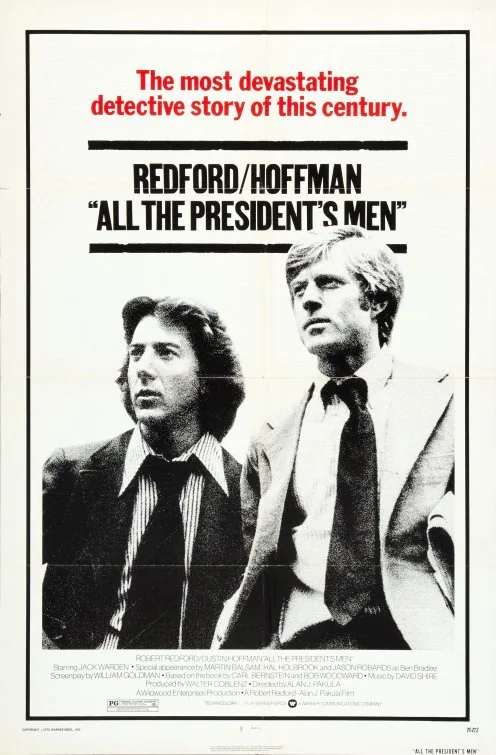
Two newspaper reporters investigate a burglary whose apparently minor details lead towards senior political figures. Interviews, records and reluctant sources gradually reveal a larger operation, but each claim requires corroboration before publication. Their progress depends less on a single revelation than on patient persistence inside a newsroom negotiating evidence, risk and the pressure exerted by powerful people.
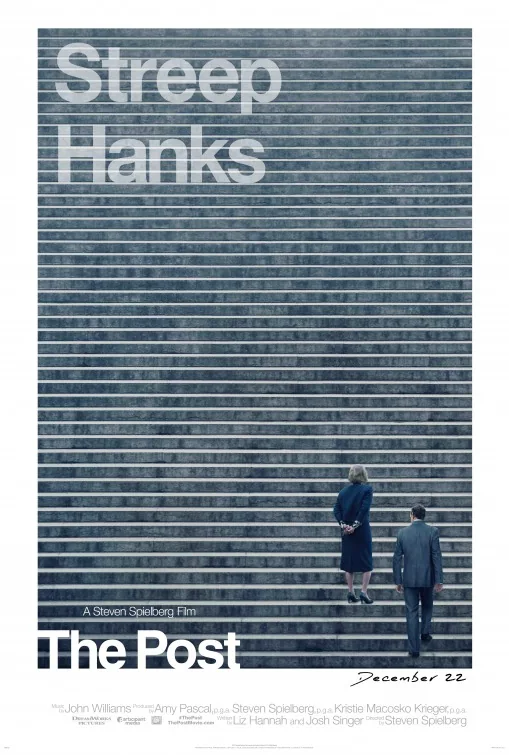
A Supreme Court fight over the Times's publication raises the stakes of the Post's own decision to print classified documents before a public offering.
Why this matches +
Investigators reconstruct a concealed crime while personal access and contradictory evidence make certainty dangerous.
Genres: Drama / Thriller
Shared film traits
Based on recorded story, mood and style. Your preferences can change the order.
Investigation · Political resistance
What changes State of Play: measured and investigation-led. The Post: deadline-driven and escalating.
In 1971, Washington Post publisher Katharine Graham weighs the future of the paper as it prepares for a public stock offering and faces pressure from the Nixon administration. After the New York Times is enjoined from publishing the Pentagon Papers, editor Ben Bradlee pushes the Post to obtain and print the documents. Graham must decide whether the paper's duty to readers outweighs legal risk, possible criminal charges and the financial exposure of a company about to go public. Reporters work to verify the leak while lawyers and board members argue over what can safely be published. The story follows a newsroom making an institutional choice under a deadline, with Graham's authority changing as she moves from social and business constraints toward editorial responsibility.
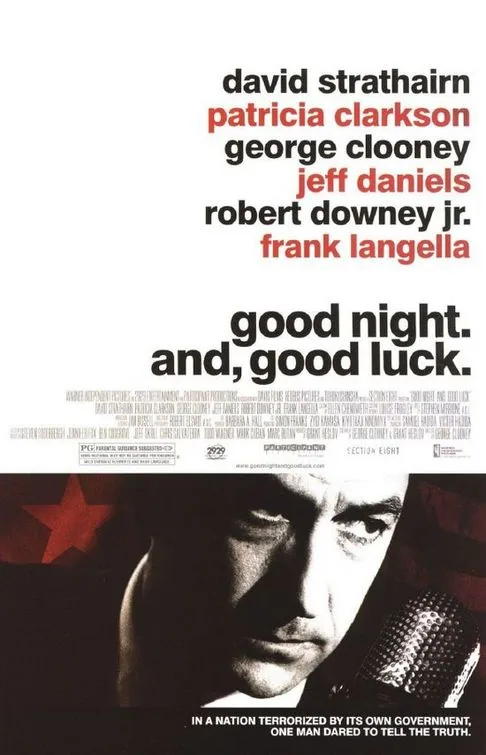
A newsroom's evidence-based challenge to political intimidation tests how far a commercial broadcaster will support the independence it publicly endorses.
Why this matches +
Investigators reconstruct a concealed crime while personal access and contradictory evidence make certainty dangerous.
Genres: Drama / History
Shared film traits
Based on recorded story, mood and style. Your preferences can change the order.
Investigation
Expect restrained and tense, with measured pacing.
A television news team challenges accusations and procedures associated with Senator McCarthy while working inside a network vulnerable to sponsors and political pressure. Decisions about evidence, wording and airtime make editorial independence a practical risk rather than an abstract professional virtue. Personal consequences unfold around the broadcasts, including scrutiny of colleagues whose lives do not fit institutional rules. The restrained historical drama presents journalism as coordinated work whose public authority depends on choices made under commercial and political constraint.
A local allegation expands into an investigation of systematic concealment, requiring documentary proof of institutional knowledge rather than another isolated accusation.
Why this matches +
Investigators reconstruct a concealed crime while personal access and contradictory evidence make certainty dangerous.
Genres: Drama / Biography
Shared film traits
Based on recorded story, mood and style. Your preferences can change the order.
Investigation
What changes State of Play: measured and investigation-led. Spotlight: slow burn.
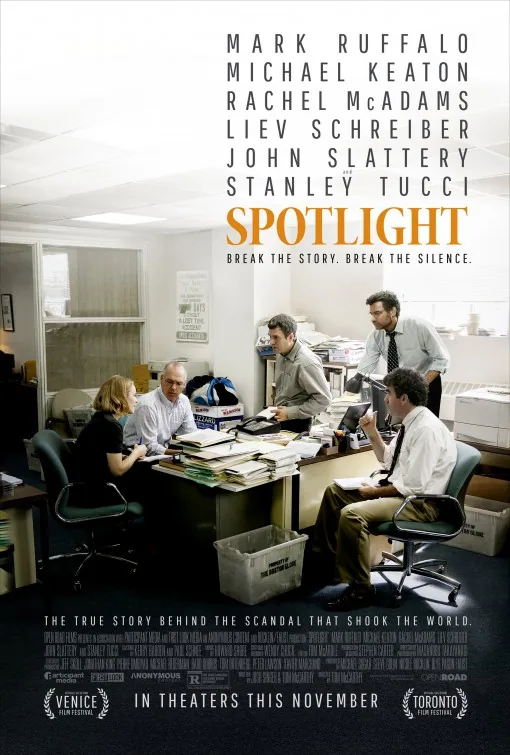
A newspaper's investigative team begins examining allegations against a Boston priest and encounters a pattern extending far beyond an individual offence. Reporters work through court records, reluctant witnesses and professional networks while institutional resistance repeatedly narrows what can be made public. The inquiry also forces them to confront how their own organisation previously missed opportunities to act, making publication a test of collective responsibility as well as evidentiary persistence.
The threat of publication links two risks: Wigand may lose his safety and livelihood, while CBS may suppress the interview to protect itself.
Why this matches +
Investigators reconstruct a concealed crime while personal access and contradictory evidence make certainty dangerous.
Genres: Drama / Thriller
Shared film traits
Based on recorded story, mood and style. Your preferences can change the order.
Investigation
What changes State of Play: measured and investigation-led. The Insider: reporting and verification and publicity escalation.
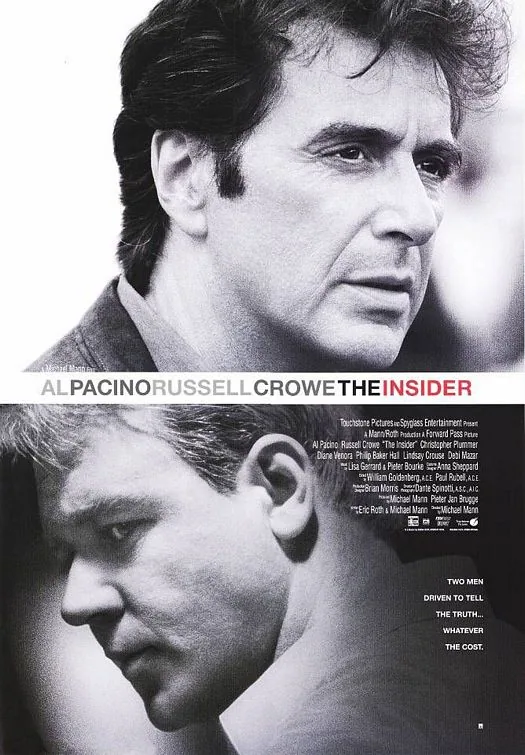
CBS producer Lowell Bergman persuades former tobacco executive Jeffrey Wigand to explain what he knows about Brown & Williamson’s practices for a 60 Minutes investigation. Wigand’s confidentiality agreement, threats and family pressures make cooperation dangerous, while CBS executives worry about legal and financial exposure. As the broadcast is delayed and edited, Bergman must decide whether protecting the story means confronting the network that employs him. The film turns investigative reporting into a battle over sources, corporate pressure and newsroom independence, dramatizing real events without serving as a transcript of every participant’s perspective.
An elusive criminal's intermittent evidence creates a prolonged investigation whose uncertainty becomes a sustaining obsession of its own.
Why this matches +
Investigators reconstruct a concealed crime while personal access and contradictory evidence make certainty dangerous.
Genres: Thriller / Mystery
Shared film traits
Based on recorded story, mood and style. Your preferences can change the order.
Investigation
What changes State of Play: measured and investigation-led. Zodiac: slow burn.
A series of killings and public messages draws police officers and newspaper staff into a search for an offender who controls attention through selective disclosure. Years of interviews, uncertain identifications and jurisdictional boundaries make progress difficult to distinguish from renewed speculation. A cartoonist's growing private commitment to the case exposes the personal cost of treating an unresolved account as a problem that more persistence must eventually close.
The reporters’ collaboration allows the investigation to continue when one avenue stalls.
Why this matches +
Investigators reconstruct a concealed crime while personal access and contradictory evidence make certainty dangerous.
Genres: Biography / Drama
Shared film traits
Based on recorded story, mood and style. Your preferences can change the order.
Investigation · Political resistance
What changes State of Play: measured and investigation-led. She Said: a procedural rhythm advances through interviews and verification.
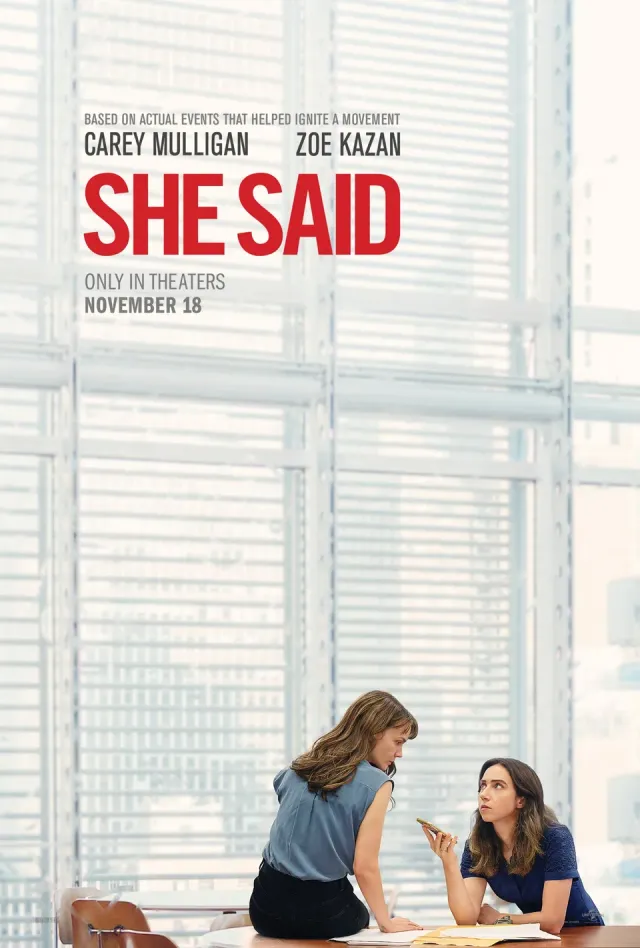
New York Times journalists Jodi Kantor and Megan Twohey investigate allegations of sexual abuse by producer Harvey Weinstein. Their reporting depends on finding sources willing to speak despite fear of career damage, legal threats, and years of institutional silence. The newsroom drama focuses on methodical interviews, corroboration, and publication, showing how collaborative reporting can turn private accounts into a public record.
Jones and his small team examine a vast record and try to substantiate what the CIA did during interrogation.
Why this matches +
Investigators reconstruct a concealed crime while personal access and contradictory evidence make certainty dangerous.
Genres: Drama / History
Shared film traits
Based on recorded story, mood and style. Your preferences can change the order.
Investigation · Political resistance
What changes State of Play: measured and investigation-led. The Report: document-driven procedure, gradual accumulation of evidence and political release climax.
In 2009, Senate staffer Daniel Jones is asked to review millions of pages of CIA records about the agency's post-9/11 interrogation program. Working with a small team, he documents how officials authorized and described the practices, while facing delays, political pressure, and resistance from the intelligence agency. Senator Dianne Feinstein backs the inquiry, but the report's publication becomes a struggle of its own. The political drama follows the patient work of assembling evidence and making an official record public.
A farmer's evidence leads a corporate lawyer into a long legal challenge over chemical contamination.
Why this matches +
Investigators reconstruct a concealed crime while personal access and contradictory evidence make certainty dangerous.
Genres: biography / drama
Shared film traits
Based on recorded story, mood and style. Your preferences can change the order.
Investigation
What changes State of Play: measured and investigation-led. Dark Waters: procedural, cumulative and multi-year.
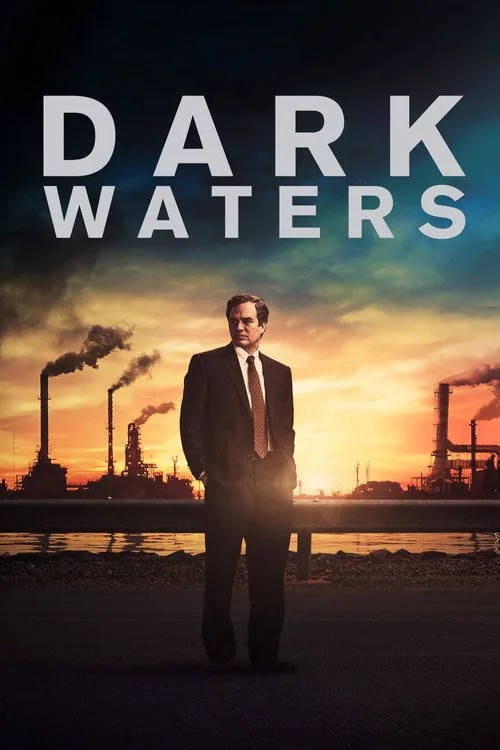
Corporate defense lawyer Robert Bilott is asked by West Virginia farmer Wilbur Tennant to investigate unexplained animal deaths near a DuPont chemical operation. His research connects the farm's contamination to a persistent compound used in making Teflon, and a local dispute grows into a decades-long legal and public-health fight. Bilott's pursuit strains his work and family life as corporate resistance makes evidence, time, and accountability central obstacles.
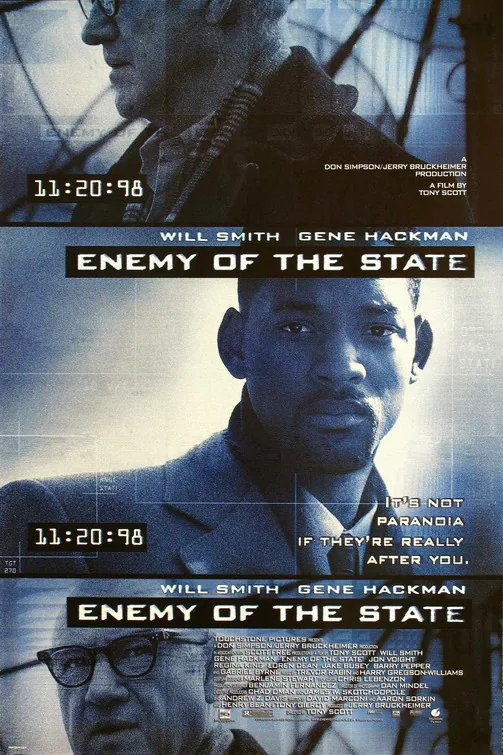
Accidental possession of evidence triggers a coordinated attack on an ordinary person's credibility, forcing him to expose the operation while the attackers control much of what others can observe.
Why this matches +
A private discovery reveals hidden institutional power and makes the person who knows the truth vulnerable to coercion.
An adjacent discovery: a related idea with a different viewing experience.
Genres: Thriller / Action
Shared film traits
Based on recorded story, mood and style. Your preferences can change the order.
What changes State of Play: measured and investigation-led. Enemy of the State: fast.
A lawyer unknowingly receives a recording of a political murder and becomes the target of officials determined to erase the evidence. Financial disruption, fabricated allegations and pervasive monitoring dismantle the ordinary routines through which he could defend himself. An experienced surveillance specialist offers help but also insists that surviving requires abandoning familiar forms of contact, making the restoration of a credible public identity depend on people who have learned not to appear in public at all.
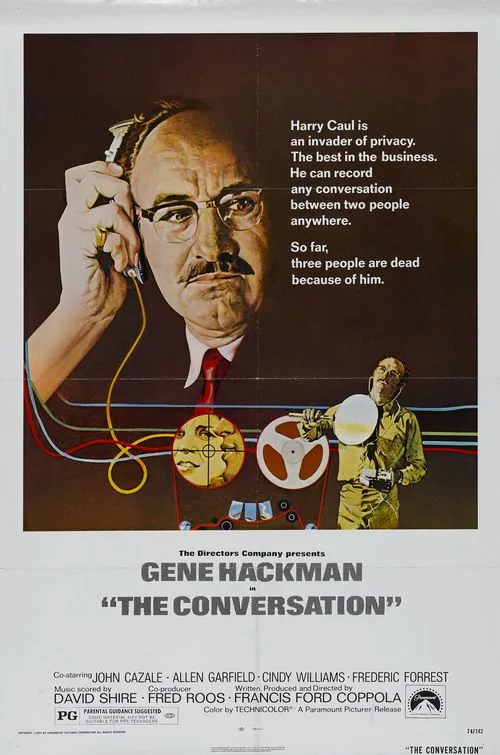
Repeated analysis of a recorded conversation deepens a technician's uncertainty about the harm his work may enable.
Why this matches +
A private discovery reveals hidden institutional power and makes the person who knows the truth vulnerable to coercion.
An adjacent discovery: a related idea with a different viewing experience.
Genres: Mystery / Thriller
Shared film traits
Based on recorded story, mood and style. Your preferences can change the order.
Investigation
What changes State of Play: measured and investigation-led. The Conversation: slow burn.
A surveillance specialist records a couple in a crowded square and becomes preoccupied with what their apparently ordinary exchange might mean. His professional distance is eroded by memories of an earlier job with deadly consequences. Replaying and refining the recording draws him into a situation where technical precision cannot guarantee understanding, and the observer begins to fear that he is also being watched.
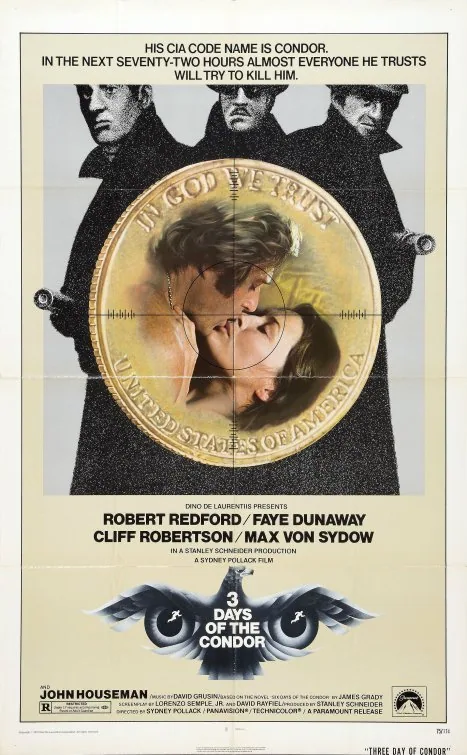
A bookish intelligence analyst becomes a fugitive after discovering his colleagues killed, and must investigate his own institution to stay alive.
Why this matches +
A private discovery reveals hidden institutional power and makes the person who knows the truth vulnerable to coercion.
An adjacent discovery: a related idea with a different viewing experience.
Genres: Crime / Drama
Shared film traits
Based on recorded story, mood and style. Your preferences can change the order.
Investigation
What changes State of Play: measured and investigation-led. Three Days of the Condor: fast pursuit and procedural.
Joe Turner works as a reader for a small CIA research office in New York, where he studies books and newspapers for ideas that might matter to intelligence work. Returning from lunch, he finds the office staff murdered and realizes that his codename, Condor, has made him a target. With no reliable colleague to trust, he kidnaps Kathy Hale and seeks shelter while trying to learn who ordered the killings and why. His search reveals that the threat may come from within the agency, making the skills he uses to analyze information relevant to his own survival. Turner tries to contact a higher authority but discovers that the usual channel could expose him to the same killers.
Harriet’s disappearance leads Mikael and Lisbeth through family records, testimony and old crimes, while the investigation repeatedly collides with present-day danger.
Why this matches +
A private discovery reveals hidden institutional power and makes the person who knows the truth vulnerable to coercion.
An adjacent discovery: a related idea with a different viewing experience.
Genres: Crime / Drama
Shared film traits
Based on recorded story, mood and style. Your preferences can change the order.
Investigation
What changes A much darker investigation with graphic sexual violence rather than a newsroom-centered political thriller.
Journalist Mikael Blomkvist is hired by an aging industrialist to investigate the disappearance of his niece Harriet decades earlier. He joins forces with Lisbeth Salander, a brilliant researcher whose own abusive guardian has made her deeply wary of institutions and control. The investigation uncovers a pattern of violence within the family and gives Lisbeth’s technical skill and personal history equal weight in the search. David Fincher’s adaptation makes the case a bleak northern noir about the persistence of abuse, the limits of justice and two outsiders whose collaboration is based on competence rather than easy trust.
A government translator leaks a memo that could influence the Iraq invasion and is prosecuted for revealing it.
Why this matches +
A private discovery reveals hidden institutional power and makes the person who knows the truth vulnerable to coercion.
An adjacent discovery: a related idea with a different viewing experience.
Genres: Drama / Thriller
Shared film traits
Based on recorded story, mood and style. Your preferences can change the order.
Investigation · Political resistance
What changes State of Play: measured and investigation-led. Official Secrets: press investigation, legal escalation and steady procedural tension.
In 2003, GCHQ translator Katharine Gun sees a request for intelligence that could help secure support for the invasion of Iraq. Believing the request is illegal and morally indefensible, she leaks a memo to the press, then faces arrest under Britain's Official Secrets Act. The film follows the effort to verify the story, the mounting pressure on Gun and her husband, and a legal case whose outcome depends on whether the government will disclose its own conduct.
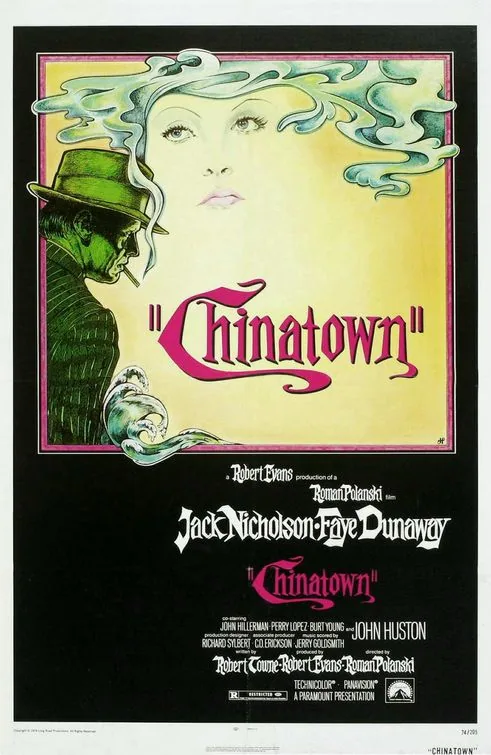
A small surveillance assignment expands into a confrontation with wealth whose authority reaches beyond the investigator's practical ability to expose or restrain it.
Why this matches +
A private discovery reveals hidden institutional power and makes the person who knows the truth vulnerable to coercion.
An adjacent discovery: a related idea with a different viewing experience.
Genres: Mystery / Crime
Shared film traits
Based on recorded story, mood and style. Your preferences can change the order.
Investigation
What changes More disturbing sexual and familial corruption; both inquiries expose powerful people's concealed crime.
A private investigator accepts what appears to be a routine marital surveillance job and becomes involved in a death connected to a dispute over water. A wealthy woman's inconsistent explanations seem to promise an ordinary deception, but the evidence points towards forms of power that control both public resources and intimate lives. His confidence in reading other people's motives becomes a liability when the harm he is approaching exceeds the categories of the job he thought he took.
A revenge investigation depends on external records whose meaning cannot be separated from the purposes behind their creation.
Why this matches +
A private discovery reveals hidden institutional power and makes the person who knows the truth vulnerable to coercion.
An adjacent discovery: a related idea with a different viewing experience.
Genres: Mystery / Thriller
Shared film traits
Based on recorded story, mood and style. Your preferences can change the order.
Investigation
Expect unsettling and tense, with measured pacing.
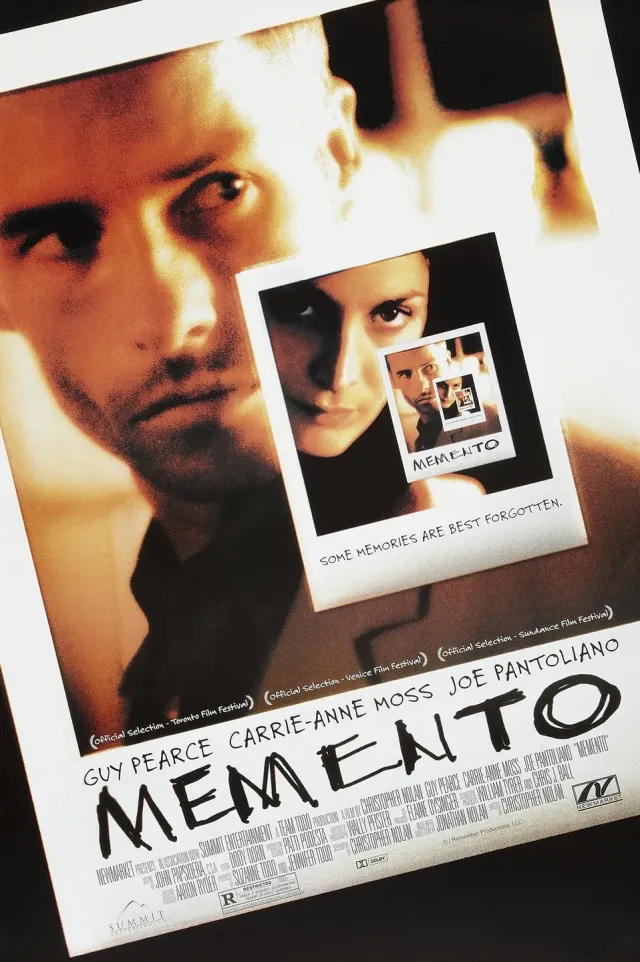
A man unable to form lasting new memories searches for the person he believes killed his wife, using photographs, notes and tattoos to orient each encounter. People offering help have information he cannot independently retain, while his own records appear to promise a certainty they may not deserve. Interlocking sequences make the audience repeatedly reconstruct how a confident action emerged from incomplete knowledge.
A sound recording leads Jack from routine film work into an investigation of an event powerful people want forgotten.
Why this matches +
A private discovery reveals hidden institutional power and makes the person who knows the truth vulnerable to coercion.
An adjacent discovery: a related idea with a different viewing experience.
Genres: Thriller / Mystery
Shared film traits
Based on recorded story, mood and style. Your preferences can change the order.
Investigation · Political resistance
What changes State of Play: measured and investigation-led. Blow Out: procedural and escalating.
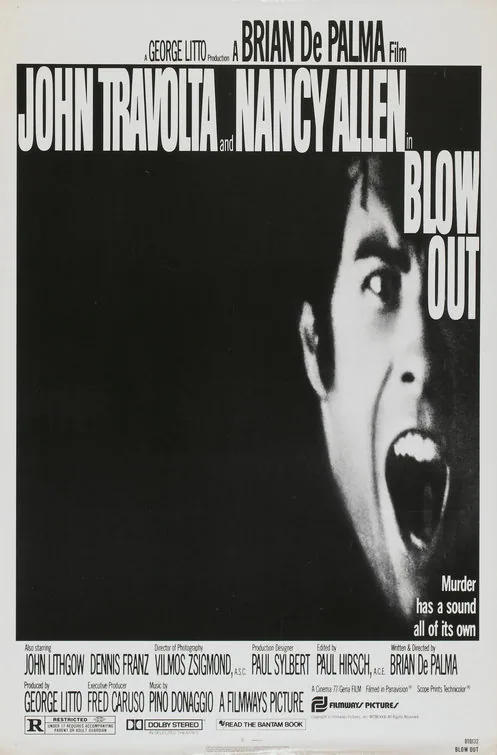
Philadelphia sound technician Jack Terry records what seems to be a late-night accident while collecting effects for a film, then realizes his tape may document a politically consequential crime. He teams up with Sally, a witness whose photographs preserve another part of the event, and tries to connect the separate evidence before powerful interests can bury it, turning technical listening into a dangerous investigation.
A multiple murder links separate investigations until institutional corruption makes the investigators' own methods and loyalties part of the evidence.
Why this matches +
A private discovery reveals hidden institutional power and makes the person who knows the truth vulnerable to coercion.
An adjacent discovery: a related idea with a different viewing experience.
Genres: Crime / Drama
Shared film traits
Based on recorded story, mood and style. Your preferences can change the order.
Investigation
What changes More physically violent historical police noir; the shared appeal is contradictory evidence and institutional corruption.
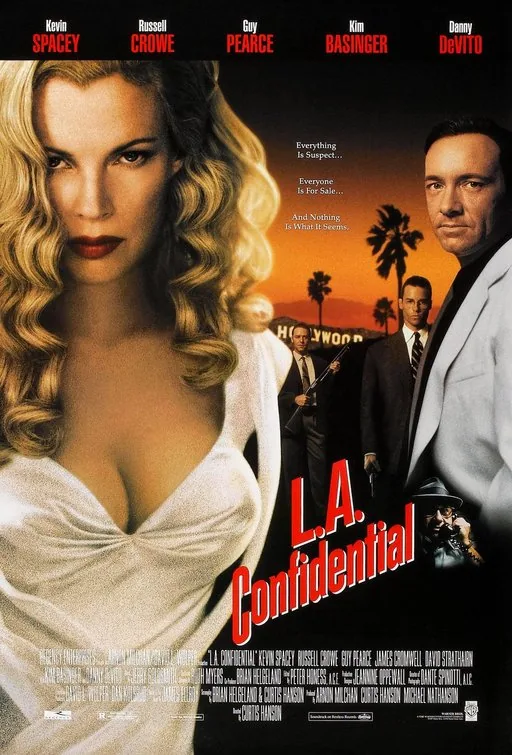
Three Los Angeles policemen with conflicting ambitions become connected to a massacre at an all-night diner. Their investigation leads through celebrity publicity, organised crime and arrangements that protect the department's public image. As apparently settled evidence begins to unravel, each man must confront how his preferred route to success has made him useful to people who manipulate both justice and appearances.
An apparently voluntary entertainment service destabilises every ordinary source of security until the participant cannot locate a trustworthy boundary around the experience.
Why this matches +
A private discovery reveals hidden institutional power and makes the person who knows the truth vulnerable to coercion.
An adjacent discovery: a related idea with a different viewing experience.
Genres: Thriller / Mystery
Shared film traits
Based on recorded story, mood and style. Your preferences can change the order.
What changes State of Play: measured and investigation-led. The Game: steady.
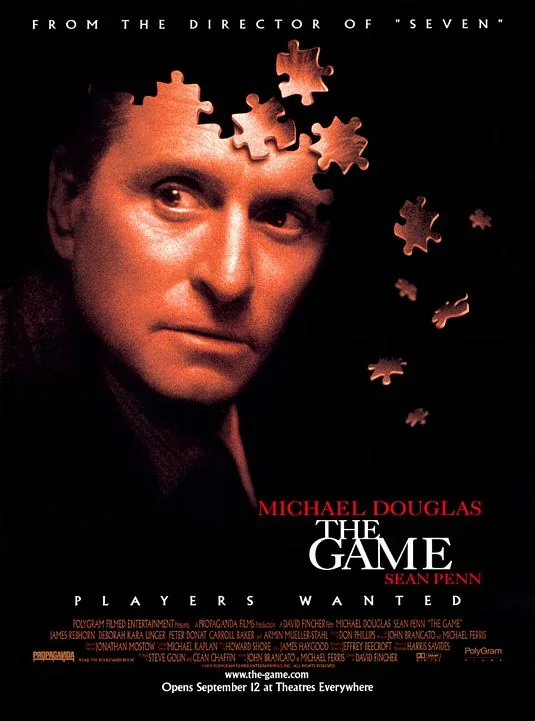
A wealthy, isolated banker receives an unusual birthday gift from his brother: participation in a personalised experience offered by a secretive company. After an intrusive assessment, everyday encounters begin behaving like coordinated attempts to strip him of control, money and certainty. Following apparent clues makes assistance and persecution difficult to distinguish, while memories of his father's death give the unfolding ordeal a vulnerability no financial defence can secure.
Adams’s account is weighed against Harris’s changing statements and the memories of people involved in the investigation.
Why this matches +
A private discovery reveals hidden institutional power and makes the person who knows the truth vulnerable to coercion.
An adjacent discovery: a related idea with a different viewing experience.
Genres: Documentary / Crime
The approach A documentary treatment rather than a dramatic feature.
Shared film traits
Based on recorded story, mood and style. Your preferences can change the order.
Investigation
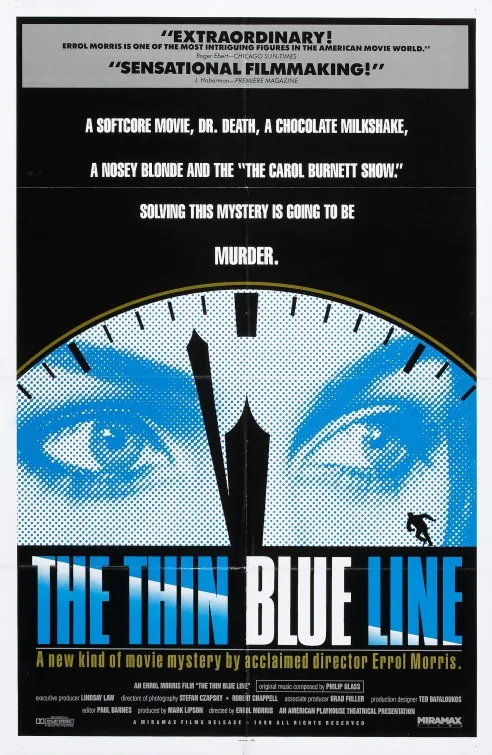
What changes State of Play: measured and investigation-led. The Thin Blue Line: interview-driven inquiry, repeated reconstruction, accumulating contradictions and open evidentiary question.
Errol Morris reexamines the 1976 murder of Dallas police officer Robert Wood and the conviction of Randall Adams, a man sentenced to death for the crime. Through interviews with Adams, David Harris, police officers, lawyers and witnesses, the documentary tests how testimony and memory shaped the case. Stylized reenactments return to key moments from different angles, exposing contradictions without presenting a conventional omniscient reconstruction. Rather than relying on a narrator to settle every uncertainty, the film makes the viewer compare claims, motives and visual evidence. Its investigation asks how an official story becomes accepted and what can happen when courts, police and witnesses fail to question it. The result is both a true-crime inquiry and a study of the power of representation in the justice system.
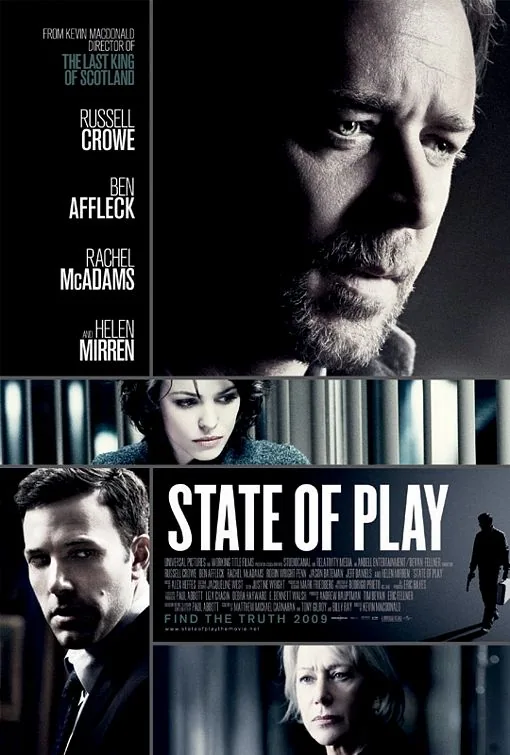
A veteran newspaper reporter investigates the death of a congressional aide and discovers connections to the congressman’s private life and a defense contractor. His work intersects with a political blogger and editor as sources offer conflicting accounts and pressure grows to publish quickly. The newsroom thriller examines evidence, friendship and the cost of public scrutiny, while treating reporting as a process that can expose power but also damage people close to the reporter.
What drives the story
A suspicious death leads a reporter through political relationships and corporate interests that resist a simple explanation.
The people at its centre
His long friendship with the congressman complicates the investigation, while colleagues press him to verify claims before publication.
What it feels like
Measured newsroom scenes and layered testimony keep the suspense grounded in evidence and professional judgment.
Worth knowing
a political journalism thriller about reporting and public evidence rather than an election campaign drama
JournalismPowerTruth
Mood
Investigative · Tense · Grounded
Pacing
Measured · Investigation-led
Visual style
Journalistic · Urban
Storytelling
Political investigation · Conflicting testimony · Public evidence advocacy