A politically motivated surveillance assignment turns a loyal operative's access to private evidence into a conflict between bureaucratic obedience and covert protection.
Why this matches +
Selected for the central appeal: Paranoid thrillers about surveillance, recorded evidence and the danger of misinterpreting what was captured.
Genres: Drama / Thriller
Shared film traits
Based on recorded story, mood and style. Your preferences can change the order.
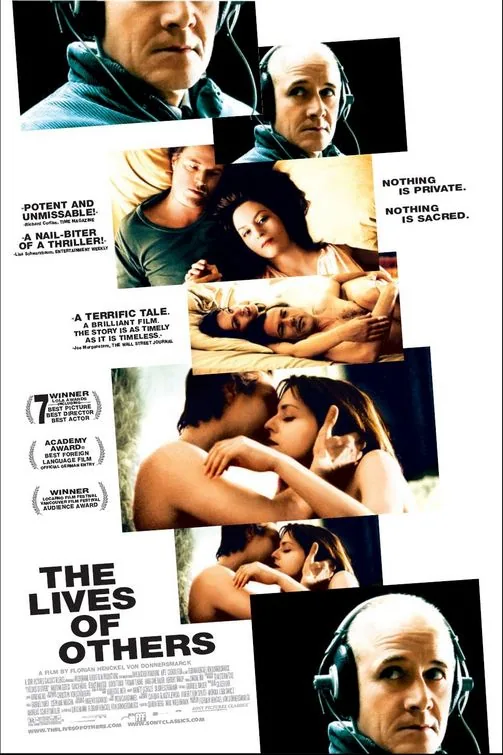
What changes The Lives of Others follows a surveillance specialist whose observation erodes his professional distance.
An East German surveillance officer is assigned to monitor a celebrated playwright and his partner, ostensibly for national security. Listening to their private life reveals artistic friendships, fear and a senior official's exploitative motive behind the operation. The officer's identification with people he is meant to expose creates small opportunities to intervene, but every altered report risks his position within an institution that treats conscience as disloyalty.
A casual photograph becomes a suspected crime scene, but each attempt to enlarge or verify the image multiplies interpretations rather than securing proof. The disappearance of the prints and possible body leaves the method of verification unstable.
Why this matches +
Selected for the central appeal: Paranoid thrillers about surveillance, recorded evidence and the danger of misinterpreting what was captured.
Genres: Drama / Mystery
Shared film traits
Based on recorded story, mood and style. Your preferences can change the order.
Investigation
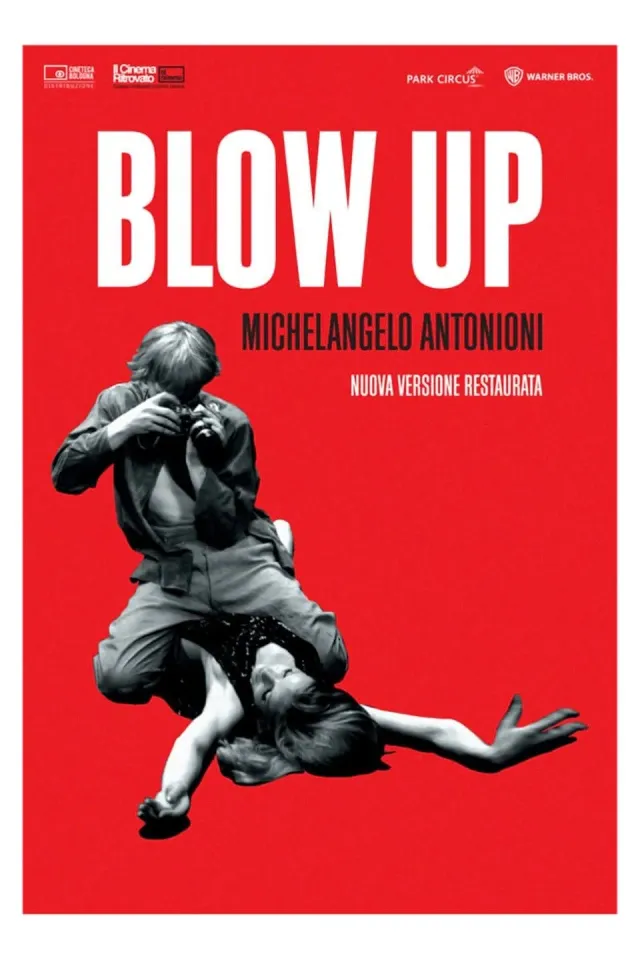
What changes Blowup follows a photographer whose recorded image may reveal a crime he did not initially understand.
A fashion photographer follows a couple through a London park and later enlarges his pictures until he suspects they record a killing. Each crop seems to sharpen a detail while loosening the connection between image and event; a possible body and the prints themselves then disappear. His professional habit of turning people into subjects gives him no authority over what the encounter meant or how others receive his evidence. The investigation tests whether looking closely can ever amount to possessing the truth. In the final tennis sequence, the audience is asked to sustain the same unstable act of seeing.
A sound recording leads Jack from routine film work into an investigation of an event powerful people want forgotten.
Why this matches +
Selected for the central appeal: Paranoid thrillers about surveillance, recorded evidence and the danger of misinterpreting what was captured.
Genres: Thriller / Mystery
Shared film traits
Based on recorded story, mood and style. Your preferences can change the order.
Investigation
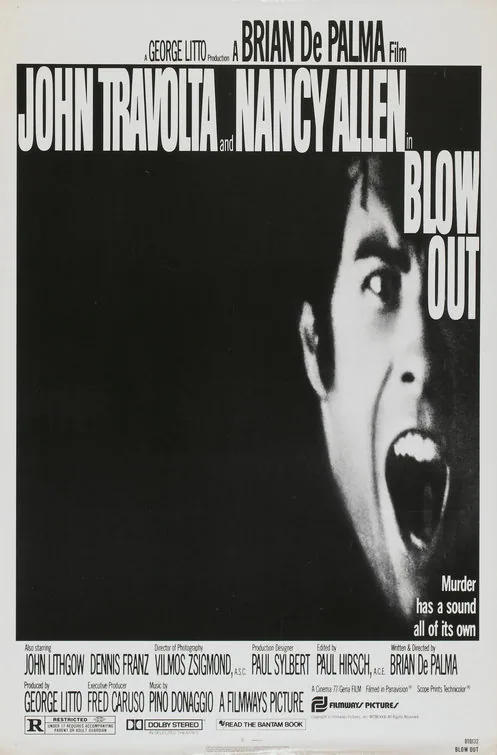
What changes Blow Out follows a sound recordist whose captured audio draws him into a deadly mystery.
Philadelphia sound technician Jack Terry records what seems to be a late-night accident while collecting effects for a film, then realizes his tape may document a politically consequential crime. He teams up with Sally, a witness whose photographs preserve another part of the event, and tries to connect the separate evidence before powerful interests can bury it, turning technical listening into a dangerous investigation.
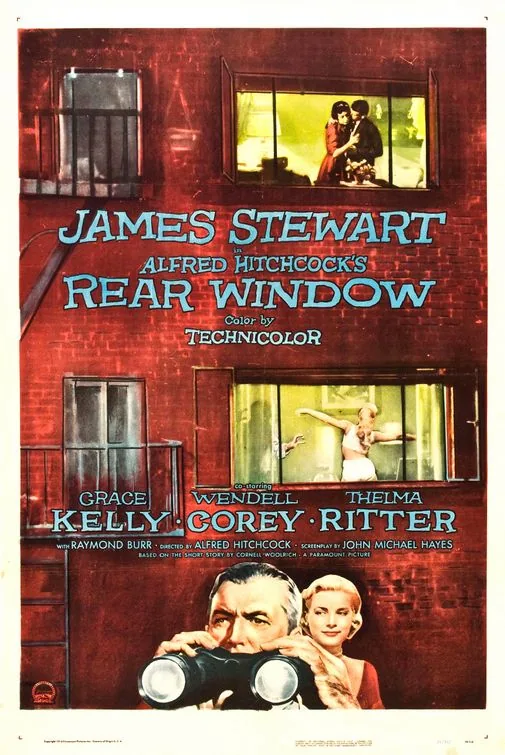
A restricted observer develops a murder hypothesis from partial domestic evidence, drawing people able to move freely into his investigation.
Why this matches +
These offer a related experience with a meaningful difference in story, tone, or presentation.
An adjacent discovery: a related idea with a different viewing experience.
Genres: Mystery / Thriller
Shared film traits
Based on recorded story, mood and style. Your preferences can change the order.
Investigation
What changes Rear Window follows an observer whose partial view of others' lives leads to a dangerous suspicion.
Confined to his apartment with a broken leg, a photographer watches the neighbours across a courtyard and begins to suspect that one man has murdered his wife. His girlfriend and nurse become increasingly involved in testing observations made from a distance. The investigation converts everyday domestic fragments into possible evidence while exposing the photographer's own resistance to intimacy and the risks of watching without full knowledge.
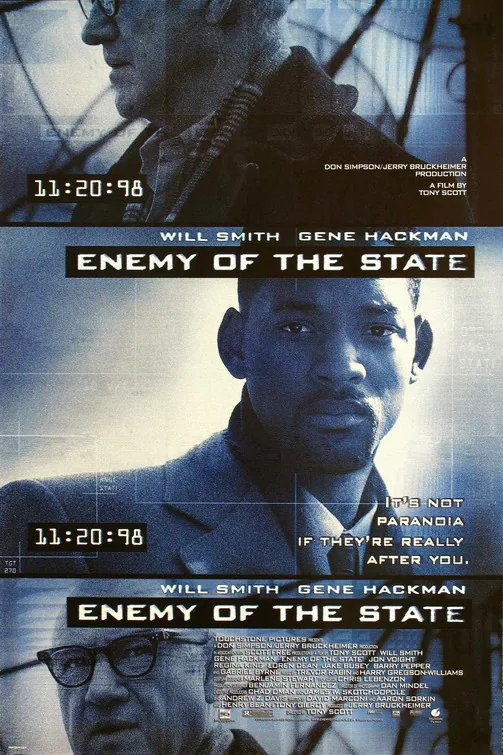
Accidental possession of evidence triggers a coordinated attack on an ordinary person's credibility, forcing him to expose the operation while the attackers control much of what others can observe.
Why this matches +
These offer a related experience with a meaningful difference in story, tone, or presentation.
An adjacent discovery: a related idea with a different viewing experience.
Genres: Thriller / Action
Shared film traits
Based on recorded story, mood and style. Your preferences can change the order.
What changes Enemy of the State follows a man who becomes the target of pervasive electronic surveillance.
A lawyer unknowingly receives a recording of a political murder and becomes the target of officials determined to erase the evidence. Financial disruption, fabricated allegations and pervasive monitoring dismantle the ordinary routines through which he could defend himself. An experienced surveillance specialist offers help but also insists that surviving requires abandoning familiar forms of contact, making the restoration of a credible public identity depend on people who have learned not to appear in public at all.
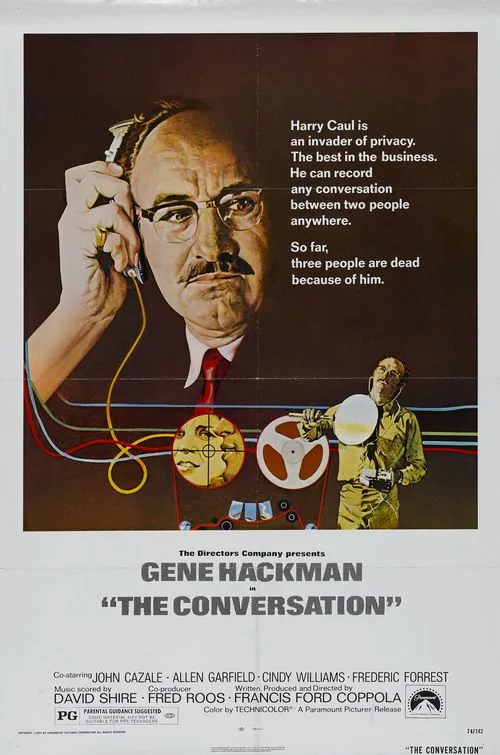
A surveillance specialist records a couple in a crowded square and becomes preoccupied with what their apparently ordinary exchange might mean. His professional distance is eroded by memories of an earlier job with deadly consequences. Replaying and refining the recording draws him into a situation where technical precision cannot guarantee understanding, and the observer begins to fear that he is also being watched.
What drives the story
Repeated analysis of a recorded conversation deepens a technician's uncertainty about the harm his work may enable.
The people at its centre
An intensely private professional resists intimacy while projecting responsibility onto strangers he cannot fully understand.
What it feels like
Sound, repetition and withheld context produce quiet, accumulating paranoia and a persistent sense of compromised privacy.
Worth knowing
Its mystery depends on interpretation and moral anxiety rather than constant clues, chases or a conventional detective partnership.
PrivacyGuiltSurveillance
Mood
Paranoid · Contemplative · Unsettling
Pacing
Slow burn
Visual style
Restrained · Grounded
Storytelling
Investigation · Unreliable interpretation · Character study