Repeated analysis of a recorded conversation deepens a technician's uncertainty about the harm his work may enable.
Why this matches +
Selected for the central appeal: Ambiguous mysteries about an observer examining recorded evidence that may reveal a crime.
Genres: Mystery / Thriller
Shared film traits
Based on recorded story, mood and style. Your preferences can change the order.
Investigation
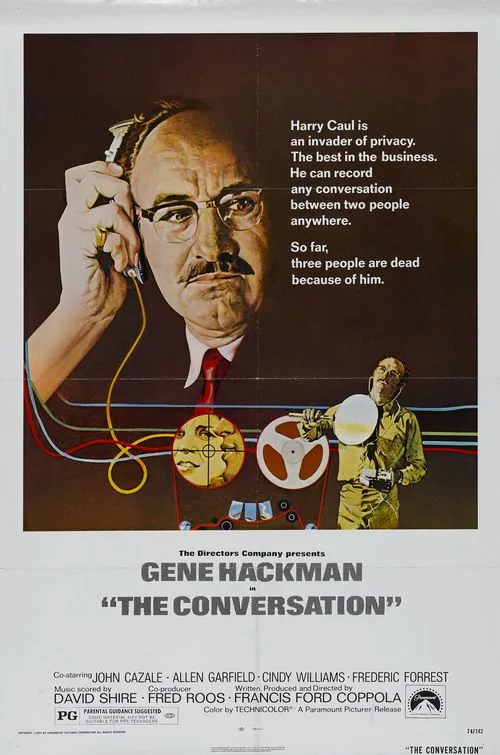
What changes The Conversation follows a surveillance specialist whose repeated examination of a recording suggests a possible killing.
A surveillance specialist records a couple in a crowded square and becomes preoccupied with what their apparently ordinary exchange might mean. His professional distance is eroded by memories of an earlier job with deadly consequences. Replaying and refining the recording draws him into a situation where technical precision cannot guarantee understanding, and the observer begins to fear that he is also being watched.
A restricted observer develops a murder hypothesis from partial domestic evidence, drawing people able to move freely into his investigation.
Why this matches +
Selected for the central appeal: Ambiguous mysteries about an observer examining recorded evidence that may reveal a crime.
Genres: Mystery / Thriller
Shared film traits
Based on recorded story, mood and style. Your preferences can change the order.
Investigation
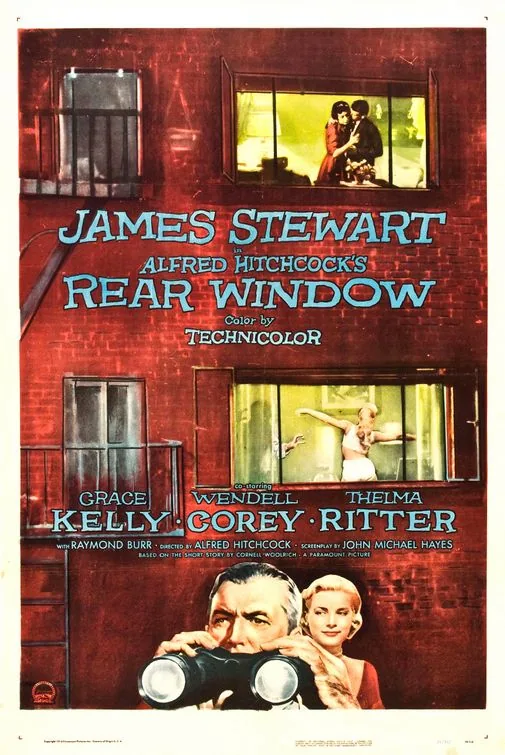
What changes Rear Window follows a photographer whose observation of others leads him to suspect murder.
Confined to his apartment with a broken leg, a photographer watches the neighbours across a courtyard and begins to suspect that one man has murdered his wife. His girlfriend and nurse become increasingly involved in testing observations made from a distance. The investigation converts everyday domestic fragments into possible evidence while exposing the photographer's own resistance to intimacy and the risks of watching without full knowledge.
A revenge investigation depends on external records whose meaning cannot be separated from the purposes behind their creation.
Why this matches +
These offer a related experience with a meaningful difference in story, tone, or presentation.
An adjacent discovery: a related idea with a different viewing experience.
Genres: Mystery / Thriller
Shared film traits
Based on recorded story, mood and style. Your preferences can change the order.
Investigation
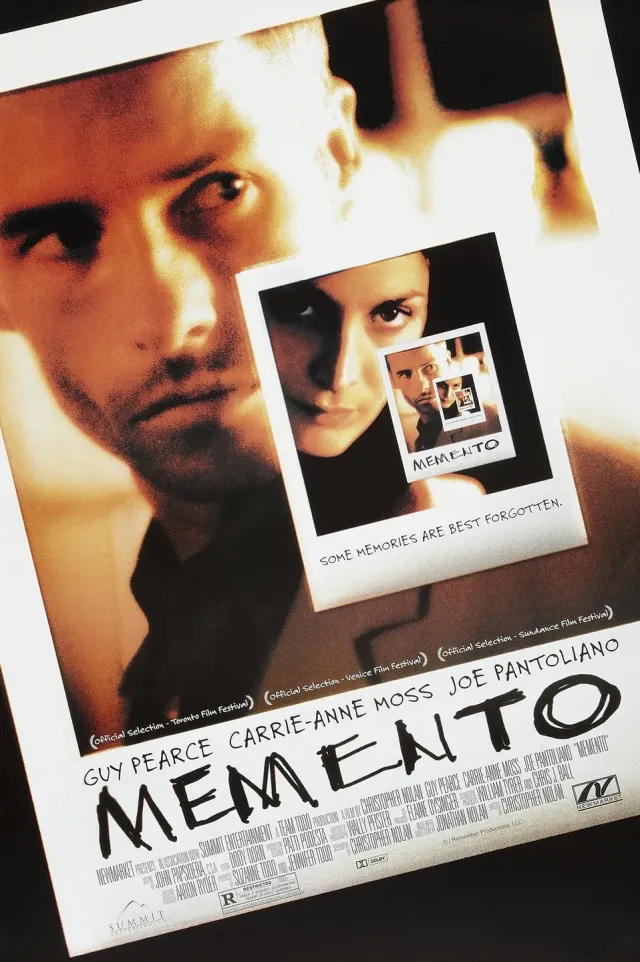
What changes Memento follows an investigation where fragments of evidence cannot guarantee a reliable account of events.
A man unable to form lasting new memories searches for the person he believes killed his wife, using photographs, notes and tattoos to orient each encounter. People offering help have information he cannot independently retain, while his own records appear to promise a certainty they may not deserve. Interlocking sequences make the audience repeatedly reconstruct how a confident action emerged from incomplete knowledge.
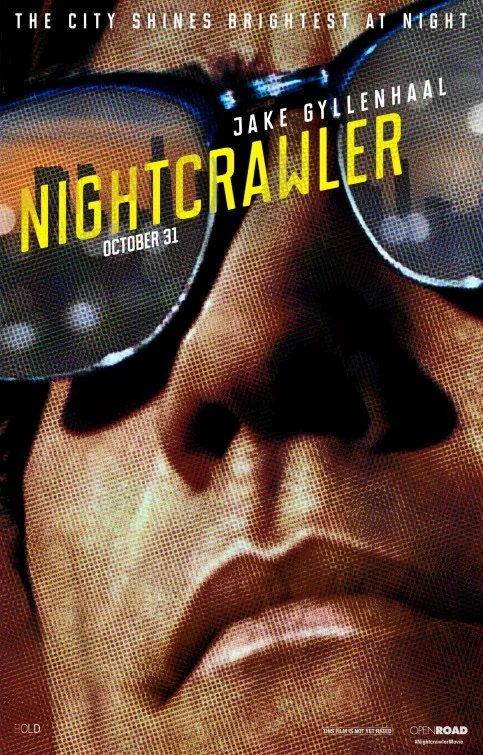
A beginner's rapid adaptation to a market's incentives escalates from opportunistic documentation towards manufacturing the conditions of valuable footage.
Why this matches +
These offer a related experience with a meaningful difference in story, tone, or presentation.
An adjacent discovery: a related idea with a different viewing experience.
Genres: Crime / Thriller
Shared film traits
Based on recorded story, mood and style. Your preferences can change the order.
Investigation
What changes Nightcrawler examines the ethics of turning violent events and other people's suffering into recorded images.
An unemployed outsider discovers that graphic footage of crime and disaster can be sold to local television news. Learning what a producer rewards, he turns observation into increasingly active manipulation of scenes and people. Professional self-improvement language conceals a predatory account of success, while the relationship between an ambitious freelancer and an institution hungry for sensational material makes exploitation look like efficient business practice.
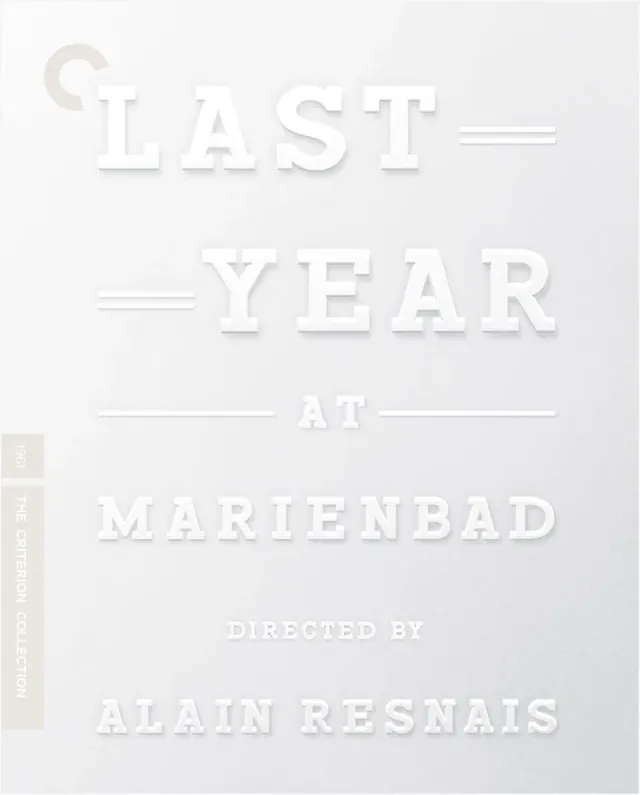
The unnamed man keeps trying to convert his account of a prior meeting into a present obligation. The film’s loops do not establish whether he remembers, invents or imposes the story.
Why this matches +
These offer a related experience with a meaningful difference in story, tone, or presentation.
An adjacent discovery: a related idea with a different viewing experience.
Genres: Drama / Mystery
Shared film traits
Based on recorded story, mood and style. Your preferences can change the order.
What changes Last Year at Marienbad uses uncertain images and memory to challenge whether an encounter can be understood definitively.
At an ornate European resort, a man insists that a woman met him the previous year and agreed to leave with him. She resists his version, while their conversations return to rooms, gardens and events that seem familiar but never settle into one chronology. A second man’s presence turns their exchange into a contest over memory and authority as much as a possible romance. Alain Resnais’s film withholds the evidence that would make the story a conventional mystery; its repeated spaces and contradictory statements keep the viewer inside a struggle over what may have happened. Ambiguity does not make the woman’s resistance incidental. The film’s formal puzzle and the pressure exerted by the man’s insistence need to be held together rather than resolved into a single secret answer.
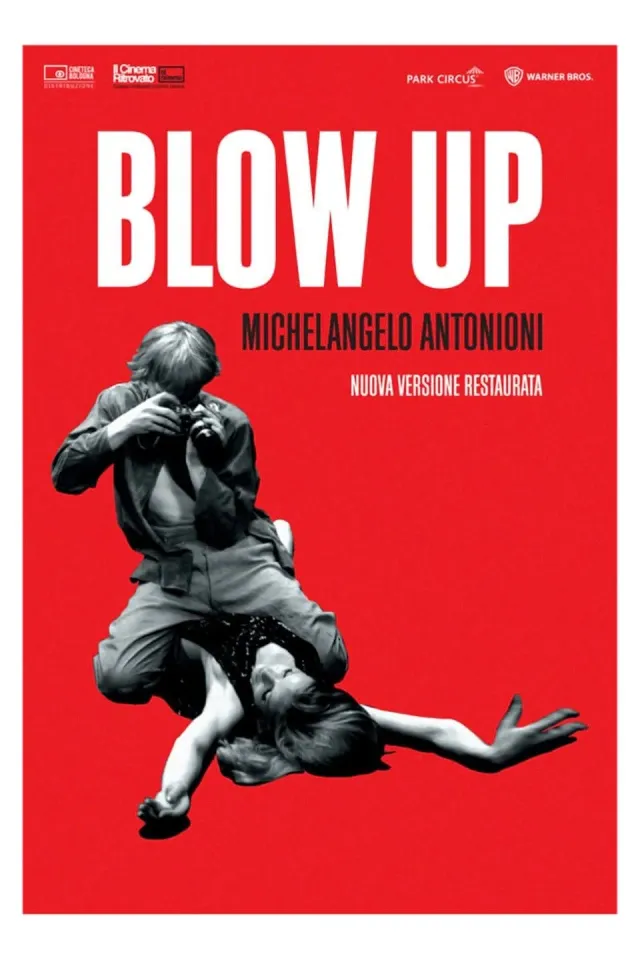
A fashion photographer follows a couple through a London park and later enlarges his pictures until he suspects they record a killing. Each crop seems to sharpen a detail while loosening the connection between image and event; a possible body and the prints themselves then disappear. His professional habit of turning people into subjects gives him no authority over what the encounter meant or how others receive his evidence. The investigation tests whether looking closely can ever amount to possessing the truth. In the final tennis sequence, the audience is asked to sustain the same unstable act of seeing.
What drives the story
A casual photograph becomes a suspected crime scene, but each attempt to enlarge or verify the image multiplies interpretations rather than securing proof. The disappearance of the prints and possible body leaves the method of verification unstable.
The people at its centre
The photographer's routine command over models and clients contrasts with his helplessness before strangers and with the indifference of people he wants to persuade. A model's consent to posing does not extend to his inquiry.
What it feels like
Patient observation gives way to conspicuous abstraction and mimed play; uncertainty becomes a visual condition instead of a clue awaiting a conventional solution. The tennis sequence makes spectators help sustain an unseen ball.
Worth knowing
Match on perception, images and the limits of proof rather than on murder-puzzle mechanics. The final ambiguity neither confirms that a crime occurred nor rules it out; no image settles what lay beyond the frame.