Both share themes of love, plus a warm atmosphere.
Why this matches +
Genres: Comedy / Drama
Shared film traits
Based on recorded story, mood and style. Your preferences can change the order.
What changes Bicentennial Man: a decades-long narrative follows successive stages of self-change. About Time: measured.
On his twenty-first birthday, Tim learns from his father that the men in their family can travel back through their own lives by entering a dark place and concentrating on a moment. He first uses the ability to repair awkward encounters, then pursues Mary while concealing how much he can revise their shared past. Family life makes the power harder to treat as a private advantage: changes can alter who is born, and returning to earlier moments cannot restore every later attachment. The romantic comedy gradually becomes a story about accepting ordinary days and the grief no perfect revision can remove.
Based on recorded story, mood and style. Your preferences can change the order.
Artificial life · Memory and identity
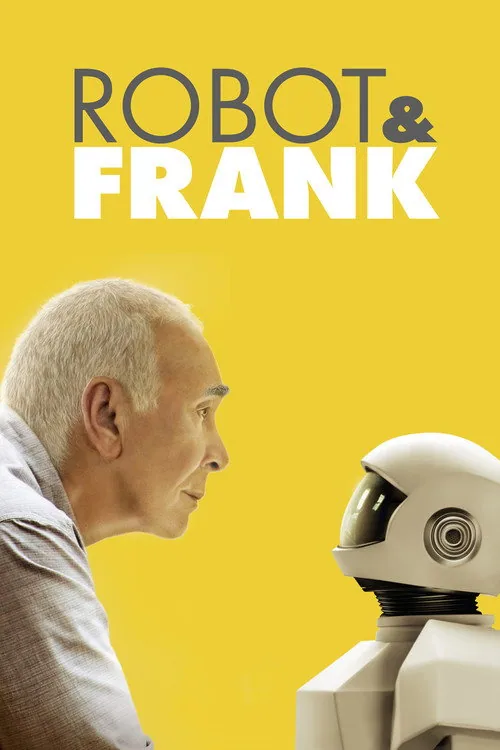
What changes Bicentennial Man: a decades-long narrative follows successive stages of self-change. Robot & Frank: measured, character-led and light heist progression.
In a near future, retired cat burglar Frank Weld is living alone as memory problems make his routines less reliable. His son brings him a care robot, which Frank first resists and then discovers can be enlisted in a small burglary. Their partnership gives Frank a new puzzle and an unlikely companion, while his family must weigh independence against safety. Robot & Frank uses a modest science-fiction premise for a warm, bittersweet comedy about aging, memory, and the uneasy line between support and control.
Both share themes of time and love, plus a warm atmosphere.
Why this matches +
Genres: Science fiction / Adventure
Shared film traits
Based on recorded story, mood and style. Your preferences can change the order.
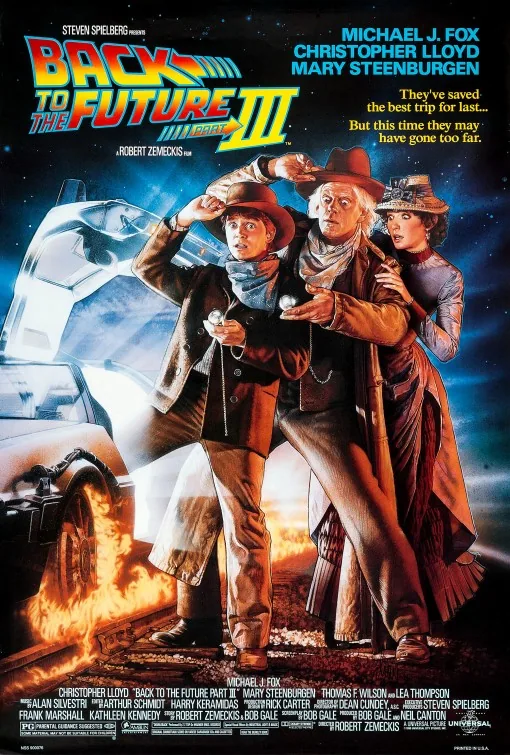
What changes Bicentennial Man: a decades-long narrative follows successive stages of self-change. Back to the Future Part III: fast.
A teenager travels to the nineteenth-century American West to rescue his friend after discovering evidence of the scientist's approaching death. Returning home requires solving a mechanical problem without modern fuel while avoiding a violent local bully. The scientist's unexpected romance complicates the plan, turning a familiar mission to repair time into a choice about where and with whom a life should be lived.
Based on recorded story, mood and style. Your preferences can change the order.
Artificial life · Memory and identity
What changes Bicentennial Man: a decades-long narrative follows successive stages of self-change. Teri Baaton Mein Aisa Uljha Jiya: workplace meet-cute, family comedy episodes and romantic science-fiction resolution.
Robotics engineer Aryan Agnihotri travels to Los Angeles to visit his aunt and meets SIFRA, an advanced humanoid robot he initially believes to be human. He falls in love before learning what she is, then returns to India and agrees to an arranged marriage while remaining drawn to SIFRA. His aunt sends the robot to his family under the pretext of testing, creating comic and emotional situations as relatives accept her as a person. The Hindi romantic science-fiction comedy explores intimacy, family expectations, and what makes a partner feel human.
Based on recorded story, mood and style. Your preferences can change the order.
Artificial life · Memory and identity
What changes Bicentennial Man: a decades-long narrative follows successive stages of self-change. Never Let Me Go: a memory-led structure follows friends from childhood into adult revelation.
Kathy, Ruth, and Tommy grow up at a secluded English boarding school that teaches them to value health and art while concealing their purpose. As adults, they gradually understand that their lives have been designed to serve a medical system built around donated organs. The dystopian drama frames this discovery through friendship, memory, and longing, asking what humanity means when the future has been assigned by others.
Based on recorded story, mood and style. Your preferences can change the order.
Artificial life · Memory and identity
What changes Bicentennial Man: a decades-long narrative follows successive stages of self-change. Junior: comedy built around pregnancy stages, workplace complications and emotional turn.
Reproductive researchers Alex Hesse and Larry Arbogast develop a drug intended to reduce miscarriage risk, but their experiment is blocked by regulators and their laboratory. Larry persuades Alex to take part in a secret test, resulting in Alex becoming pregnant. As the pregnancy progresses, Alex grows attached to the developing child, while the researchers try to keep their work hidden from a suspicious administrator. Ivan Reitman’s science-fiction comedy uses an absurd medical premise to explore parenthood, gender expectations, and friendship.
Based on recorded story, mood and style. Your preferences can change the order.
Artificial life
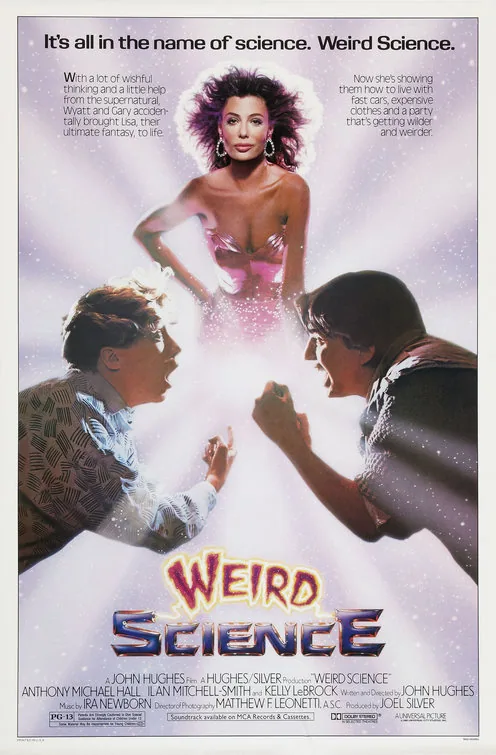
What changes Bicentennial Man: a decades-long narrative follows successive stages of self-change. Weird Science: fast-moving and escalating.
Two socially awkward high-school students use a home computer to create Lisa, an idealized woman who appears with extraordinary powers and rearranges their lives. Their experiment begins as a fantasy of social confidence, but Lisa's agency and the consequences of their choices complicate the boys' assumptions about control, desire, and popularity, while a series of comic encounters forces them to grow beyond the invention that started it all.
Based on recorded story, mood and style. Your preferences can change the order.
Memory and identity
What changes Bicentennial Man: a decades-long narrative follows successive stages of self-change. The Fountain: nonlinear and contemplative.
A scientist searches for a way to save his dying wife, while a writer creates a story about a conquistador seeking a tree of life and a later figure journeys through space. The film intertwines these strands without settling every connection between them. Darren Aronofsky’s drama uses recurring images and a compressed structure to explore love, mortality, grief and the desire to defeat loss.
Both share themes of time and love, plus a sentimental atmosphere.
Why this matches +
Genres: Drama / Fantasy
Shared film traits
Based on recorded story, mood and style. Your preferences can change the order.
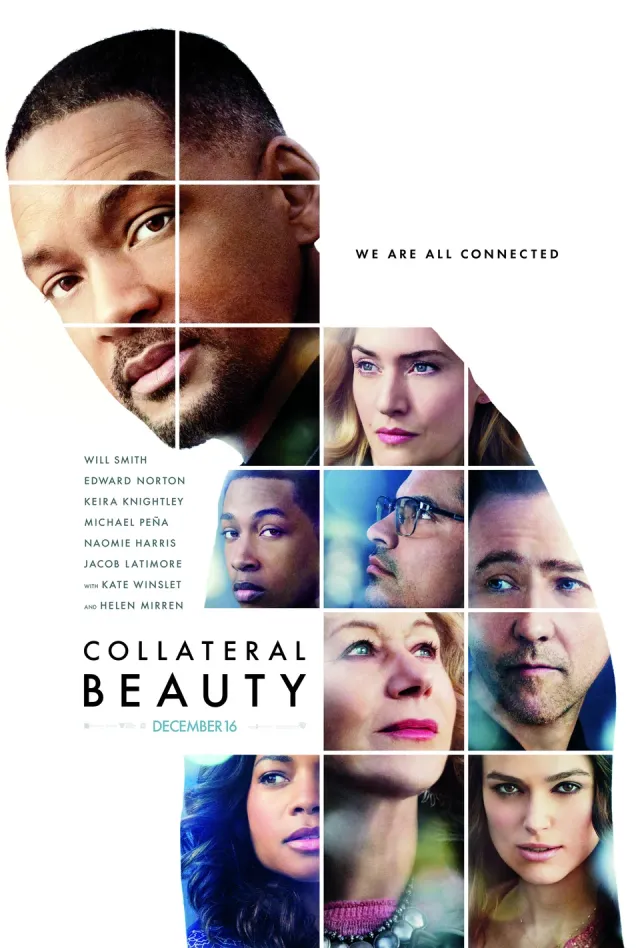
What changes Bicentennial Man: a decades-long narrative follows successive stages of self-change. Collateral Beauty: reflective and interwoven.
After the death of his young daughter, advertising executive Howard Inlet withdraws from his colleagues and writes letters to Love, Time, and Death. His worried coworkers try to reach him through an unusual plan involving performers who embody those ideas, while their own grief and moral choices become part of the story. David Frankel's drama uses a lightly fantastical device to explore loss, friendship, and the difficulty of returning to life.
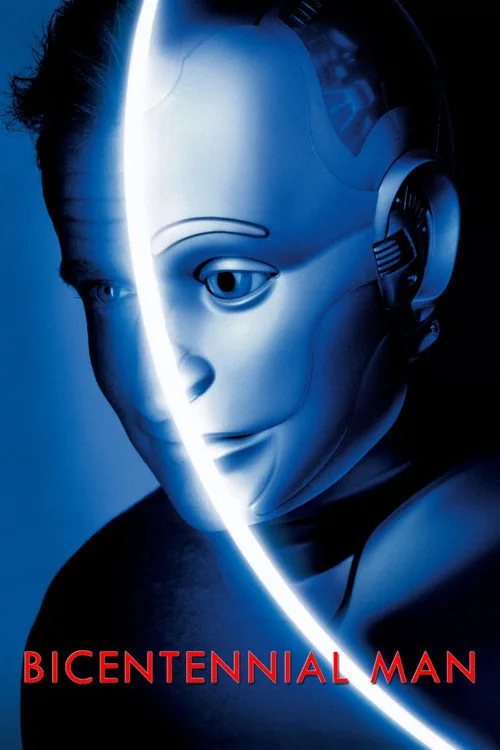
Andrew is introduced to the Martin family as a household robot, but his creativity and emotional life soon exceed what his owners expect from a machine. Over many decades he earns independence, seeks a more human appearance, and pursues legal recognition while his friendships and love for the Martin family span generations. The science-fiction drama turns the question of personhood into a long personal journey, connecting technological change to aging, memory, love, and the desire to be treated as an individual.
What drives the story
Andrew’s growing self-awareness moves him from household service toward a campaign for autonomy and human status.
The people at its centre
Richard guides Andrew’s early development, while Amanda and later Portia connect his long life to changing human generations.
What it feels like
The film combines family melodrama and speculative technology with questions about aging and mortality.
Worth knowing
It is a life-spanning artificial-intelligence drama based on Isaac Asimov’s story, not a robot action film.
PersonhoodFreedomLove
Mood
Warm · Reflective · Sentimental
Pacing
A decades-long narrative follows successive stages of self-change