A time-limited summer visit creates space for a developing attachment whose meaning must be negotiated without an established shared future.
Why this matches +
Selected for the central appeal: Intimate coming-of-age romances about desire, identity and relationships shaped by class and ambition.
Genres: Drama / Romance
Shared film traits
Based on recorded story, mood and style. Your preferences can change the order.
Coming of age
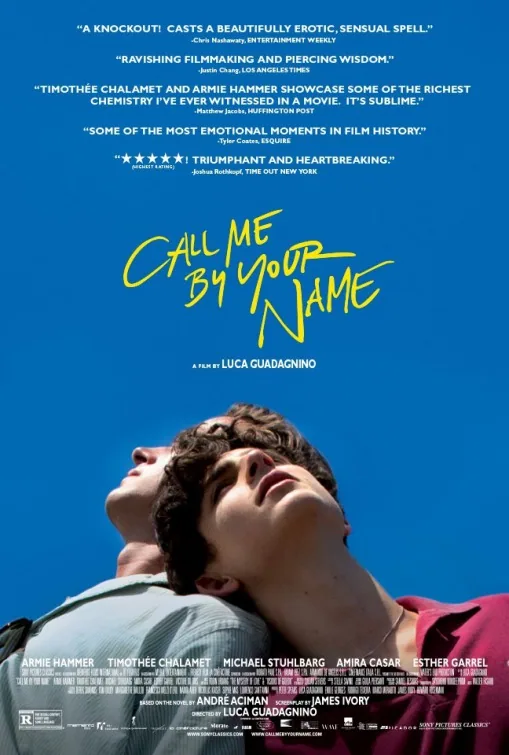
What changes Call Me by Your Name follows a formative same-sex romance and the emotional aftermath of a first intense attachment.
A teenager spending the summer with his family in northern Italy meets an older graduate student invited to assist his father. Initial irritation, curiosity and self-conscious performance give way to an attachment neither can assume the other is prepared to acknowledge. Music, reading and the routines of a temporary household provide indirect ways to approach desire, while the visitor's limited stay makes emerging intimacy inseparable from anticipated separation.
A developing romance is shaped by a custody system that can turn private intimacy into evidence and by each woman's changing sense of what she wants for herself. Public scrutiny changes what the relationship can safely leave undocumented.
Why this matches +
Selected for the central appeal: Intimate coming-of-age romances about desire, identity and relationships shaped by class and ambition.
Genres: Drama / Romance
Shared film traits
Based on recorded story, mood and style. Your preferences can change the order.
What changes Carol explores a relationship between women shaped by differences in age, social position and personal freedom.
Therese, a young department-store clerk and aspiring photographer, meets Carol, a married mother navigating divorce and a custody dispute. Their attraction begins with tentative looks and a shared journey, but power between them is not fixed by age, wealth or experience alone. Custody surveillance makes private affection legible to people who can use it against Carol, while Therese's artistic and personal choices develop beyond the romance. The film treats restraint as an effect of scrutiny and social risk, not a lack of desire.
An older man's curated access to culture makes a student's future seem disposable until concealed information exposes the cost of dependence.
Why this matches +
These offer a related experience with a meaningful difference in story, tone, or presentation.
An adjacent discovery: a related idea with a different viewing experience.
Genres: Drama / Romance
Shared film traits
Based on recorded story, mood and style. Your preferences can change the order.
Coming of age
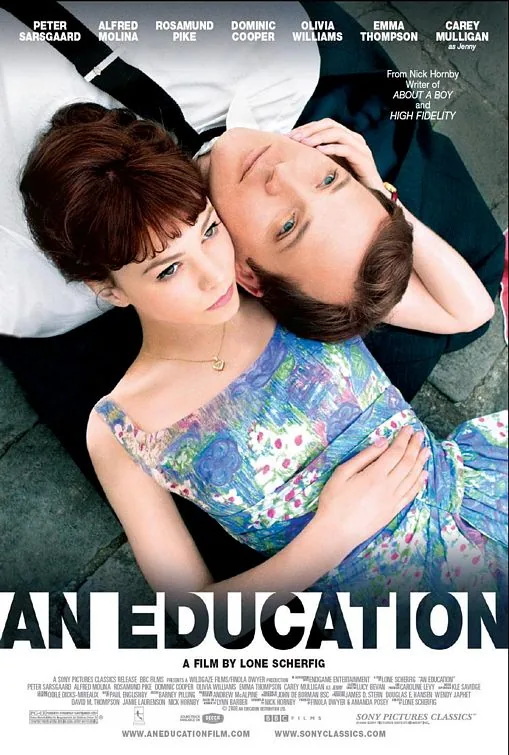
What changes An Education follows a young woman's relationship with an older partner as she reconsiders class and ambition.
A gifted schoolgirl in early 1960s London is offered an apparently sophisticated escape from exams and parental restrictions by an older man. His access to music, travel, and adult approval makes formal education seem small beside a life already available. As inconsistencies emerge, the attraction becomes a test of how glamour can disguise unequal knowledge and how easily ambition can be redirected by someone presenting himself as its shortcut.
The road trip keeps changing meaning as the friends’ bravado meets an adult traveler’s more complicated circumstances.
Why this matches +
These offer a related experience with a meaningful difference in story, tone, or presentation.
An adjacent discovery: a related idea with a different viewing experience.
Genres: Drama / Romance
Shared film traits
Based on recorded story, mood and style. Your preferences can change the order.
Coming of age
What changes Y tu mamá también explores desire, class and changing identities through an intense, transient relationship.
Two teenage friends take a road trip with an older woman who is dealing with a private loss, and their shifting trio turns a carefree journey into a reckoning with desire, class and growing up. A candid voice-over widens the story beyond the travelers’ self-image. The film’s erotic humor sits beside an attentive portrait of Mexican places and inequalities.
A folk ensemble becomes the starting point for a relationship repeatedly reshaped by political borders, artistic compromise and different opportunities to leave.
Why this matches +
These offer a related experience with a meaningful difference in story, tone, or presentation.
An adjacent discovery: a related idea with a different viewing experience.
Genres: Drama / Romance
Shared film traits
Based on recorded story, mood and style. Your preferences can change the order.
What changes Cold War follows a passionate relationship across years as artistic ambition and differing circumstances pull its lovers apart.
After World War II, composer and pianist Wiktor and singer Zula meet in a Polish folk ensemble shaped by state cultural policy. Their love carries them across years and borders, but exile, language and performance alter what each can make of artistic freedom. Western life offers Wiktor another possibility without giving Zula the same route or resolving their unequal choices. The film's elliptical jumps and shifting songs make the relationship feel both enduring and repeatedly remade, resisting the idea that suffering alone proves a perfect romance.
Adèle's first serious relationship with the older art student Emma opens a new language for desire, intimacy and cultural belonging. Their attachment is shaped by different class positions and ambitions, and the life that first makes Adèle feel recognized cannot remain the measure of who she becomes. Close, explicit observation places the viewer near their bodies while also raising questions about who controls that looking. The film's romance and its production history both call for attention to the gap between an image of intimacy and the agency of the people represented. The years-long span makes the separation as formative as their first recognition of one another.
What drives the story
A formative relationship expands Adèle's sense of desire and adulthood, then strains under diverging ambitions and unequal access to the cultural world that first drew them together. The change grows through ordinary life rather than one villainous betrayal.
The people at its centre
Adèle and Emma share real affection, but artistic confidence, class and expectations shape their choices differently. Neither woman's identity or agency is a completed milestone supplied by the other.
What it feels like
Long close observation gives ordinary gestures unusual duration. Explicit intimacy and the reported conditions of production also invite viewers to question whose perspective the image serves, so tenderness can feel exposing as well as intimate.
Worth knowing
Compare a relationship whose emotional and cultural balance changes over time. Do not treat queer discovery as a single achievement or the film's explicit gaze as neutral documentation; production criticism concerns the making, not the characters' fictional history.
IdentityClassDesire
Mood
Intimate · Romantic · Melancholic
Pacing
Slow burn
Visual style
Naturalistic · Close observation
Storytelling
First defining relationship · Unequal cultural belonging · Separation and aftermath