A carefully ordered household reveals how social respectability can conceal pain and constrain honest connection.
Why this matches +
Selected for the central appeal: Restrained period romances about desire, social scrutiny and women's independence.
Genres: Drama / Romance
Shared film traits
Based on recorded story, mood and style. Your preferences can change the order.
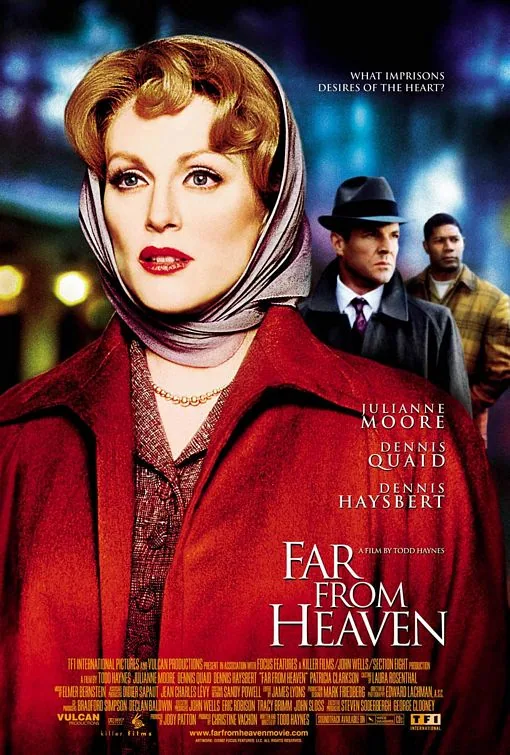
What changes Far from Heaven shares Todd Haynes's period style and examines desire constrained by 1950s social expectations.
In 1950s Connecticut, a suburban wife discovers that her polished marriage conceals a truth her community is unwilling to accept, while she forms a connection that crosses the era’s racial boundaries. Her husband and their children also face the consequences of a rigid social order. The film uses period melodrama and carefully controlled style to examine desire, respectability and the limits imposed on private life.
The hidden portrait turns looking into both a professional task and an intimate negotiation over who controls the image.
Why this matches +
Selected for the central appeal: Restrained period romances about desire, social scrutiny and women's independence.
Genres: Drama / Romance
Shared film traits
Based on recorded story, mood and style. Your preferences can change the order.
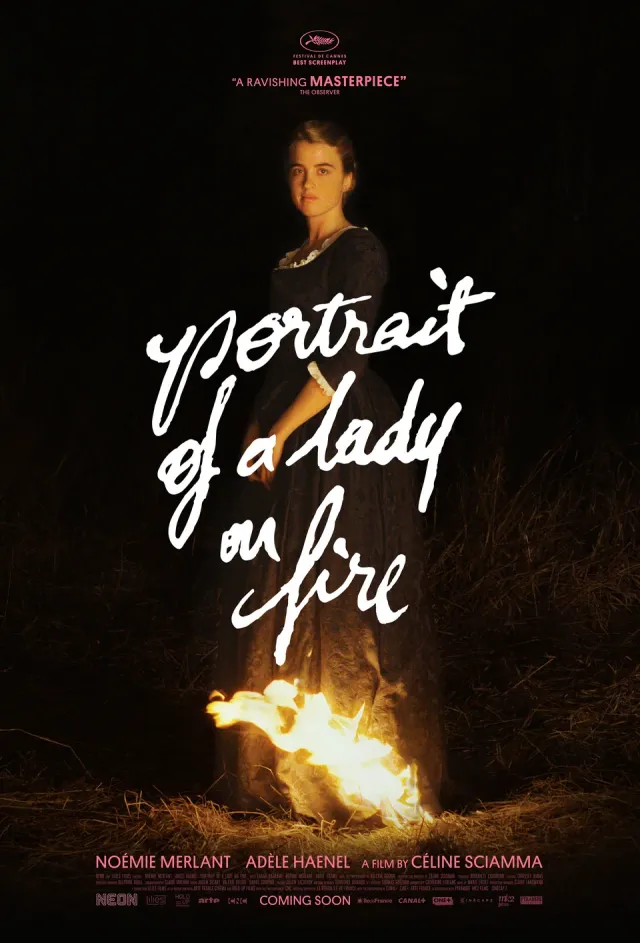
What changes Portrait of a Lady on Fire follows a relationship between women shaped by art, class and social restriction.
In late-eighteenth-century Brittany, painter Marianne is hired to make a portrait of Héloïse, a young woman whose arranged marriage depends on a painting she refuses to sit for. Marianne first observes her under the pretense of companionship, then paints from memory. When Héloïse agrees to pose, the two women develop an intimacy shaped by the short time before the marriage. Their relationship also includes the household’s young servant Sophie, whose pregnancy leads to a clandestine abortion. The portrait is completed, and Marianne and Héloïse separate, with a final later encounter preserving the force of their shared memory.
A formative relationship expands Adèle's sense of desire and adulthood, then strains under diverging ambitions and unequal access to the cultural world that first drew them together. The change grows through ordinary life rather than one villainous betrayal.
Why this matches +
Selected for the central appeal: Restrained period romances about desire, social scrutiny and women's independence.
Genres: Drama / Romance
Shared film traits
Based on recorded story, mood and style. Your preferences can change the order.
What changes Blue Is the Warmest Colour follows a formative relationship between women across differences in age and ambition.
Adèle's first serious relationship with the older art student Emma opens a new language for desire, intimacy and cultural belonging. Their attachment is shaped by different class positions and ambitions, and the life that first makes Adèle feel recognized cannot remain the measure of who she becomes. Close, explicit observation places the viewer near their bodies while also raising questions about who controls that looking. The film's romance and its production history both call for attention to the gap between an image of intimacy and the agency of the people represented. The years-long span makes the separation as formative as their first recognition of one another.
Anna's relationship with Vronsky challenges a marriage embedded in public status, but the social order gives her fewer ways to leave than it gives him. The parallel Levin plot resists treating passion as the only model of intimacy.
Why this matches +
These offer a related experience with a meaningful difference in story, tone, or presentation.
An adjacent discovery: a related idea with a different viewing experience.
Genres: Drama / Romance
Shared film traits
Based on recorded story, mood and style. Your preferences can change the order.
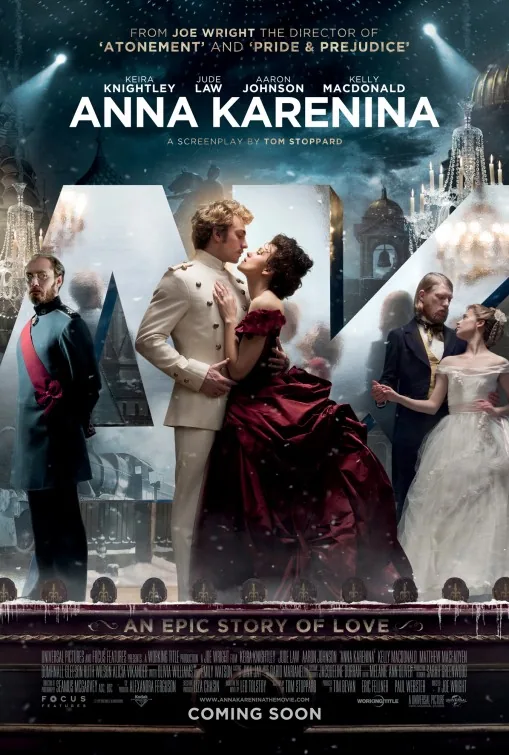
What changes Anna Karenina follows a woman whose romantic choices become subject to severe social judgment.
In nineteenth-century Russia, Anna's affair with the cavalry officer Vronsky ruptures the marriage and social standing that have defined her public life. Their attraction offers an apparent alternative, but the social costs fall most heavily on Anna and make private desire a public spectacle. A parallel story follows Levin's slower courtship and marriage to Kitty, providing a contrasting account of work, faith and commitment. Joe Wright stages much of the film as if it unfolds inside a theater, turning class performance into both setting and visual argument.
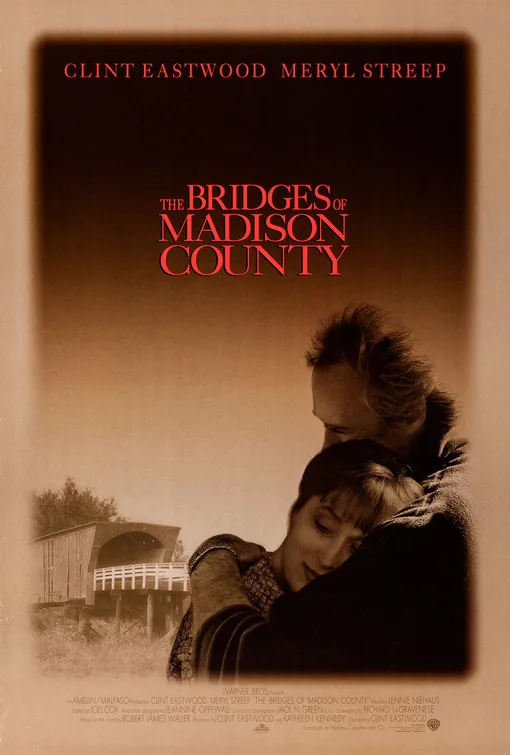
The adult children's discovery gives the romance a second timeline: Francesca's private choice changes how they understand the mother they thought they knew.
Why this matches +
These offer a related experience with a meaningful difference in story, tone, or presentation.
An adjacent discovery: a related idea with a different viewing experience.
Genres: Drama / Romance
Shared film traits
Based on recorded story, mood and style. Your preferences can change the order.
What changes The Bridges of Madison County portrays a restrained affair constrained by family obligations and social convention.
After their mother Francesca dies, her adult children discover journals explaining why she asked to be cremated and have her ashes scattered from a covered bridge. The notebooks take them back to 1965, when National Geographic photographer Robert Kincaid arrived at the Iowa farm to find directions to the bridges. Francesca's husband and children are away for several days, and she guides Robert through the county. Their brief affair becomes a lasting choice between a new love and the family life Francesca has built, with her children reading the story years later.
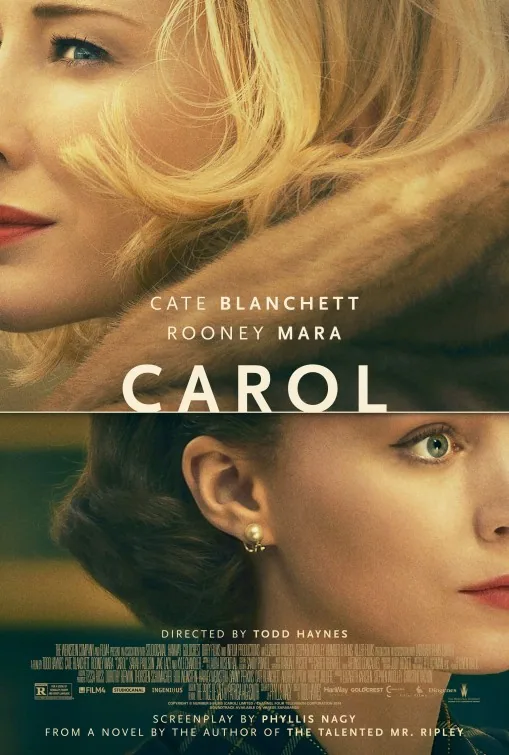
Therese, a young department-store clerk and aspiring photographer, meets Carol, a married mother navigating divorce and a custody dispute. Their attraction begins with tentative looks and a shared journey, but power between them is not fixed by age, wealth or experience alone. Custody surveillance makes private affection legible to people who can use it against Carol, while Therese's artistic and personal choices develop beyond the romance. The film treats restraint as an effect of scrutiny and social risk, not a lack of desire.
What drives the story
A developing romance is shaped by a custody system that can turn private intimacy into evidence and by each woman's changing sense of what she wants for herself. Public scrutiny changes what the relationship can safely leave undocumented.
The people at its centre
Carol has social and financial advantages but remains vulnerable in the custody dispute; Therese begins less sure of her direction and gradually makes choices not reducible to Carol's influence. Her photography develops alongside that independence.
What it feels like
Reflections, windows, winter textures and careful close observation make desire felt through glances and pauses, with surveillance shaping what can safely be shown. Watching becomes part of the romantic form.
Worth knowing
Compare restrained queer romance under family and state scrutiny, not a simple age-gap rescue or forbidden-love template. Wealth helps Carol in some ways without giving her control over custody.
DesireAutonomyLove
Mood
Romantic · Restrained · Tender
Pacing
Slow burn
Visual style
Reflections · Period texture · Composed observation