Three separated stages of one life trace how protective habits form around experiences of shame, tenderness, violence and interrupted intimacy.
Why this matches +
Selected for the central appeal: Naturalistic coming-of-age stories that observe family, identity and everyday changes over time.
Genres: Drama / Coming-of-age
Shared film traits
Based on recorded story, mood and style. Your preferences can change the order.
Coming of age
What changes Moonlight follows a boy through successive stages of life as family and identity shape his adulthood.
Across childhood, adolescence and adulthood, a quiet boy from Miami learns different ways to protect himself from bullying, instability at home and expectations of masculinity. A drug dealer and his partner offer care complicated by the economy harming his mother, while one friendship creates a vulnerable possibility of intimacy. The divisions between the three periods reveal how a hardened adult identity can preserve earlier wounds without extinguishing the desire to be known.
Daily needs and modest hopes shape a family's life while children discover possibilities beyond its immediate limits.
Why this matches +
Selected for the central appeal: Naturalistic coming-of-age stories that observe family, identity and everyday changes over time.
Genres: Drama
Shared film traits
Based on recorded story, mood and style. Your preferences can change the order.
Coming of age
What changes Pather Panchali observes childhood and family hardship through the accumulation of ordinary moments.
A boy grows up in a poor rural Bengali household with an older sister whose curiosity guides his encounters with the wider world. Their mother's daily effort to keep the family together contrasts with their father's hopes for work and advancement. Small discoveries, family tensions and material insecurity unfold through changing seasons, allowing wonder and loss to emerge from the same ordinary surroundings.
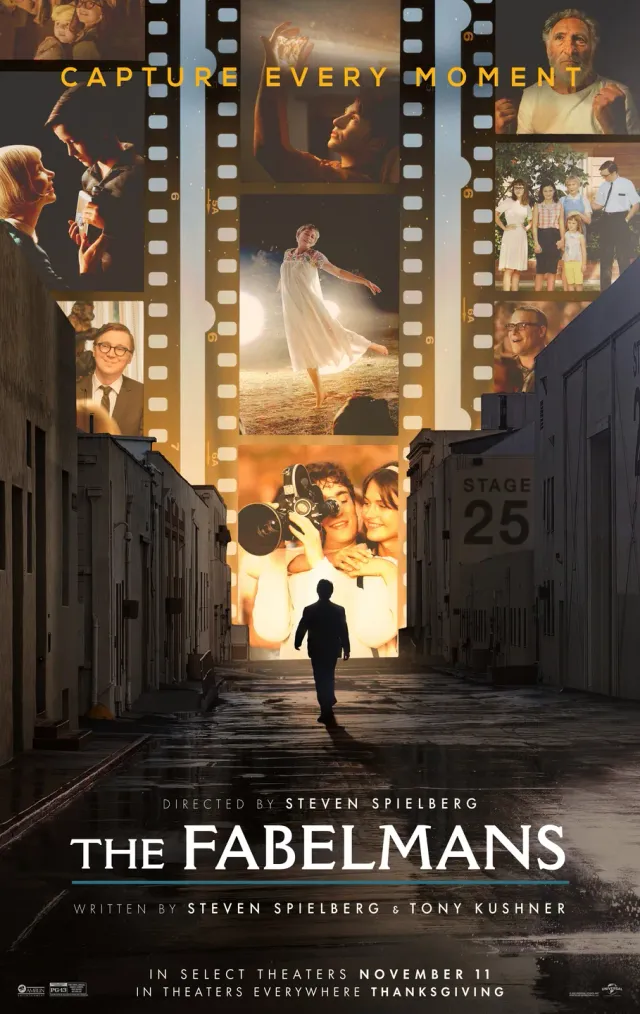
Sammy’s camera shifts from toy to instrument of understanding; filming lets him notice family tensions he is too young to interpret directly.
Why this matches +
Selected for the central appeal: Naturalistic coming-of-age stories that observe family, identity and everyday changes over time.
Genres: Drama / Coming-of-age
Shared film traits
Based on recorded story, mood and style. Your preferences can change the order.
What changes The Fabelmans follows a young person growing up amid changing family relationships and creative discovery.
Young Sammy Fabelman becomes fascinated with filmmaking after seeing a train crash in a movie and recreates it with his toy set and camera. As his family moves from New Jersey to Arizona and later California, the hobby grows into a way to understand what he sees at home. Sammy’s mother Mitzi is an expressive pianist; his father Burt is a practical engineer, and the household’s closeness is strained by changes neither parent can easily explain to their children. Sammy discovers that his camera can preserve details adults would rather avoid, placing him in a painful position between them. The coming-of-age story follows how making films becomes both an artistic calling and a way to process family fracture.
Episodic childhood play gradually reveals an unstable household whose economic pressures are approaching consequences the child cannot control.
Why this matches +
These offer a related experience with a meaningful difference in story, tone, or presentation.
An adjacent discovery: a related idea with a different viewing experience.
Genres: Drama
Shared film traits
Based on recorded story, mood and style. Your preferences can change the order.
Coming of age
What changes The Florida Project stays close to children's everyday experiences while revealing adult financial pressures.
A young girl spends a summer roaming the budget motels and improvised play spaces near a major Florida tourist resort. Her mother's precarious work and escalating conflicts remain only partly visible through the child's adventures, while a motel manager repeatedly balances compassion against practical limits. The pleasures of unsupervised friendship unfold beside the risk of losing a fragile home, exposing a gap between childhood imagination and the adult systems shaping it.
News from home opens a recollection in which apprenticeship, first love and departure shape the meaning of a later artistic life.
Why this matches +
These offer a related experience with a meaningful difference in story, tone, or presentation.
An adjacent discovery: a related idea with a different viewing experience.
Genres: Drama / Coming-of-age
Shared film traits
Based on recorded story, mood and style. Your preferences can change the order.
Coming of age
What changes Cinema Paradiso looks back on childhood and the relationships that shape a young person's life.
A successful filmmaker learns of a death in the Sicilian town he left decades earlier and revisits his childhood through memories of its cinema. Friendship with a projectionist introduced him to images, forbidden access and the communal life organised around a screen. Growing older brings romance and the difficult possibility that following a vocation may require leaving the place and people through which that vocation first became imaginable.
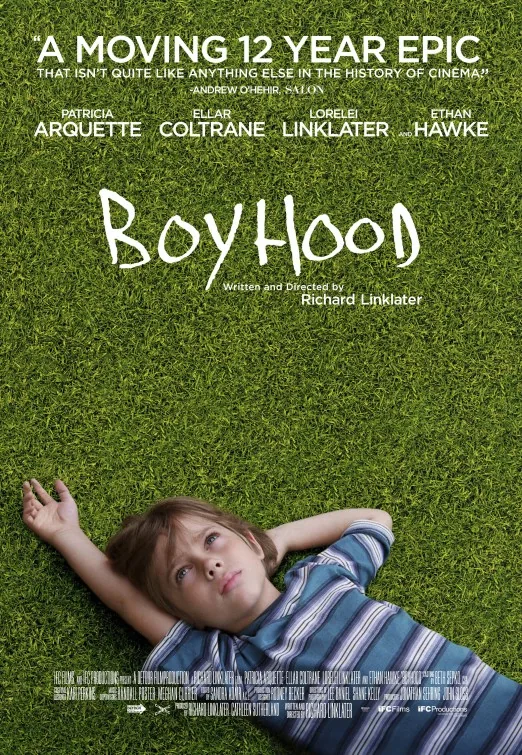
A Texas boy grows from early childhood towards college while his family moves, changes partners and adapts to financial and emotional pressures. Ordinary conversations, sibling conflicts and shifting friendships accumulate without a single governing crisis. As the years pass, the adults' unfinished lives remain visible alongside his developing sense of identity, making growing up a process of observation as much as decisive action.
What drives the story
Repeated transitions in home, school and relationships accumulate into an emerging adult perspective.
The people at its centre
A child observes parents making imperfect choices while slowly acquiring independence from them.
What it feels like
Everyday moments and visible aging produce an unusually sustained sense of time and changing familiarity.
Worth knowing
Its value lies in accumulation and ordinary uncertainty, rather than a tightly plotted childhood obstacle course.