Both share themes of memory and family, plus an intimate and bittersweet atmosphere.
Why this matches +
Genres: Drama
Shared film traits
Based on recorded story, mood and style. Your preferences can change the order.
Memory and identity
What changes The Fabelmans: childhood episodes and adolescent turning points. Here: a non-linear structure revisits one place across multiple generations.
The film remains anchored to one location while moving across different periods and generations of people who live in or pass through it. Domestic routines, relationships, and historical change become visible through the space itself, making the room a witness to lives it cannot control. The drama adapts a graphic-novel structure into a meditation on memory, time, family, and the meanings that accumulate around an ordinary place.
Both share themes of memory, plus a reflective atmosphere.
Why this matches +
Genres: Comedy drama / Drama
Shared film traits
Based on recorded story, mood and style. Your preferences can change the order.
Memory and identity
What changes The Fabelmans: childhood episodes and adolescent turning points. The Divine Secrets of the Ya-Ya Sisterhood: alternating timelines and character-led.
A playwright's public comments about her childhood deepen a long-running rift with her mother and threaten to disrupt her upcoming wedding. The mother's lifelong friends intervene, bringing the daughter into a shared history that spans girlhood, marriage and painful family choices. The drama uses memories and an ensemble of older women to ask how adult children can understand parents without excusing the harm they experienced.
Based on recorded story, mood and style. Your preferences can change the order.
Memory and identity
What changes The Fabelmans: childhood episodes and adolescent turning points. The Tree of Life: fragmented and contemplative.
Adult Jack reflects on his childhood in 1950s Texas, where his mother's warmth and his father's strict, ambitious parenting shaped his ideas about love and power. The memory of a family loss runs through his recollections, making ordinary moments of play, discipline and sibling rivalry feel charged with questions he could not answer as a child. The film moves between Jack's present, fragmented family memories and vast images of the universe's origins, placing private grief beside the scale of creation. Rather than offer a single explanatory account of the past, it lets images, music and recurrence carry much of the emotional argument. Jack's adult search is for a way to hold anger, love and absence together.
Both centre on cinema and memory and family obligation.
Why this matches +
Genres: Drama / Biography
Shared film traits
Based on recorded story, mood and style. Your preferences can change the order.
Memory and identity
What changes The Fabelmans: childhood episodes and adolescent turning points. The Mirror: associative montage and nonlinear time shifts.
A dying man’s memories unfold in fragments across childhood, adulthood and wartime, with the film shifting between a boy named Alex, his mother and the adult voice remembering them. Images of a country house, a printing press and family separations recur without being arranged into a conventional chronological plot. Andrei Tarkovsky weaves autobiographical material, poetry and historical footage into a meditation on memory and inheritance. The scenes do not always clarify whether they belong to recollection, dream or present action; their emotional links matter more than a single explanatory mystery.
Both centre on cinema and memory and family obligation.
Why this matches +
Genres: Drama / Comedy
Shared film traits
Based on recorded story, mood and style. Your preferences can change the order.
Memory and identity · Music and performance
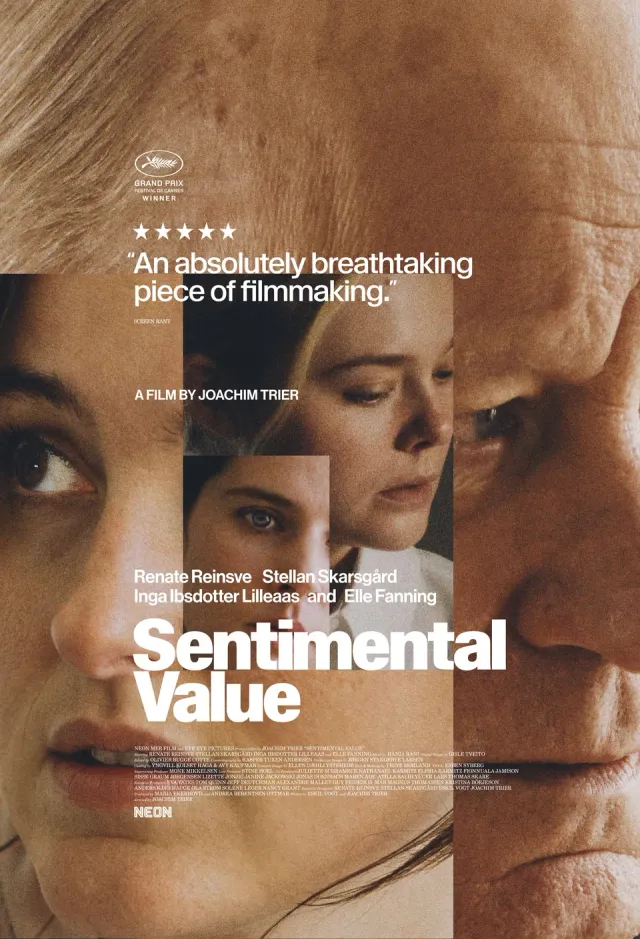
What changes The Fabelmans: childhood episodes and adolescent turning points. Sentimental Value: measured, interwoven and emotionally restrained.
After their mother’s death, sisters Nora and Agnes face the return of their estranged father Gustav, a once-successful director who wants to make a film inspired by his own mother’s wartime trauma in their family home. Nora, a stage actor who struggles with performance anxiety, refuses the role he offers her; Agnes, a historian and parent, is more willing to hear him out. Gustav’s script turns private family memory into material for a production, and the dispute over where and how to film it exposes what each generation has inherited. The eventual staging asks whether art can create understanding without repairing the past by itself.
Both share themes of family, plus an intimate and bittersweet atmosphere.
Why this matches +
Genres: Drama / Coming-of-age
Shared film traits
Based on recorded story, mood and style. Your preferences can change the order.
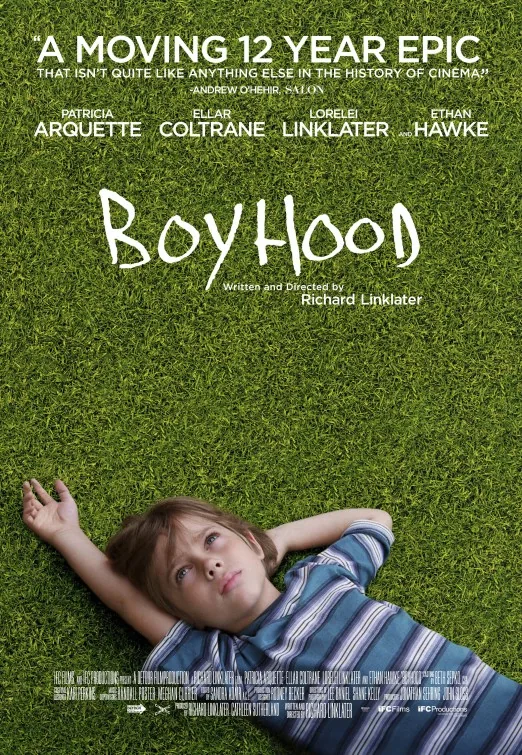
What changes The Fabelmans: childhood episodes and adolescent turning points. Boyhood: measured.
A Texas boy grows from early childhood towards college while his family moves, changes partners and adapts to financial and emotional pressures. Ordinary conversations, sibling conflicts and shifting friendships accumulate without a single governing crisis. As the years pass, the adults' unfinished lives remain visible alongside his developing sense of identity, making growing up a process of observation as much as decisive action.
Based on recorded story, mood and style. Your preferences can change the order.
Memory and identity
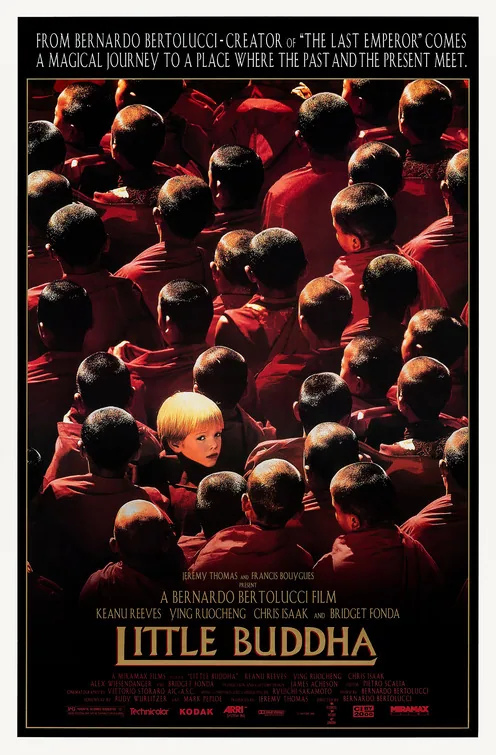
What changes The Fabelmans: childhood episodes and adolescent turning points. Little Buddha: parallel and measured.
Tibetan Buddhist monks believe a Seattle boy may be the reincarnation of their teacher and visit his family to test that possibility. The film intercuts the modern search with a stylized account of Siddhartha Gautama’s life, turning the child’s ordinary world into a meeting point between faith, family anxiety and religious story. His parents respond differently as the monks explain their tradition, but the film does not establish the search as an objective test that proves rebirth to viewers. Bertolucci’s visual epic is an outsider-made representation of Tibetan Buddhism and combines a fictional family with a sacred narrative. It can invite curiosity about reincarnation while remaining distinct from the diverse practices and actual processes through which communities recognize tulkus.
Both share themes of memory, plus an intimate and reflective atmosphere.
Why this matches +
Genres: Drama
Shared film traits
Based on recorded story, mood and style. Your preferences can change the order.
Memory and identity
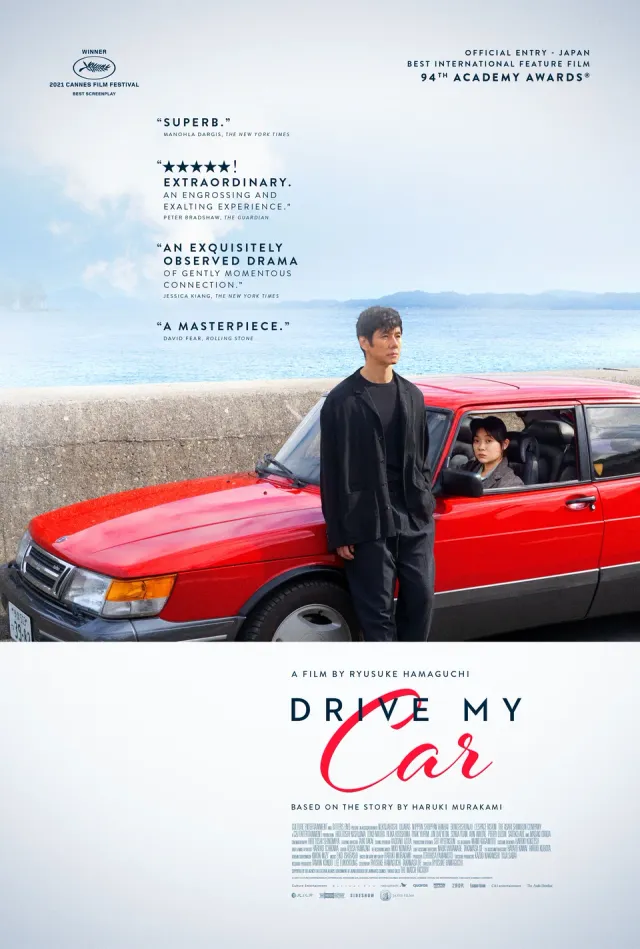
What changes The Fabelmans: childhood episodes and adolescent turning points. Drive My Car: slow and layered.
Theater director Yūsuke Kafuku travels to Hiroshima to stage Uncle Vanya and is assigned a quiet driver, Misaki. Rehearsals, long drives and the use of recorded lines gradually create room for both to confront grief and difficult memories. Ryusuke Hamaguchi gives the adaptation a patient, conversational structure, using Chekhov’s play and the red Saab as recurring spaces where private pain can be approached indirectly.
Based on recorded story, mood and style. Your preferences can change the order.
Memory and identity
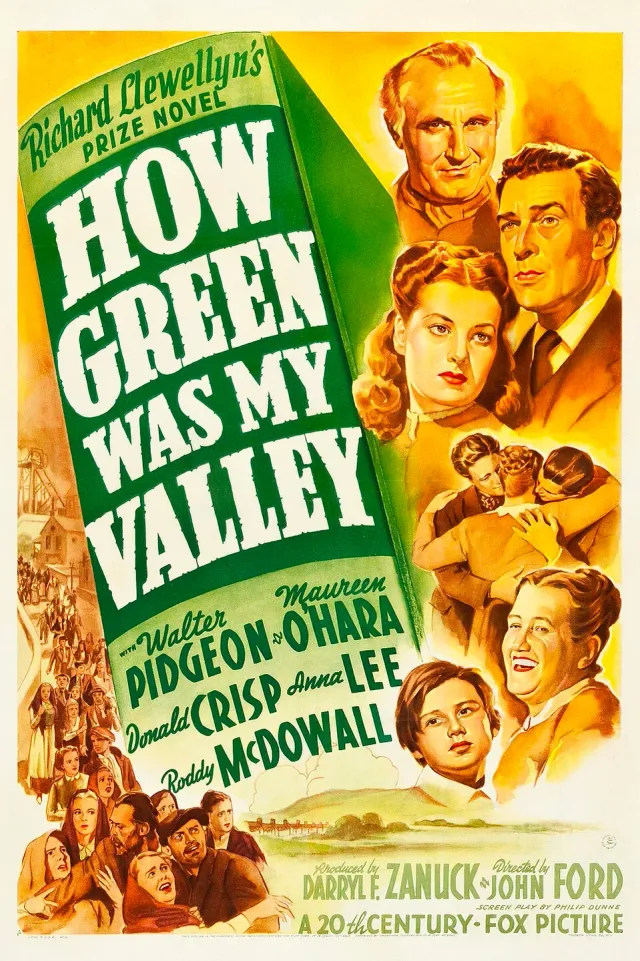
What changes The Fabelmans: childhood episodes and adolescent turning points. How Green Was My Valley: episodic and measured.
A man remembers childhood in a Welsh mining family before changes in work and landscape dissolved the world he knew. Wage conflict divides his father from older brothers, while schooling, romance and religious gossip expose other hierarchies inside a community he still loves. Injuries and departures accumulate beneath the warmth of song and family ritual. The drama makes recollection both a shelter and an admission of loss, presenting industrial change through the child who cannot yet understand every pressure shaping the adults around him.
Young Sammy Fabelman becomes fascinated with filmmaking after seeing a train crash in a movie and recreates it with his toy set and camera. As his family moves from New Jersey to Arizona and later California, the hobby grows into a way to understand what he sees at home. Sammy’s mother Mitzi is an expressive pianist; his father Burt is a practical engineer, and the household’s closeness is strained by changes neither parent can easily explain to their children. Sammy discovers that his camera can preserve details adults would rather avoid, placing him in a painful position between them. The coming-of-age story follows how making films becomes both an artistic calling and a way to process family fracture.
What drives the story
Sammy’s camera shifts from toy to instrument of understanding; filming lets him notice family tensions he is too young to interpret directly.
The people at its centre
Mitzi’s creative restlessness and Burt’s practical steadiness pull the household in different directions. Sammy’s loyalty becomes complicated by what his footage reveals.
What it feels like
A semi-autobiographical family drama that links childhood movie-making to home movies, editing and the thrill of discovering what a camera can frame.
Worth knowing
A fit for intimate coming-of-age stories about art, family and memory; it is Spielberg’s fictionalized account of his youth, not a literal biography of every event or relationship.
FamilyArtistic vocationMemory
Mood
Reflective · Intimate · Bittersweet
Pacing
Childhood episodes · Adolescent turning points
Visual style
Domestic realism · Home-movie footage
Storytelling
Young filmmaker · Family fracture · Semi-autobiographical drama