Both share a melancholic and reflective atmosphere.
Why this matches +
Genres: Drama / Comedy
Shared film traits
Based on recorded story, mood and style. Your preferences can change the order.
Expect reflective and melancholic, with measured pacing.
After her mother's death, advertising executive Elsa keeps working through the December holidays rather than facing her loss. A crisis eventually takes her to Lanzarote with her friend Patricia. Another strand follows a filmmaker, bringing lived experience into contact with the stories people create from it. Grief, friendship and artistic invention intersect without turning the holiday setting into a promise of seasonal comfort.
Based on recorded story, mood and style. Your preferences can change the order.
Memory and identity · Music and performance
Expect reflective and melancholic, with measured and fragmented pacing.
Aging film director Salvador Mallo lives with chronic pain and creative paralysis, then attends a screening of one of his old films and reconnects with actor Alberto. Their reunion brings back memories of childhood in Paterna, his mother’s sacrifices and a past relationship with Federico. When Salvador tries heroin, the drug opens a path into memories he has avoided; meanwhile, Alberto stages a monologue from one of Salvador’s texts. The film moves between present-day illness, remembered youth and fiction, eventually revealing that some apparent memories belong to a film Salvador is making.
Based on recorded story, mood and style. Your preferences can change the order.
What changes Sentimental Value: measured, interwoven and emotionally restrained. Hannah and Her Sisters: episodic.
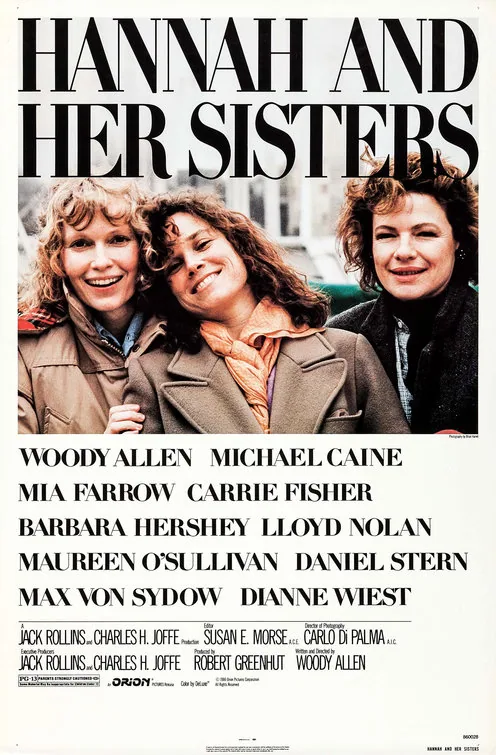
Family gatherings frame two years in which three sisters and their partners seek reassurance through work, affairs, borrowed money and explanations for mortality. The sister who appears most stable becomes the object around which other people's resentment and dependency circulate. Elsewhere, a former husband's health anxiety leads into a search for meaning that alternates panic with comic discovery. The ensemble comedy makes intimacy difficult to separate from self-justification, allowing genuine attachment to coexist with betrayals that the family never fully names.
Based on recorded story, mood and style. Your preferences can change the order.
Memory and identity
What changes Sentimental Value: measured, interwoven and emotionally restrained. The Lost Daughter: slow-burn, interior and memory-driven.
On a Greek island holiday, professor and translator Leda Caruso observes a young mother, Nina, struggling with the demands of caring for her daughter. A missing doll becomes an unsettling focus for Leda, while memories of her own years as a mother return through flashbacks. As Leda and Nina speak, the film explores choices, resentment, desire, and the parts of motherhood people rarely admit aloud. Maggie Gyllenhaal’s adaptation of Elena Ferrante’s novel is a psychological character study with a deliberately uneasy view of intimacy and maternal identity.
Based on recorded story, mood and style. Your preferences can change the order.
Music and performance
Expect intimate and somber, with measured pacing.
Chloé Zhao’s adaptation imagines the marriage of Agnes and William Shakespeare around the death of their young son Hamnet and the grief that follows. Agnes’s perspective keeps domestic care, intuitive knowledge and loss in the foreground, while the later theatre sequence proposes a powerful artistic response to bereavement. The connection between this private tragedy and Hamlet is the film’s imaginative premise, not a documented explanation of Shakespeare’s writing. Its intimate attention to family life builds toward an emotionally expansive performance, asking how art can give grief form without claiming to recover the historical couple’s private thoughts.
Based on recorded story, mood and style. Your preferences can change the order.
Memory and identity
What changes Sentimental Value: measured, interwoven and emotionally restrained. Sorry, Baby: nonlinear chapters move through agnes's life, academic and social routines continue and past experience shapes present choices.
Agnes is a literature graduate student at a small New England college whose life is derailed by an assault from her thesis adviser. Rather than treating that experience as the whole of her identity, the film follows her across several years in nonlinear chapters, returning to her friendship with Lydie, her work, her humor, and the uneven process of trying to move forward. Agnes is later a professor at the same institution, still living with what happened while people around her continue their lives. The black comedy-drama balances pain with warmth and everyday absurdity.
Based on recorded story, mood and style. Your preferences can change the order.
Memory and identity
Expect wry and tender, with conversation-led and measured pacing.
A Montreal professor nearing death is reunited with his estranged son, who tries to make his final days more comfortable and reconnects him with old friends and former lovers. Their visits expose differences in politics, values and memory, but also leave room for humor and reconciliation. The film treats mortality through conversation, friendship and the imperfect work of repairing a relationship before time runs out.
Both centre on family obligation and cinema and memory.
Why this matches +
Genres: Drama / Coming-of-age
Shared film traits
Based on recorded story, mood and style. Your preferences can change the order.
Memory and identity · Music and performance
What changes Sentimental Value: measured, interwoven and emotionally restrained. The Fabelmans: childhood episodes and adolescent turning points.
Young Sammy Fabelman becomes fascinated with filmmaking after seeing a train crash in a movie and recreates it with his toy set and camera. As his family moves from New Jersey to Arizona and later California, the hobby grows into a way to understand what he sees at home. Sammy’s mother Mitzi is an expressive pianist; his father Burt is a practical engineer, and the household’s closeness is strained by changes neither parent can easily explain to their children. Sammy discovers that his camera can preserve details adults would rather avoid, placing him in a painful position between them. The coming-of-age story follows how making films becomes both an artistic calling and a way to process family fracture.
Based on recorded story, mood and style. Your preferences can change the order.
Memory and identity · Music and performance
What changes Sentimental Value: measured, interwoven and emotionally restrained. New York Stories: three distinct short narratives place intimate conflicts in one city.
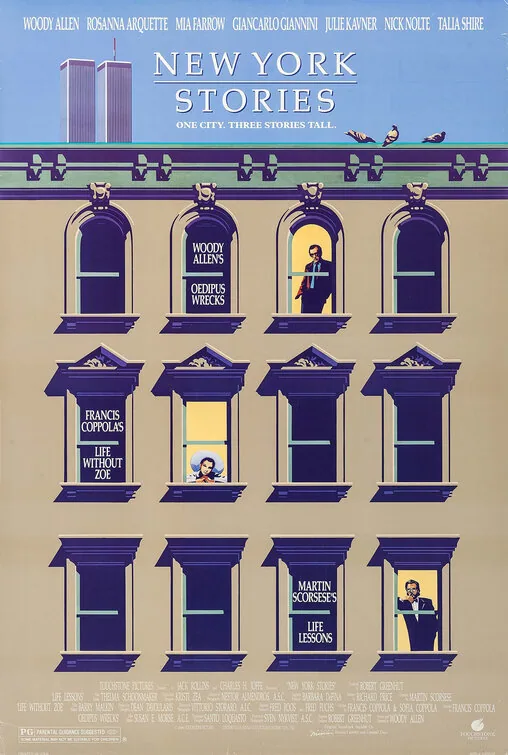
Three New York-set short films explore adults negotiating ambition, family and desire. In Life Lessons, a painter uses a turbulent relationship as fuel for his work; Life Without Zoë centers on a wealthy child navigating her parents' separation; and Oedipus Wrecks follows a man whose overbearing mother becomes the focus of an extraordinary public episode. The anthology varies in tone while remaining rooted in urban relationships.
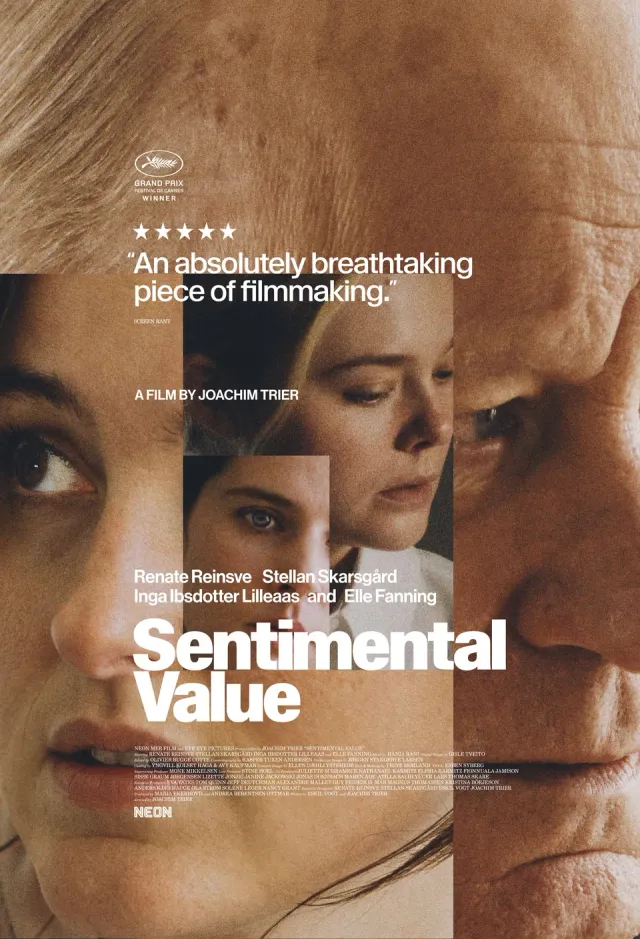
After their mother’s death, sisters Nora and Agnes face the return of their estranged father Gustav, a once-successful director who wants to make a film inspired by his own mother’s wartime trauma in their family home. Nora, a stage actor who struggles with performance anxiety, refuses the role he offers her; Agnes, a historian and parent, is more willing to hear him out. Gustav’s script turns private family memory into material for a production, and the dispute over where and how to film it exposes what each generation has inherited. The eventual staging asks whether art can create understanding without repairing the past by itself.
What drives the story
Gustav’s attempt to make a film about his mother revives tensions with his daughters, turning the family house into both a contested inheritance and a proposed set.
The people at its centre
Nora’s refusal protects a boundary with a father who has been absent; Agnes’s empathy is complicated by her own responsibilities and the history she knows.
What it feels like
The film places acting, rehearsal and the transformation of a real home into a set beside ordinary family scenes, making representation part of the drama.
Worth knowing
A contemporary family drama about memory, art and estrangement, with wartime trauma and suicide in its family history; it is quieter and more self-reflexive than a conventional reconciliation story.