Based on recorded story, mood and style. Your preferences can change the order.
Music and performance
What changes Hamnet is tagged intimate and somber; Finding Neverland is tagged warm and tender.
After a disappointing play, J. M. Barrie forms a friendship with Sylvia Llewelyn Davies and her sons, finding in shared imaginative games a way to engage with childhood and grief. The bond inspires Peter Pan but also exposes tensions with his wife and with the family’s different needs. As Sylvia’s illness narrows the future, a performance brought into the home becomes an act of accompaniment rather than simply a triumph for the playwright. The film compresses and sentimentalizes biographical material, so its emotional account of inspiration should not be mistaken for a complete record of the real family or Barrie’s obligations to them.
Based on recorded story, mood and style. Your preferences can change the order.
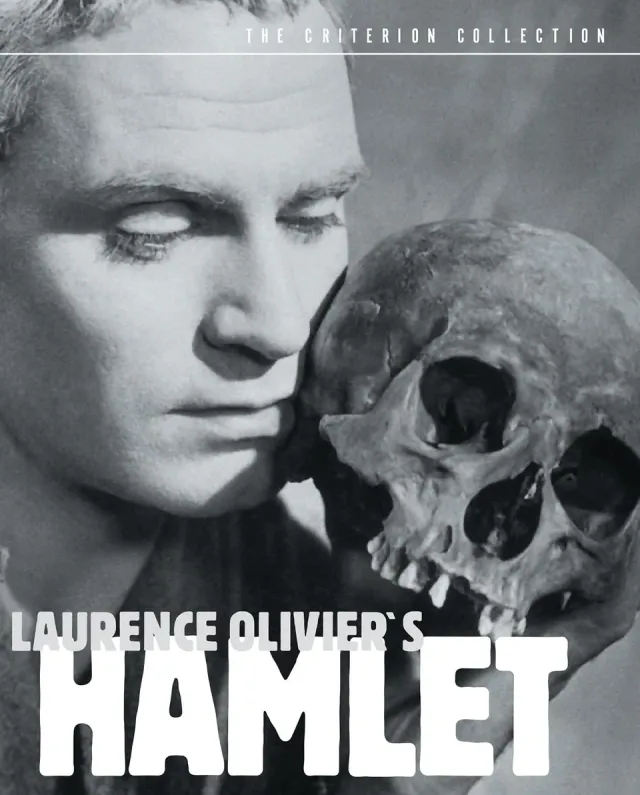
What changes Hamnet is tagged intimate and somber; Hamlet is tagged tragic and claustrophobic.
Olivier’s black-and-white Hamlet centers the prince’s uncertainty after his father’s death and the ghost’s accusation destabilizes the Danish court. The adaptation makes inner hesitation and family betrayal its organizing concerns, trimming Shakespeare’s play and emphasizing shadowed spaces within Elsinore. That choice turns the castle into a psychological maze, but it also reduces some of the political and social machinery surrounding the succession. Ophelia, Gertrude and the court remain part of the tragedy’s consequences, even as the camera stays close to Hamlet’s perspective. This is Olivier’s particular screen reading, not a neutral substitute for the full play or other film versions.
Based on recorded story, mood and style. Your preferences can change the order.
Expect elegant and melancholic, with measured and interior pacing.
In 1960s Los Angeles, a British professor is grieving the sudden death of his partner and tries to move through one day while deciding whether he can continue living alone. Encounters with a friend, a student and strangers alter the emotional texture of that day without undoing his loss. The film turns clothing, color and routine into close expressions of grief, loneliness and the fragile possibility of renewed attention.
Both share themes of family, plus an intimate and somber atmosphere.
Why this matches +
Genres: Drama
Shared film traits
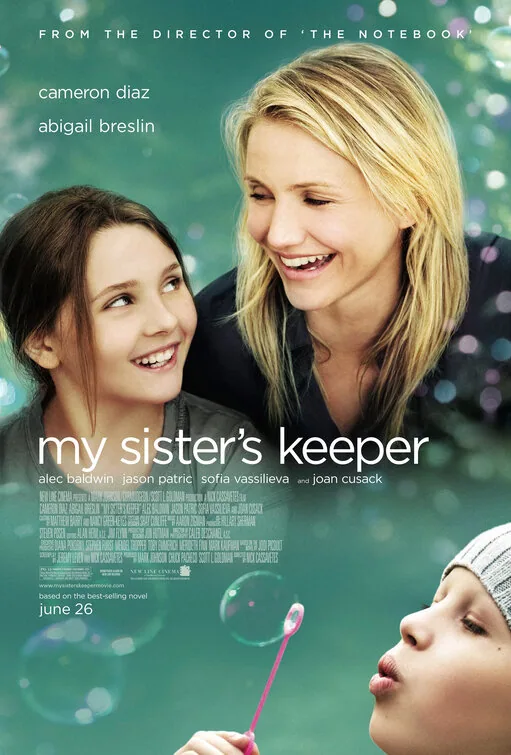
Based on recorded story, mood and style. Your preferences can change the order.
Expect emotional and somber, with measured and emotionally building pacing.
A family’s effort to care for a daughter with a serious illness is disrupted when her younger sister seeks the right to make medical decisions for herself. The court dispute exposes different forms of love, fear and sacrifice carried by each family member. The drama examines the strain of treating one child as a possible source of help for another and asks who gets to choose what their body endures.
Based on recorded story, mood and style. Your preferences can change the order.
What changes Hamnet: measured. Julieta: a written recollection moves between decades of a mother’s life.
Julieta’s plans to leave Madrid change when she encounters a friend of her estranged daughter Antía. She returns to the apartment she once shared with Antía and begins writing a letter that recalls their relationship from childhood onward. The drama unfolds as a mother’s account of grief, guilt, and the limits of explanation, tracing how one family’s silences can persist long after a person has disappeared from daily life.
Based on recorded story, mood and style. Your preferences can change the order.
Music and performance
What changes Hamnet is tagged intimate and somber; Sunset Boulevard is tagged bleak and mysterious.
A struggling Hollywood screenwriter takes refuge in the mansion of a former silent-film star who believes her return to prominence is imminent. Agreeing to revise her screenplay gives him financial security at the cost of increasing dependence on her emotional demands and carefully maintained illusions. As another professional relationship offers creative and romantic possibility, the arrangement turns into a contest over control, humiliation and the refusal to accept time's passage.
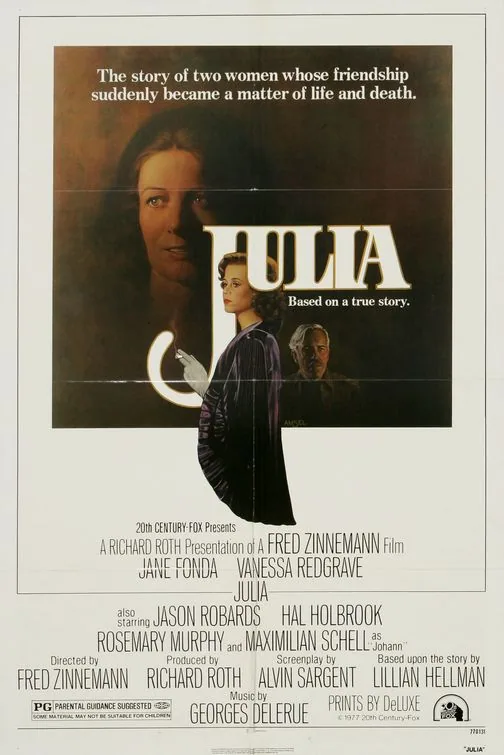
Based on recorded story, mood and style. Your preferences can change the order.
Expect reflective and somber, with nonlinear and measured pacing.
Playwright Lillian Hellman recalls her close friend Julia, whose anti-fascist work takes her into danger in Europe. In the film, Julia asks Hellman to carry money through Nazi Germany, a mission performed with limited information and little control over its outcome. Hellman’s earlier dependence on the older friend gives the journey emotional weight, but the brief reunion cannot restore their former intimacy or verify what became of Julia. The story is adapted from Hellman’s memoir Pentimento, whose account was challenged after publication; Muriel Gardiner said she recognized her own life in Julia, while Hellman denied that identification. The film’s elegant suspense therefore sits inside an unresolved question of memory and source identity, not a fully verified biography of a resistance courier.
Both share themes of family, plus an intimate atmosphere.
Why this matches +
Genres: Drama
Shared film traits
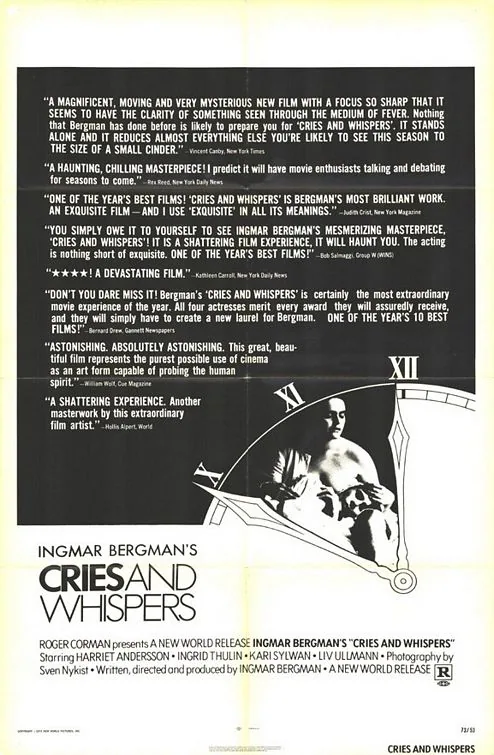
Based on recorded story, mood and style. Your preferences can change the order.
What changes Hamnet: measured. Cries and Whispers: slow burn.
Agnes is dying in a red-walled family house while her sisters Maria and Karin return, each carrying a different form of distance from her suffering. Anna, the maid, offers the physical comfort her relatives struggle to give, but her care does not grant her equal authority in the household. Memory and an uncanny return briefly reopen the possibility of tenderness before the sisters resume their separate lives. Bergman's close framing and saturated color make bodily pain intimate without resolving it into a reassuring story of reconciliation.
Based on recorded story, mood and style. Your preferences can change the order.
Music and performance
Expect somber and compassionate, with measured and episodic pacing.
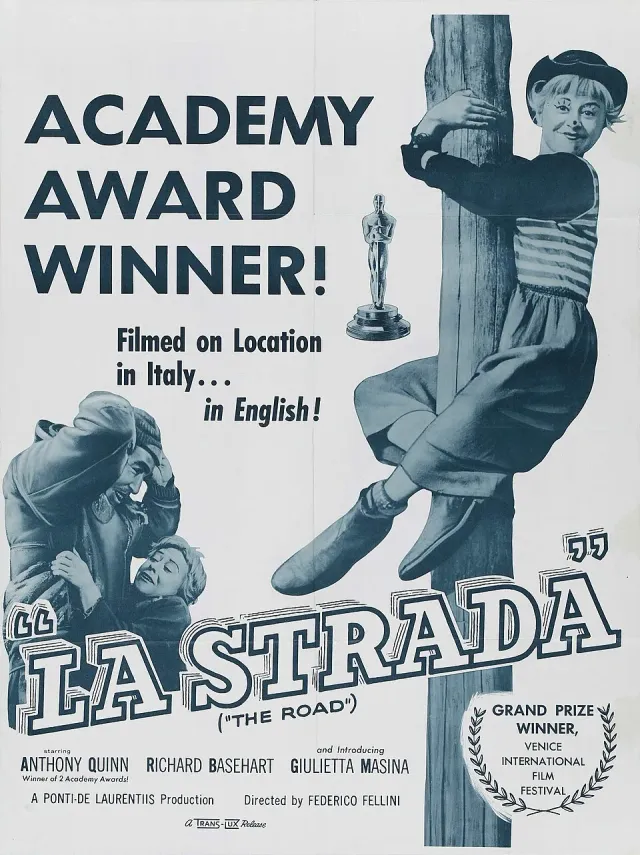
Poor Gelsomina is sold by her mother to Zampanò, a traveling strongman who takes her on the road as his assistant. His cruelty and her isolation become more visible when the Fool offers her a different account of what her companionship might mean. Gelsomina remains attached to the idea that she has a purpose, but the film does not grant her equal power to choose the life she is enduring. Zampanò abandons her after rejecting that bond, and only later recognizes the loss. Fellini’s fable uses circus performance and spiritual language to make tenderness feel possible, while its ending risks framing a woman’s suffering as a service that transforms an abusive man. Grief is not retroactive consent, redemption or proof that she had to stay.
Chloé Zhao’s adaptation imagines the marriage of Agnes and William Shakespeare around the death of their young son Hamnet and the grief that follows. Agnes’s perspective keeps domestic care, intuitive knowledge and loss in the foreground, while the later theatre sequence proposes a powerful artistic response to bereavement. The connection between this private tragedy and Hamlet is the film’s imaginative premise, not a documented explanation of Shakespeare’s writing. Its intimate attention to family life builds toward an emotionally expansive performance, asking how art can give grief form without claiming to recover the historical couple’s private thoughts.
What drives the story
A child’s death alters Agnes and William’s marriage, while their separate responses to grief lead toward an imagined relation between family loss and theatrical creation. The film imagines grief across a marriage without access to the historical couple’s private interior lives.
The people at its centre
Agnes’s practical and emotional labor remains distinct from William’s public work, and the film asks what each can know of the other’s mourning. Agnes’s perspective prevents William’s work from becoming the sole measure of family loss.
What it feels like
Naturalistic family scenes and immersive landscapes give way to a staged ending that translates private grief into performance rather than historical proof. The final theatrical sequence gives grief a public form rather than supplying historical evidence.
Worth knowing
Compare with intimate grief dramas and art-as-mourning stories, while stating clearly that the film’s causal link between Hamnet’s death and Hamlet is speculative historical fiction. Hamnet’s death as the source of Hamlet is an artistic hypothesis, not an established causal fact.