The daughter's effort to make sense of her mother's past becomes a family reconciliation story rather than a single apology scene.
Why this matches +
These offer a related experience with a meaningful difference in story, tone, or presentation.
An adjacent discovery: a related idea with a different viewing experience.
Genres: Comedy drama / Drama
Shared film traits
Based on recorded story, mood and style. Your preferences can change the order.
Memory and identity
What changes A mother and daughter revisit painful memories to understand the misunderstandings that have separated them.
A playwright's public comments about her childhood deepen a long-running rift with her mother and threaten to disrupt her upcoming wedding. The mother's lifelong friends intervene, bringing the daughter into a shared history that spans girlhood, marriage and painful family choices. The drama uses memories and an ensemble of older women to ask how adult children can understand parents without excusing the harm they experienced.
An encounter with a young family activates memories that make Leda reassess her choices and what she has hidden from herself.
Why this matches +
These offer a related experience with a meaningful difference in story, tone, or presentation.
An adjacent discovery: a related idea with a different viewing experience.
Genres: Drama / Psychological thriller
Shared film traits
Based on recorded story, mood and style. Your preferences can change the order.
Memory and identity
What changes A woman reflects on motherhood, guilt and choices that complicated her relationship with her children.
On a Greek island holiday, professor and translator Leda Caruso observes a young mother, Nina, struggling with the demands of caring for her daughter. A missing doll becomes an unsettling focus for Leda, while memories of her own years as a mother return through flashbacks. As Leda and Nina speak, the film explores choices, resentment, desire, and the parts of motherhood people rarely admit aloud. Maggie Gyllenhaal’s adaptation of Elena Ferrante’s novel is a psychological character study with a deliberately uneasy view of intimacy and maternal identity.
Ahmad’s return unsettles a family already adapting to a new arrangement.
Why this matches +
These offer a related experience with a meaningful difference in story, tone, or presentation.
An adjacent discovery: a related idea with a different viewing experience.
Genres: Drama / Mystery
Shared film traits
Based on recorded story, mood and style. Your preferences can change the order.
Coming of age · Memory and identity
What changes Estranged family members confront the silences and unresolved grief that shaped their relationships over time.
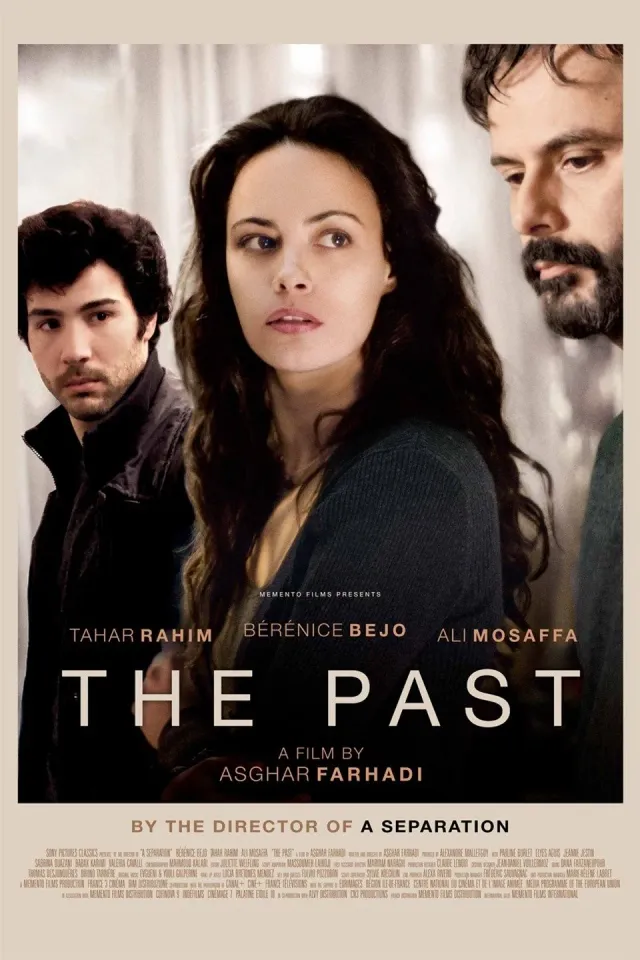
Ahmad returns to France from Iran to complete his divorce from Marie and finds himself drawn into the tensions of her current household. Her teenage daughter Lucie is troubled by the new relationship with Samir, while adults struggle to understand what the children know and what they have hidden. The family drama shows how prior relationships remain active in the present, turning silence and partial knowledge into sources of conflict.
Janis’s pregnancy and historical inquiry unfold beside her evolving connection with Ana, linking family identity to collective memory.
Why this matches +
These offer a related experience with a meaningful difference in story, tone, or presentation.
An adjacent discovery: a related idea with a different viewing experience.
Genres: Drama
Shared film traits
Based on recorded story, mood and style. Your preferences can change the order.
Memory and identity
What changes A mother's account of family history unfolds through grief, concealed truths and the lasting consequences of separation.
A Madrid photographer becomes pregnant after a relationship with a forensic anthropologist, and shares a maternity-ward room with Ana, a much younger expectant mother. Their lives remain connected after the birth as questions of parentage, care and personal history emerge. Janis’s effort to address a mass grave in her village links this intimate story to Spain’s unresolved Civil War memory.
A father's return from disappearance leads to a journey whose emotional destination is an account of past harm.
Why this matches +
These offer a related experience with a meaningful difference in story, tone, or presentation.
An adjacent discovery: a related idea with a different viewing experience.
Genres: Drama
Shared film traits
Based on recorded story, mood and style. Your preferences can change the order.
What changes A parent's return to a fractured family opens a difficult attempt to explain absence and reconnect with a child.
A silent man found wandering in the desert is reunited with a brother who has been raising his young son. Relearning conversation and parenthood brings fragments of a damaged family history into view. He and the boy eventually travel in search of the child's mother, but recovering contact requires confronting why the family separated and what a reunion can realistically repair.
Julieta’s plans to leave Madrid change when she encounters a friend of her estranged daughter Antía. She returns to the apartment she once shared with Antía and begins writing a letter that recalls their relationship from childhood onward. The drama unfolds as a mother’s account of grief, guilt, and the limits of explanation, tracing how one family’s silences can persist long after a person has disappeared from daily life.
What drives the story
The letter lets Julieta revisit the story without assuming her daughter will read it.
The people at its centre
Antía’s absence gives ordinary memories an unresolved emotional edge. This keeps the emotional stakes grounded in specific relationships.
What it feels like
The film connects maternal love with guilt and the limits of control.
Worth knowing
Changes in appearance and setting make time visible without flattening its losses.
MemoryMotherhoodGrief
Mood
Reflective · Melancholic · Intimate
Pacing
A written recollection moves between decades of a mother’s life
Visual style
Madrid interiors · Colorful design · Time-shifting compositions
Storytelling
Memory and identity · Family restoration · Grief and adjustment