Explore films connected to The Lost Daughter through Motherhood and ambivalence, Memory and self-judgment, Desire and responsibility. Choose the qualities you want to carry into your next watch.
What should feel similar?
Find your next favourite
9 films · Closest overall matches
Hide films you’ve seen or don’t want. Saved on this device.
No matches for this combination yet.
Try another option or reset your choices to see more films.
Based on recorded story, mood and style. Your preferences can change the order.
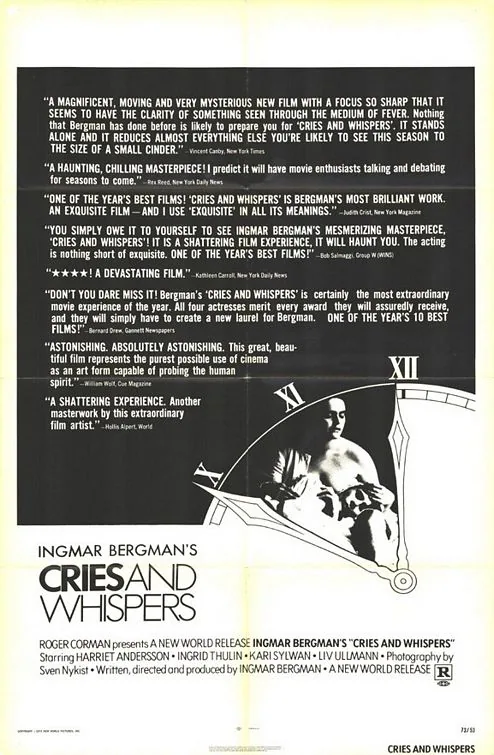
What changes The Lost Daughter: slow-burn, interior and memory-driven. Cries and Whispers: slow burn.
Agnes is dying in a red-walled family house while her sisters Maria and Karin return, each carrying a different form of distance from her suffering. Anna, the maid, offers the physical comfort her relatives struggle to give, but her care does not grant her equal authority in the household. Memory and an uncanny return briefly reopen the possibility of tenderness before the sisters resume their separate lives. Bergman's close framing and saturated color make bodily pain intimate without resolving it into a reassuring story of reconciliation.
Based on recorded story, mood and style. Your preferences can change the order.
Memory and identity
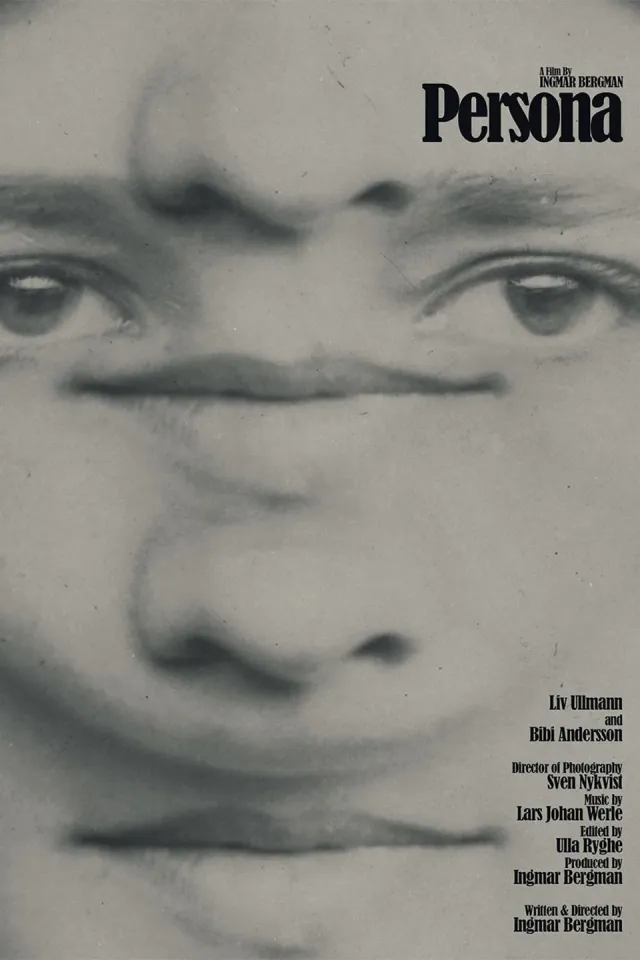
What changes The Lost Daughter: slow-burn, interior and memory-driven. Persona: measured, repetitive and reflective.
Stage actress Elisabet Vogler stops speaking during a performance and is sent to recover at a seaside cottage with nurse Alma. As Alma talks through memories and private anxieties, Elisabet listens without offering the reassurance Alma expects. Their closeness becomes increasingly uneasy: Alma feels exposed, the actress appears to observe her, and scenes begin to unsettle the boundary between the women’s identities. The film returns to Elisabet’s motherhood and her rejection of her son, but it does not settle whether the women merge, mirror one another or remain in a painful struggle for control. Its broken framing keeps the act of watching visible.
Based on recorded story, mood and style. Your preferences can change the order.
Memory and identity
What changes The Lost Daughter: slow-burn, interior and memory-driven. The Divine Secrets of the Ya-Ya Sisterhood: alternating timelines and character-led.
A playwright's public comments about her childhood deepen a long-running rift with her mother and threaten to disrupt her upcoming wedding. The mother's lifelong friends intervene, bringing the daughter into a shared history that spans girlhood, marriage and painful family choices. The drama uses memories and an ensemble of older women to ask how adult children can understand parents without excusing the harm they experienced.
Based on recorded story, mood and style. Your preferences can change the order.
Memory and identity
What changes The Lost Daughter: slow-burn, interior and memory-driven. Julieta: a written recollection moves between decades of a mother’s life.
Julieta’s plans to leave Madrid change when she encounters a friend of her estranged daughter Antía. She returns to the apartment she once shared with Antía and begins writing a letter that recalls their relationship from childhood onward. The drama unfolds as a mother’s account of grief, guilt, and the limits of explanation, tracing how one family’s silences can persist long after a person has disappeared from daily life.
Based on recorded story, mood and style. Your preferences can change the order.
What changes The Lost Daughter: slow-burn, interior and memory-driven. The Diary of a Teenage Girl: episodic, intimate and character-led.
In 1970s San Francisco, fifteen-year-old Minnie Goetze records her thoughts as she tries to understand desire, adulthood and her ambitions as an artist. Her bohemian mother is focused on her own life, and Minnie becomes involved with Monroe, her mother’s boyfriend, after he takes her out one night. The relationship complicates Minnie’s family ties and self-image as she moves through school, friendship and drawing. The film adapts Phoebe Gloeckner’s graphic novel through an adolescent point of view.
Based on recorded story, mood and style. Your preferences can change the order.
Memory and identity
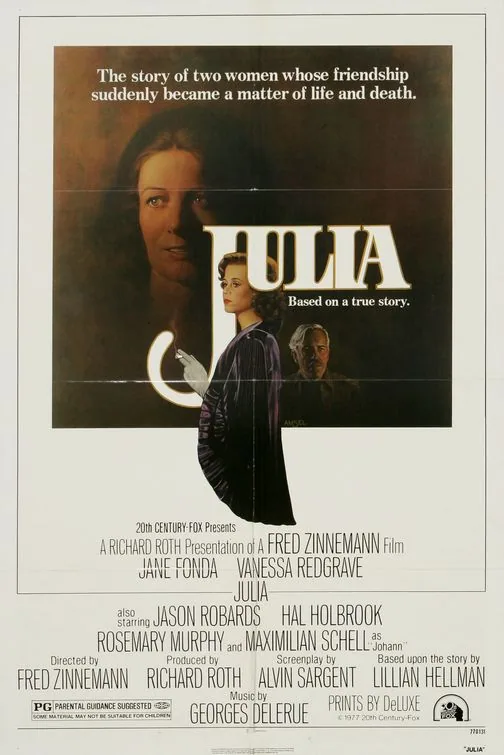
What changes The Lost Daughter: slow-burn, interior and memory-driven. Julia: nonlinear and measured.
Playwright Lillian Hellman recalls her close friend Julia, whose anti-fascist work takes her into danger in Europe. In the film, Julia asks Hellman to carry money through Nazi Germany, a mission performed with limited information and little control over its outcome. Hellman’s earlier dependence on the older friend gives the journey emotional weight, but the brief reunion cannot restore their former intimacy or verify what became of Julia. The story is adapted from Hellman’s memoir Pentimento, whose account was challenged after publication; Muriel Gardiner said she recognized her own life in Julia, while Hellman denied that identification. The film’s elegant suspense therefore sits inside an unresolved question of memory and source identity, not a fully verified biography of a resistance courier.
Based on recorded story, mood and style. Your preferences can change the order.
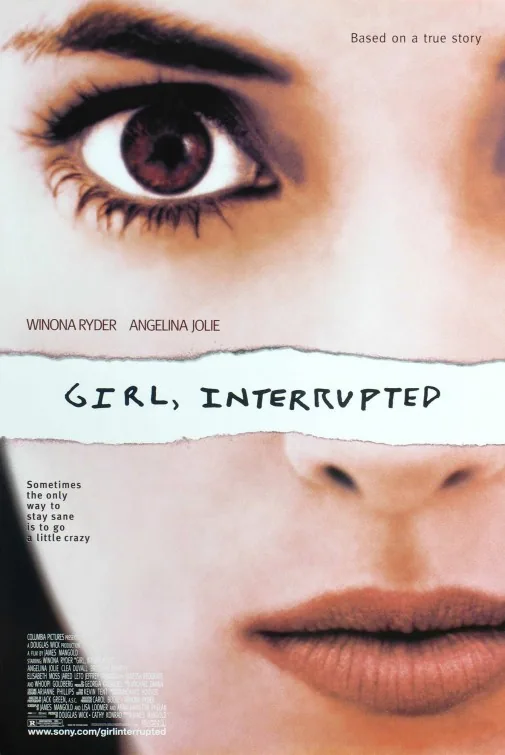
What changes The Lost Daughter: slow-burn, interior and memory-driven. Girl, Interrupted: measured and episodic.
After a suicide attempt, Susanna is admitted to a psychiatric hospital where her relationships with patients, staff and the charismatic Lisa challenge the diagnoses and accounts she has brought with her. Lisa’s rebellion gives Susanna a model of resistance but also exposes how manipulation can travel inside a language of freedom. The film’s adaptation of Susanna Kaysen’s memoir turns institutional life into an ensemble story about care, illness and identity, yet its focus on one young woman’s crisis cannot stand for all psychiatric treatment or diagnoses. Recovery is neither simply obedience nor glamorous rejection of help.
Based on recorded story, mood and style. Your preferences can change the order.
Memory and identity
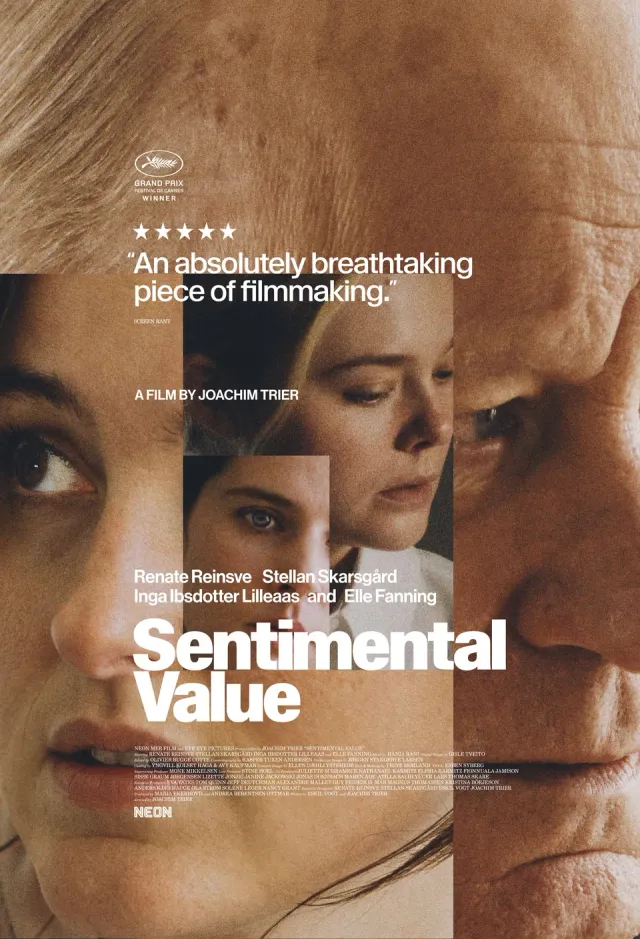
What changes The Lost Daughter: slow-burn, interior and memory-driven. Sentimental Value: measured, interwoven and emotionally restrained.
After their mother’s death, sisters Nora and Agnes face the return of their estranged father Gustav, a once-successful director who wants to make a film inspired by his own mother’s wartime trauma in their family home. Nora, a stage actor who struggles with performance anxiety, refuses the role he offers her; Agnes, a historian and parent, is more willing to hear him out. Gustav’s script turns private family memory into material for a production, and the dispute over where and how to film it exposes what each generation has inherited. The eventual staging asks whether art can create understanding without repairing the past by itself.
Based on recorded story, mood and style. Your preferences can change the order.
Memory and identity
What changes The Lost Daughter: slow-burn, interior and memory-driven. Here: a non-linear structure revisits one place across multiple generations.
The film remains anchored to one location while moving across different periods and generations of people who live in or pass through it. Domestic routines, relationships, and historical change become visible through the space itself, making the room a witness to lives it cannot control. The drama adapts a graphic-novel structure into a meditation on memory, time, family, and the meanings that accumulate around an ordinary place.
On a Greek island holiday, professor and translator Leda Caruso observes a young mother, Nina, struggling with the demands of caring for her daughter. A missing doll becomes an unsettling focus for Leda, while memories of her own years as a mother return through flashbacks. As Leda and Nina speak, the film explores choices, resentment, desire, and the parts of motherhood people rarely admit aloud. Maggie Gyllenhaal’s adaptation of Elena Ferrante’s novel is a psychological character study with a deliberately uneasy view of intimacy and maternal identity.
What drives the story
An encounter with a young family activates memories that make Leda reassess her choices and what she has hidden from herself.
The people at its centre
Leda’s interest in Nina carries both recognition and projection, while Nina’s own strained family situation reveals different pressures on motherhood.
What it feels like
The film is intimate and psychologically ambiguous, and includes maternal distress, family separation, and a brief act of physical violence.
Worth knowing
Its tension comes from memory, self-perception, and social expectations, rather than an external mystery with a single clear solution.
Motherhood and ambivalenceMemory and self-judgmentDesire and responsibility
Mood
Unsettling · Intimate · Reflective
Pacing
Slow-burn · Interior · Memory-driven
Visual style
Sunlit Greek island · Close character framing · Sensory beach imagery
Storytelling
Present and past structure · Holiday encounter · Psychological confession